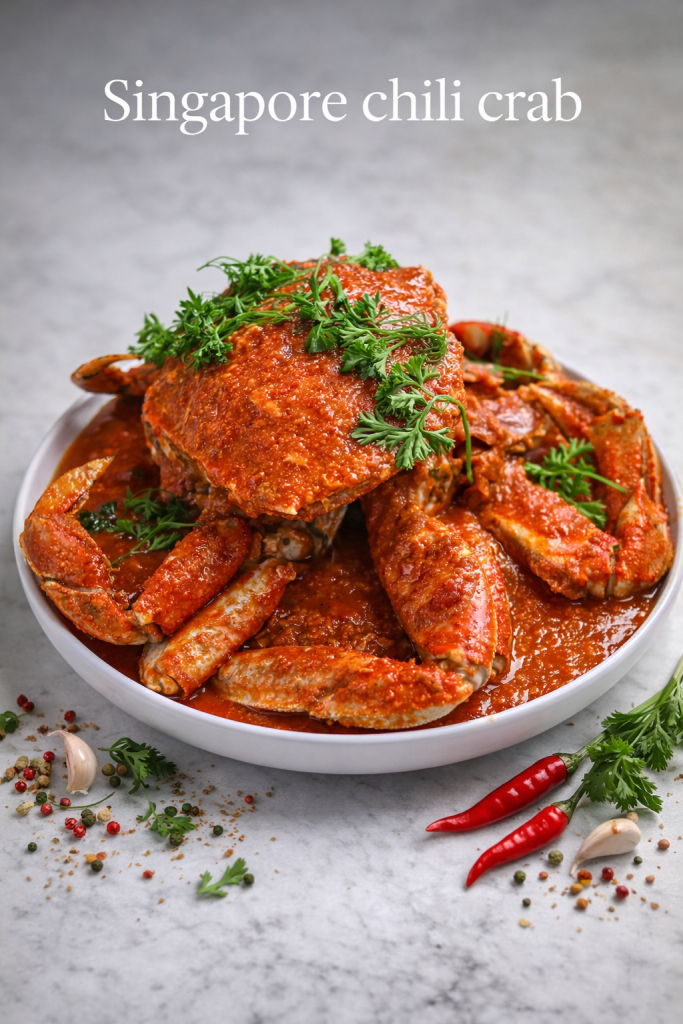
Master this authentic Singapore chili crab recipe featuring fresh mud crab in a rich, sweet-spicy-savory sauce. Step-by-step instructions, pro tips, and the secret to perfect egg ribbons.
Have you ever dreamed of recreating that unforgettable hawker center experience in your own kitchen? This authentic Singapore chili crab recipe delivers the real deal—a magnificent culinary spectacle that has become the Southeast Asian city-state's unofficial national dish. Picture enormous clusters of fresh crab, their shells cracked to perfection, swimming in a luscious, sweet-spicy-savory tomato-based sauce that's so good you'll find yourself sopping up every last drop with golden-fried mantou buns.
According to the National Library Board Singapore, chili crab is widely regarded as Singapore's national seafood dish, with a fascinating origin story dating back to the 1950s. What makes this homemade chili crab recipe special is our commitment to authenticity—using whole fresh mud crab, creating our own rempah (spice paste) from scratch, and incorporating the often-discarded but flavor-packed tomalley directly into the sauce. This is the best chili crab recipe for home cooks who want to impress dinner guests with a restaurant-quality Southeast Asian seafood masterpiece.
The MICHELIN Guide describes chili crab as "a national icon with a famously punchy mix of sweet, spicy, savory and tangy flavors." By following this step-by-step chili crab guide, you'll understand why Singaporeans have been obsessed with this dish for over half a century.
THE HISTORY: From Pushcart to National Icon
How Cher Yam Tian Invented Singapore Chili Crab
The story of Singaporean chili crab begins in the 1950s, along the banks of the Singapore River. According to historical records from the National Library Board, a resourceful hawker named Cher Yam Tian, along with her husband Lim Choon Ngee, ran a modest pushcart stall selling stir-fried crabs. One day, when she ran out of tomato sauce—her usual ingredient—Cher improvised by adding bottled chili sauce to her stir-fried crabs. The result was an immediate sensation that would forever change Singapore's culinary landscape.
This original chili crab recipe quickly spread along the river, then throughout the island. By 1962, Cher and her husband had opened the Palm Beach Seafood Restaurant at Upper East Coast Road, establishing themselves as pioneers of what would become Singapore's most famous seafood dish.
The Evolution of Singapore's National Dish
According to the MICHELIN Guide, another crucial figure in chili crab's evolution was Hooi Kok Wah, one of the four legendary "heavenly kings" of Chinese cuisine in 1960s Singapore. When Hooi opened Dragon Phoenix Restaurant in 1963, he created a sourer version using lemon juice, vinegar, sambal, tomato paste, and egg white in the gravy—a variation that has become the more common version of the dish in Singapore today.
As noted by the MICHELIN Guide, "Singaporean cuisine is a melting pot. For Chilli Crab, we embrace not just the Chinese influences, but also Malay and Western influences." The rempah (spice paste) derives from Malay culture, the wok-frying technique reflects Chinese culinary tradition, and the bottled tomato sauce came from Western cuisine—creating something entirely unique and authentically Singaporean.
This traditional chili crab recipe has achieved global recognition. CNN Go listed chili crab as one of the "world's 50 most delicious foods" at Number 35. The dish has been featured on Netflix's "Street Food" series and even appeared as a challenge on multiple seasons of "The Amazing Race."
THE SCIENCE: Deconstructing Perfect Chili Crab Sauce
The Rempah Foundation: Building Layers of Flavor
The magic of any authentic Singapore chili crab lies in its rempah—the aromatic spice paste that forms the flavor foundation. As explained by Paul Liew, third-generation proprietor of Keng Eng Kee restaurant in the MICHELIN Guide, "We start with a rempah, which is derived from Malay culture—we do it with galangal, ginger and chili, and we fry it in the wok."
When you sauté the rempah in oil, several chemical transformations occur. The heat breaks down the cell walls of the aromatics, releasing essential oils and volatile compounds. The natural sugars begin to caramelize, while the proteins undergo the Maillard reaction—creating hundreds of new flavor molecules that contribute depth and complexity. You'll know the rempah is properly cooked when it darkens slightly, becomes intensely fragrant, and the oil begins to separate from the paste.
The Umami Power of Belachan and Tomalley
Belachan (fermented shrimp paste) is the umami bomb in this Singapore seafood recipe. When you first add it to hot oil, the pungent, almost funky aroma can be overwhelming—but this is exactly what you want. According to culinary science, the heat triggers the Maillard reaction in the fermented proteins, transforming harsh compounds into deep, savory notes that you simply cannot achieve any other way.
The tomalley—that greenish-yellow "crab mustard" many cooks discard—is perhaps the most underutilized secret weapon in Asian crab dishes. This hepatopancreas functions as the crab's liver and pancreas, concentrating flavor compounds and enzymes. When added to the sauce, it acts as both a flavor booster and a natural thickener, creating that luxurious mouthfeel that defines restaurant-quality chili crab in sauce.
The Egg Ribbon Technique
That final addition of whisked egg serves both textural and chemical purposes. As noted in multiple Singapore hawker chili crab recipes, pouring the beaten egg slowly in a thin stream while stirring gently creates delicate ribbons that catch and hold the sauce.
The MICHELIN Guide explains that this technique creates a "smooth, eggy, creamy texture" that begs to be ladled onto fried rice or sopped up with mantou. The egg proteins contain lecithin, a natural emulsifier that helps bind the oil and water in your sauce into a stable emulsion—which is why properly made spicy crab sauce has that luxurious, coating quality rather than separating into greasy oil and watery tomato liquid.
GOOD PAIRINGS: Building the Ultimate Seafood Feast
Appetizer: Fresh Vietnamese-Style Spring Rolls
Before diving into the richness of your homemade chili crab, start with something light and refreshing. Rice paper rolls filled with shrimp, fresh herbs, lettuce, and rice vermicelli provide a clean, bright opening. The cool mint and cilantro prepare your palate for the heat to come, while the neutral rice paper won't compete with the complex flavors of the main event.
Main Course: Singapore Chili Crab (This Recipe)
This is the centerpiece—your authentic Singapore chili crab deserves to be the star. Consider serving multiple crabs if you're feeding a crowd; this dish is meant to be shared and savored.
Side Dish: Stir-Fried Morning Glory (Kangkung Belacan)
This classic Southeast Asian side provides the perfect counterpoint. The morning glory (water spinach) is stir-fried at high heat with garlic, chilies, and more belacan. The vegetable's crisp-tender texture and slightly earthy flavor stand up beautifully to the bold sauce, while the shared belacan base creates harmony between the dishes. According to the MICHELIN Guide, this combination is commonly found at Singapore's zi char restaurants.
Dessert: Coconut Ice Cream with Gula Melaka Syrup
After all that savory intensity, cool down with rich coconut ice cream drizzled with warm palm sugar syrup. The coconut's tropical notes echo the Southeast Asian theme, while the caramel-like syrup provides just enough sweetness without overwhelming.
Cocktail: Singapore Sling
Created at the Raffles Hotel around the same time chili crab was emerging from hawker stalls, the Singapore Sling is a natural companion. This gin-based cocktail combines pineapple juice, lime, Cointreau, and cherry liqueur for a sweet-tart profile that complements the chili crab's complexity.
Non-Alcoholic Drink: Fresh Lime Soda
Sometimes simple is best. Fresh lime juice mixed with chilled soda water and a touch of simple syrup provides the perfect palate cleanser. The bubbles help cut through the richness, while the acidity echoes the vinegar in the sauce.
Dietary:
Dairy-Free, High Protein, Iron-Rich, Nut-Free, Omega-3 Rich
Description
Master this authentic Singapore chili crab recipe and transport your dinner table to a bustling hawker center. Fresh mud crab is simmered in a complex sweet-spicy-savory tomato sauce enriched with belachan, taucu, and the crab's own tomalley. Served with golden mantou buns for sopping up every last drop of that legendary sauce.
Ingredients
For the Crab
1.5kg / 3 lb live Dungeness crab (, cut into large portion-size pieces, tomalley and juices reserved separately (see Note 1) or other large, fresh crab like Mud Crab)
2tablespoons cornstarch, for dusting (optional)
For the Chili Paste (Rempah):
5red cayenne chilies (, seeds left in, roughly chopped)
2tablespoons taucu paste (fermented soybean paste; substitute red miso)
1tablespoon belachan (dried shrimp paste , chopped (substitute other Asian shrimp paste))
1cup tomato passata (smooth tomato puree)
1/2cup sweet chili sauce (Thai-style)
2tablespoons ketchup (Heinz recommended for authentic taste)
2cups water (or chicken/seafood stock for richer flavor)
1large egg (, lightly whisked)
3tablespoons white vinegar (or lime juice for brighter flavor)
For Garnish and Serving:
Fresh Parsley (cilantro , leaves whole or roughly chopped)
2tablespoons green onion (, finely sliced)
Golden mantou buns (Chinese steamed then fried buns, for serving)
Instructions
1
Prepare the crab: Clean and cut the live crab following a detailed seafood preparation tutorial. You should end up with two separate bowls: one containing the crab pieces, and another containing the reserved tomalley ("crab mustard") and any juices released during cutting. As emphasized in multiple Singapore chili crab recipes, this tomalley is a crucial flavor component—do not discard it!
2
Make the chili paste: Place the chopped cayenne chilies, taucu paste, garlic, eschalots, and ginger into a small food processor or Nutribullet. Blitz until you achieve a fairly smooth paste. According to culinary experts, the quality of your rempah directly determines the depth of your final dish.
3
Sauté the belachan: Heat the canola oil in a large pot or Dutch oven over medium-high heat. Add the chopped belachan and cook for 2 minutes, stirring constantly. Warning: The aroma will be intensely pungent at this stage—this is normal! The MICHELIN Guide notes that this fermented paste is essential for authentic flavor.
4
Cook the chili paste: Add the prepared chili paste and cook, stirring frequently, for 3 minutes. You'll notice the raw garlic and ginger smell fade as the paste becomes fragrant and deepens in color. The oil may begin to separate slightly—this indicates the rempah is properly cooked.
5
Add the tomato passata: Pour in the tomato passata and cook, stirring regularly, for 4 minutes. This step allows the tomato to caramelize slightly, reducing acidity and developing natural sweetness.
6
Add remaining sauce ingredients: Add the sweet chili sauce, ketchup, and water. Stir thoroughly to combine, scraping any browned bits from the bottom of the pot. Bring the sauce to a gentle boil.
7
Add the crab claws first: Add the crab claws to the pot first—they're thicker and require slightly longer cooking. Stir to coat them in the sauce. Return to a boil, then reduce heat to maintain a simmer. Cover and cook for 3 minutes.
8
Add the tomalley and juices: Remove the lid and add the reserved tomalley along with all the collected crab juices. Stir gently to incorporate. The sauce will immediately become richer and more complex.
9
Add remaining crab pieces: Add the remaining crab pieces and any additional juices. Stir carefully to coat all pieces without breaking them. Replace the lid and cook for 7 minutes. The crab is done when shells turn bright orange-red and meat is opaque.
10
Remove crab pieces: Using tongs, carefully transfer all crab pieces to a serving bowl or platter. Leave the sauce over low heat.
11
Create egg ribbons: With the sauce still simmering gently, use a fork or chopsticks to stir in a circular motion. While stirring, pour the lightly whisked egg in a thin, steady stream into the middle of the pot. Continue stirring gently for about 30 seconds—the egg will set into delicate ribbons throughout the sauce.
12
Add vinegar: Stir in the white vinegar. Taste and adjust—it should balance sweet, spicy, savory, and tangy.
13
Return crab to sauce: Return all crab pieces to the pot. Gently stir and turn to coat thoroughly in the sauce. Heat through for 1-2 minutes.
14
Serve immediately: Transfer to a large serving platter or shallow bowl. Garnish generously with fresh coriander and sliced green onions. Serve piping hot with golden mantou buns for dipping.
Nutrition Facts
Servings 3
Amount Per Serving
Calories535kcal
% Daily Value *
Total Fat23g36%
Saturated Fat3.5g18%
Cholesterol190mg64%
Sodium1520mg64%
Total Carbohydrate39g13%
Dietary Fiber3g12%
Sugars25g
Protein43g86%
Vitamin C 38 mg
Calcium 183 mg
Iron 3.6 mg
* Percent Daily Values are based on a 2,000 calorie diet. Your daily value may be higher or lower depending on your calorie needs.
Note
Pro Tips for Success
On crab selection and handling: Live mud crab is absolutely worth seeking out for this authentic chili crab recipe. According to seafood experts, the meat is sweeter, firmer, and more succulent than pre-cooked or frozen alternatives. Asian grocery stores and specialty seafood markets often carry live mud crab. The MICHELIN Guide notes that Singapore restaurants typically import mud crabs from Sri Lanka, Indonesia, and the Philippines.
The tomalley is non-negotiable: I cannot stress this enough—the crab mustard separates good chili crab from transcendent chili crab. If your fishmonger tries to clean the crab completely and discard the tomalley, stop them and ask to keep it.
Timing is everything: Crab cooks quickly and becomes tough if overcooked. Follow the timing precisely, and remove from heat as soon as it's done.
Mise en place matters: Have all your components ready before you start cooking. The best chili crab recipes emphasize preparation—chop your aromatics, measure your sauces, and have everything within reach.
Make-Ahead Instructions
The chili paste can be prepared up to 3 days in advance and stored in an airtight container in the refrigerator. You can also make the sauce base (through step 6) up to 24 hours ahead. When ready to serve, reheat the sauce, then proceed with adding the crab.
Storage Guidelines
Refrigerator: Leftover crab meat (removed from shells) can be stored separately from sauce in an airtight container for up to 2 days. The sauce will keep for 3-4 days separately. Reheat gently—crab meat toughens easily when overheated.
Freezer: Not recommended for cooked crab. The sauce freezes reasonably well, but the crab meat becomes watery and loses texture.
Substitutions
Crab: If mud crab is unavailable, use any large, fresh crab—Dungeness, blue crab, or king crab legs work well. Avoid canned or pasteurized crab; the texture won't hold up.
Taucu paste: Red miso paste makes an acceptable substitute. The flavor profile shifts slightly but remains delicious.
Belachan: If unavailable, look for "shrimp paste" in the international aisle. Thai shrimp paste (gapi) or Filipino bagoong can work, though flavors vary.
Cayenne chilies: Any medium-hot red chili works—Fresno, red jalapeño, or serrano for more heat. Adjust quantity based on tolerance.
Tomato passata: Use plain tomato puree; avoid pre-seasoned pasta sauces.
Troubleshooting
Sauce too thin? Continue simmering without the crab to reduce. The cornstarch from dusting the crab and the egg will also help thicken.
Sauce too thick? Add water or stock a few tablespoons at a time.
Not spicy enough? Next time, include more chili seeds or add a dash of chili oil.
Crab meat sticking to shell? Usually indicates undercooking. Fresh crab meat should release easily when properly cooked.
Egg scrambled instead of ribbons? Turn off the heat before adding egg, and pour more slowly while stirring gently.
Keywords:
Singapore chili crab recipe, authentic chili crab, how to make chili crab, Singaporean seafood, mud crab recipe, chili crab sauce, Singapore national dish, hawker center food, crab in tomato sauce, mantou buns, belachan recipe, fermented shrimp paste, crab tomalley, Southeast Asian recipes, spicy crab, restaurant-style crab, fresh crab recipe, cracked crab, chili crab at home, Singapore crab dish, Asian seafood recipes, Dungeness crab recipe, crab with egg ribbons, rempah spice paste, zi char style,
The Chili Crab Family Tree
While Singaporean chili crab remains the most famous version, it has inspired numerous variations across Southeast Asia. According to Wikipedia, the earlier version known as "ketam balado" is a drier preparation cooked in balado, a hot and spicy mixture originating from Minang cuisine of West Sumatra, Indonesia. This version has been recognized as Malaysia's Intangible Cultural Heritage.
In Malaysia, you'll find chili crab with a thicker, darker sauce that includes more belachan and less tomato—reflecting stronger Malay culinary influences. Some Malaysian versions incorporate curry leaves for additional aromatic dimension.
The Jumbo Seafood Experience
According to Trip.com travel reviews, Jumbo Seafood remains the most famous restaurant chain for enjoying chili crab in Singapore, with locations at Clarke Quay and Jewel Changi Airport being particularly popular among tourists. Experienced diners offer this insider tip: "Small crabs are tastier! Small crabs have tender and sweet meat; don't sacrifice the taste for a better photo."
Modern Interpretations
The MICHELIN Guide reports that innovative chefs have created novel reinterpretations like chili crab chips, xiao long bao (soup dumplings filled with chili crab), and burgers. Even chili crab instant noodles exist—a collaboration with Nissin available in Singapore supermarkets.
The Ritual of Eating Chili Crab
In Singapore, eating chili crab is never solitary—it's communal, messy, and joyfully loud. As Paul Liew from Keng Eng Kee told the MICHELIN Guide, "This dish is very special in my memory because once it is served, everybody stops using their phones. You need to eat it with your hands—whatever you are doing, you have to stop, you have to eat, and that is when I think the real meal starts."
Most restaurants provide wet towels or washing bowls, as the dish is traditionally eaten with hands. The pincers contain the most meat, but meat from the body and legs tends to be smoother.
The Mantou Connection
Golden-fried mantou buns aren't merely an accompaniment—they're essential. These small, pillow-soft buns are first steamed, then deep-fried until golden and crispy outside while remaining fluffy inside. According to the National Library Board, "A favourite way of eating is to sop up the spicy sweet and sour gravy with the bread, which could be soft white bread, baguette or fried Chinese buns called mantou."