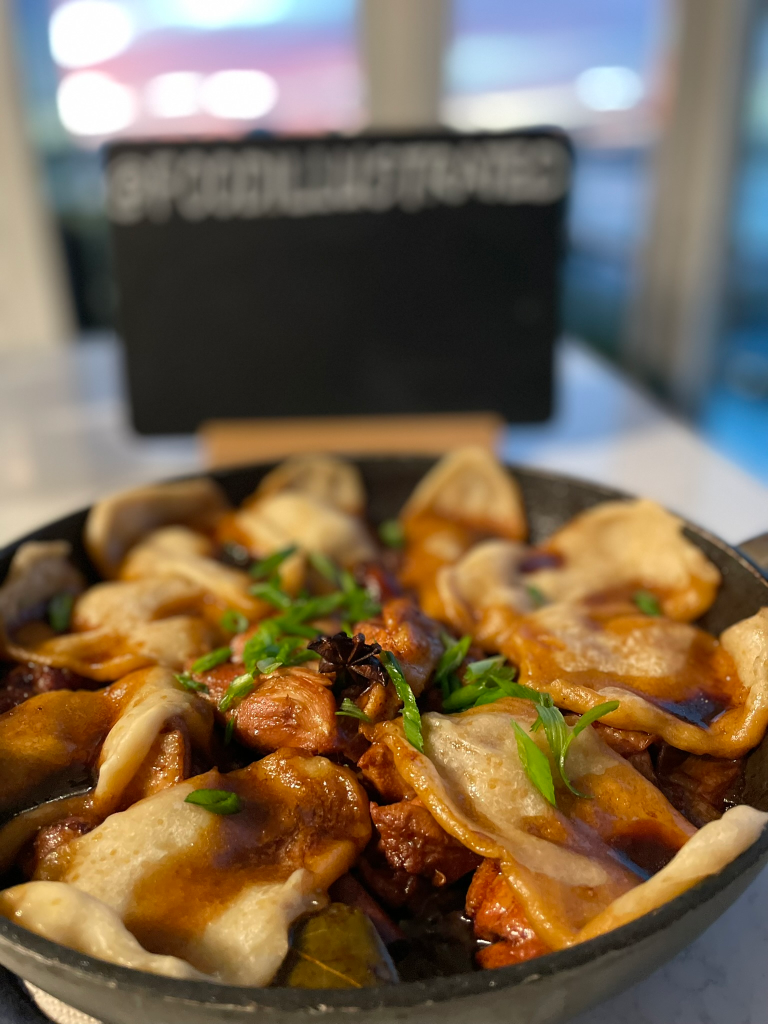
Servings 5
- Amount Per Serving
- % Daily Value *
- Total Fat 32g50%
- Saturated Fat 8g40%
- Sodium 1150mg48%
- Total Carbohydrate 35g12%
- Dietary Fiber 2g8%
- Sugars 7g
- Protein 48g96%
* Percent Daily Values are based on a 2,000 calorie diet. Your daily value may be higher or lower depending on your calorie needs.
Note
- Caramelizing sugar: If the sugar turns bitter or burns, start over. The amber stage comes just after the sugar liquefies and before it smokes. Swirl, don’t stir.
- Miso vs. black bean paste: White miso is a modern, umami‑packed substitute that dissolves smoothly. For a more traditional flavor, use fermented black bean paste ( rinsed and crushed).
- Flatbreads not sticking? Ensure your dough has rested fully and that you soaked each piece in water long enough. The pot wall should be hot and slick with braising liquid.
- Make ahead: The braise can be prepared through step 8 and refrigerated for up to 2 days. Reheat gently, then proceed with shaping and steaming the flatbreads.
- Leftovers: Store chicken and flatbreads separately. The breads soften significantly overnight; re‑crisp them in a dry skillet, or enjoy them as tender “noodle‑like” morsels.
Keywords:
diguo ji, ground pot chicken, Chinese braised chicken, sticky flatbreads, iron pot chicken, Jiangsu recipe, Anhui cuisine, hongshao chicken, one‑pot chicken dinner, Chinese comfort food, homemade flatbread, soy braised chicken, peasant dish,
A Dish Born from the Soil
Over 300 years ago, along the flood‑prone banks of the Yellow River, farmers and laborers needed a meal that was portable, fuel‑efficient, and satisfying after long days in the fields. They carried small iron pots, a few hardy ingredients, and a pouch of flour. A fire was lit directly on the ground – hence 地锅 (dìguō), “ground pot.” Tough, older chickens were braised for hours over low embers until knife‑tender, while simple flour‑and‑water dough was slapped onto the inner walls of the pot to steam. The result was a complete meal: protein, starch, and broth, all in one vessel with zero waste.
From Fields to Feast
Generations refined the dish. Bone‑in chicken gave way to more tender cuts; soy sauce and spices deepened the flavor; the flatbreads became thinner and more elegant. Yet the soul of dìguō jī remains unchanged – it is still a celebration of resourcefulness, communal eating, and the deep, caramelized savor of hongshao (red‑braising). Today, specialty restaurants across China serve it in massive black iron woks, and home cooks treasure it as a symbol of culinary heritage.
Why This Recipe Works
We honor the original while ensuring modern success:
- Bone‑in, skin‑on chicken stays moist and infuses the sauce with collagen.
- The cartouche (parchment lid) mimics the effect of a clay‑pot lid, keeping the chicken succulent without excessive liquid.
- Dough soaking – a nearly forgotten farmhouse trick – creates a silky, resilient flatbread that clings to the pot and absorbs sauce beautifully.
Did you make this recipe?