Introduction
Have you ever wondered why a single cocktail can taste like a meal, a cure, and a celebration all at once? Meet the Bloody Mary—a drink that defies easy categorization and has earned its reputation as the world's most complex cocktail .
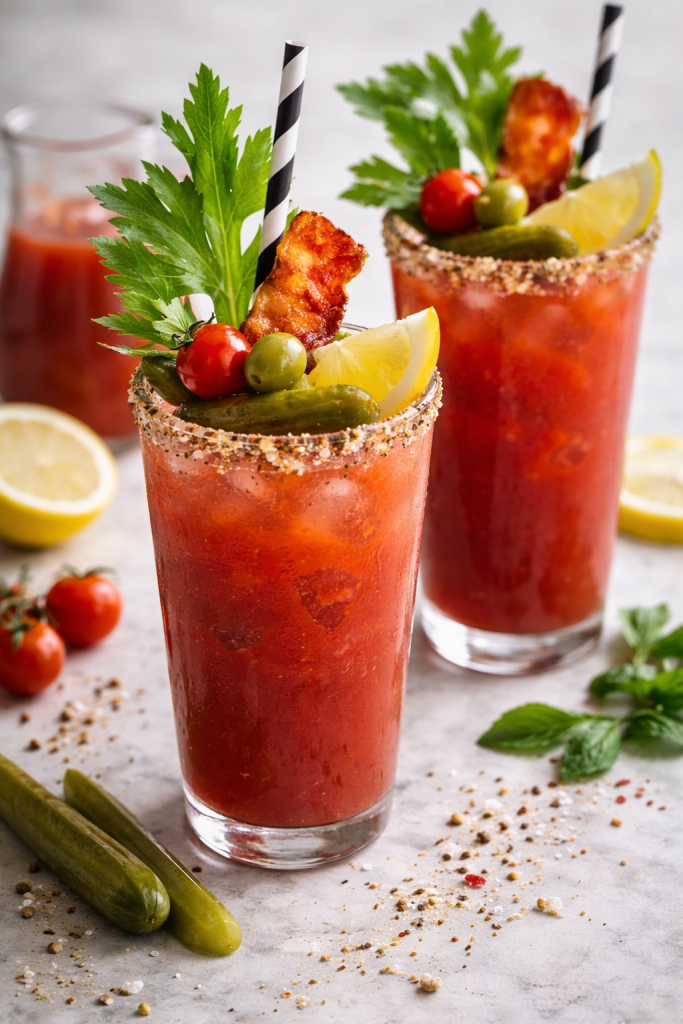
This iconic Bloody Mary recipe delivers that perfect balance of savory, spicy, tangy, and umami flavors that brunch lovers crave. Made with vodka, tomato juice, and a carefully curated blend of Worcestershire sauce, horseradish, Tabasco, and fresh lemon, it's a drink that wakes up your palate and soothes your soul in equal measure .
What makes this version special? I'm sharing the exact proportions that professional bartenders use, along with insider tips from flavor chemists who've analyzed what makes this cocktail tick. You'll learn why fresh ingredients matter, how to slow down the chemical reactions that degrade flavor, and why you can save your premium vodka for another day . Let's raise a glass to the queen of brunch cocktails.
The History: A Tale of Two Cities and a Queen
The Parisian Birth
The Bloody Mary's origin story begins in the legendary "Roaring Twenties" at Harry's New York Bar in Paris, a favorite haunt for American expatriates escaping Prohibition . Around 1921, a young French bartender named Ferdinand "Pete" Petiot faced an intriguing challenge: what to do with a newfangled Russian import called vodka, combined with an equally novel American product—canned tomato juice .
Petiot's initial creation, given the unappetizing name "Bucket of Blood," combined equal parts vodka and tomato juice with a few spices . It was simple but promising. The drink might have remained a Parisian curiosity if not for Petiot's eventual move across the Atlantic.
The New York Refinement
In 1933, Petiot relocated to New York City to work at the King Cole Bar in the St. Regis Hotel. There, he renamed his creation the "Red Snapper" and significantly refined the recipe, adding Worcestershire sauce, salt, pepper, and lemon juice to create the spicy, complex version we recognize today .
According to another theory, Broadway star George Jessel may have contributed an early version of the recipe around the same time. Regardless, by the late 1930s, the King Cole Bar was serving up to 150 of these cocktails daily to a clientele that included United States presidents and notorious figures like mobster Frank Costello .
The Name Game
The cocktail reached peak fame in 1939 thanks to a column in the New York Herald Tribune by Lucius Beebe. By this point, the name had evolved from Red Snapper to the more enduring—and macabre—Bloody Mary .
The name likely references Queen Mary I of England, the 16th-century Tudor monarch whose brutal persecution of Protestants earned her the posthumous nickname "Bloody Mary" . The deep red color of the tomato juice, reminiscent of blood, made the association both natural and memorable. Other theories connect the name to Hollywood star Mary Pickford or contemporary urban legends, but the connection to the "Bloody" Queen remains the most widely accepted .
During Prohibition, when vodka was scarce, bartenders temporarily substituted gin, proving even then that this cocktail's adaptability was one of its greatest strengths .
The Science: Why This Is the World's Most Complex Cocktail
A Symphony of Hundreds of Flavor Compounds
According to flavor chemist Neil C. Da Costa, who presented his research at the American Chemical Society's national meeting, the Bloody Mary deserves its title as the world's most complex cocktail . "It's a very complicated drink," Da Costa explains. "From the standpoint of flavor chemistry, you've got a blend of hundreds of flavor compounds that act on the taste senses. It covers almost the entire range of human taste sensations—sweet, salty, sour and umami or savory—but not bitter" .
Let's break down what each ingredient contributes chemically:
- Tomato juice provides the foundation with its natural glutamates, creating umami—that savory fifth taste. It's also rich in lycopene, an antioxidant with potential health benefits .
- Worcestershire sauce is a complex concoction in its own right, containing at least ten ingredients that add depth, umami, and tangy fermented notes .
- Tabasco sauce contributes capsaicin, the compound responsible for the "heat and burn sensations" that wake up your palate .
- Horseradish contains allyl isothiocyanate, which provides those distinctive sinus-clearing effects .
- Black pepper adds piperine, creating subtle "tingle effects" on the tongue .
- Fresh lemon juice delivers unstable fresh lemon citral (aroma compounds) and sour citric acid, brightening the entire mixture .
The Instability Factor
Here's the catch: all this complexity comes at a price. Chemically, the Bloody Mary is "highly unstable" . When you combine these ingredients, chemical reactions begin immediately, particularly involving the acids in tomato juice and other components. These reactions degrade the fresh, bright flavors, and the quality deteriorates quickly .
Waiting even half an hour before serving is too long . This is why the best Bloody Marys are made fresh, served immediately, and kept ice-cold—the low temperatures slow down those unwanted chemical reactions .
Economize on Vodka, Splurge on Juice
Because the Bloody Mary is so intensely flavored, the vodka's subtle character gets completely masked. "The intense, spicy flavor of a Bloody Mary masks the vodka, and using premium vodka makes little sense," Da Costa advises. "You're better off having a fair vodka with little taste—not a cheap one, though, because you'll get a headache from the poor quality of the spirit" .
Conversely, since tomato juice makes up most of the volume, investing in high-quality juice with deep, rich flavor pays dividends .
American Chemical Society - "Creating the perfect Bloody Mary: Good chemistry of fresh ingredients"
LCGC International - "Bloody good Mary"
Will Studd - "Bloody Mary & Cheddar Pairing"
Good Pairing Food and Drink
The Bloody Mary is practically a meal in a glass, which makes it incredibly food-friendly. Here are perfect companions.
- Appetizer: Oysters on the Half Shell with Mignonette. The briny, mineral quality of fresh oysters echoes the cocktail's savory complexity. A splash of the Bloody Mary itself works as an unconventional but brilliant oyster topping, while the vodka's heat cuts through the oyster's richness.
- Main Course: This is a cocktail, not a main course. For a complete brunch, serve after Classic Eggs Benedict or alongside a Stack of Savory Bacon Pancakes.
- Side Dish: Crispy Breakfast Potatoes with Smoked Paprika. The crunchy exterior and fluffy interior of roasted potatoes provide textural contrast. Smoked paprika echoes the cocktail's smoky notes, while the potatoes' neutrality balances the drink's intensity.
- Dessert: Lemon Ricotta Pancakes with Blueberry Compote. After the savory, spicy cocktail, a light, citrusy dessert cleanses the palate. The lemon echoes the fresh juice in the Bloody Mary, while the berries add bright, sweet-tart contrast.
- Cocktail: The Red Snapper (Gin Version). For a fascinating comparison, serve the gin-based original alongside your vodka Bloody Mary. The botanical notes of London dry gin create a completely different but equally delicious experience .
- Non-Alcoholic Drink: Virgin Mary (or Bloody Shame). Simply omit the vodka and increase the tomato juice slightly. Add an extra dash of Worcestershire and Tabasco to compensate. Garnish identically for a sophisticated alcohol-free option that everyone can enjoy.