
INTRO
Have you ever seen a dish on a menu with a name so intriguing you had to order it just to learn the story? That’s the magic of Crying Tiger, or Sua Rong Hai in Thai. This iconic Isaan beer snack has traveled from the rustic fields of northeastern Thailand to become a worldwide sensation, and for good reason. It’s a deceptively simple dish of boldly flavored, char-grilled beef served with the addictive, umami-packed dipping sauce known as Nam Jim Jaew.
But why does the tiger cry? The legends are as rich and complex as the dish itself. In this post, we’re not just sharing a recipe; we’re uncovering those stories and diving deep into what makes this dish so special. I’ll guide you through my preferred version—a balance of the traditional Isaan spirit with a few personal touches for guaranteed success—while honoring the techniques my own family used.
THE HISTORY
Crying Tiger, or Sua Rong Hai (เสือร้องไห้), hails from the Isaan region of northeastern Thailand. This area is known for its stark beauty, resourceful people, and a cuisine defined by bold, contrasting flavors: blazing heat from fresh and dried chilies, funk from fermented fish (pla ra), and the essential smokiness of grilled meats. Originally, this wasn’t a restaurant dish; it was a simple, rustic meal born from the need to utilize every part of the animal, often enjoyed as a snack with local rice whiskey or cold beer after a long day’s work.
The name itself is a subject of delicious debate, with a few colorful legends vying for the truth. One popular story suggests the dish was made from tougher, cheaper cuts of beef, like brisket. The meat was so chewy and difficult to eat that it would bring a tear to the eye of even a mighty tiger. Another, more playful theory tells of a tiger who gorges himself on the easier-to-reach parts of the cow, only to discover the most delicious morsel—the grilled beef itself—was left uneaten. Full and frustrated, he can only cry at his mistake. A third, more gruesome tale claims the meat comes from a specific, hard-to-reach spot near the cow’s chest, a cut so difficult to extract that the tiger weeps in despair.
As the dish’s fame spread from local villages to the streets of Bangkok and then to the world, it evolved. Chefs began using more tender cuts like sirloin or ribeye to cater to modern palates, and the dipping sauce, once fiercely spicy and sharp, was sometimes sweetened to suit international tastes. But at its heart, Crying Tiger remains a testament to Isaan’s culinary soul: transforming simple ingredients into something profoundly flavorful.
THE SCIENCE
A great Crying Tiger is a masterclass in texture and flavor layering, and the science behind each step is key to its success.
The Marinade’s Mission: While some traditional versions use only salt, a simple marinade of oyster sauce and seasoning sauce (like thin soy sauce) does more than just add flavor. Oyster sauce contains sugars and amino acids, which will later fuel the Maillard reaction on the hot grill, creating that deeply savory, charred crust. The salt in the seasoning sauce also helps the meat’s proteins retain moisture, ensuring a juicier result. Piercing the beef with a fork before marinating, as in this recipe, creates tiny channels for these seasonings to penetrate deeper, a quick and effective tenderizing trick.
The Maillard Reaction & The Perfect Sear: This is the most critical chemical process at play. When the beef’s surface hits the high, dry heat of a charcoal grill or cast-iron pan, the amino acids and reducing sugars from the meat and marinade begin to recombine. This creates hundreds of new flavor compounds and that irresistible brown, crispy crust. It’s not just about cooking the meat; it’s about building an entirely new layer of savory, toasty, and slightly bitter flavor that defines the dish. The smoky flavor from charcoal is an additional, irreplaceable layer that speaks directly to the dish’s rustic origins.
The Magic of Nam Jim Jaew: This dipping sauce is a symphony of chemical interactions. The acidity of the tamarind cuts through the rich fat of the grilled beef, cleansing the palate. The fish sauce provides a backbone of umami (from glutamates) and salinity. But the true genius is the khao khua (ground toasted rice). These toasted grains add a nutty, earthy flavor and a subtle, pleasant grittiness that clings to the meat. More importantly, the starches in the rice act as a thickener, helping the sauce cling to each slice of beef and carrying all those vibrant flavors directly to your taste buds.
https://www.mixology.eu/ein-maerchen-aus-dem-dschungel-der-crying-tiger-grilled-cocktail
http://www.foodcanon.com/2013/10/fried-minced-beef-with-basil.html
GOOD PAIRING FOOD AND DRINK
Crying Tiger is the ultimate centerpiece for a communal Thai-style meal. Its bold flavors demand equally compelling companions.
- One Appetizer: Som Tum (Green Papaya Salad) . The cool, crunchy, and explosively tangy and spicy salad is the perfect preface. Its sharp, lime-driven flavors wake up the palate and provide a refreshing contrast to the rich, smoky beef to come.
- One Main Course: While Crying Tiger is often the main event, for a larger feast, serve it alongside Gai Yang (Grilled Thai Chicken) . Marinated in coriander root, garlic, and pepper, another Isaan grilled specialty creates a fantastic surf-and-turf of the grill, offering different textures and marinade profiles.
- One Side Dish: Sticky Rice (Khao Niew) is non-negotiable. It’s the tool and the edible napkin, used to scoop up slices of beef and soak up every last drop of the Nam Jim Jaew. Its neutral, slightly sweet flavor is the perfect canvas.
- One Dessert: Mango Sticky Rice (Khao Niew Mamuang) . The sweet, creamy coconut milk and ripe mango provide a luscious, cooling finish that soothes any lingering heat from the meal, creating a perfect sweet-salty-spicy balance.
- One Cocktail and One Non-Alcoholic Drink:
- Cocktail: A Cold Thai Lager (like Singha or Chang). This is the classic pairing for a reason. The beer’s crisp, clean, and slightly sweet profile is a palate-cleansing foil to the rich, spicy, and smoky flavors of the beef and sauce.
- Non-Alcoholic: Thai Iced Tea (Cha Yen) . The creamy, sweet, and aromatic tea, with its notes of star anise and cinnamon, provides a cooling, indulgent counterpoint to the heat and char of the grilled beef.
Description
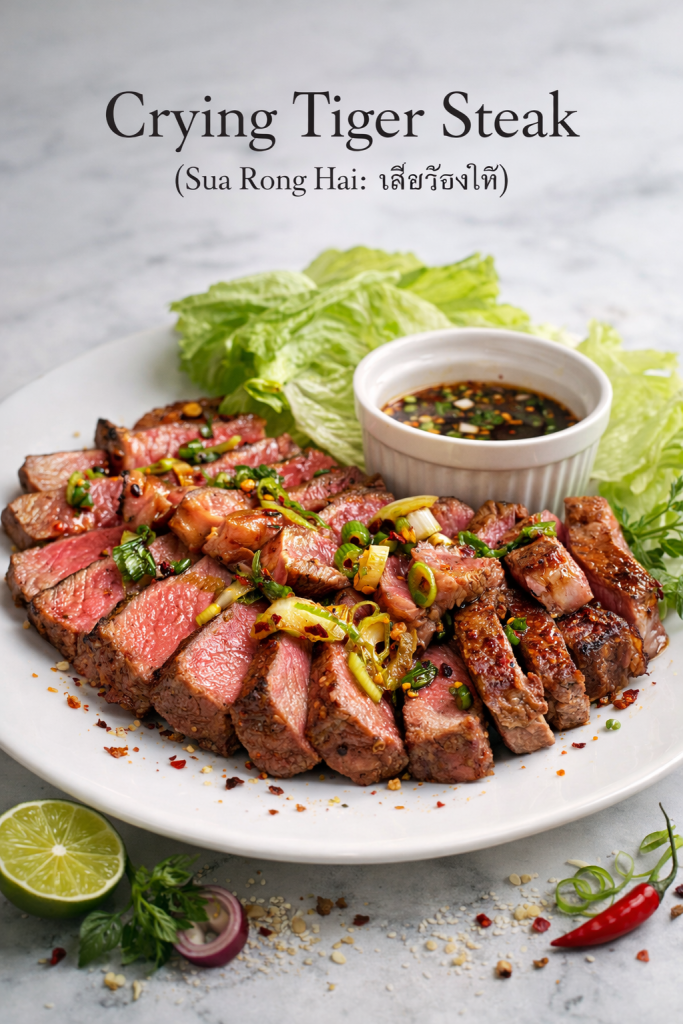
This authentic Crying Tiger recipe features succulent, marinated grilled beef served with the iconic Thai dipping sauce, Nam Jim Jaew. Bursting with smoky, savory, and spicy flavors, it's the perfect shareable dish for any occasion.
Ingredients
For the Beef:
For the Nam Jim Jaew (Dipping Sauce):
To Serve:
Instructions
Prepare the Beef:
-
-
Tenderize: Use a fork to pierce the beef steaks all over. This helps the marinade penetrate deeper.
-
First Marinade: In a bowl, combine the beef with the oyster sauce and seasoning sauce. Use your hands to rub the marinade into the meat vigorously for 5-10 minutes. This mechanical action, combined with the marinade, begins to break down the surface proteins.
-
Second Marinade: Add the cooking oil to the bowl and rub it into the beef again until well-coated. The oil will help conduct heat during cooking and promote even browning. Cover and let it marinate at room temperature for 15-20 minutes while you prepare the grill and sauce.
-
Make the Nam Jim Jaew:
-
-
Combine Base: In a small bowl, combine the tamarind paste, fish sauce, and chopped palm sugar. Stir vigorously until the palm sugar has completely dissolved. This is your flavor base.
-
Add Aromatics: Add the Thai chili flakes, ground toasted rice (khao khua), sliced shallots, spring onion, coriander, and sawtooth coriander (if using).
-
Taste and Adjust: Stir everything together. Taste the sauce—it should be a powerful balance of sour, salty, spicy, and a hint of sweetness. Adjust to your preference: add more chili for heat, more tamarind for sourness, or a tiny bit more sugar if it's too sharp.
-
Grill the Beef:
-
-
Preheat: Prepare your grill for high, direct heat (about 400-450°F / 200-230°C). If using a charcoal grill, wait until the coals are glowing and covered with white ash for the best smoky flavor. A cast-iron grill pan on high heat works well indoors.
-
Sear: Place the marinated beef on the hottest part of the grill. Resist the urge to move it. Sear for 3-5 minutes per side (depending on thickness), until you have a deep, dark brown, slightly charred crust. You are looking for a medium-rare to medium doneness for the most tender result.
-
Rest (Crucial!): Transfer the grilled beef to a cutting board and let it rest for at least 10 minutes. This allows the muscle fibers to relax and reabsorb the juices, ensuring every slice is moist and tender.
-
Serve:
-
-
Slice: Using a sharp knife, slice the rested beef thinly against the grain. This shortens the muscle fibers and makes even a tougher cut like brisket more tender to chew.
-
Arrange: Fan the sliced beef on a serving platter. Serve immediately with the bowl of Nam Jim Jaew on the side and plenty of sticky rice.
-
Nutrition Facts
Servings 2
- Amount Per Serving
- Calories 385kcal
- % Daily Value *
- Total Fat 22g34%
- Sodium 1420mg60%
- Total Carbohydrate 8g3%
- Dietary Fiber 1g4%
- Sugars 5g
- Protein 38g76%
* Percent Daily Values are based on a 2,000 calorie diet. Your daily value may be higher or lower depending on your calorie needs.
Note
- Choosing Your Beef: The "best" cut is what you enjoy. For a traditional, chewier texture that honors the name's origins, use beef brisket. Slice it very thinly against the grain. For a guaranteed tender, melt-in-your-mouth experience, choose sirloin, New York strip, or ribeye.
- Khao Khua (Ground Toasted Rice): This is the secret ingredient in Nam Jim Jaew. To make it, add 2 tablespoons of uncooked sticky rice (or jasmine rice) to a dry skillet over medium heat. Toast, shaking the pan constantly, until the rice turns a deep golden brown and smells wonderfully nutty. Let it cool completely, then grind to a coarse powder in a mortar and pestle or a clean spice grinder/coffee grinder.
- Make-Ahead: You can prepare the Nam Jim Jaew up to a day in advance and store it in the refrigerator. The flavors will meld beautifully. The ground toasted rice (khao khua) can be made weeks ahead and stored in an airtight jar. Marinate the beef just before grilling for the best texture.
- Substitutions:
- Protein: This recipe works beautifully with grilled chicken, pork, or even thick-cut portobello mushrooms for a vegetarian version. Adjust grilling times accordingly.
- Tamarind: If you can't find tamarind paste, you can substitute with 1 ½ tablespoons of lime juice mixed with ½ tablespoon of brown sugar. The flavor won't be as complex, but it will work in a pinch.
- Storage: Leftover grilled beef is best enjoyed within 2 days. Store it separately from the sauce and reheat gently. The sauce will keep in the fridge for up to a week.