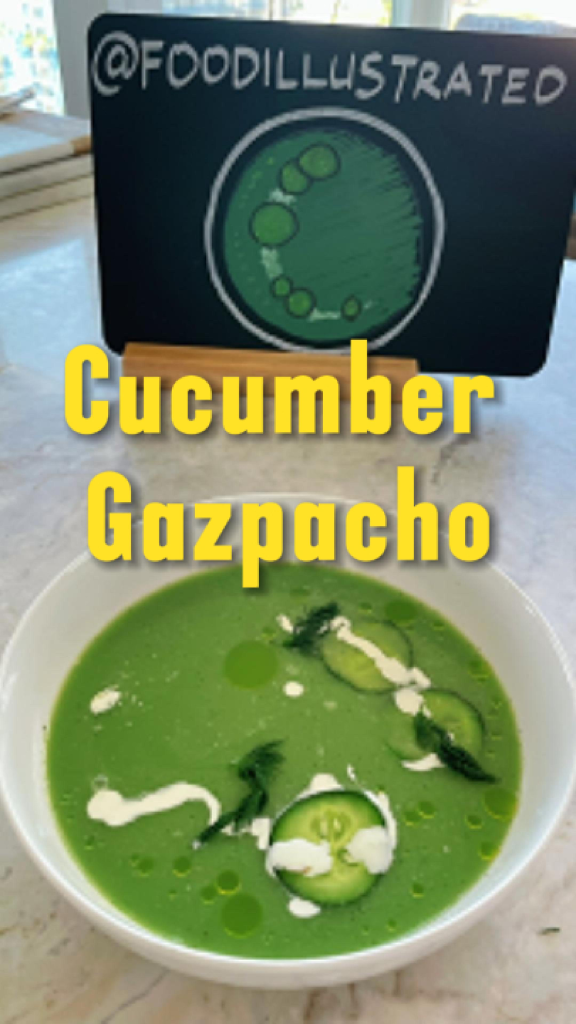
Intro When the temperature soars and the thought of turning on the stove feels unbearable, this Cucumber Gazpacho comes to the rescue. It's the most refreshing, creamy, and herbaceous cold soup you'll ever make—and it comes together in just 10 minutes with nothing more than a blender. This isn't just a soup; it's pure, hydrating summer in a bowl. Dairy-free, vegan, and bursting with bright flavors from fresh dill, green grapes, and a hint of serrano pepper, this recipe transforms simple produce into something truly luxurious. All you need is the best fruits and vegetables you can find and a willingness to taste as you go.
The History Gazpacho has ancient roots that stretch back to the Romans, who made a simple bread mush with olive oil, water, vinegar, and garlic . This humble mixture arrived in Spain with the Romans and became deeply embedded in the cuisine of Andalusia, particularly in Córdoba, Seville, and Granada . For centuries, gazpacho was the food of peasants and shepherds—a refreshing, portable meal that used stale bread to stretch simple ingredients.
The word itself may come from the Mozarabic "caspa," meaning residue or fragments, a reference to the bread and olive oil remnants that formed the soup's base . During the 19th century, a transformation occurred: tomatoes from the New World were added to the mix, creating the familiar red gazpacho that spread internationally . But the original white gazpacho (ajoblanco) and green variations have always existed alongside their more famous red cousin. Our cucumber version honors these traditions while embracing modern tastes—proof that this ancient soup continues to evolve while remaining the perfect antidote to hot summer days.
The Science What makes this no-cook soup taste so luxuriously creamy without a drop of dairy? The answer lies in emulsification and the natural properties of the ingredients themselves. When you blend cucumbers, which are 96% water, with olive oil, you're creating a temporary emulsion . The olive oil breaks into tiny droplets that suspend throughout the watery base, but without an emulsifier, these droplets would eventually separate and rise to the surface.
This is where the green grapes work their magic. Grapes contain natural pectin and sugars that help stabilize the emulsion, giving the soup that silky, luxurious mouthfeel . The blending process itself is critical—starting on low and gradually increasing to high speed shears the oil into microscopic particles that stay suspended longer. The result is a soup that tastes creamy without a drop of cream. The brief chilling time isn't just for temperature; it allows the flavors to marry and the emulsion to fully stabilize, ensuring every spoonful is perfectly balanced .
Why: The crispy, golden potatoes with spicy tomato sauce and garlicky aioli provide a warm, hearty contrast to the cool, refreshing soup. The bold Spanish flavors echo gazpacho's Andalusian roots while adding satisfying texture.
Main Course:Note: This soup can be a light main. For a heartier meal, serve before: Grilled Shrimp Skewers with Lemon and Garlic
Why: The sweet, charred shrimp complement the soup's herbaceous notes, while the lemon brightens both dishes. Grilling adds a smoky depth that contrasts beautifully with the soup's cool freshness.
Side Dish:Manchego Cheese and Quince Paste on Toasted Baguette
Why: The nutty, salty Manchego paired with sweet membrillo (quince paste) on crusty bread offers the perfect accompaniment. It adds richness and texture while the quince's sweetness mirrors the grapes in the soup.
Dessert:Honeydew and Mint Granita
Why: A frozen, icy dessert that continues the theme of refreshing, hydrating fruits. The honeydew echoes the cucumber's gentle sweetness, while mint ties back to the soup's herbaceous notes. It's light, bright, and the perfect ending.
Why: The botanical notes of gin complement the dill and cucumber, while lime brightens both the cocktail and the soup. It's like the soup in a glass—refreshing, herbaceous, and perfectly balanced.
Non-Alcoholic Drink:Sparkling Mint Limeade
Why: Fresh mint ties directly to the soup's herbaceous profile, while lime's acidity cleanses the palate. The effervescence provides a refreshing counterpoint to the soup's silky texture.
When it's too hot to cook, make this instead. My 10-Minute Cucumber Gazpacho is the most refreshing, creamy, and herbaceous cold soup you'll ever make. It's dairy-free, vegan, and tastes like pure summer in a bowl.
Ingredients
For the Soup:
2large English cucumbers, roughly chopped (about 900g / 2 lbs)
2large garlic cloves
1cup green grapes (150g)
½ serrano pepper (seeds removed adjust to taste)
⅓cup fresh dill (15g , plus more for garnish)
¼cup extra virgin olive oil (60ml plus more for drizzling)
3tbsp fresh lemon juice (about 1 large lemon)
sea salt
freshly ground black pepper
For the Garnish (Choose Your Favorites):
cucumber (Finely diced)
Fresh dill (or mint leaves)
extra virgin olive oil (or A drizzle of chili oil)
Toasted pumpkin seeds (or slivered almonds)
Edible flowers (optional, for elegance)
Instructions
1
Prep the Ingredients: Roughly chop the cucumbers (no need to peel English cucumbers). Peel the garlic cloves. Wash the grapes and pick the dill leaves from their stems. Remove the seeds from the serrano pepper if you prefer less heat.
2
Blend: In a high-speed blender, combine the chopped cucumbers, garlic, green grapes, serrano pepper, fresh dill, olive oil, and lemon juice. Season generously with a big pinch of sea salt and black pepper.
3
Emulsify: Start blending on low, then gradually increase to high speed. Blend until the mixture is completely smooth, silky, and pale green. This may take 1-2 minutes. If the soup is too thick for your liking, add cold water or a few ice cubes, one tablespoon at a time, until you reach your desired consistency—it should be creamy but still luxurious.
4
Taste & Adjust: Taste the gazpacho. This is the most important step. Adjust with more salt, pepper, or lemon juice as needed. The flavors should be bright, creamy, and perfectly balanced.
5
Chill: Transfer the soup to a sealed container and refrigerate for at least 1 hour to allow the flavors to marry and the soup to become thoroughly chilled. Gazpacho tastes best when very cold.
6
Serve: Pour the chilled gazpacho into bowls or glasses. Garnish generously with your chosen toppings—a little diced cucumber, fresh herbs, a sprinkle of seeds for crunch, and a final drizzle of your best olive oil or a drop of chili oil for a kick.
7
Enjoy Immediately: This soup is best enjoyed the day it's made, when the flavors are at their brightest.
Nutrition Facts
Servings 4
Amount Per Serving
Calories180kcal
% Daily Value *
Total Fat14g22%
Total Carbohydrate12g4%
Dietary Fiber2g8%
Sugars8g
Protein2g4%
* Percent Daily Values are based on a 2,000 calorie diet. Your daily value may be higher or lower depending on your calorie needs.
Note
Secret Ingredient: The green grapes aren't just for sweetness—they add natural body and help create that silky, creamy texture without any dairy . Don't skip them!
Spice Control: Serrano peppers vary in heat. Start with half the pepper (with seeds removed) and taste before adding more. You can always blend in more heat, but you can't take it out.
Make It Ahead: Gazpacho actually improves with a few hours of chilling as the flavors meld . It will keep in the refrigerator for up to 3 days in an airtight container. Stir well before serving as separation may occur naturally.
Freezing: While you can freeze gazpacho, the texture may change upon thawing due to the high water content of cucumbers . If you do freeze, use it within 1 month and re-blend after thawing to restore some smoothness.
Serving Suggestion: For an elegant presentation, serve in chilled glasses as a starter for summer dinner parties. The vibrant green color is stunning against white porcelain or clear glass.
While the tomato-based red gazpacho is most famous internationally, Spain boasts an incredible diversity of gazpacho styles . In Málaga, you'll find ajoblanco—a white gazpacho made with almonds, garlic, bread, and grapes, often served with melon or grapes floating on top. Córdoba is famous for salmorejo, a thicker, creamier version emulsified with bread and olive oil, traditionally garnished with hard-boiled eggs and jamón. In Extremadura, cojondongo is a thick purée of breadcrumbs, garlic, oil, and vinegar topped with chopped vegetables . And in La Mancha, despite the name, gazpacho manchego is actually a hearty hot meat stew—proof that gazpacho defies simple categorization.
The Blender Revolution
Before the 1920s, making gazpacho was a laborious process. Cooks would pound garlic in a mortar, gradually adding soaked bread, olive oil, and salt to create a paste, then slowly incorporate vegetables . This traditional method kept the soup cool through evaporation in unglazed earthenware pots. The invention of the blender transformed gazpacho from a peasant's labor-intensive meal into an accessible modern classic . While purists might argue that blenders create too smooth a texture, most of us will happily trade elbow grease for the push of a button—especially on a sweltering summer day when the last thing we want is more heat in the kitchen.