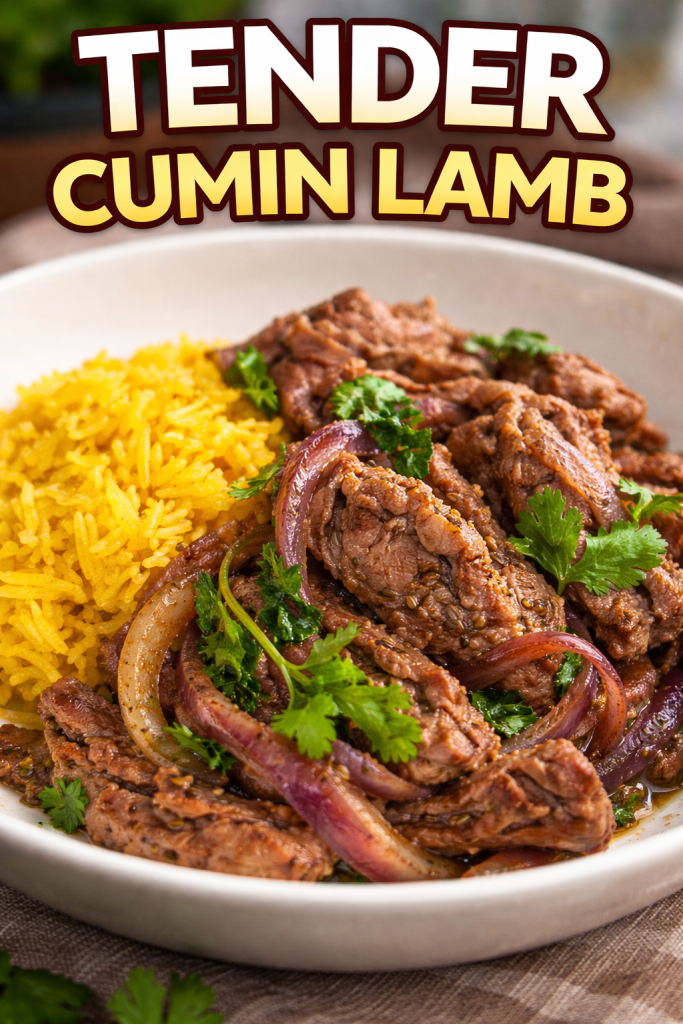
Intro Have you ever taken a bite of something so aromatic, so deeply savory and warm, that it immediately transported you to a bustling night market halfway around the world? That's the magic of this Cumin Lamb Stir Fry. In under 15 minutes of active cooking, you can create a dish that delivers the intense, smoky, and slightly spicy flavors of the Xinjiang region of China right in your own kitchen. This recipe uses a double-toasting method for the spices and the Chinese technique of "velveting" to ensure the lamb is explosively flavorful and impossibly tender. It's quick enough for a weeknight, yet impressive enough to be the star of a dinner party.
The History This dish, known in Chinese as zī rán yáng ròu (孜然羊肉), has its roots in the far northwestern Xinjiang Uyghur Autonomous Region, a vast and culturally distinct area that has long served as a crossroads of the Silk Road . The cuisine of Xinjiang is a unique fusion, reflecting the Central Asian and Middle Eastern influences that traveled along these ancient trade routes. Lamb and mutton have always been staple proteins here, a direct result of the region's pastoral lifestyle where herding sheep and goats is central to the culture . The Uyghur people, who are predominantly Muslim, developed a cuisine rich in grilled meats and hearty breads .
When spices like cumin made their way into China via the Silk Road, they found a natural home in Xinjiang. The warm, earthy, and slightly smoky flavor of cumin proved to be the perfect complement to the rich, sometimes gamey taste of lamb . This combination quickly became emblematic of the region's cooking, found everywhere from street-side barbecue stalls to home kitchens . As China's cities grew more cosmopolitan and regional cuisines began to spread, this boldly flavored dish gained immense popularity across the entire country and beyond . Today, it stands as a delicious testament to the power of cultural exchange, representing both the unique identity of the northwest and the beautiful diversity of Chinese gastronomy .
The Science What elevates a simple stir-fry into a transcendent experience? It's all about understanding and leveraging two key scientific principles: protein transformation and volatile aroma management.
1. The Velveting Trick (Protein Chemistry): The "velveting" technique is the Chinese restaurant secret to incredibly tender meat . We use a quick marinade of cornstarch, soy sauce, and a small amount of baking soda. Baking soda is alkaline, and when it comes into contact with the lamb, it raises the pH on the surface of the meat . This change in pH causes the protein molecules on the exterior to loosen and unravel slightly, preventing them from tightening up too much and squeezing out moisture during the high-heat cooking . The cornstarch then forms a thin, protective barrier that locks in those precious juices and gives the lamb its signature silky, "velvety" mouthfeel .
2. Double-Cooking the Spices (Volatile Oil Activation): Cumin's irresistible aroma comes from volatile oils that are incredibly sensitive to heat. By toasting the whole cumin seeds and Sichuan peppercorns in a dry pan before grinding them, we initiate a process called the Maillard reaction on the seeds themselves. This unlocks a deeper, more complex fragrance than pre-ground spices can ever offer. Then, by adding the freshly ground spice mix towards the very end of the stir-fry, we ensure those precious volatile compounds don't burn off or become bitter. They bloom in the residual heat, coating the lamb and infusing the entire dish with an intensely fragrant, smoky, and warm aroma that hits your nose the moment the plate hits the table.
Why: The cool, crisp, and refreshing cucumbers with a garlicky, vinegary dressing provide a bright, acidic contrast to the rich, spicy lamb. It cleanses the palate and wakes up the taste buds for the bold flavors to come.
Main Course:Note: This dish is already a satisfying main. For a multi-course feast, serve it before: Steamed Whole Fish with Ginger and Scallions
Why: The delicate, clean flavors of a simple steamed fish provide a light, elegant contrast after the intense, smoky lamb, creating a well-balanced meal.
Side Dish:Garky Green Beans (Sichuan-Style)
Why: The crisp-tender texture and savory, slightly spicy flavor of stir-fried green beans echo the cooking method and flavor profile of the lamb, creating a cohesive and satisfying plate.
Dessert:Mango Sticky Rice
Why: The sweet, creamy, and coconutty dessert provides a cooling, soothing finish. The tropical fruitiness of the mango is a refreshing counterpoint to the warm, savory spices.
Why: The spicy ginger in the cocktail complements the cumin and chili in the lamb, while the bright lime and effervescence cut through the richness and cleanse the palate .
Non-Alcoholic Drink:Iced Lemongrass & Mint Tea
Why: The cooling mint and citrusy lemongrass provide a refreshing, palate-cleansing contrast to the dish's warmth and spice, preparing you for each flavorful bite.
Dietary:
High Protein, Iron-Rich, Low-Carb / Keto (with Modification)
Description
Craving that incredibly savory, aromatic lamb dish from your favorite Chinese restaurant? This Cumin Lamb Stir Fry delivers maximum flavor in under 15 minutes of cooking. Tender slices of lamb are wok-tossed with a bold dry rub of toasted cumin, chili, and peppercorns for an unforgettable, addictive meal.
Ingredients
For the Lamb & Marinade:
1lb Sliced Lamb (450g boneless lamb leg or shoulder, thinly sliced against the grain)
1tbsp soy sauce (light or all-purpose)
1tsp cornstarch
½tsp baking soda
1tsp vegetable oil (or canola)
For the Spice Mix:
2tbsp whole cumin seeds
1tsp dried chili flakes (to taste)
1tsp whole Sichuan peppercorns (or black peppercorns)
½tsp sea salt
½tsp granulated sugar
For the Stir Fry:
3tbsp vegetable oil (divided)
1large onion (sliced)
4cloves garlic (minced)
1thumb-sized fresh ginger (minced)
1tbsp Shaoxing wine (or dry sherry)
1tbsp soy sauce
2long green onions (cut into 2-inch segments)
fresh cilantros (for garnish)
Toasted sesame seeds (for garnish)
Instructions
1
Marinate the Lamb: In a bowl, combine the lamb slices with soy sauce, cornstarch, and baking soda. Mix vigorously until the liquid is absorbed and the lamb feels sticky . Stir in 1 tsp of oil. This "velveting" process will ensure the lamb is incredibly tender. Set aside to marinate for 15-20 minutes.
2
Make the Spice Mix: Place a small dry skillet or pan over medium heat. Add the whole cumin seeds and Sichuan peppercorns. Toast for 1-2 minutes, shaking the pan frequently, until they become fragrant and the cumin darkens slightly. Be careful not to burn them. Remove from heat, let cool slightly, then transfer to a mortar and pestle or a spice grinder. Grind coarsely with the chili flakes, salt, and sugar. Set aside .
3
First Cook the Lamb: Heat 2 tablespoons of oil in a wok or large skillet over high heat until it's just starting to smoke. Add the lamb in a single layer and let it sear undisturbed for 60-90 seconds. Then, stir-fry quickly until the lamb is just browned but still tender . Remove the lamb from the wok and set aside.
4
Stir Fry the Aromatics: Add the remaining 1-2 tablespoons of oil to the wok. Add the sliced onion and stir-fry for 2-3 minutes until it begins to char at the edges. Add the minced garlic, ginger, and green onions, and stir-fry for another 30 seconds until fragrant.
5
Combine and Finish: Return the cooked lamb to the wok. Sprinkle the entire prepared spice mix over the lamb and vegetables. Drizzle in the Shaoxing wine and an additional tablespoon of soy sauce. Toss everything together vigorously over high heat for 1-2 minutes until the lamb is evenly coated and the dish is intensely aromatic.
6
Garnish and Serve: Transfer immediately to a serving plate. Garnish generously with fresh cilantro and toasted sesame seeds. Serve hot with steamed rice or hand-pulled noodles.
Nutrition Facts
Servings 4
Amount Per Serving
Calories358kcal
% Daily Value *
Total Fat20g31%
Sodium1003mg42%
Total Carbohydrate25g9%
Protein24g48%
Iron 7 mg
* Percent Daily Values are based on a 2,000 calorie diet. Your daily value may be higher or lower depending on your calorie needs.
Note
Slice Against the Grain: This is the #1 secret for tender lamb. Look for the lines of muscle fibers and cut perpendicular to them. This shortens the fibers, making each bite easier to chew.
High Heat is Non-Negotiable: Your wok or skillet must be smoking hot before adding the lamb. If the pan isn't hot enough, the lamb will release its juices and stew instead of searing .
Work in Batches: If your wok isn't huge, cook the lamb in two batches. Overcrowding the pan will lower the temperature and cause steaming, not searing .
Customize the Heat: Control the spice level by adjusting the amount of chili flakes. For a milder dish, use 1 teaspoon or remove the seeds from dried chilies.
Don't Burn the Spices: Add the spice mix at the end of cooking. Toasting it for too long in the hot pan can make it bitter
Keywords:
cumin lamb, cumin lamb stir fry, Xinjiang lamb recipe, Chinese lamb stir fry, ziran yangrou, how to make cumin lamb, lamb stir fry recipe, Chinese cumin lamb, Xinjiang cuisine, easy lamb recipe, restaurant style lamb, lamb with cumin, spicy lamb stir fry, velveting lamb, lamb dinner ideas,
The Silk Road on a Plate
The beauty of Xinjiang cuisine lies in its position as a cultural and culinary crossroads. The Uyghur people, the region's largest ethnic group, are Turkic-speaking and Muslim, and their food reflects a blend of Central Asian, Middle Eastern, and Chinese influences . This dish is a perfect example: the lamb is a nod to the pastoral, nomadic traditions of the steppe; the generous use of cumin points directly to Persia and points west via the ancient trade routes; and the lightning-fast stir-fry technique is pure Chinese . It's a dish that tells a story of migration, trade, and the beautiful ways cultures meld over a shared love of good food.
Regional Lamb Variations Across China
While the cumin-heavy style of Xinjiang is perhaps the most famous, lamb is enjoyed in many other parts of China. In the north, especially around Beijing and Inner Mongolia, lamb is a star ingredient in the famously communal Hot Pot, where paper-thin slices are swished in a simmering broth and dipped in a rich sesame sauce. In the Muslim quarters of Xi'an, you'll find yangrou paomo, a hearty lamb soup into which diners crumble pieces of unleavened bread. These variations showcase the versatility of lamb, from the boldly spiced to the simply prepared, all united by a deep appreciation for the meat's unique flavor.