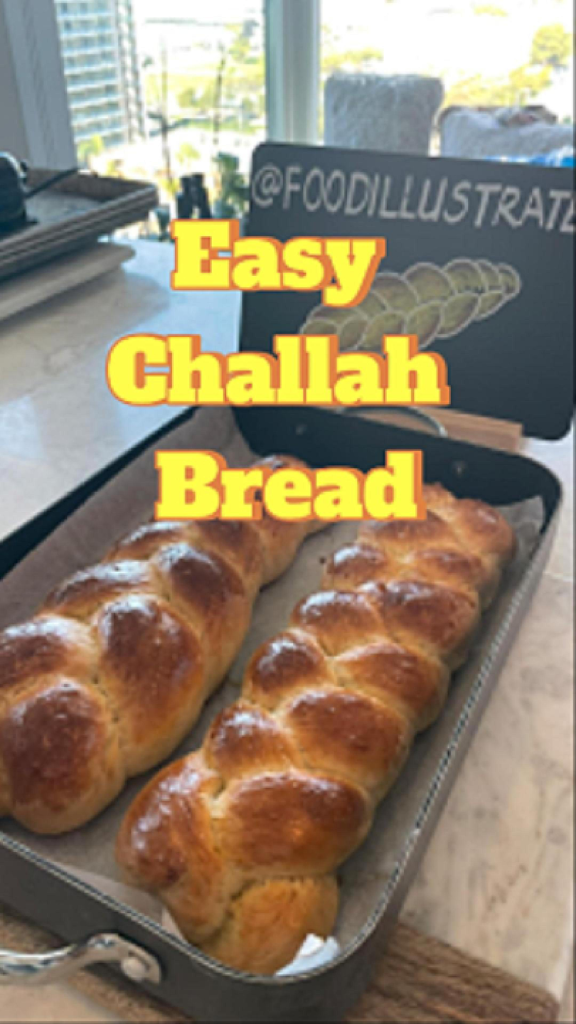
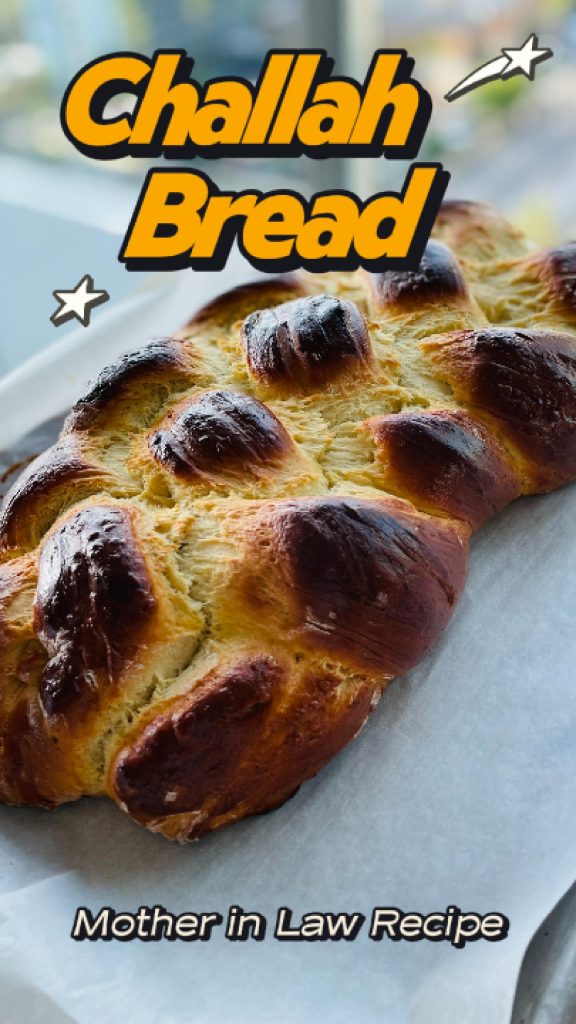
Master this easy challah bread recipe with a simple 3-strand braid. Perfect for beginners—soft, golden, slightly sweet, and foolproof instructions for Shabbat and holidays.
Is a six-strand braid intimidating you? What if I told you that you could make gorgeous, soft challah starting with a simple three-strand braid? This easy challah bread recipe is your gateway to homemade Jewish baking, and I promise you can do this.
Today, I'm giving you a foolproof method for creating the perfect golden loaf. Whether you're a first-time baker or someone who's been intimidated by braiding, this recipe will build your confidence. The result is a beautifully golden, soft, and slightly sweet traditional egg bread that tastes like it came from a professional bakery.
I'll show you exactly how to create a simple 3-strand braid that looks impressive but requires minimal skill. The dough comes together easily, rises reliably, and bakes into something truly special. Perfect for Shabbat, holidays, French toast, or any day that calls for exceptional homemade bread.
THE HISTORY: A Loaf Woven Through Time
From Ancient Offering to Shabbat Centerpiece
Challah, the ubiquitous Jewish Sabbath and holiday bread enriched with eggs, oil, and sugar, has a history as rich as its flavor. The word "challah" itself is ancient. In the Hebrew Bible (Numbers 15:17–21), it refers to a commandment to set aside a portion of dough—the "chalah"—as an offering to the priests. According to My Jewish Learning, for most of Jewish history, this was the primary meaning of the word. It wasn't until the 15th century that "challah" began to refer to the specific braided loaf we know today.
The iconic braided form evolved from German and Austrian Sunday breads. Ashkenazi Jews adapted these local traditions for their Friday night Sabbath meals. The braid itself carries deep symbolism. The strands are thought to intertwine values like love, peace, and justice—each one essential, together creating something stronger.
The Meaning Behind the Loaves
The two loaves served on Shabbat commemorate the double portion of manna that fell from heaven before the day of rest. As Chabad.org explains, this ensured the Israelites wouldn't have to gather food on the Sabbath. Traditionally, the 12 "bumps" of a braided loaf represent the 12 loaves of the showbread offering in the ancient Temple of Jerusalem.
Every time you braid challah, you're connecting to centuries of tradition. You're participating in a ritual that has brought families together for generations. And with this easy challah bread recipe, you're making that tradition accessible.
THE SCIENCE: Understanding Your Dough
Gluten Development: The Structure Builder
Creating that perfect pillowy soft and chewy challah is a beautiful lesson in gluten science. The key to challah's characteristic texture is the development of a strong gluten network. Gluten forms when water hydrates the proteins in flour. This elastic structure traps the gases produced by yeast, allowing the bread to rise and giving it its satisfying chew.
Using high-protein bread flour, as recommended in this recipe, is essential. It provides more of the building blocks for this gluten network. King Arthur Baking explains that higher protein content directly translates to better structure and chew.
The Autolyse Technique: A Head Start
The autolyse technique—letting the flour and water rest briefly after initial mixing—gives the flour time to fully hydrate. Enzymes get a head start on breaking down starches. This jumpstarts gluten development, leading to dough that's easier to work with. Your final loaf will have a better-defined braid and lighter crumb.
Eggs and Oil: Tenderizers and Enrichers
The eggs and oil in challah do more than just add flavor. The fats from the egg yolks and oil tenderize the dough by coating some of the gluten strands. This prevents them from becoming too tough. As Harold McGee explains in On Food and Cooking, eggs "supplement the gluten structure with tender protein coagulum" and help "slow staling," keeping your challah fresher for longer.
The Maillard Reaction: Golden Crust Magic
That beautiful golden-brown crust doesn't happen by accident. The egg wash you apply before baking contains proteins and sugars. Under high heat, they undergo the Maillard reaction—a complex chemical process that creates hundreds of new flavor compounds and that irresistible deep color. It's the final touch that transforms good bread into great bread.
GOOD PAIRING FOOD AND DRINK
Appetizer: Classic Hummus and Baba Ganoush Platter
Serve warm challah slices with creamy hummus and smoky baba ganoush. The soft, slightly sweet bread is the perfect vehicle for these savory, earthy dips. Its tender texture soaks up the bold flavors without falling apart, creating a wonderful contrast.
Main Course: Hearty Chicken Soup or Beef Stew
Challah's fluffy texture makes it the ideal companion for sopping up rich, flavorful broth. The subtle sweetness of the bread provides a comforting balance to the savory depth of the soup or stew. It's a match made in comfort food heaven.
Side Dish: Roasted Vegetable Medley
Pair thick slices of challah with a vibrant mix of roasted Brussels sprouts, carrots, and sweet potatoes. The bread's softness beautifully contrasts the caramelized, crispy edges of the vegetables. A drizzle of good olive oil completes the meal.
Dessert: Challah Bread Pudding with Vanilla Sauce
This is the ultimate way to transform leftover challah. Its rich, eggy dough is naturally suited to soaking up a creamy custard. The result is a decadent, comforting dessert that's far greater than the sum of its parts. Add raisins or chocolate chips for extra indulgence.
Cocktail: Aperol Spritz
The bright, bitter orange notes and effervescent bubbles of an Aperol Spritz cut through the richness of the challah. It acts as a perfect palate cleanser between bites, especially if you're serving the bread with a savory meal.
Non-Alcoholic Drink: Sparkling Honey Lemonade
Honey is a traditional sweetener for challah, especially during Rosh Hashanah. A sparkling lemonade sweetened with honey echoes this flavor beautifully. The bubbles and citrus provide a refreshing counterpoint to the bread's richness.
Master the art of homemade challah with this complete, foolproof guide. Learn two braiding methods—a simple 3-strand braid for beginners and a classic 6-strand for a stunning bakery-style look—to create a soft, golden, and slightly sweet loaf every time.
Ingredients
4cups bread flour (500g (highly recommended for structure))
1/4cup granulated sugar (50g (or 1/4 cup/85g honey for a different flavor))
2tsp instant yeast (7g)
1 1/4tsp salt
2large eggs (room temperature)
1/4cup neutral oil (60ml (avocado, vegetable, or light olive oil))
3/4cup warm water (180ml (about 110°F/43°C))
For Egg Wash & Topping:
1large egg yolk (+ 1 tbsp water or milk)
Sesame seeds, poppy seeds, or everything bagel seasoning (optional)
Instructions
1
Make the Dough: In a large bowl, whisk together the flour, sugar, yeast, and salt. In a separate bowl or measuring cup, whisk together the eggs, oil, and warm water. Pour the wet ingredients into the dry and mix with a sturdy spoon or your hands until a shaggy dough forms.
2
Autolyse (Rest): Cover the bowl and let the dough rest for 15 minutes. This autolyse period allows the flour to hydrate, making the dough easier to knead .
3
Knead: Turn the dough out onto a lightly floured surface. Knead for 8-10 minutes until the dough is smooth, elastic, and no longer sticky. The dough should pass the "windowpane test" (a small piece can be stretched thin enough to see light through without tearing).
4
First Rise: Place the dough in a lightly greased bowl, turning to coat. Cover with plastic wrap or a clean kitchen towel and let it rise in a warm, draft-free spot for 1.5 to 2 hours, or until doubled in size.
5
Shape & Braid: Punch the dough down to release the air. Turn it out onto a work surface and divide it into two equal pieces for two medium loaves, or keep it as one for a single large loaf.
6
For a 3-Strand Braid: Divide one piece of dough into 3 equal parts. Roll each part into a rope about 14-16 inches long. Pinch the three ropes together at the top. Braid them: bring the right strand over the middle, then the left strand over the new middle. Repeat until you reach the end. Pinch the ends together and tuck them under the loaf.
7
For a 6-Strand Braid: Divide the dough into 6 equal parts and roll them into 16-inch ropes. Pinch the tops of all six strands together. Spread them out slightly. To braid: take the outermost strand on the right and weave it over two, under one, and over two. Then, take the outermost strand on the left and weave it over two, under one, and over two. Repeat until the loaf is braided, then pinch and tuck the ends .
8
Second Rise: Place the braided loaves on a parchment-lined baking sheet. Cover loosely with oiled plastic wrap or a clean kitchen towel. Let them rise for 45-60 minutes, until puffy (but not quite doubled).
9
Preheat and Egg Wash: Preheat your oven to 375°F (190°C). In a small bowl, whisk together the egg yolk and water. Gently brush the egg wash over the risen loaves. Sprinkle with your desired seeds.
10
Bake: Bake for 25-30 minutes, rotating the pan halfway through, until the challah is deep golden brown and sounds hollow when tapped on the bottom. For perfect doneness, the internal temperature should reach 190°F (88°C).
11
Cool: Transfer the loaves to a wire rack and let them cool completely for at least 1 hour before slicing. This is crucial for achieving the best texture.
Nutrition Facts
Servings 24
Amount Per Serving
Calories180kcal
% Daily Value *
Total Fat5g8%
Total Carbohydrate28g10%
Dietary Fiber1g4%
Sugars4g
Protein5g10%
* Percent Daily Values are based on a 2,000 calorie diet. Your daily value may be higher or lower depending on your calorie needs.
Note
Flour Power: Using bread flour is highly recommended for the best structure and chew. All-purpose flour can be used, but the texture will be slightly less chewy.
Room Temperature Ingredients: Using room-temperature eggs helps them incorporate into the dough more smoothly, creating a better emulsion.
Don't Rush the Rise: The time for the dough to rise can vary based on the temperature of your kitchen. Look for the visual cues (doubled in size, puffy) rather than strictly watching the clock.
Freezing: Challah freezes beautifully. Wrap the completely cooled loaf tightly in plastic wrap and then foil. Freeze for up to 3 months. Thaw at room temperature.
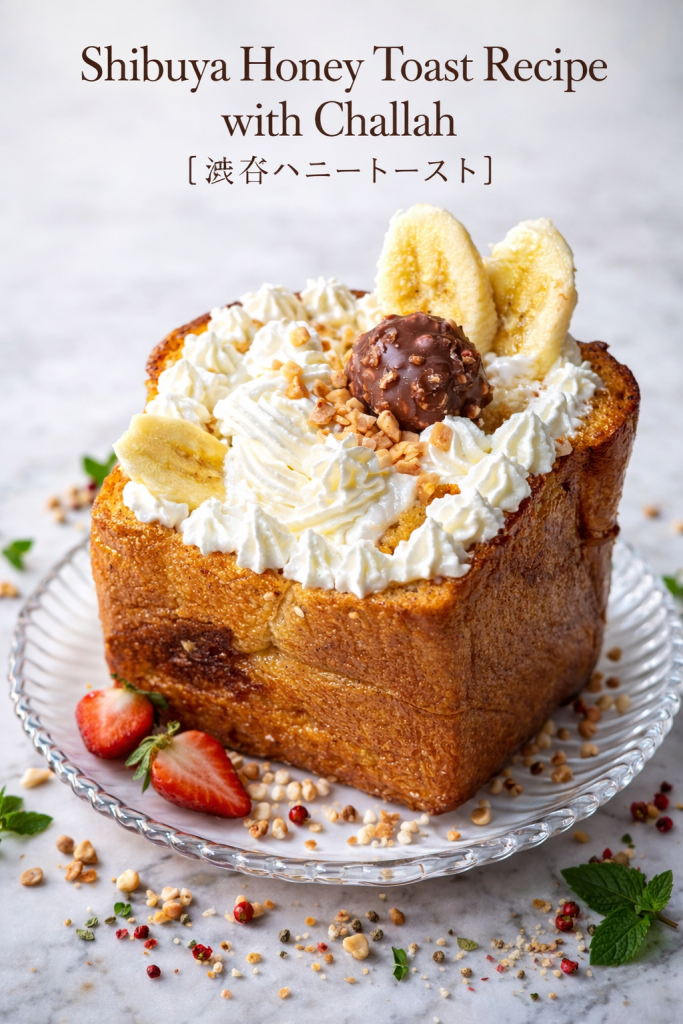
Storing Leftovers: Store leftover challah in an airtight container at room temperature for up to 3 days. It makes the world's best French toast or bread pudding once it's a day or two old .
The Art of the Braid: More Than Just a Pretty Shape The number of strands in a challah braid can carry symbolic meaning. While the 3-strand braid is a beautiful and simple starting point, a 6-strand braid is often considered the "standard" for a reason . When you bake two 6-strand loaves, they have a total of 12 "bumps," which some traditions say represent the 12 loaves of showbread (Lechem HaPanim) that were placed in the Holy Temple in Jerusalem . For the Sabbath, two loaves with 3-strand braids are used, and together they represent the six days of the work week, bringing harmony to the whole . Mastering the braid is a meditative part of the challah-making process, connecting modern bakers to centuries of tradition.
Creative Uses for Day-Old Challah While fresh challah is perfection, day-old (or slightly stale) challah is a gift to the creative cook. Its dense, slightly sweet crumb is ideal for:
The Ultimate French Toast: Slices soak up a classic custard of eggs, milk, vanilla, and cinnamon without falling apart, frying up to a rich, golden brown .
Rich and Creamy Bread Pudding: Cubed challah baked in a sweet custard with raisins or chocolate chips is the definition of comfort food .
Flavorful Homemade Croutons: Toss cubes with olive oil, garlic powder, and herbs, then bake until crisp for a delicious addition to salads or soups .
Elevated Grilled Cheese: Use thick slices of challah to make a decadent grilled cheese sandwich. The buttery flavor of the bread perfectly complements the melted cheese .