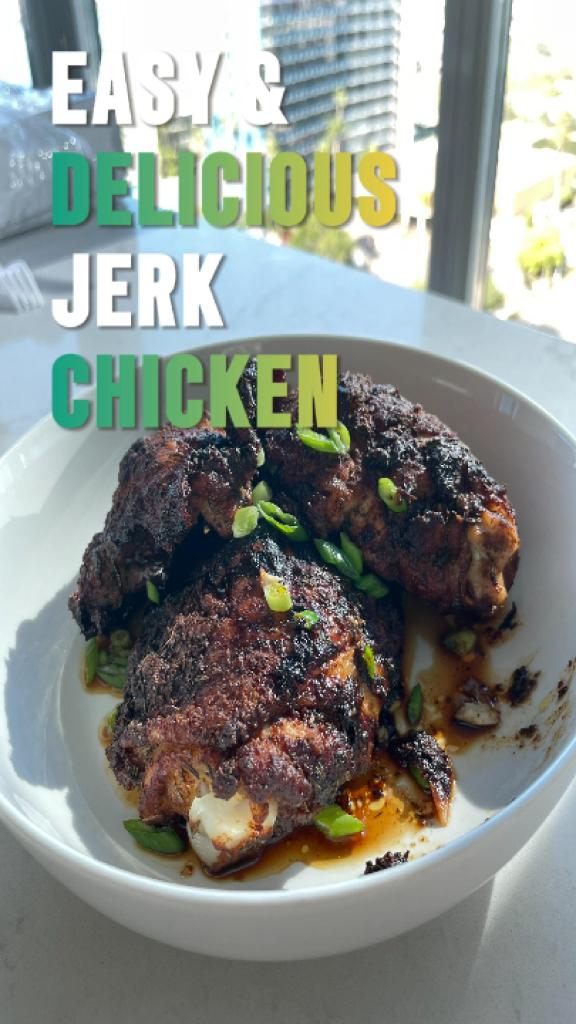
Easy Oven Baked Jerk Chicken: The Juiciest Caribbean Dinner
INTRO
The moment you catch a whiff of allspice and thyme mingling with the smoky warmth of Scotch bonnet heat, you know something magical is happening in your kitchen. That intoxicating aroma is the soul of Jamaica calling—and today, I'm showing you how to capture it with the easiest oven baked jerk chicken recipe you'll ever make.
Growing up, I thought authentic jerk chicken required a pimento wood-fired drum in a Jamaican backyard, a full day of tending coals, and maybe some ancestral magic passed down through generations. And while that traditional method produces something truly transcendent, I discovered that you can achieve remarkably authentic, deeply flavorful jerk chicken right in your home oven—with about 10 minutes of active work and ingredients you probably already have in your spice cabinet.
This easy oven baked jerk chicken delivers everything you crave: impossibly juicy meat under crackling-crisp skin, that signature warm-but-complex heat that builds slowly, and those deep smoky-sweet notes that make jerk one of the world's most beloved seasoning traditions. No grill required. No hard-to-find Scotch bonnets if you don't have them. Just pure, uncomplicated flavor that will have everyone at your table asking for the recipe.
What makes this version truly special is the technique—a simple two-minute spice paste, a crucial poking step that lets flavor penetrate deep into the meat, and a high-heat oven method that gives you that gorgeous caramelized exterior while keeping the chicken impossibly moist inside. Whether you're a jerk novice or a seasoned pro looking for a reliable weeknight method, this recipe is about to become your new favorite dinner.
To understand jerk chicken is to understand a story of resilience, ingenuity, and the beautiful collision of cultures that defines Caribbean cuisine. The word "jerk" likely derives from the Spanish word "charqui," meaning dried meat—which also gives us our word "jerky." But the technique itself predates Spanish arrival by centuries.
The indigenous Taíno people of Jamaica developed methods of preserving meat by smoking it over green wood fires, using the smoke to both cook and protect their catch from insects in the tropical climate. When the Spanish brought African slaves to the island in the 16th century, and later when the British arrived, these culinary traditions began to merge in fascinating ways.
The true evolution of jerk as we know it today, however, belongs to the Maroons—escaped enslaved Africans who fled to Jamaica's mountainous interior and formed autonomous communities. For these freedom fighters, the ability to preserve meat without smoke giving away their positions to British soldiers was literally a matter of life and death. They perfected cooking techniques using buried pits and green pimento wood, which produced flavorful smoke without the telltale plumes that would reveal their hidden settlements.
The Maroons developed the complex spice blend that defines jerk: allspice (called "pimento" in Jamaica, named after the wood they cooked with), Scotch bonnet peppers for heat and fruity complexity, thyme, scallions, and warm spices like cinnamon, nutmeg, and cloves—ingredients that arrived through the island's complex trade history. This wasn't just food; it was a culinary declaration of independence, a taste of home and heritage preserved against impossible odds.
Today, jerk has transcended its origins to become Jamaica's most famous culinary export. From roadside stands in Boston Bay to trendy London restaurants and home kitchens worldwide, jerk chicken represents the spirit of Jamaican cooking: bold, unapologetic, deeply flavorful, and impossible to forget once you've experienced it done right.
THE SCIENCE
What makes jerk chicken so irresistible isn't just the ingredient list—it's what happens chemically when those ingredients interact with heat and time. Understanding a little food science transforms good jerk chicken into something extraordinary.
Let's start with that spice paste. By combining dried herbs and spices with oil, you're doing something crucial: extracting fat-soluble flavor compounds. Many of the aromatic molecules in allspice, thyme, and cinnamon are more soluble in fat than in water. The olive oil acts as a solvent and carrier, dissolving these compounds and helping them penetrate deep into the chicken's tissues. When you poke holes in the meat (that simple but essential step), you're creating direct channels for this flavorful oil to reach the interior, bypassing the barrier of the skin.
The sugar in this recipe serves multiple scientific roles. Brown sugar contains molasses, which adds its own complex, slightly bitter-sweet notes. But more importantly, sugar participates in two critical reactions: caramelization and the Maillard reaction. Caramelization begins around 320°F, when sugar molecules break down and reform into hundreds of new flavor compounds. The Maillard reaction—that magical browning that creates savory, umami depth—starts when amino acids and reducing sugars react at temperatures above 285°F. Your 425°F oven hits both zones perfectly, creating that deeply bronzed, flavorful crust.
That allspice? It's the soul of jerk, containing eugenol—the same compound that gives cloves their numbing quality and is also found in nutmeg and cinnamon. Eugenol bonds with fat molecules and slowly releases its warmth as you chew, which is why jerk heat feels different from the immediate burn of raw chili. Speaking of which, capsaicin from the cayenne (or Scotch bonnets in traditional versions) binds to pain receptors in your mouth, but it's also fat-soluble—another reason the oil in your paste is essential for distributing heat evenly.
Finally, that high-heat oven method isn't just about speed. By roasting at 425°F, you're creating rapid moisture evaporation from the skin's surface, which is essential for crispiness. Meanwhile, the meat itself stays protected by its fat cap and skin, cooking more slowly through conduction. The result is the ideal contrast: shatteringly crisp exterior with tender, juicy meat that's been infused with flavor from the inside out thanks to those poked holes and the oil-based paste.
GOOD PAIRING FOOD AND DRINK
One Appetizer: Jamaican Beef Patties
Before the main event, set the stage with these golden, flaky pastries filled with spiced ground beef. The turmeric-tinted crust and savory, lightly spicy filling echo the warmth of the jerk seasoning while offering a completely different texture. The pastry's buttery richness balances the heat to come, preparing your palate without overwhelming it. Make them mini for easy pre-dinner snacking, or serve full-size as a heartier starter.
One Side Dish: Classic Rice and Peas
No jerk chicken plate is complete without this Jamaican staple—coconut-infused rice cooked with kidney beans (called "peas" in Jamaican parlance), thyme, scallions, and Scotch bonnet (left whole to perfume the dish without overwhelming heat). The creamy coconut milk tempers the jerk's fire, while the gentle aromatics create a beautiful harmony with the chicken's spice blend. Every forkful should combine chicken, rice, and maybe a drizzle of those pan drippings.
One Side Dish: Sweet Fried Plantains (Maduros)
The caramelized sweetness of ripe plantains sliced and fried until golden-brown offers the perfect counterpoint to jerk's heat and smoke. As the plantains cook, their natural sugars concentrate and caramelize, creating edges that are almost candy-like. This sweet-savory contrast is fundamental to Caribbean cuisine—the way sweetness amplifies and balances heat, making each bite of chicken taste more complex than the last.
One Dessert: Rum Cake
Continue the Caribbean theme with a moist, buttery pound cake saturated with dark rum syrup. The warmth of the rum echoes the spices in your jerk seasoning—cinnamon, nutmeg, allspice all make appearances—while the cake's richness provides a soothing, indulgent finish. Serve with a dollop of lightly sweetened whipped cream or a scoop of vanilla ice cream to cut the sweetness.
One Cocktail: Dark 'n Stormy
The official cocktail of Bermuda pairs beautifully with jerk chicken for good reason: the spicy bite of ginger beer cuts through the richness of the dark meat, while the funk of Gosling's Black Seal rum stands up to the bold jerk spices. Lime juice brightens everything, cleansing your palate between spicy bites. The effervescence is particularly welcome against the chicken's richness.
One Non-Alcoholic Drink: Jamaican Sorrel Drink
Make this vibrant, crimson infusion from hibiscus petals, ginger, and spices (often including the same allspice and cinnamon in your jerk rub) for an authentic pairing. Tart, mildly spicy, and deeply refreshing, sorrel drink acts as a palate cleanser and coolant—the traditional accompaniment to spicy Jamaican meals. Served over ice with a slice of orange, it's as beautiful as it is delicious.
Dietary:
Dairy-Free, Gluten-Free, High Protein, Low-Carb / Keto (with Modification)
Description
Forget the grill—this easy oven baked jerk chicken brings authentic Jamaican flavor to your kitchen with just 10 minutes of prep. Packed with warm allspice, smoky paprika, and build-your-own heat, every bite is impossibly juicy under perfectly crisp skin. The secret? A simple poke-and-rub technique that lets flavor penetrate deep into the meat.
Per serving (2 chicken leg quarters, based on 5 servings)
For the Jerk Chicken:
10 chicken leg quarters (thigh and drumstick attached, about 3-3.5 pounds total)
1/2teaspoon ground cinnamon (start with ¼ teaspoon if you're sensitive to cinnamon in savory dishes)
1teaspoon ground ginger
1teaspoon ground cloves
1teaspoon cayenne pepper (adjust up or down for your heat preference)
1teaspoon garlic powder
1teaspoon onion powder
9/4teaspoons kosher salt (use 1½ teaspoons if using table salt)
1/4teaspoon freshly ground black pepper
1tablespoon dark soy sauce (or browning sauce, optional, for deeper color and umami)
Instructions
1
Step 1: Create Your Flavor Base
2
In a medium mixing bowl, combine the olive oil, brown sugar, and all the dried spices and herbs: thyme, allspice, smoked paprika, cinnamon, ginger, cloves, cayenne, garlic powder, onion powder, salt, and black pepper. If you're using the optional dark soy sauce or browning sauce, add it now. Stir vigorously with a fork or small whisk until everything forms a cohesive, fragrant paste. The mixture should look like a thick, dark, aromatic rub—this is your flavor powerhouse, and it took about 90 seconds to create.
3
Pro Tip: Take a moment to smell the paste. That complex aroma—warm, spicy, slightly sweet, deeply savory—is exactly what will transform plain chicken into something extraordinary.
4
Step 2: Prepare the Chicken
5
Remove the chicken leg quarters from their packaging and pat them absolutely dry with paper towels. This isn't just busywork—dry skin is the single most important factor in achieving that coveted crispy, crackling finish. Moisture is the enemy of browning, so be thorough.
6
Here's the technique that separates good jerk chicken from unforgettable jerk chicken: take a fork and poke holes all over each piece of chicken. Focus especially on the thicker parts—the drumstick meat and the meatiest section of the thigh. You're creating tiny channels that will allow the oil-based spice paste to penetrate deep into the muscle, rather than just coating the surface. Don't be shy about this—20-30 pokes per piece is entirely reasonable.
7
Step 3: Apply the Jerk Paste
8
Now for the hands-on part. Using your hands (gloves are optional but helpful if you're sensitive to capsaicin), take generous amounts of the jerk paste and rub it all over each chicken leg. Be thorough—every inch of skin should be coated.
9
The Secret Step: Gently lift the skin away from the meat wherever possible—particularly over the thickest parts of the thigh—and spread a good amount of paste directly underneath. This ensures that the meat itself is seasoned, not just the skin, and creates those pockets of concentrated flavor that make every bite exciting. Work the paste into all the nooks and crannies, including the back of the leg and around the joint.
10
Step 4: Arrange for Success
11
Place your oven rack in the lower-middle position. This spot provides the ideal balance of even heat distribution and good air circulation. Preheat your oven to 425°F (220°C).
12
Line a large, rimmed baking sheet with aluminum foil for effortless cleanup. If you have a wire rack that fits inside your baking sheet, place it on top—this allows hot air to circulate under the chicken, promoting even crisping on all sides. If you don't have a rack, simply place the chicken legs directly on the foil, leaving at least an inch of space between pieces. Crowding would trap steam and prevent that beautiful browning, so give them room to breathe.
13
Step 5: Bake to Golden Perfection
14
Transfer the baking sheet to your preheated oven. Bake for 40 to 50 minutes, depending on the size of your chicken legs. You'll know they're getting close when the kitchen fills with that unmistakable jerk aroma and the skin turns a deep, caramelized bronze.
15
About 30 minutes in, check the chicken. If any pieces are browning faster than others, rotate the pan. The chicken is done when:
16
The skin is beautifully browned and crispy to the touch
17
A meat thermometer inserted into the thickest part (without touching bone) reads 165°F (74°C)
18
The juices run clear when you pierce the thigh meat
19
Step 6: Rest and Serve
20
Remove the baking sheet from the oven and let the chicken rest for 5 full minutes. This brief rest allows the juices to redistribute throughout the meat—cut too soon and they'll flood your cutting board instead of staying in the chicken.
21
Transfer the chicken legs to a serving platter and spoon the pan drippings over the top. Those juices are liquid gold, packed with concentrated flavor from the spice paste and chicken fat. Serve immediately and watch them disappear.
Nutrition Facts
Servings 5
Amount Per Serving
Calories485kcal
% Daily Value *
Total Fat28g44%
Saturated Fat7g35%
Sodium890mg38%
Total Carbohydrate8g3%
Dietary Fiber2g8%
Sugars4g
Protein48g96%
Vitamin A 890 IU
Calcium 60 mg
Iron 3 mg
* Percent Daily Values are based on a 2,000 calorie diet. Your daily value may be higher or lower depending on your calorie needs.
Note
Pro Tips for Success
Pat absolutely dry: This can't be overstated—moisture is the enemy of crispy skin. Take an extra 30 seconds with the paper towels.
Temperature matters: An instant-read thermometer takes the guesswork out of doneness. Chicken is safe at 165°F, but dark meat actually benefits from cooking to 175-180°F, where connective tissue breaks down more completely for fork-tender results.
Watch the sugar: Brown sugar helps create that gorgeous caramelized exterior, but it also means the chicken can burn if your oven runs hot. Check at 35 minutes if you're unsure.
Make-Ahead Instructions
Dry spice mix: Combine all the dried spices and herbs (everything except the oil and optional soy sauce) and store in an airtight jar for up to 3 months. When ready to cook, just add oil and proceed.
Fully seasoned chicken: Prepare the chicken through Step 3, then cover and refrigerate for up to 24 hours before baking. The flavors will penetrate even deeper, and the salt will begin to improve the meat's texture.
Freezer meal: Place the raw, seasoned chicken in a freezer-safe bag, press out air, and freeze for up to 2 months. Thaw overnight in the refrigerator before baking.
Storage and Reheating
Refrigerator: Store leftovers in an airtight container for up to 4 days.
Freezer: Cooked chicken can be frozen for up to 3 months. Thaw overnight in the refrigerator.
Reheating: For best results, reheat in a 350°F oven for 10-15 minutes until heated through and skin re-crisps. The microwave works but will soften the skin.
Substitutions
Chicken parts: This works beautifully with bone-in, skin-on chicken thighs, drumsticks, or even a whole cut-up chicken. Adjust cooking time accordingly—thighs may need slightly less time, breasts significantly less (check at 30 minutes).
Fresh aromatics: For even more authentic flavor, replace the dried ginger, garlic powder, and onion powder with 2 tablespoons fresh grated ginger, 4 minced garlic cloves, and 4 finely chopped scallions (white and green parts).
Scotch bonnets: Want the real deal? Replace the cayenne with 1-2 Scotch bonnet peppers, seeded and minced (wear gloves!). Start with one and taste—these are seriously hot.
Heat adjustment: For mild jerk, reduce cayenne to ½ teaspoon. For extra fire, increase to 2 teaspoons or add a minced habanero.
Troubleshooting
Skin not crispy? Your oven might not be hot enough, or the chicken was too crowded. Next time, ensure pieces aren't touching and consider using a wire rack.
Too spicy? Balance the heat with cooling sides—coconut rice, mango salsa, or a dollop of plain yogurt or sour cream.
Burned spots? Sugar in the paste can burn if your oven runs hot. Tent foil over any pieces that are browning too quickly, or reduce temperature to 400°F and extend cooking time slightly.
Keywords:
easy jerk chicken, oven baked jerk chicken, Jamaican jerk chicken recipe, baked chicken legs, Caribbean chicken recipe, spicy chicken dinner, jerk seasoning recipe, chicken leg quarters, easy chicken dinner, sheet pan chicken, gluten free chicken recipe, dairy free dinner, meal prep chicken, how to make jerk chicken, authentic jerk chicken, best jerk chicken recipe, jerk chicken in oven, chicken thigh recipe, spicy baked chicken, Caribbean dinner ideas,
Regional Variations of Jerk
While this recipe captures the essence of Jamaican jerk, it's worth knowing that "jerk" means something slightly different depending on where you are in Jamaica. In the island's famous Boston Bay, considered the epicenter of jerk culture, you'll find pork jerked over pimento wood until it's fall-apart tender, often chopped and served with hardo bread. In Kingston, chicken jerk reigns supreme, typically with a wetter, more aggressive marinade and served with festival (sweet fried dough) rather than bread.
Further afield, jerk has been embraced and adapted across the Caribbean. In Trinidad, you'll find influences of curry and dual use of Scotch bonnets. In the Bahamas, jerk seasoning often incorporates more citrus. And in the United States and UK, jerk chicken has evolved into a beloved takeaway staple, with regional variations from New York to Miami adding their own touches—sometimes hotter, sometimes sweeter, but always recognizable as part of the jerk family.
The Art of Scotch Bonnet
If you decide to graduate to fresh Scotch bonnets, you're entering the big leagues of pepper appreciation. These wrinkly, lantern-shaped peppers aren't just about heat—they average 100,000-350,000 Scoville units, putting them firmly in the "handle with care" category. But what sets them apart is their fruity, almost citrusy flavor profile, with notes of cherry and apple that complement the warm spices of jerk seasoning perfectly.
When working with Scotch bonnets, always wear gloves. The capsaicin will linger on your skin for hours and is particularly painful if you accidentally touch your eyes. To tame the heat while keeping flavor, remove the seeds and white pith—that's where most of the fire lives. For the traditional method, some cooks add one or two whole peppers to the marinade, then remove them before cooking, allowing them to perfume the dish without overwhelming heat.
Cooking for Community
In Jamaica, jerk is never just food—it's an event. Weekend jerk fests bring communities together around smoky pits, with cold Red Stripe flowing and music playing into the night. This spirit of communal cooking and sharing is baked into the dish's DNA, and it's worth carrying forward even when you're making this easy oven version.
Invite friends over. Make it a party. Set out bowls of rice and peas, plantains, and maybe a rum punch. Let everyone gather in the kitchen as the aroma fills your home, and watch faces light up at the first bite. That's the real magic of jerk chicken—not just the complex spice blend or the perfect technique, but the way it brings people together around something delicious.