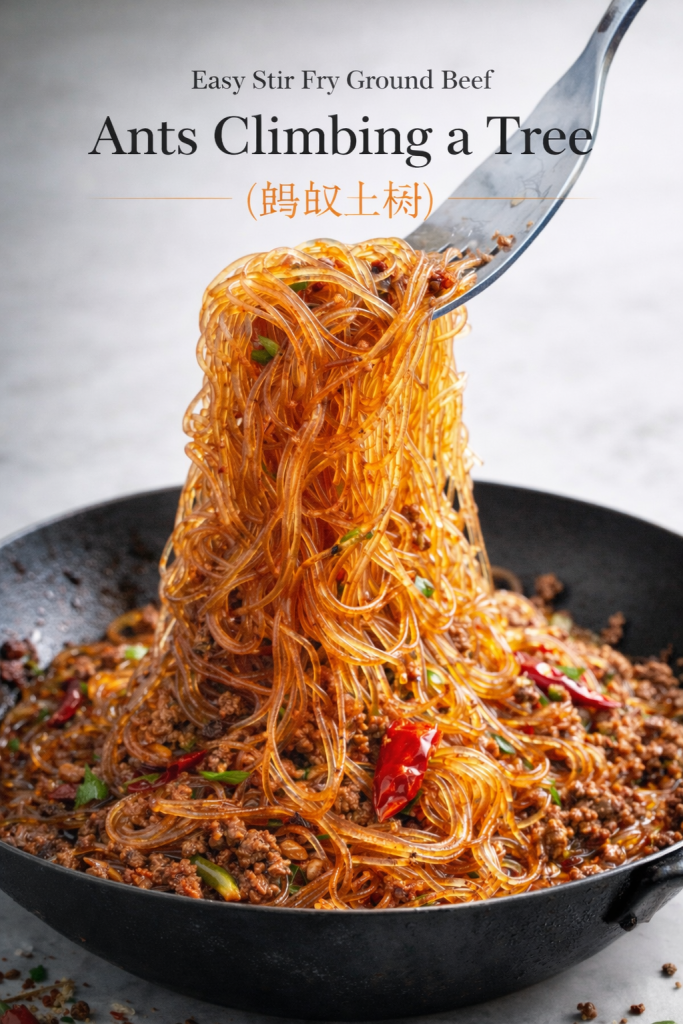
Why You'll Love This Ground Beef Ants Climbing a Tree
Have you ever stumbled upon a dish with a name so poetic that you simply had to know more? That's the magic of Ground Beef Ants Climbing a Tree. This classic Sichuan dish, known in Chinese as 蚂蚁上树 (mǎ yǐ shàng shù), is a staple of Chinese comfort food. It is a humble yet profoundly satisfying stir-fry.
Tiny, savory morsels of ground meat cling to translucent glass noodles. They evoke the image of ants slowly crawling along twigs. This recipe is my take on the beloved classic. It features a delicious, hearty twist. While traditionally made with pork, we use ground beef for a richer, deeper flavor. It pairs perfectly with the robust sauce.
What makes this Ants Climbing a Tree special is its balance of accessible ingredients and authentic technique. We harness the power of fermented black bean paste. We use the aromatic trinity of garlic, ginger, and green onion. The umami punch of soy and oyster sauce creates a dish that's quick enough for a weeknight dinner. Yet it is impressive enough to serve to guests. Get ready to create a meal that's as fun to eat as it is to say.
THE HISTORY
The Legend of Ants Climbing a Tree
The story of Ground Beef Ants Climbing a Tree is as charming as its name. Like many classic dishes, it has a couple of origin legends. The most popular tale connects to the famous Yuan Dynasty play The Injustice to Dou E (窦娥冤) by Guan Hanqing. It speaks to the dish's resourceful and comforting heart.
In the story, the protagonist Dou E finds herself caring for her ailing mother-in-law. She has very little money. Desperate to create a nourishing meal, she begs the local butcher for a meager scrap of meat. Back home, her eyes fall on a small bundle of dried glass noodles. They are the only other ingredient in her pantry.
She minces the pork. She stir-fries it with aromatics and soy sauce. Then she tosses in the softened noodles. When she serves the dish, her mother-in-law peers at the dark specks of meat. With her failing eyesight, she asks in alarm, "Why are there ants climbing up the tree?" Upon learning the truth and tasting the delicious result, she humorously dubs the dish "Ants Climbing a Tree." The name has stuck for centuries.
From Humble Origins to Global Favorite
Another legend tells of a frugal housewife in the Sichuan countryside. She faced a large family to feed with minimal ingredients. She used the same clever technique to stretch a tiny amount of minced pork. This story reinforces the dish's identity. It is a testament to the ingenuity of home cooks. They transform scarcity into satisfaction.
The dish originated in Sichuan province. This region is famed for its bold, fiery, and numbing flavors (málà). This dish is a bit of an outlier. It is savory and deeply flavorful. Yet it typically lacks the overwhelming heat of mapo tofu or kung pao chicken. Instead, it focuses on pure, comforting essence. Well-browned meat and noodles coat in a luscious sauce.
From humble beginnings in rural kitchens, it has climbed its way onto menus worldwide. It is a true symbol of how simple creativity can lead to culinary legend. Making your own easy ants climbing a tree at home connects you to this long history of resourceful cooking.
THE SCIENCE
The Science of the Perfect Ants Climbing a Tree Stir Fry
Creating the perfect plate of Ground Beef Ants Climbing a Tree is a beautiful exercise in kitchen chemistry. Understanding the "why" behind the steps elevates your cooking. You move from simply following a recipe to mastering a technique. The magic lies in texture, flavor absorption, and creating a complex sauce.
Understanding the "Tree": Glass Noodles
First, let's talk about the "tree": the glass noodles. These are also known as cellophane noodles or bean thread noodles. They aren't made from wheat flour. They come from starch—typically mung bean, sweet potato, or potato starch. This composition is key.
When dry, the starch molecules are tightly packed. A quick soak in hot water (not boiling) rehydrates them. This makes them pliable and tender but still chewy. If you boiled them, they'd absorb too much water. They would become mushy and lose that delightful springy texture.
Their true superpower, however, is their lack of inherent flavor. Like tofu, they are a blank canvas. They are a sponge waiting to absorb the savory masterpiece we're about to create.
Building Flavor from the Bottom Up
Next, the "ants" and their journey. In this Sichuan glass noodles recipe, we bloom the aromatics and fermented paste first. This is a crucial step for building a flavor foundation. The fat-soluble compounds in the garlic, ginger, and the funky fermented black bean paste release directly into the hot oil.
This flavored oil then becomes the cooking medium for the ground beef. As the beef cooks, it absorbs these deep, aromatic flavors from the very beginning. The "ants" become infused with the soul of the dish from the inside out. The browning of the beef still occurs. This is the Maillard reaction. It creates those deep savory notes. Now they are layered on top of an already complex aromatic base.
The Umami Sauce That Binds
Finally, the sauce brings the ants and the tree together. The combination of fermented black bean paste, soy sauces, oyster sauce, and sugar creates a symphony of umami. The sugar is not just for sweetness. It balances the saltiness. It also helps the sauce glaze the noodles beautifully.
When we add the liquid and the noodles, the starch molecules immediately begin to absorb the flavorful liquid. As the sauce simmers and reduces, it concentrates in flavor. It lightly coats the noodles. This ensures every single "twig" is packed with the essence of the "ants." This is the science that makes a great ants climbing a tree recipe so satisfying.
GOOD PAIRING FOOD AND DRINK
This Ground Beef Ants Climbing a Tree is flavorful and satisfying on its own. Yet when paired thoughtfully, it can become the centerpiece of a memorable meal. Here are my top recommendations to create a harmonious dining experience.
One Appetizer:Sichuan Cucumber Salad (拍黄瓜). Before diving into the rich, savory noodles, you'll want something cool and refreshing. A simple salad of smashed cucumbers is the perfect start. Toss them with rice vinegar, a touch of sugar, minced garlic, and a drizzle of sesame oil. Its bright and crunchy profile provides a stunning contrast to the warm, soft main dish. It prepares your taste buds for the feast ahead. It's the ideal prelude to any ground beef noodle recipe.
One Side Dish:Stir-fried Baby Bok Choy with Garlic. To add a fresh, green element, you can't beat garlicky bok choy. The mild leaves are quickly stir-fried with garlic until just wilted. This simple side introduces a welcome freshness. It cuts through the richness of the beef and the slickness of the noodles. It creates a more balanced plate. It pairs beautifully with the Chinese glass noodle stir fry.
One Dessert:Mango Pomelo Sago (杨枝甘露). After a meal with deep savory flavors, a light and fruity dessert is ideal. This famous Cantonese dessert is a chilled tropical parfait. It features creamy coconut milk, tangy mango puree, and chewy tapioca pearls. Its bright and sweet profile acts as a palate cleanser. It is a refreshingly sweet ending. A perfect finish after enjoying your savory glass noodles.
One Cocktail:Sichuan Mule. Give the classic Moscow Mule an aromatic twist. Muddle fresh ginger and a Thai chili slice in a copper mug. Add vodka, lime juice, and top with spicy ginger beer. The heat from the ginger mirrors the warmth of the dish. The lime and bubbly ginger beer cut through the richness. Each sip becomes a perfect companion to a bite of your Ground Beef Ants Climbing a Tree.
One Non-Alcoholic Drink:Jasmine Green Tea with Honey. For a non-alcoholic option, you can't go wrong with jasmine green tea. The floral aroma and light notes provide a gentle contrast to the savory noodles. A small touch of honey adds subtle sweetness. It ties in with the caramelized notes in the beef. It is a soothing and palate-cleansing experience. It's a classic pairing for any ants climbing a tree.
Experience the poetic charm of Sichuan cooking with this simple yet flavorful Ground Beef Ants Climbing a Tree recipe. Savory minced beef and translucent noodles are stir-fried in a rich sauce made with black bean paste, ginger, and garlic for a truly satisfying meal.
Ingredients
3small packs Longkou rice noodles (bean thread noodles / cellophane noodles) (about 150g or 5.3 oz total)
1lb lean ground beef (450g (85/15 or 90/10 is ideal))
1tablespoon fresh ginger, minced (from about a 1-inch knob)
6-8 green onions (, sliced, white and green parts separated)
2tablespoons black bean paste (or fermented black beans, rinsed and minced)
1½ cups water (or low-sodium chicken stock)
2tablespoons cooking wine (Shaoxing wine is best, or dry sherry)
2tablespoons soy sauce (light or regular)
2teaspoons dark soy sauce (for color, optional but recommended)
1teaspoon granulated sugar
1tablespoon oyster sauce
1teaspoon sesame oil (for finishing)
Instructions
1
Prepare the "Tree": Place the Longkou rice noodles in a large bowl. Cover them with very hot (but not boiling) tap water. Let them soak for 10-15 minutes. They should become pliable and soft but still have a bit of a bite (al dente). You should be able to easily separate the strands with your fingers. Drain them thoroughly in a colander. Use kitchen shears to snip them a few times into shorter lengths (about 6-8 inches long). Set aside. This step is crucial for any ants climbing a tree recipe. It ensures the perfect noodle texture.
2
Bloom the Aromatics and Paste: Heat 1 tablespoon of vegetable oil in a large wok over medium-high heat. Once the oil is shimmering, add the white parts of the green onions. Add the minced garlic and minced ginger. Stir-fry constantly for about 30 seconds until fragrant. Add the black bean paste to the aromatics. Continue to stir-fry for another minute. Mash it into the oil. This "blooming" step activates its funky, savory flavors. It infuses the entire foundation of the dish. This technique makes this Ground Beef Ants Climbing a Tree so deeply flavorful.
3
Cook the "Ants": Add the ground beef directly to the wok with the aromatic oil. Increase the heat to high. Spread the beef out into a single layer. Let it cook undisturbed for 3-4 minutes. This allows for a good sear and that crucial Maillard reaction. Once the bottom is deeply browned, use a spatula to break the beef into small crumbles. Continue cooking, stirring occasionally, until the beef is fully cooked. The beef will now be beautifully infused with garlic, ginger, and black bean paste. This creates the perfect "ants" for your Sichuan glass noodles.
4
Deglaze and Build the Sauce: Pour the cooking wine into the wok. Use it to deglaze the pan. Scrape up any delicious browned bits from the bottom. Add the water (or stock), soy sauce, dark soy sauce (if using), sugar, and oyster sauce. Stir everything together until well combined. Bring the mixture to a boil. Then reduce the heat to a simmer. This savory sauce is the heart of this easy ants climbing a tree dish.
5
Add the "Tree": Add the drained noodles to the wok. Use tongs or two forks to gently toss and turn the noodles. Coat them evenly in the sauce. Continue to cook over medium heat for 3-5 minutes. Stir frequently. Cook until the noodles have absorbed most of the liquid. They should become translucent and glossy. The sauce should thicken and coat the noodles beautifully. Watching the noodles transform is the best part of making this ground beef and glass noodles dish.
6
Finish and Serve: Remove the wok from the heat. Drizzle with the sesame oil. Add the reserved green parts of the onions. Give everything one final toss. Serve immediately in bowls. Make sure each serving gets a good mix of "ants" and "tree." Your Ground Beef Ants Climbing a Tree is ready to enjoy.
Nutrition Facts
Amount Per Serving
Calories485kcal
% Daily Value *
Total Fat22g34%
Saturated Fat6g30%
Sodium890mg38%
Total Carbohydrate42g15%
Dietary Fiber2g8%
Sugars4g
Protein30g60%
* Percent Daily Values are based on a 2,000 calorie diet. Your daily value may be higher or lower depending on your calorie needs.
Note
Pro Tips for Success: The key to this Ground Beef Ants Climbing a Tree is high heat and quick cooking. Have all your ingredients prepped before you start heating the pan. Don't overcook the noodles in the water soak. They will finish cooking in the sauce. Thoroughly drain the soaked noodles. Excess water will dilute the sauce. It will prevent it from clinging properly. Following these tips ensures your ants climbing a tree is perfect every time.
Make-Ahead & Storage: This dish is best enjoyed immediately. However, leftovers can be stored in an airtight container in the refrigerator for up to 2 days. The noodles will continue to absorb sauce. They may become a bit softer. To reheat, add a splash of water or broth to a pan over medium-low heat. Toss the noodles until warmed through.
Substitutions:
Protein: Ground pork, chicken, or turkey are excellent substitutes. For a vegetarian version of this ground beef noodle recipe, use finely chopped shiitake mushrooms or crumbled firm tofu.
Black Bean Paste: If you find salted fermented black beans (douchi), rinse them of excess salt. Pat them dry and mince them finely before using.
Wine: Dry sherry or dry white wine can replace Shaoxing wine. For an alcohol-free version, substitute with equal low-sodium chicken or vegetable broth.
Gluten-Free: To make this Chinese glass noodle stir fry gluten-free, use tamari or coconut aminos. Ensure your oyster sauce and black bean paste are certified gluten-free.
Troubleshooting: Noodles are mushy? You likely soaked them too long or used boiling water. Next time, use hot (not boiling) water. Stick to the 10-15 minute soak time.
Keywords:
Ground beef ants climbing a tree, ants climbing a tree recipe, how to make ants climbing a tree, 蚂蚁上树, mā yǐ shàng shù, Sichuan glass noodles, ground beef and glass noodles, Chinese glass noodle stir fry, cellophane noodle recipe, bean thread noodle recipe, quick Chinese dinner, easy weeknight stir fry, ground beef noodle recipe, savory glass noodles, black bean paste recipe, easy ants climbing a tree, authentic ants climbing a tree, ground beef glass noodles stir fry,
Regional Variations and Personal Connections
One of the most fascinating things about Ants Climbing a Tree is how it adapts. The traditional recipe is a beautiful example of resourcefulness. Yet variations have sprung up over time.
For instance, a popular vegetarian version exists. It swaps the ground meat for finely minced and fried gluten, or "面筋" (miàn jīn). When deep-fried, these small wheat gluten bits become incredibly crispy. They provide a completely different but equally delightful texture. The sauce in this version often relies heavily on umami. It uses fermented ingredients like doubanjiang (spicy bean paste) and black beans. This proves the dish's soul lies in its flavor profile, not just its protein. It shows the versatility of a simple ground beef and glass noodles concept.
Personally, this dish holds a special place in my memory. It was the first "Sichuan" dish I ever learned to make. I remember being a broke college student. I stared at a package of bean thread noodles bought on a whim. I also had a half-pound of ground beef in my fridge. I found a recipe online for what I later learned was ants climbing a tree. I was skeptical something so simple could be good.
Twenty minutes later, I sat in awe. It was the most flavorful, comforting bowl of noodles I had ever made. It was a revelation. With a few key techniques and a well-stocked pantry, you can transform humble ingredients into something magical. This Ground Beef Ants Climbing a Tree feels like a warm hug. It proves you don't need exotic ingredients to create a meal that feels special.