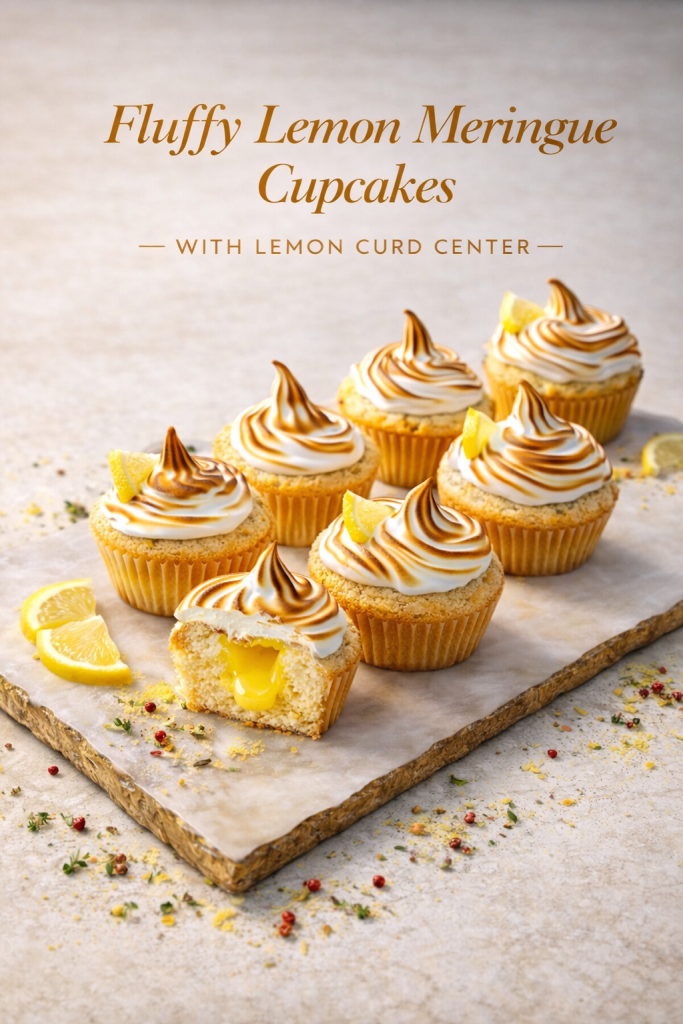
INTRO There is magic in a cupcake. You bite in and discover a hidden, tangy surprise waiting inside. I recently set out to create the ultimate lemon meringue cupcakes with lemon curd. The result was everything I had hoped for. These lemon meringue cupcakes with lemon curd achieve the perfect balance of sweet, tart, and fluffy textures.
Why This Recipe Works This recipe celebrates everything we love about the classic lemon pie. First, the base is an incredibly tender vanilla-lemon cupcake. It is moist and light, serving as the perfect vessel. Inside each of these lemon meringue cupcakes with lemon curd, a pocket of vibrant homemade curd awaits. It provides a burst of tartness that cuts through the sweetness beautifully. Finally, a cloud-like Swiss meringue crowns it all, toasted to a perfect golden brown. These truly are the best lemon meringue cupcakes with lemon curd you will ever make.
THE HISTORY OF A CLASSIC DESSERT
From Simple Cakes to Individual Treats The cupcake has quintessentially American origins. It evolved in the 19th century from baking cakes in individual cups or ramekins. The first official mention of a "cupcake" appears in Eliza Leslie's 1828 cookbook, Seventy-five Receipts for Pastry, Cakes, and Sweetmeats. Early recipes were often called "1234 cakes." They used one cup of butter, two of sugar, three of flour, and four eggs. This is quite a distance from our sophisticated lemon meringue cupcakes with lemon curd.
The European Influence of Meringue Our crowning glory, the meringue, has a more storied European past. Legend credits a Swiss pastry chef named Gasparini. He worked in the town of Meiringen (hence "meringue") and supposedly invented it in the 17th century. Consequently, meringue became a staple of classical European pastry. Later, the combination of a tart lemon base and sweet, airy meringue created the beloved Lemon Meringue Pie in the late 19th century. Therefore, these lemon meringue cupcakes with lemon curd are a direct descendant of that classic. They are simply reimagined in a perfect handheld form.
THE SCIENCE BEHIND THE PERFECT CUPCAKE
Creating a Light and Fluffy Crumb Creating the perfect lemon meringue cupcakes with lemon curd requires understanding key scientific principles. The magic begins with the creaming method. When you beat butter and sugar together, you mechanically create air pockets. The sugar crystals cut through the fat, forming a network of tiny air bubbles. This process is crucial for a light crumb. Then, when you add the eggs, they emulsify the mixture. They coat those air bubbles with a thin layer of protein, which strengthens them for the oven.
The Stability of Swiss Meringue This recipe uses a Swiss meringue, which is inherently more stable than its French cousin. You gently heat the egg whites and sugar together over a water bath before whipping. This process accomplishes two things. First, the heat dissolves the sugar completely, ensuring a silky-smooth texture. Second, it partially cooks the egg whites, denaturing the proteins. As a result, when you whip them, the proteins form a stronger, more stable network around the air bubbles. This network holds its shape perfectly. It also allows the meringue on your lemon meringue cupcakes with lemon curd to be beautifully torched without weeping. For a deep dive into the science of egg foams, Serious Eats offers an excellent explanation.
GOOD PAIRING FOOD AND DRINK The bright, citrusy profile of these lemon meringue cupcakes with lemon curd makes them incredibly versatile for pairing with a full meal.
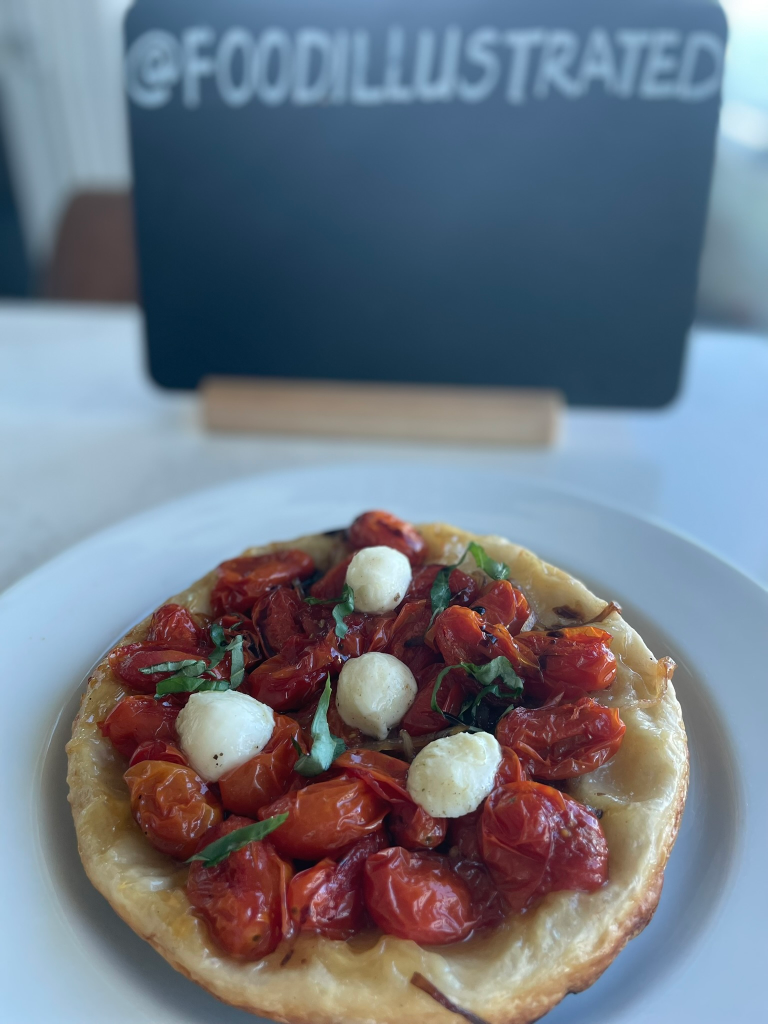
One Appetizer:Caramelized Tomato Tarte Tatin | Easy Savory Upside-Down Tart. This savory-sweet tart is the perfect way to start a meal that ends with our lemon meringue cupcakes with lemon curd. The caramelized tomatoes offer a deep umami sweetness that contrasts beautifully with the bright, acidic lemon. The buttery, flaky pastry of the tarte tatin also provides a textural counterpoint to the soft cupcake and meringue, making each course distinct yet harmonious.
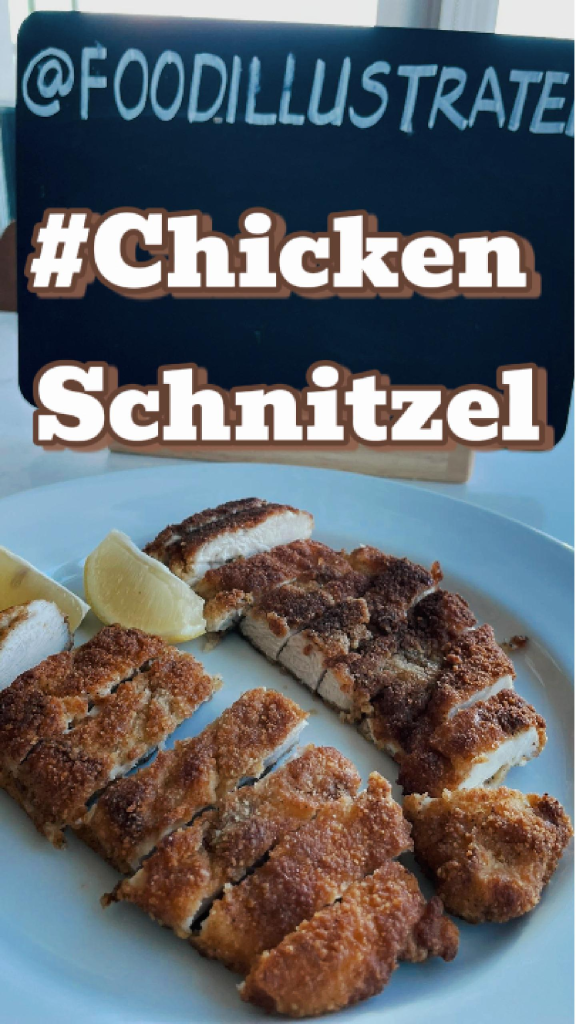
One Main Course: For a main course that pairs seamlessly, I recommend the Easy Chicken Schnitzel Recipe (20-Minute Meal) from Food Illustrated. The crispy, golden exterior of the schnitzel provides a satisfying savory crunch, while the tender chicken inside is mild and palate-friendly. A squeeze of fresh lemon over the schnitzel (classic!) will echo the lemon curd center in your cupcakes, creating a beautiful flavor bridge from the main course to dessert.
One Side Dish:A light Arugula and Fennel Salad with a Simple Lemon Vinaigrette. This reinforces the lemon theme without being heavy. The peppery arugula and crunchy fennel provide a fresh, palate-cleansing contrast that prepares you for the sweetness of your lemon meringue cupcakes with lemon curd.
One Dessert: You've already got the star! But a selection of fresh berries served alongside your lemon meringue cupcakes with lemon curd adds a pop of color and fresh tartness that complements the dessert beautifully.
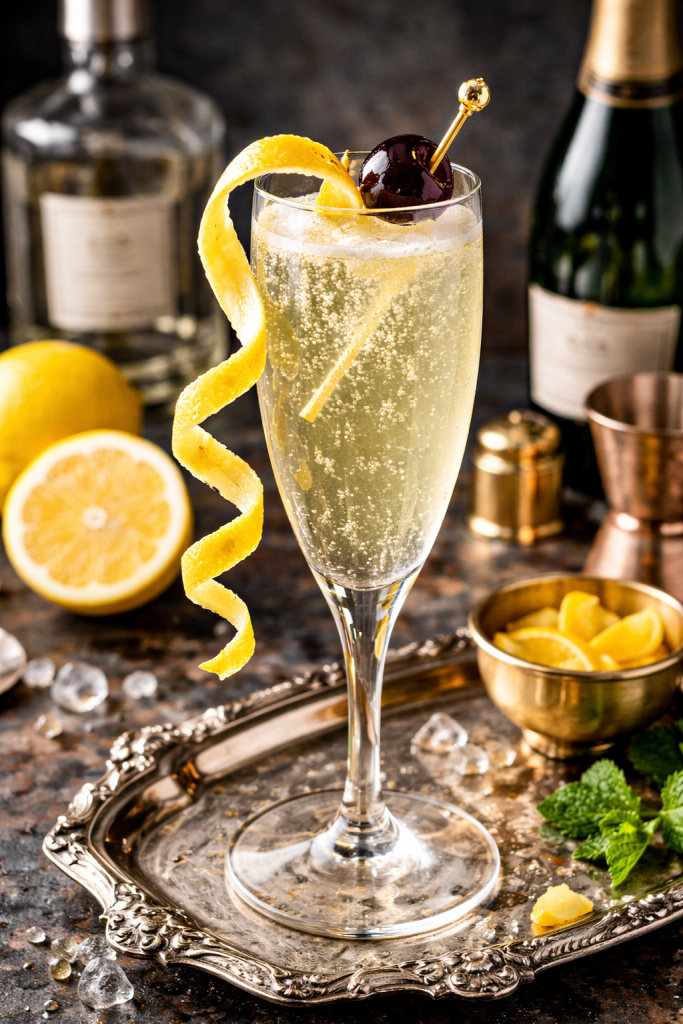
One Cocktail:A French 75. This classic cocktail, with its combination of gin, lemon juice, simple syrup, and Champagne, is a natural partner for your lemon meringue cupcakes with lemon curd. The bright lemon and bubbles mirror the cupcake's citrus notes.
One Non-Alcoholic Drink:Earl Grey Tea. The bergamot in Earl Grey tea has a natural affinity for citrus. Its floral and slightly bold flavor provides a sophisticated counterpoint to the sweet and tangy lemon meringue cupcakes with lemon curd.
Best Season:
Summer, Spring, Suitable throughout the year
Dietary:
Nut-Free, Vegetarian
Description
These lemon meringue cupcakes with lemon curd are the ultimate citrus dessert. A tender vanilla-lemon cupcake hides a pocket of tangy homemade curd. It is then topped with a cloud of silky Swiss meringue, toasted to golden perfection.
Ingredients
For the Lemon Curd (Filling):
3large egg yolks
1/2cup granulated sugar (100g)
1/3cup fresh lemon juice (80ml (from about 2 lemons))
1tablespoon fresh lemon zest
4tablespoons unsalted butter (55g, cut into small cubes)
For the Cupcakes (The Base):
3/2cups cake flour (180g)
3/2teaspoons baking powder
1/4teaspoon fine sea salt
1/2cup unsalted butter (115g, softened)
1cup granulated sugar (200g)
2large eggs (, room temperature)
3/2teaspoons vanilla extract
1/2cup whole milk (120ml, room temperature)
2tablespoons fresh lemon zest
For the Swiss Meringue (The Topping)
4large egg whites (, room temperature)
1cup granulated sugar (200g)
1/4teaspoon cream of tartar
1teaspoon vanilla extract
Instructions
Phase 1: Bake the Cupcake Base First
1
Preheat and prepare. First, preheat your oven to 350°F (175°C). Then, line a standard 12-cup muffin tin with paper cupcake liners. Set it aside for now.
Mix the dry ingredients. In a medium bowl, whisk together the cake flour, baking powder, and salt. Whisking ensures the baking powder is evenly distributed throughout the flour.
Cream the butter and sugar. In a large bowl (or the bowl of a stand mixer fitted with the paddle attachment), beat the softened butter on medium-high speed. Beat until it is smooth and creamy, about 1 minute. Gradually add the granulated sugar. Continue beating for another 3 to 5 minutes. The mixture should become light in color and fluffy in texture. Scrape down the sides and bottom of the bowl once or twice during this process.
Add the wet ingredients. Next, beat in the eggs one at a time. Mix well after each addition until each egg is fully incorporated. Then, beat in the vanilla extract and the fresh lemon zest.
Combine wet and dry mixtures. With the mixer on low speed, add the flour mixture in three separate additions. Alternate this with the milk in two additions. Start and end with the flour mixture. The order is: flour, half the milk, flour, the rest of the milk, flour. Mix only until just combined after each addition. Do not overmix the batter. It should be thick, smooth, and lump-free.
Fill the muffin tin. Divide the batter evenly among the 12 prepared liners. Fill each about two-thirds full for the best rise.
Bake the cupcakes. Place the tin in the preheated oven. Bake for 18 to 22 minutes. To check for doneness, insert a toothpick into the center of a cupcake. It should come out clean or with a few moist crumbs.
Cool the cupcakes completely. Let the cupcakes cool in the pan for 5 to 10 minutes. Then, carefully transfer them to a wire rack. Allow them to cool completely before filling. This is very important; warm cupcakes will melt the curd later.
Phase 2: Prepare the Lemon Curd Filling
2
Combine the base. In a small, heavy-bottomed saucepan, whisk together the egg yolks and granulated sugar. Whisk until the mixture is smooth and well combined.
Add the lemon. Pour in the fresh lemon juice and add the lemon zest. Whisk again until everything is fully incorporated.
Cook the curd gently. Place the saucepan over medium-low heat. Stir the mixture constantly with a whisk or silicone spatula. This is crucial; do not walk away or stop stirring.
Check for doneness. Continue cooking for about 5 to 8 minutes. The mixture will gradually thicken. You will know it is ready when it coats the back of a spoon. To test, run your finger across the coated spoon. It should leave a clean trail that does not run back together. Do not let the curd boil, or the eggs will scramble.
Finish with butter. Remove the pan from the heat immediately. Add the cold butter cubes one at a time. Stir constantly after each addition until the butter is fully melted and incorporated. This creates a glossy, smooth curd.
Strain and chill. Pour the finished curd through a fine-mesh sieve into a small, clean bowl. This removes the zest and any accidental lumps. Cover the bowl with plastic wrap, pressing it directly onto the surface of the curd. This prevents a skin from forming. Refrigerate for at least 2 hours, or until the curd is completely chilled and firm.
Phase 3: Assemble the Filled Cupcakes
3
Core the cupcakes. Once the cupcakes are completely cool, use a small knife, a cupcake corer, or the wide end of a large piping tip. Cut a small, cylindrical plug out of the center of each cupcake. Go about 1 inch deep. You can reserve the plugs for snacking or discard them.
Fill with lemon curd. Retrieve the chilled lemon curd from the refrigerator. Spoon it into the hole of each cupcake. Alternatively, transfer it to a piping bag for easier and cleaner filling. Fill each hole level with the top of the cupcake. This creates that perfect hidden surprise in every bite.
Phase 4: Make the Swiss Meringue Topping
4
Set up a water bath. Add about an inch of water to a medium saucepan. Bring it to a simmer over medium heat. Ensure the heatproof bowl of your stand mixer fits snugly on top of the saucepan without touching the water.
Heat the egg whites and sugar. In the stand mixer bowl, combine the egg whites, granulated sugar, and cream of tartar. Place the bowl over the simmering water. Whisk constantly but gently. Continue until the sugar is completely dissolved and the mixture feels warm to the touch. It should reach about 160°F (70°C) on a thermometer. You can also test by rubbing a tiny bit between your fingers; it should feel smooth, not grainy.
Whip the meringue. Carefully transfer the bowl to your stand mixer fitted with the whisk attachment. Start on low speed and gradually increase the speed to medium-high. Whip the mixture until stiff, glossy peaks form. This will take about 8 to 12 minutes. The bottom of the bowl should be cool to the touch. Add the vanilla extract during the last minute of whipping.
Phase 5: Final Assembly and Serving
5
Pipe the meringue. Transfer the finished Swiss meringue to a piping bag fitted with a large star tip. Pipe a high, decorative swirl onto each filled cupcake. Be sure to completely cover the curd-filled hole.
Torch the meringue. Use a kitchen torch to gently toast the meringue. Move the flame constantly in small circles. Continue until the meringue is golden brown all over.
Serve immediately. For the best texture and presentation, serve your lemon meringue cupcakes with lemon curd right away. Enjoy the fluffy cake, the tangy surprise, and the toasted meringue in every single bite!
Nutrition Facts
Servings 12
Amount Per Serving
Calories350kcal
% Daily Value *
Total Fat11g17%
Saturated Fat6g30%
Total Carbohydrate59g20%
Sugars46g
Protein5g10%
* Percent Daily Values are based on a 2,000 calorie diet. Your daily value may be higher or lower depending on your calorie needs.
Note
Pro Tips for Success
For the Lemon Curd: Patience is key. Stirring constantly over low heat ensures a silky texture. Do not rush this step.
For the Cupcakes: Ensure all your ingredients are at room temperature. This creates a smooth, uniform batter that bakes evenly.
For the Meringue: Make sure your bowl and whisk are completely clean and grease-free. Any fat will prevent the egg whites from whipping properly.
Make-Ahead and Storage
Make-Ahead: You can make the lemon curd up to a week in advance. The cupcakes can be baked a day ahead and stored at room temperature.
Storage: Assemble and torch the meringue just before serving for the best texture. Store any leftovers in an airtight container in the refrigerator for up to 2 days. The meringue may soften slightly.
Substitutions
Cake Flour Substitute: For every 1 cup of all-purpose flour, remove 2 tablespoons. Replace them with 2 tablespoons of cornstarch. Sift together several times to combine.
No Kitchen Torch? Place the piped cupcakes under a hot broiler for 30-60 seconds. Watch them constantly, as they can burn in an instant.
Troubleshooting
Lumpy Lemon Curd: If your curd becomes lumpy, the heat was too high. Simply press it through a fine-mesh sieve to fix the texture.
Flat Meringue: This is often due to under-whipping or the presence of fat. Ensure your meringue reaches stiff peaks. Also, check that your equipment is grease-free.
Keywords:
lemon meringue cupcakes with lemon curd, lemon meringue cupcakes, lemon curd filled cupcakes, how to make lemon meringue cupcakes, easy lemon cupcakes, best lemon meringue cupcakes, homemade lemon curd recipe, swiss meringue for cupcakes, cupcakes with lemon filling, lemon dessert recipes, spring cupcake ideas, torched meringue cupcakes, baking with lemon, lemon curd recipe, fluffy vanilla cupcakes, lemon pie cupcakes, lemon meringue pie cupcakes.
What elevates a simple lemon cupcake to the extraordinary? It is that hidden pocket of curd. Lemon curd is a classic British spread. It perfectly embodies the idea of "culinary alchemy." Simple ingredients transform into something far greater than the sum of their parts.
The magic lies in the coagulation of egg yolks. When gently heated, the proteins in the yolks begin to unwind. They bond together, trapping the liquid. This liquid is the lemon juice and melted butter. The result is a thick, luscious texture. The sugar plays a dual role. It provides sweetness. It also raises the temperature at which the eggs coagulate. This allows you to cook the curd to a thick consistency safely. Finally, the addition of cold butter adds a beautiful shine. It creates a velvety mouthfeel. This is the iconic curd that makes these lemon meringue cupcakes with lemon curd so incredibly special.