Servings 5
- Amount Per Serving
- % Daily Value *
- Total Fat 22g34%
- Saturated Fat 12g60%
- Sodium 75mg4%
- Total Carbohydrate 26g9%
- Dietary Fiber 2g8%
- Sugars 20g
- Protein 6g12%
* Percent Daily Values are based on a 2,000 calorie diet. Your daily value may be higher or lower depending on your calorie needs.
Note
- Why a water bath? The gentle, indirect heat of a bain‑marie prevents the custard from curdling and ensures a silky, uniform texture. Skipping it leads to grainy, overbaked eggs.
- Room temperature eggs matter: Cold egg yolks can seize the warm chocolate. Let your eggs sit on the counter for 30 minutes before starting.
- Chocolate quality is everything: Use a good‑quality bittersweet chocolate (at least 70% cacao). This is not the place for chocolate chips, which contain stabilizers and won’t melt as smoothly.
- Espresso powder is not coffee: It doesn’t make the custard taste like coffee – it simply deepens the chocolate flavor. If you omit it, consider adding an extra tablespoon of cocoa powder.
- Make‑ahead perfection: These pots de crème improve after 24 hours in the fridge. Make them up to 3 days in advance, covered tightly.
- No half‑and‑half? Substitute ¾ cup heavy cream + ½ cup whole milk. The extra fat yields an even more decadent result.
- Flavor variations: Swap hazelnut liqueur for Grand Marnier (orange), Chambord (raspberry), or a splash of bourbon.
Keywords:
chocolate pots de crème, French chocolate custard, easy pots de crème, make ahead chocolate dessert, bain marie chocolate, ramekin dessert, gluten free French dessert, silky chocolate pudding,
A Bistro Classic, Demystified
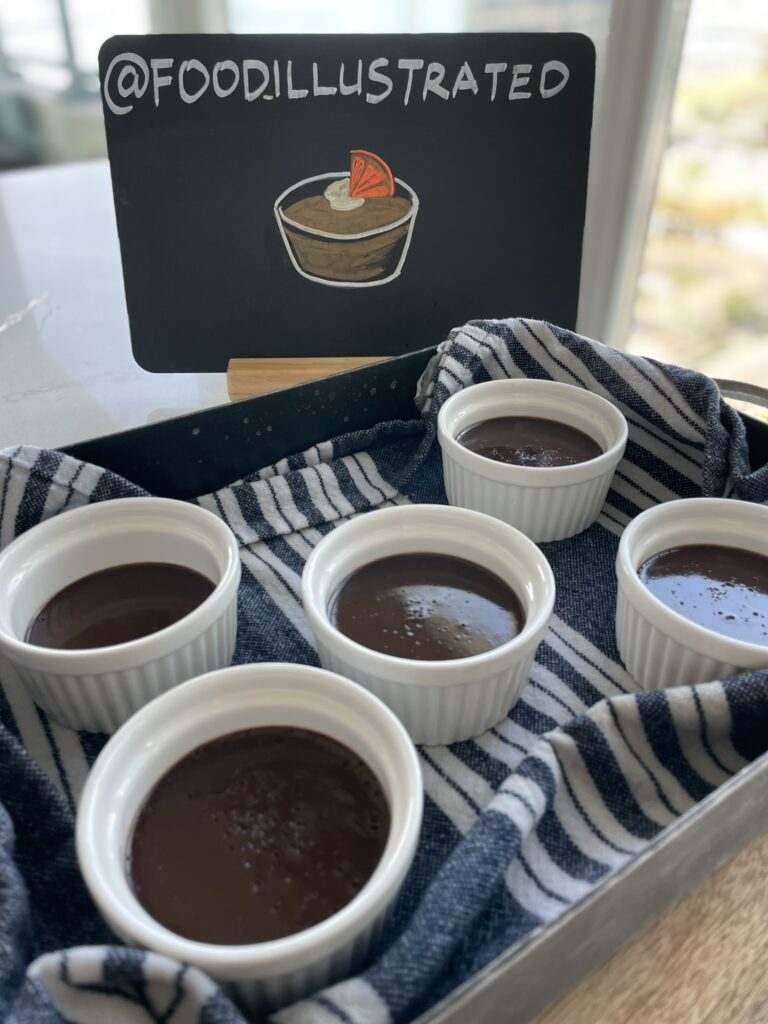
Pots de Crème translates literally to “pots of cream,” and the name perfectly describes the dessert: a small, individual pot of the richest custard imaginable. Unlike crème brûlée, which is baked in a water bath and then torched, or panna cotta, which is set with gelatin, pots de crème rely solely on egg yolks and gentle heat to achieve their signature density. The dessert originated in 18th‑century France as a luxurious way to showcase chocolate, which was still a rare and expensive import.
Today, it remains a staple of Parisian bistros and home cooks alike – not because it’s complicated, but because it’s forgiving. The water bath does most of the work, and the final texture is far more forgiving than a finicky soufflé. It’s also naturally gluten‑free, making it a go‑to for entertaining guests with dietary restrictions.
Why This Recipe Works
- Double chocolate: We use both melted chocolate and a touch of cocoa powder. The cocoa powder dissolves into the cream, reinforcing the chocolate flavor without adding extra fat.
- The 5‑minute rest: Letting the chocolate sit in hot cream without stirring mimics a gentle tempering, preventing graininess.
- Espresso + hazelnut: A classic French pairing. The nutty liqueur plays off the bittersweet chocolate, while espresso powder adds an elusive depth that makes guests ask, “What is that flavor?”
Perfect Pairings
- Wine / Spirits: Serve with a tiny glass of Sauternes, Madeira, or the same hazelnut liqueur used in the recipe.
- Coffee: A demitasse of espresso is the traditional accompaniment.
- Texture contrast: Top with flaky sea salt (Maldon) or crushed cocoa nibs for crunch.
Did you make this recipe?