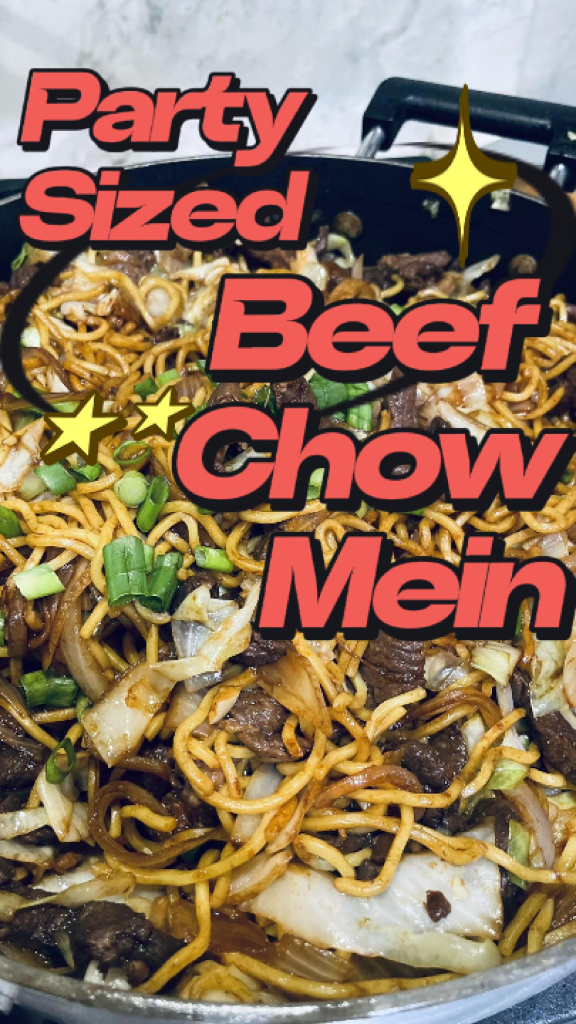
Intro Hosting a dinner party doesn't have to mean stress, tiny portions, or hours of last-minute chaos. This Giant Beef Chow Mein is here to change all that. We're talking about a massive, glorious wok full of tender beef, crisp vegetables, and savory "wok-kissed" noodles—all coated in a rich, umami-packed sauce. It's the kind of dish that lands on the table to gasps and applause, yet it's built on a foolproof restaurant-style sequence that you can master at home. Designed to serve 8-10 hungry guests, this showstopper proves that better-than-takeout Chinese food can also be the ultimate crowd-pleasing centerpiece.
The History Chow mein, which translates directly from the Cantonese "chāu-mèing" as "stir-fried noodles," has its roots in Northern China, where wheat-based noodles have been a staple for millennia . The technique of stir-frying itself was born of practicality—a way to cook small amounts of food quickly over limited fuel, a method perfected by street vendors feeding busy city workers . When Chinese immigrants arrived in the United States during the 1850s California Gold Rush, they brought their culinary traditions with them, and chow mein soon appeared on the menus of the earliest Chinese restaurants in America .
Over time, the dish evolved to suit local tastes. In contrast to the lighter, more varied versions found across China, American-style chow mein became heartier, with more protein and a savory-sweet sauce that resonated with Western palates . It grew from a simple noodle dish into a cultural phenomenon, even appearing in canned form in the 1940s thanks to companies like Chun King . Our giant-batch version honors this immigrant story and the dish's evolution, delivering the satisfying, flavor-packed experience that made chow mein a beloved classic across North America and beyond .
The Science Creating truly exceptional beef chow mein at home comes down to understanding the physics of the wok and the chemistry of the ingredients. The wok is ingeniously designed with two distinct heat zones: the scorching-hot bottom (the "sear zone") where food makes direct contact and develops deep browning via the Maillard reaction, and the sloping sides (the "steam zone") where moisture evaporates and helps cook food through quickly . Constant stirring isn't just for show—it brings new surfaces into contact with the hot pan, speeding up cooking and driving off moisture, which concentrates flavors and allows for that coveted browning .
The "wok hei"—that elusive smoky, savory essence of great stir-fry—is the ultimate reward. It's created by a combination of factors: oils heating to their smoke point, chemical interactions between food and the seasoned steel, and accelerated Maillard and caramelization reactions that happen when the heat is cranked up . The baking soda in our beef marinade works on a chemical level, raising the pH on the meat's surface to prevent protein strands from tightening excessively, ensuring the beef stays tender and juicy even under intense heat. Finally, the cornstarch slurry at the end triggers starch gelatinization, transforming the sauce from a thin liquid into a glossy coating that clings to every noodle and strip of beef .
Appetizer:Crispy Spring Rolls with Sweet Chili Sauce
Why: The light, crunchy texture of spring rolls provides a delightful contrast to the saucy noodles to come. The sweet and slightly spicy dip awakens the palate and echoes the savory-sweet notes in the chow mein sauce.
Main Course:Note: This chow mein is already a complete, hearty main. For an epic multi-course feast, serve it alongside: Kung Pao Chicken
Why: The bold, spicy, and nutty flavors of Kung Pao offer a fantastic counterpoint to the rich, savory chow mein. The contrasting textures of tender chicken and crunchy peanuts add another layer of excitement to the meal.
Side Dish:Blanched Baby Bok Choy with Oyster Sauce
Why: Simple, tender greens provide a mild, earthy counterbalance to the rich noodles. A light drizzle of oyster sauce adds a touch of umami sweetness that complements the beef and sauce without overwhelming them.
Dessert:Fortune Cookies and Fresh Mandarin Oranges
Why: A classic, light ending to a Chinese feast. The sweet, crisp cookies are a fun tradition, while the bright, juicy citrus segments cleanse the palate and provide a refreshing finish.
Cocktail:Classic Gin & Tonic with a Lime Wedge
Why: The botanical notes of gin and the bright, bitter effervescence of tonic cut through the richness of the dish and act as a perfect palate cleanser between bites.
Non-Alcoholic Drink:Iced Lychee Green Tea
Why: The floral sweetness of lychee complements the savory notes of the chow mein, while the clean, slightly astringent quality of green tea refreshes the palate and aids digestion.
Hosting a dinner party? This giant-batch Beef Chow Mein is your secret weapon. Tender beef, crunchy vegetables, and "wok-kissed" noodles come together in a savory sauce for an epic, better-than-takeout meal that serves 8-10.
Ingredients
For the Beef & Marinade:
2lbs flank steak (900g or sirloin, thinly sliced against the grain)
3tbsp soy sauce
2tbsp oyster sauce
1tbsp Shaoxing wine (or dry sherry)
1tbsp cornstarch
1tbsp vegetable oil
1tsp baking soda
For the Stir-Fry:
1.5lbs fresh chow mein noodles (or 24 oz dried lo mein noodles) (700g)
1large yellow onion (sliced)
½ head green cabbage (about 4-5 cups, shredded)
6 green onions (cut into 2-inch pieces)
6cloves garlic (minced)
3tbsp vegetable oil (divided)
For the Sauce:
½cup low-sodium soy sauce
⅓cup oyster sauce
¼cup Shaoxing wine
2tbsp hoisin sauce
2tbsp dark soy sauce (for color)
1cup chicken broth (or beef broth)
1tbsp brown sugar
2tsp sesame oil
¼cup cornstarch (slurry mixed with ¼ cup cold water)
For Garnish:
Additional sliced green onions
Toasted sesame seeds
Instructions
1
Marinate the Beef: In a large bowl, whisk together the soy sauce, oyster sauce, Shaoxing wine, cornstarch, and 1 tbsp of oil. Add the sliced beef and toss thoroughly to coat. The baking soda will help tenderize the meat . Cover and marinate for 20-30 minutes at room temperature.
2
Prepare the Noodles: If using fresh chow mein noodles, par-cook them according to package directions (usually 1-2 minutes in boiling water). Drain, rinse with cold water to stop cooking, and toss with a little oil to prevent sticking. Set aside.
3
Make the Sauce: In a medium bowl or measuring cup, whisk together the soy sauce, oyster sauce, Shaoxing wine, hoisin, dark soy sauce, broth, and brown sugar until the sugar dissolves. Set aside. Prepare the cornstarch slurry in a small bowl and have it ready by the stove.
4
Sear the Beef: Heat 1 tbsp of oil in your largest wok or heavy-bottomed skillet over high heat until it just begins to smoke. Add half the marinated beef in a single layer (do not overcrowd). Let it sear undisturbed for 60-90 seconds, then stir-fry for another 1-2 minutes until browned but not necessarily cooked through. Remove to a clean plate. Repeat with remaining beef.
5
Stir-Fry the Vegetables: Add another 1 tbsp of oil to the wok. Add the sliced onion and shredded cabbage. Stir-fry for 4-5 minutes until the vegetables are wilted and have some nice charred spots. Remove to a separate bowl.
6
Brown the Noodles & Aromatics: Heat the final 1 tbsp of oil in the wok over medium-high heat. Add the green onion pieces and minced garlic, stir-frying for just 30 seconds until fragrant. Add the prepared noodles and spread them out. Let them sit for 1-2 minutes to brown on one side, then toss and sear for another 2-3 minutes total.
7
The Grand Combine: Return the cooked beef and the cooked vegetables to the wok with the noodles. Give the prepared sauce a quick stir and pour it over everything. Immediately add the cornstarch slurry. Stir-fry vigorously over high heat for 2-3 minutes, tossing constantly, until the sauce thickens, becomes glossy, and coats every strand of noodle and piece of beef .
8
Finish & Serve: Turn off the heat. Drizzle with an extra teaspoon of sesame oil and give it one final toss. Transfer the entire glorious mass to a huge serving platter. Garnish with more sliced green onions and toasted sesame seeds. Serve immediately to a very happy crowd!
Nutrition Facts
Servings 10
Amount Per Serving
Calories520kcal
% Daily Value *
Total Fat18g28%
Sodium1250mg53%
Total Carbohydrate58g20%
Dietary Fiber5g20%
Sugars8g
Protein32g64%
* Percent Daily Values are based on a 2,000 calorie diet. Your daily value may be higher or lower depending on your calorie needs.
Note
Prep Ahead for Success: This is the key to a stress-free dinner party. Marinate the beef and chop all vegetables the morning of your party. Par-cook the noodles 1-2 hours ahead, rinse with cold water, and toss with a little oil to prevent sticking .
Wok Power: Don't overcrowd the wok during the searing steps. Cooking in concentrated batches builds flavor through proper browning instead of steaming .
Work in Batches: If your wok isn't huge, cook the beef in two or even three batches. It's better to have perfectly seared meat in stages than a large, soggy pile.
Hold Warm for a Buffet: This dish holds surprisingly well for 30+ minutes. You can keep it warm in a low oven (200°F / 95°C) or transfer it to a chafing dish for a buffet-style spread.
Ingredient Sourcing: Dark soy sauce is thicker, less salty, and adds that beautiful deep color you see in restaurant versions. It's worth seeking out at an Asian grocery, but you can substitute with more light soy in a pinch.
Keywords:
giant beef chow mein, dinner party chow mein, beef chow mein recipe, chow mein for a crowd, Chinese stir-fry noodles, restaurant style chow mein, homemade chow mein, wok recipes, beef and noodle stir-fry, better than takeout chow mein, flank steak chow mein, chow mein sauce, how to make chow mein, large batch stir-fry, Cantonese noodles
Chow Mein Around the World
The beauty of chow mein lies in its incredible global adaptability. While our recipe focuses on a hearty American-style version, the dish takes on fascinating local forms everywhere :
Canada: Cantonese-style chow mein features deep-fried crunchy egg noodles topped with a thick sauce, shrimp, and roast pork . In Newfoundland, a unique version uses shredded cabbage instead of noodles, a substitution born from the island's historical remoteness .
Caribbean: In Trinidad, Jamaica, and Guyana, chow mein is stir-fried with local spices and often served with hot Scotch bonnet peppers, creating a fiery Creole-Chinese fusion .
India: Indian-Chinese (Indo-Chinese) cuisine features "Hakka noodles," a close cousin of chow mein, often served with a spicy gravy or as a dry variant, sometimes including paneer for a vegetarian option .
Nepal: Tibetan settlers brought chow mein to Nepal, where it's sometimes made with water buffalo meat (buff) and mixed with local vegetables .
The Physics of the Toss
Making chow mein isn't just cooking; it's applied physics. Researchers at Georgia Tech actually studied the kinematics of wok-tossing to understand how chefs achieve the perfect result . They found that the ideal motion combines a side-to-side push-pull with a see-sawing rotation, using the stove rim as a fulcrum. This dual-motion ensures that ingredients constantly leave the wok's scorching surface, allowing them to cool slightly and preventing burning, while the rapid return to the heat builds that complex "wok hei" flavor. The study found chefs perform about 276 tossing cycles in the two minutes it takes to cook a dish—a testament to the skill and physics behind your dinner .
The Apopka Voice / The Conversation (East Meets West in Fall River)