Servings 12
- Amount Per Serving
- % Daily Value *
- Total Fat 12g19%
- Saturated Fat 2g10%
- Sodium 89mg4%
- Total Carbohydrate 12g4%
- Sugars 2g
- Protein 5g10%
* Percent Daily Values are based on a 2,000 calorie diet. Your daily value may be higher or lower depending on your calorie needs.
Note
The Official Ramsay Method vs. This Recipe:
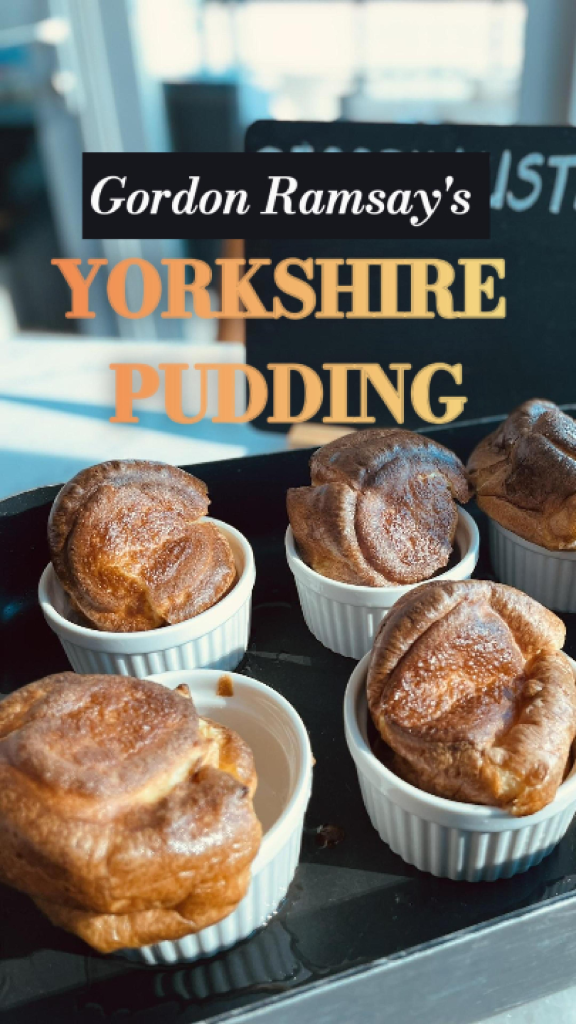
Gordon Ramsay’s official restaurant recipe uses 3 eggs, 125g flour, and 150ml milk . However, the 4-egg, 1.5-cup milk version provided here is the most widely circulated adaptation from Ramsay (featured on Food.com and The Spruce Eats) and is beloved by home cooks for its reliability and higher yield .
The Secret to the Tallest Rise:
- Chilled batter + hot fat: This temperature shock is the single most important factor .
- Eggs over milk: Higher egg-to-liquid ratios create more steam and structure. Mary Berry and Gordon Ramsay both advocate for less milk to maximize lift .
- Gluten rest: Do not skip the fridge time. A relaxed gluten network stretches easily, allowing the puddings to balloon .
Fat Matters:
- Vegetable oil: Neutral, vegetarian, reaches high smoke point.
- Beef dripping: The traditional choice. Adds deep, savory umami .
- Goose fat: Extra luxury for Christmas dinner.
- Bacon grease: A flavorful substitute .
Make-Ahead & Freezing:
- Batter: Store covered in the fridge for up to 3 days .
- Baked puddings: Cool completely, freeze in a sealed bag. Reheat at 400°F for 3-4 minutes until crisp.
Mini Yorkies:
Use 1 tsp oil per hole in a mini muffin tin. Bake for 12–15 minutes
Keywords:
yorkshire pudding, gordon ramsay yorkshire pudding, easy yorkshire pudding recipe, british popovers, sunday roast side dish, toad in the hole base, beef dripping puddings,
A Dish Born from Thrift, Perfected by Science
Long before Gordon Ramsay demanded smoking-hot fat, Yorkshire pudding was a humble solution to a wasteful problem. In 18th-century England, cooks roasting meat on a spit placed a pan beneath to catch the drippings. They poured a simple batter of flour, eggs, and milk into the hot fat, creating a cheap, filling pudding that hungry laborers ate before the meat—dulled appetite meant the expensive roast went further .
Hannah Glasse & The Name "Yorkshire"
The first recorded recipe for “a dripping pudding” appeared in 1737. A decade later, Hannah Glasse renamed it Yorkshire pudding in her seminal work, The Art of Cookery Made Plain and Easy (1747). The name stuck, and the county of Yorkshire became synonymous with the dish—perhaps, as some suggest, because the region’s coal-fired ovens reached higher temperatures, producing crisper results .
The 4-Inch Rule
In 2008, the Royal Society of Chemistry declared: “A Yorkshire pudding isn’t a Yorkshire pudding if it is less than four inches [10 cm] tall.” This remains the unofficial benchmark of success .
Pudding First, Roast Second
Until the mid-20th century, Yorkshire pudding was traditionally served as a first course with gravy, followed by the meat and vegetables with a parsley or white sauce. Today, it sits proudly alongside the roast—but the old way is worth reviving for your next dinner party .
Global Cousins:
- Popovers (USA): Lighter, often served sweet with butter and jam.
- Dutch Baby (Germany/USA): Baked in a skillet, puffed, usually sweet.
- Takoyaki (Japan): Savory batter balls filled with octopus .
Did you make this recipe?