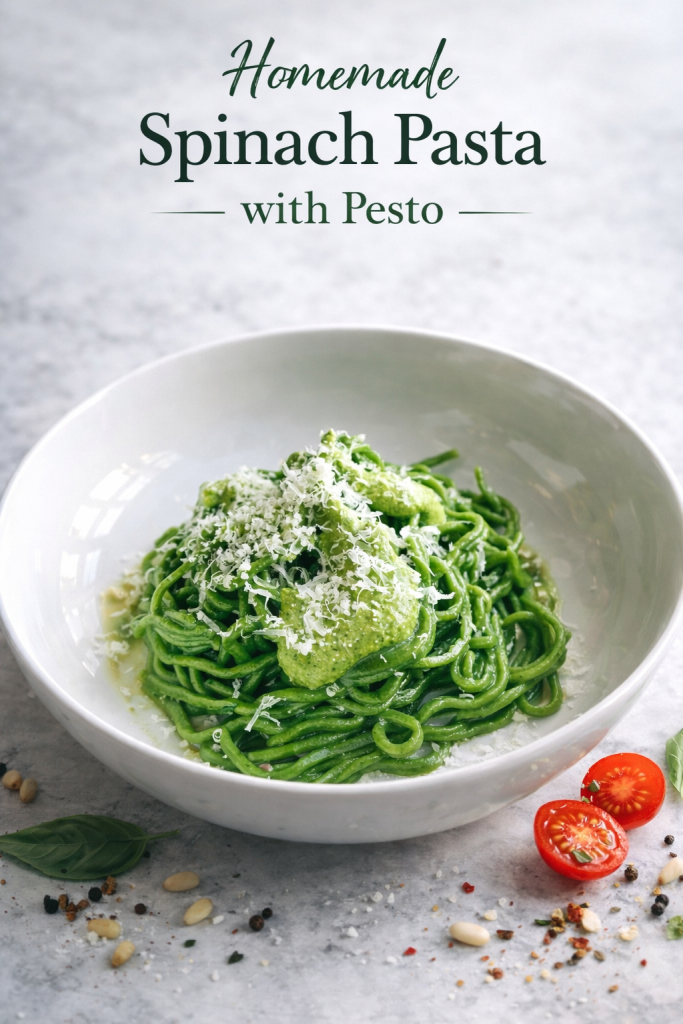
Homemade Spinach Pasta with Pesto: Vibrant Green Garlicky Goodness
INTRO
Have you ever noticed how the most vibrant green dishes often taste the most alive? There's something almost magical about a bowl of homemade spinach pasta with pesto—the way the emerald ribbons glisten under a blanket of fragrant, garlicky sauce, finished with delicate curls of Parmesan cheese. It doesn't just look impressive; it's a sensory experience that transports you straight to a cozy trattoria in the Italian countryside.
This recipe is my definitive guide to creating that experience in your own kitchen. We're making everything from scratch: a silky, nutrient-packed spinach pasta dough and a bright, nutty pesto that puts any store-bought version to shame. What makes this version unique is our focus on technique—from properly drying your spinach for the dough to toasting the nuts for the pesto—ensuring a result that's not only beautiful but bursting with fresh, authentic flavor. Trust me, once you've made your own homemade spinach pasta with pesto, you'll never go back.
THE HISTORY
To understand this dish, we have to look at its two distinct parts: pasta and pesto. Fresh egg pasta, or pasta all'uovo, has its roots in the Emilia-Romagna region of Italy, particularly around Bologna . For centuries, the resourceful women of the region, the sfogline, would roll out sheets of dough made from nothing more than flour and eggs, transforming humble ingredients into luxurious ribbons of tagliatelle and lasagne. The addition of spinach to create pasta verde (green pasta) was a natural evolution, a way to incorporate more vegetables into the diet and add a touch of festive color to the table, especially for special occasions like Easter or Christmas .
Meanwhile, in the sun-drenched region of Liguria, another culinary masterpiece was taking shape: pesto. The name comes from the Genoese word pestâ, meaning "to pound" or "to crush," referring to the traditional method of grinding ingredients in a marble mortar with a wooden pestle . The most famous version, Pesto alla Genovese, is a celebration of the region's bounty: fragrant basil, pungent garlic, pine nuts, creamy Parmigiano-Reggiano or Pecorino, and fruity extra-virgin olive oil . For centuries, this uncooked sauce was the perfect way to capture the essence of summer, and its marriage with pasta was inevitable. The combination of the rich, earthy spinach pasta and the bright, herby pesto is a more modern, yet utterly harmonious, fusion of two great Italian culinary traditions, representing the best of Northern Italian home cooking.
THE SCIENCE
Creating the perfect homemade spinach pasta with pesto is as much a science as it is an art. Let's start with the pasta. The biggest challenge with spinach dough is water. Spinach is mostly water, and too much moisture will result in a sticky, weak dough that's difficult to roll and turns mushy when cooked. That's why we cook the spinach first . Heating the spinach breaks down cell walls, releasing a significant amount of water. By then shocking it in ice water and, crucially, squeezing it completely dry in a towel, we concentrate the flavor and color while removing the excess liquid that would otherwise wreak havoc on our gluten development . The result is a dough where the spinach acts as a flavor and color agent, not a hydration problem. The proteins (glutenin and gliadin) in the flour can then properly bond with the eggs to form a strong, elastic network, giving our pasta that perfect "al dente" bite.
Now, for the pesto, we're dealing with an emulsion and enzymatic reactions. According to food science experts, blanching greens before blending deactivates enzymes that cause browning and helps break down pectin in the cell walls, yielding a finer, smoother texture . When we blend the ingredients, the olive oil is broken into tiny droplets and suspended by the solids from the basil, nuts, and cheese, creating a thick, cohesive sauce . This is a water-in-oil emulsion, and its success relies on the right ratio of ingredients. The garlic plays a dual role: it provides pungent flavor from a compound called allicin, but it can also be overpowering if raw. Toasting the nuts is a non-negotiable step. The gentle heat triggers the Maillard reaction, a complex chemical process between amino acids and reducing sugars that creates hundreds of new, savory, and nutty flavor compounds . This adds a depth and warmth to the pesto that raw nuts simply can't provide. Finally, a squeeze of fresh lemon juice isn't just for brightness; its acidity helps to preserve the vibrant green color of the basil by slowing down the oxidation (browning) caused by enzymes reacting with oxygen .
GOOD PAIRING FOOD AND DRINK
The earthy, herbal, and cheesy notes of this dish make it wonderfully versatile for pairing. Here are some of my favorite companions:
One Appetizer:Bruschetta al Pomodoro. Toasted crusty bread rubbed with garlic and topped with a vibrant mix of diced ripe tomatoes, fresh basil, and a drizzle of balsamic glaze. The bright, acidic tomatoes provide a fresh contrast to the rich, creamy pesto pasta, waking up the palate without overwhelming it.
One Main Course:Lemon-Herb Grilled Chicken Breast. A simply grilled chicken breast marinated in lemon juice, rosemary, and thyme. The light, charred protein adds substance to the meal, while the bright lemon and herbs echo the flavors in the pesto, creating a cohesive and satisfying plate.
One Side Dish:Roasted Cherry Tomatoes with Garlic. Halved cherry tomatoes tossed with olive oil and garlic, then roasted until they blister and burst. Their sweet, concentrated juices are a phenomenal counterpoint to the savory pesto and rich pasta, adding pops of intense flavor in every other bite.
One Dessert:Lemon Ricotta Cake. A light, moist Italian-style cake made with creamy ricotta and zesty lemon. Its delicate sweetness and slight tang cleanse the palate after the meal and provide a gentle, satisfying finish without being heavy.
One Cocktail:A Classic Italian Spritz (Aperol or Campari). The bitter, bubbly, and refreshing nature of a Spritz is the perfect foil for the rich, herbal pesto. Its low alcohol content and bright orange notes cut through the dish's richness and prepare you for the next delicious forkful.
One Non-Alcoholic Drink:Sparkling Water with Lemon and Fresh Mint. Sometimes, simple is best. The effervescence acts as a palate cleanser, while the lemon and mint provide a fresh, aromatic lift that complements the basil and garlic in the pesto without competing.
This homemade spinach pasta with pesto recipe is a celebration of fresh flavors. Vibrant green spinach fettuccine is tossed in a bright, garlicky basil-walnut pesto and finished with shaved Parmesan for a restaurant-quality meal you can make at home.
Ingredients
For the Homemade Spinach Pasta:
5oz fresh spinach (140g)
2large eggs
2large egg yolks
2cups "00" flour (250g or all-purpose flour, plus more for dusting)
1teaspoon fine sea salt
1tablespoon extra virgin olive oil (, for dusting)
Semolina flour
For the Homemade Pesto:
2cups fresh basil leaves (, packed)
1/2cup pine nuts (See Note 1, lightly toasted)
2cloves garlic
1/2cup freshly grated Parmesan cheese (, plus more for serving)
1/2cup extra virgin olive oil
2tablespoons fresh lemon juice
1/2teaspoon sea salt, or to taste
1/4teaspoon freshly ground black pepper (or to taste)
For Serving:
Block of Parmesan cheese, for shaving
Instructions
Part 1: Make the Spinach Pasta Dough
1
Prepare the Spinach: Place the fresh spinach in a large skillet or pot over medium heat with just the water clinging to its leaves from washing. Cook, stirring, for 1-2 minutes until completely wilted . Immediately transfer the wilted spinach to a bowl of ice water to stop the cooking and preserve its bright green color. This is called "shocking."
Dry the Spinach: Once the spinach is cold, use your hands to transfer it to a clean, thin kitchen towel. Gather the edges of the towel and twist tightly, squeezing out every last drop of water over the sink . This step is crucial; you'll be amazed how much water comes out.
Make the Purée: Transfer the squeezed-dry spinach to a food processor. Add the 2 whole eggs, 2 egg yolks, and 1 tablespoon of olive oil. Pulse until the mixture is completely smooth and forms a vibrant green liquid. There should be no visible pieces of spinach left.
Mix the Dough: On a clean work surface, mound the 2 cups of flour and sprinkle with the 1 teaspoon of salt. Create a well in the center, like a volcano. Pour the spinach-egg mixture into the well.
Knead the Dough: Using a fork, gently beat the eggs and begin incorporating flour from the inner walls of the well. Continue until a shaggy dough forms. Use a bench scraper to help incorporate the last bits. Once the dough comes together, use your hands to knead it for 8-10 minutes. The dough will be quite firm at first but will become smooth, elastic, and slightly tacky (but not sticky) as you work . If it's too dry, wet your hands and continue; if too sticky, add a tiny dusting of flour.
Rest the Dough: Shape the dough into a ball and flatten it into a disc. Wrap it tightly in plastic wrap and let it rest at room temperature for at least 30 minutes . This allows the gluten to relax, making it much easier to roll out later.
Part 2: Make the Pesto
2
Toast the Nuts: While the dough rests, place the walnuts or pine nuts in a dry skillet over medium heat. Cook, shaking the pan frequently, for 3-5 minutes until they are fragrant and lightly golden. Be careful not to burn them . Set aside to cool completely.
Blend the Pesto: In a food processor, combine the fresh basil leaves, cooled toasted nuts, and garlic cloves. Pulse a few times to chop them up.
Emulsify: With the food processor running, slowly drizzle in the olive oil through the feed tube. Stop to scrape down the sides as needed. Process until the pesto is mostly smooth but still has a little texture.
Finish the Pesto: Add the freshly grated Parmesan cheese, lemon juice, salt, and pepper. Pulse just a few times to combine. Taste and adjust seasoning, adding more salt, lemon, or pepper as desired. Set aside.
Part 3: Roll, Cut, and Cook the Pasta
3
Roll the Dough: Unwrap the rested dough and cut it into 4 pieces. Keep the pieces you're not working with covered with a towel or plastic wrap to prevent them from drying out. Flatten one piece into a rough rectangle. Run it through your pasta machine on the widest setting. Fold the sheet into thirds (like a letter) and run it through the widest setting again. Repeat this folding and rolling step 3-4 times until the dough is very smooth.
Thin the Sheets: Now, run the dough through the machine once at each setting, without folding, until you reach your desired thinness. For fettuccine or tagliatelle, I stop at setting #6 or #7 on most machines (about 1/16th of an inch or 1.5mm thick) . The sheet should be slightly translucent. Lay the long sheet on a lightly floured surface and repeat with the remaining dough.
Cut the Pasta: If you have a pasta cutter attachment, feed the sheets through the fettuccine cutter. If cutting by hand, lightly dust the sheet with flour, loosely roll it up into a log, and use a sharp knife to cut the log into 1/4-inch wide ribbons. Immediately unroll the ribbons and toss them with a little semolina flour to prevent sticking. Form them into neat nests on a floured baking sheet.
Cook the Pasta: Bring a large pot of generously salted water to a rolling boil. The water should taste like the sea. Add the fresh pasta nests and cook for 2-4 minutes, or until the pasta floats to the top and is tender but still firm to the bite (al dente) .
Combine and Serve: Just before the pasta is done, reserve about 1 cup of the starchy pasta water. Drain the pasta and immediately transfer it to a large serving bowl. Add a generous amount of the pesto (you may not need it all) and a splash of the hot pasta water. Toss vigorously to coat the pasta evenly. The starchy water will help the pesto cling to the noodles and create a silky sauce . Serve immediately, topped with freshly shaved Parmesan cheese.
Nutrition Facts
Servings 4
Amount Per Serving
Calories620kcal
% Daily Value *
Total Fat32g50%
Saturated Fat7g35%
Sodium680mg29%
Total Carbohydrate58g20%
Dietary Fiber5g20%
Sugars3g
Protein19g38%
Vitamin A 3800 IU
Iron 5 mg
* Percent Daily Values are based on a 2,000 calorie diet. Your daily value may be higher or lower depending on your calorie needs.
Note
Pro Tip for Pasta: Don't skip the resting time for the dough. This allows the gluten to relax, preventing the pasta from shrinking and becoming tough when you roll it out. A well-rested dough is a joy to work with .
Pro Tip for Pesto: To keep your pesto bright green, always toast your nuts separately and let them cool completely before blending. The heat from warm nuts can "cook" the basil, turning it dark . Also, adding a thin layer of olive oil on top of any leftover pesto before storing it in the fridge will create a seal that prevents oxidation and browning .
Make-Ahead: You can make the pesto up to 5 days in advance and store it in an airtight container in the refrigerator . The pasta dough can be made, wrapped well, and refrigerated for up to 24 hours or frozen for up to a month. Let it come to room temperature for about 30 minutes before rolling.
Storage: Cooked homemade spinach pasta with pesto is best enjoyed immediately, as the pesto can lose its vibrant color upon reheating. Leftovers can be stored in an airtight container in the fridge for up to 2 days . To reheat, toss in a pan with a tiny splash of water over very low heat, but be aware the color will darken.
Substitutions:
Nuts: While pine nuts are traditional, walnuts are a fantastic, budget-friendly substitute that adds a wonderful earthy flavor . You can also use almonds or even sunflower seeds for a nut-free version.
Cheese: Pecorino Romano can be used in place of or in combination with Parmesan for a sharper, saltier flavor .
Flour: "00" flour is ideal for its fine texture, but high-quality all-purpose flour works beautifully.
Keywords:
homemade spinach pasta, spinach pasta recipe, how to make spinach pasta, homemade pesto, fresh pesto recipe, spinach pesto pasta, pasta with pesto, green pasta, Italian pasta recipes, homemade pasta dough, basil pesto, vegetarian pasta dinner, easy homemade pasta, date night pasta, pasta with walnuts, fresh pasta recipe, spinach fettuccine, parmesan shavings, from scratch pasta,
ngredient Deep-Dive: The Magic of Basil The soul of any pesto is the basil. Sweet basil, the variety most common in supermarkets, has a delicate flavor profile with notes of anise and mint. For the best results, look for basil with vibrant green, unblemished leaves and a strong, fragrant aroma. Avoid basil that is wilted or has dark spots. A fun trick from Italian home cooks is to gently wash the basil and spin it perfectly dry, but never cut the leaves with a knife before blending, as this can cause bruising and browning. Tearing or letting the food processor do the work is best . If you're feeling adventurous, you can try making pesto the old-fashioned way in a mortar and pestle—it creates a slightly different, more rustic texture where you can really taste each individual ingredient.
Regional Variations to Explore Once you've mastered this classic, you can experiment with different twists. For a quick weeknight version, try this 3-ingredient spinach pesto pasta that uses store-bought pasta . If you're looking for a dairy-free option, this creamy vegan spinach pasta swaps Parmesan for coconut milk . For a more indulgent take, some recipes add cream to create a creamy spinach pesto sauce