INTRO
Want a restaurant-quality meal for two without leftovers?
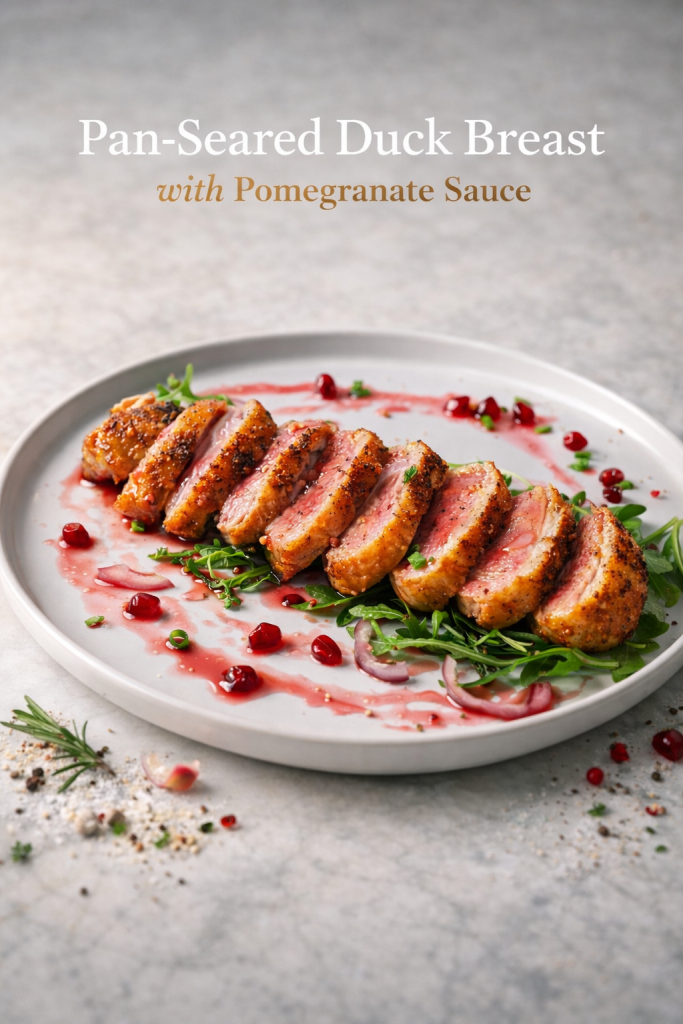
This guide teaches you exactly how to cook pan-seared duck breast with pomegranate sauce using just one breast. It's the perfect, no-waste romantic dinner.
The dish features perfectly cooked duck with crackling-golden skin and a tender, juicy interior. A shimmering, sweet-tart sauce drapes over the top.
What makes this duck breast recipe unique? The from-scratch sauce builds incredible depth with aromatics and orange juice. It's far better than anything from a bottle.
We're creating an experience here. It's a symphony of flavors and textures that makes any dinner feel like a celebration.
THE HISTORY
Duck and pomegranate is an ancient pairing.
It traces back to Persia (modern-day Iran), where the pomegranate is a native fruit and symbol of life. According to Epicurious, fourth-century Persian manuals describe ducks fattened for royalty. The finest meal? Duck served in a tart pomegranate sauce.
This evolved into Fesenjan, a beloved Persian stew from the Caspian Sea region. Fesenjan combines poultry with ground walnuts and pomegranate molasses. It's rich, creamy, and deeply flavorful.
This traditional Persian duck recipe was favored in fall when pomegranates ripened. It still holds honor at Iranian weddings today.
The core principle endures: rich duck, offset by bright, acidic pomegranate. Some culinary truths are timeless.
THE SCIENCE
Creating perfect pan-seared duck breast teaches two sciences: fat rendering and the Maillard reaction.
Duck breasts have a thick fat cap. The goal is to render that fat for crispy skin without overcooking the meat.
Start the duck in a cold pan. As it heats slowly, the fat gently renders and pools around the breast. This lets maximum fat melt away. Save it for roasting potatoes later.
As any line cook knows, pan-searing is the best method for crispy skin. Direct heat renders fat and promotes browning. This is key to mastering how to cook duck breast.
The Maillard reaction also works its magic. This chemical reaction between amino acids and sugars creates complex, savory flavor and deep color.
Scoring the skin increases surface area for this reaction. It also creates channels for fat to escape.
High pan heat (around 320°F) kickstarts browning. That's how we get that incredible crust.
Molecular gastronomist Hervé This says we should heat foods quickly at first for maximum Maillard flavor.
Duck fat is prized by chefs. It has a high smoke point (375°F) for searing and a silky texture from its low melting point.
Finally, resting is crucial. It lets juices redistribute throughout the meat. Every slice of your seared duck breast with orange sauce stays succulent and moist.
GOOD PAIRING FOOD AND DRINK