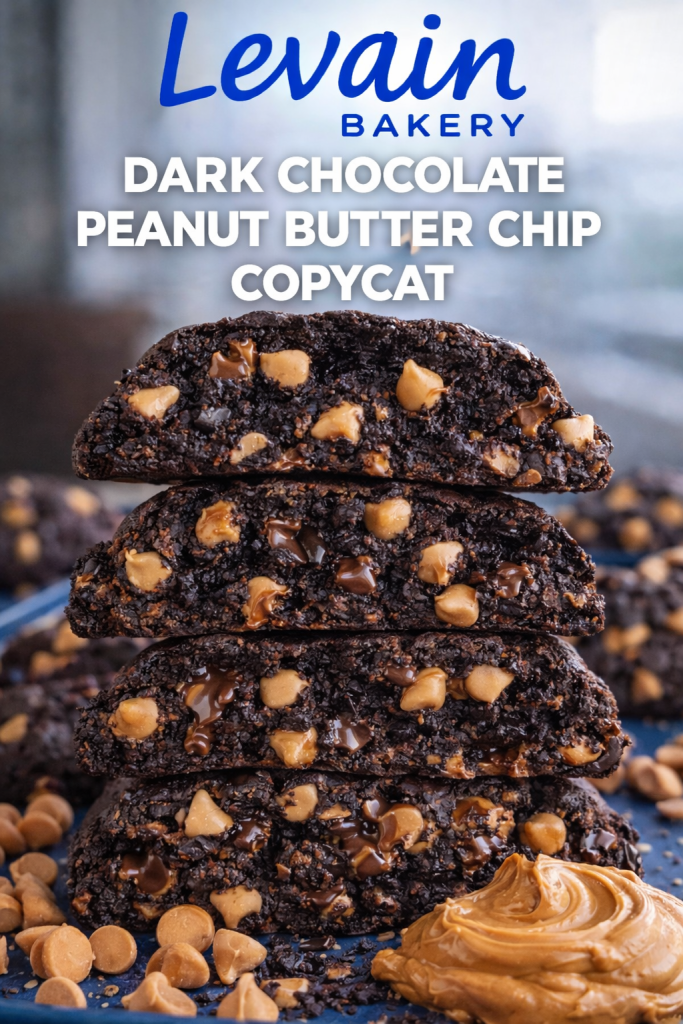
Levain Bakery Copycat Cookies: Dark Chocolate Peanut Butter Chip Recipe
Have you ever waited in that legendary line outside Levain Bakery on West 74th Street, watching people walk away clutching bags of those absurdly giant, warm cookies? The ones with the crackly tops and the interiors that somehow stay fudgy and underbaked while the edges turn perfectly crisp? Good news—you don't need to fly to New York anymore. These Levain Bakery copycat cookies deliver the exact same experience in your own kitchen.
This recipe captures everything you love about the original. Massive six-ounce portions. Deep, dark chocolate flavor from Hershey's Special Dark cocoa. Those sweet, melty peanut butter chips scattered throughout. And that signature texture—a cookie that's somehow both crunchy and gooey simultaneously. Best of all? No chilling required. You can go from craving to cookie in about twenty minutes.
THE HISTORY
The Levain Bakery story begins in 1995 with two friends who shared a passion for food and a dream. Connie McDonald and Pam Weekes were competitive triathletes who needed serious fuel for their training. They opened a small bakery on the Upper West Side of Manhattan, intending to sell artisanal bread. But something unexpected happened.
The cookies they baked for themselves—massive, dense, and packed with chocolate—caught the attention of customers. People kept asking to buy them. Connie and Pam obliged, and word spread quickly. Within months, the line stretched down the block. Within years, Levain Bakery became a New York City institution.
Today, food writers and pastry chefs still debate what makes the Levain cookie so special. Some point to the high oven temperature. Others credit the specific flour blend. The bakery guards its recipe fiercely, which explains the cottage industry of "copycat" recipes that have emerged over the past two decades. Home bakers across the country have dedicated countless hours to reverse-engineering that perfect texture.
What most versions miss, however, is the crucial detail that makes Levain cookies truly unique—they're meant to look slightly underbaked when they come out of the oven. That pale, soft center isn't a mistake. It's the entire point. The cookies continue baking on the hot sheet pan after you pull them from the oven, setting up just enough to hold together while staying gloriously fudgy inside.
THE SCIENCE
Why do these cookies achieve that impossible texture—crisp outside, gooey inside, and somehow never raw? The answer involves three key scientific principles working in harmony.
First, consider the heat. Baking these cookies at 425°F (significantly hotter than the standard 350°F) creates rapid exterior setting. The outside of the cookie firms up almost immediately, forming that thin, crackly crust. Meanwhile, the interior barely has time to catch up. By the time the five-minute mark hits, the outside has fully set while the inside remains soft and almost dough-like. That's exactly what you want.
Second, the flour blend matters tremendously. Using both all-purpose flour and cake flour creates a specific protein structure. All-purpose flour provides enough gluten development for structure and chew. Cake flour, with its lower protein content, keeps things tender and prevents toughness. The combination allows the cookies to spread just enough while maintaining that thick, chunky shape Levain is famous for.
Third, the cooling phase isn't passive—it's active cooking. When you pull those cookies from the oven at five minutes, they look alarmingly underdone. But residual heat continues transferring from the baking sheet into the cookies. Over the next ten minutes on the pan, the interiors gently finish cooking without ever reaching the temperature that would dry them out. By the time they hit the wire rack, they've achieved that perfect fudgy consistency. Patience here isn't just a virtue—it's a requirement.
Appetizer: Charcuterie Board with Sharp Cheese Before diving into cookie heaven, set out a board with sharp cheddar, aged gouda, and some cornichons. The salty, savory notes contrast beautifully with the impending sweetness. The cheese also prepares your palate for the rich chocolate to come.
Main Course: Classic Burger and Fries Keep dinner simple and satisfying. A juicy burger with all the fixings and crispy fries won't compete with the cookies—it'll set the stage. The savory, salty flavors make that first bite of chocolate peanut butter cookie taste even sweeter by contrast.
Side Dish: Fresh Berries with Whipped Cream A light, bright side of mixed strawberries, raspberries, and blueberries with a dollop of lightly sweetened whipped cream provides freshness between cookie bites. The berries' acidity cuts through the richness, letting you appreciate the dark chocolate notes more clearly.
Dessert: Salted Caramel Ice Cream Serve these cookies warm alongside a scoop of high-quality salted caramel ice cream. The cold, creamy, salty-sweet ice cream melting into the warm, fudgy cookie creates a combination that borders on transcendent. You'll understand why Levain has lines around the block.
Cocktail: Bourbon Old Fashioned A classic Old Fashioned—bourbon, simple syrup, Angostura bitters, and an orange twist—stands up to the cookies' intensity without overwhelming them. The whiskey's vanilla notes echo the cookie's warmth, while the bitters provide a grown-up counterpoint to all that sweetness.
Non-Alcoholic Drink: Cold Brew Coffee Rich, smooth cold brew coffee complements the dark chocolate beautifully. Its natural bitterness balances the sugar, and the cold temperature contrasts nicely with the warm cookie. Add a splash of cream if you're feeling fancy.
Dietary:
Energy-Boosting, High Calcium, Nut-Free (if using certified nut-free facilities for chips), Vegetarian
Description
Never wait in line again. These Levain Bakery copycat cookies deliver the real deal—massive, six-ounce cookies with caramelized bottoms and gloriously gooey centers. Dark cocoa and peanut butter chips make every bite unforgettable. No chilling required.
Position Your Oven Rack: Place one rack in the center of your oven. This ensures even heat distribution. Preheat to 425°F (218°C) for regular bake or 400°F (204°C) for convection bake. Line a baking sheet with parchment paper and set aside.
2
Cream Butter and Sugar: In the bowl of a stand mixer fitted with the paddle attachment, combine the slightly softened butter and granulated sugar. Beat on medium speed for about 1 minute. The mixture should look combined but still crumbly—don't cream it until light and fluffy. That texture matters later.
3
Add the Egg and Cocoa: Crack the cold egg directly into the bowl. Mix on low until just incorporated, then scrape down the bowl with a spatula. Add the dark cocoa powder and mix on low until fully combined and no dry streaks remain. The dough will look dark and rich.
4
Incorporate Dry Ingredients: Turn off the mixer. Add both flours, baking powder, baking soda, and salt all at once. Pulse the mixer on low speed just until the flour disappears and the dough begins coming together. This should take only a few seconds. Do not overmix at this stage, or your cookies will turn tough.
5
Fold in the Peanut Butter Chips: Remove the bowl from the mixer. Grab a sturdy spatula and fold in all of the peanut butter chips by hand. The dough will feel very thick and stiff, and it'll look absolutely packed with chips. That's exactly right.
6
Portion the Dough: Use a kitchen scale to weigh the dough into 6-ounce portions. Each portion should look about the size of a tennis ball. Roll them gently into tall, round balls—they'll look very tall and craggy on top. Don't smooth them out completely; those craggy bits create beautiful texture later. Place 4-5 dough balls on the prepared sheet, leaving at least 3 inches between them.
7
Bake Immediately: Do not chill these cookies. Place the sheet in the oven and bake for exactly 5-6 minutes. The cookies are done when the tops form a thin, set crust but the cookies still look very soft and underbaked underneath. Do not wait for them to look "done" in the traditional sense. Trust the timer.
8
Cool Completely on the Pan: Remove the sheet from the oven and let the cookies cool on the baking sheet for 10 minutes. Do not move them. During this time, residual heat finishes cooking the centers. After 10 minutes, transfer the cookies to a wire rack to cool completely, about 30 more minutes. This cooling step is absolutely crucial for achieving that signature gooey, fudgy interior.
Nutrition Facts
Servings 7
Amount Per Serving
Calories675kcal
% Daily Value *
Total Fat32g50%
Sodium320mg14%
Total Carbohydrate85g29%
Protein11g22%
* Percent Daily Values are based on a 2,000 calorie diet. Your daily value may be higher or lower depending on your calorie needs.
Note
Weigh Your Dough A kitchen scale transforms this recipe from good to great. Six ounces is the magic number for achieving that Levain-style giant cookie. Eyeballing it leads to inconsistent baking times and textures. Spend the few extra seconds to weigh each portion.
Trust the Short Bake Time Those five minutes will feel terrifyingly short. The cookies will look alarmingly underdone when you pull them from the oven. Resist every instinct to leave them in longer. The residual heat on the hot baking sheet finishes the job perfectly. Overbaking destroys the fudgy center.
Patience Isn't Optional Letting the cookies cool fully on the pan for 10 minutes, then on the rack for 30 more, feels like torture when your kitchen smells this good. But cutting into a warm cookie too early means a collapsed, raw mess. The centers need that time to set up properly while staying soft.
Storage Instructions Store baked cookies in an airtight container at room temperature for up to 3 days. For longer storage, freeze baked cookies in a freezer-safe bag for up to 3 months. Thaw at room temperature or warm gently in a 300°F oven for 5 minutes.
Cake Flour Substitute If you don't keep cake flour on hand, make your own: place 2 tablespoons cornstarch in a measuring cup, then fill to the top with all-purpose flour. Sift together at least 3-4 times to distribute the cornstarch evenly. This recipe needs about ¼ cup plus 1 tablespoon of the substitute.
Smaller Cookie Option For 3-3.5 ounce cookies (about half the size), refrigerate the dough balls for 30 minutes before baking. Reduce baking time to 4-5 minutes. The chill prevents them from spreading too much with the smaller portion size.
Keywords:
levain bakery cookies, levain bakery copycat recipe, dark chocolate peanut butter cookies, new york style cookies, giant cookies, bakery style cookies, copycat levain cookies, peanut butter chip cookies, hershey's special dark cookies, thick cookies, gooey cookies, no chill cookies, easy cookie recipe, best cookie recipe, new york bakery cookies,
The Levain Bakery Experience
Walking into Levain Bakery feels like entering a cookie lover's dream. The space itself is modest—just a small counter and a few display cases. But the energy tells a different story. Tourists snap photos. Locals grab bags on their way home from work. Everyone watches the bakers through the window, moving trays of massive cookies from oven to cooling rack with practiced efficiency.
Part of Levain's magic comes from its consistency. Every cookie looks identical. Every cookie tastes identical. That level of precision requires serious kitchen discipline, and it's why copycat recipes have obsessed home bakers for years.
The Peanut Butter Chip Controversy
Interestingly, Levain Bakery itself doesn't use peanut butter chips in their classic dark chocolate chocolate chip cookie. That combination—dark chocolate dough with peanut butter chips—is actually a beloved variation that's taken on a life of its own in the copycat community. Some versions use peanut butter chips exclusively. Others mix them with semi-sweet chocolate chips. A few adventurous bakers even add both.
The Reese's peanut butter chips recommended here bring a specific sweetness and creaminess that stands up beautifully to the dark cocoa. They soften during baking but retain their distinct peanut butter character, creating pockets of salty-sweet richness throughout each cookie.
Why No Chill?
Most cookie recipes insist on chilling the dough. It prevents spread, deepens flavor, and improves texture. So why does this recipe skip that step entirely?
The answer lies in those six-ounce portions. A dough ball that size, when chilled, would never bake through properly in just five minutes. The exterior would burn before the center even warmed up. By baking immediately, you allow the outside to set quickly while the massive interior barely has time to cook—exactly what you want for that fudgy result.