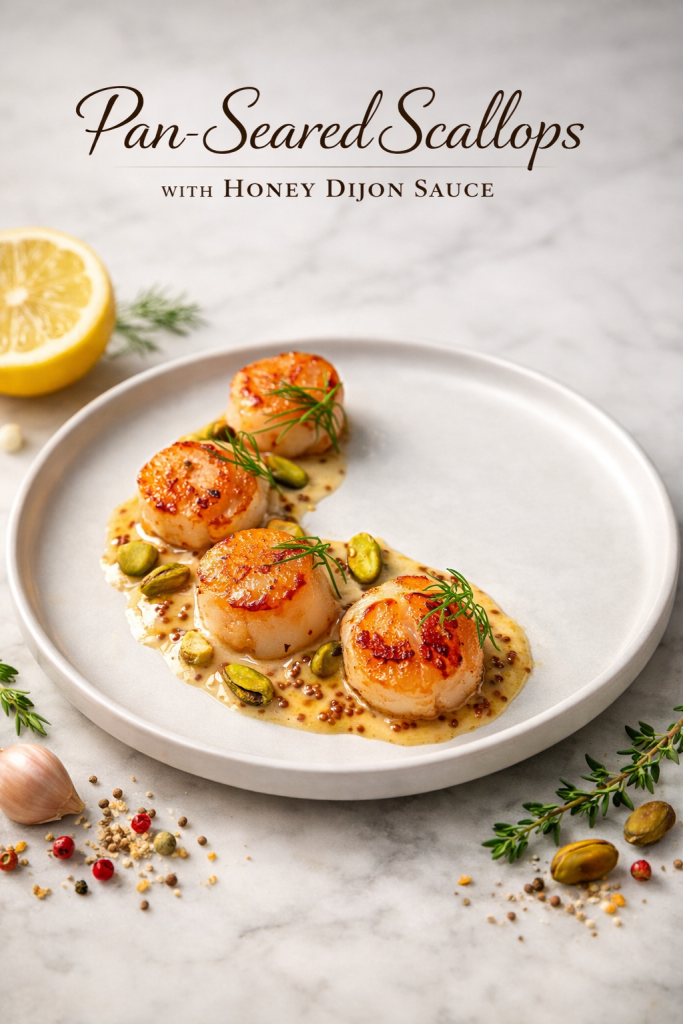
Have you ever noticed that the best dinners feel like a journey? Each course building on the last, telling a story that ends with satisfied smiles and empty plates. It all starts here—with four perfect scallops, their surfaces bronzed to a golden crust, sitting in a puddle of creamy, tangy honey dijon sauce, scattered with toasted pistachios and fresh dill. This pan-seared scallops with honey dijon sauce isn't just an appetizer; it's an announcement that something special is about to happen.
What makes this version unique is the homemade sauce. While many recipes rely on store-bought dressings, we're building our own honey dijon emulsion from scratch using mayo, honey, mustard, and apple cider vinegar. The result is brighter, more balanced, and completely customizable. Toasted pistachios add crunch, fresh dill brings herbaceous brightness, and suddenly four scallops become the most memorable part of your meal—even before the main course arrives. For more starter inspiration, check out our lemon garlic shrimp skewers or seared tuna crostini.
THE HISTORY
Scallops have been treasured by coastal communities for thousands of years. Archaeological evidence suggests humans have been harvesting these bivalve mollusks since at least the Neolithic period, with shell middens found along coastlines from Europe to North America. In medieval Europe, scallops took on religious significance—the scallop shell became the symbol of Saint James, and pilgrims traveling the Camino de Santiago wore them as badges of their journey. They were sustenance for travelers, fuel for spiritual quests, and eventually, delicacies for royal tables.
The combination of honey and mustard is equally ancient. The Romans famously mixed honey with mustard seeds to create a paste that accompanied roasted meats, valuing both the heat of mustard and the sweetness of honey. By the Middle Ages, mustard had become a staple across European kitchens, with the French city of Dijon eventually becoming synonymous with the condiment in the 19th century. Our honey dijon sauce is a direct descendant of these ancient pairings—a condiment tradition refined over millennia.
Pistachios, meanwhile, have been cultivated for over 9,000 years, originating in the Middle East before spreading along trade routes to the Mediterranean. The addition of dill—used in Greek, Roman, and Nordic cuisines for millennia—ties this dish to traditions that span continents. What we have here isn't just a recipe; it's a culinary conversation spanning centuries and civilizations, all coming together on one small plate.
THE SCIENCE
Creating perfect pan-seared scallops with honey dijon sauce requires understanding what happens in that hot pan. Scallops are mostly protein and water, with a small amount of natural sugar. When they hit high heat, two things happen simultaneously: the Maillard reaction begins creating those brown, flavorful compounds on the surface, and water evaporates rapidly. If your pan isn't hot enough, the scallops will steam rather than sear, releasing their moisture and becoming tough and rubbery. If your pan is too crowded, the temperature drops and the same thing happens. This is why a screaming-hot pan and working in batches are non-negotiable for appetizer-perfect scallops.
The honey dijon sauce is an emulsion—a stable mixture of ingredients that don't naturally combine. Mayonnaise serves as our emulsification base, already containing egg yolk that bonds oil and water. When we whisk in mustard, honey, and vinegar, we're building on that existing structure. Mustard contains mucilage, a natural thickening agent that helps stabilize emulsions, which is why mustard often appears in vinaigrettes. The apple cider vinegar provides acid that balances sweetness and cuts through the richness of the scallops, while dill adds volatile aromatic compounds that lift the entire dish—essential qualities for a starter that should awaken rather than overwhelm.
Pistachios contribute more than just crunch. When toasted, their fats undergo oxidation that creates new flavor compounds, while their proteins break down into amino acids that enhance savoriness. The contrast between the soft scallops and crunchy nuts triggers what food scientists call "dynamic contrast"—one of the key reasons we find certain foods endlessly satisfying, and why this appetizer keeps guests asking for more.
GOOD PAIRING FOOD AND DRINK
Appetizer: Pan-Seared Scallops with Honey Dijon Sauce Four perfect scallops, golden-crusted and tender, served in a bright, creamy honey dijon sauce with toasted pistachios and fresh dill. This elegant starter sets the tone for the meal to come—light enough to whet the appetite without filling you up, yet luxurious enough to feel special. The honey dijon sauce's tangy sweetness awakens the palate, while the pistachios add texture and the dill provides freshness. Each element prepares your taste buds for the richer courses ahead while standing beautifully on its own. Notice how the pistachios here will echo the pistachio crust on the lamb to come—a deliberate thread running through the meal.
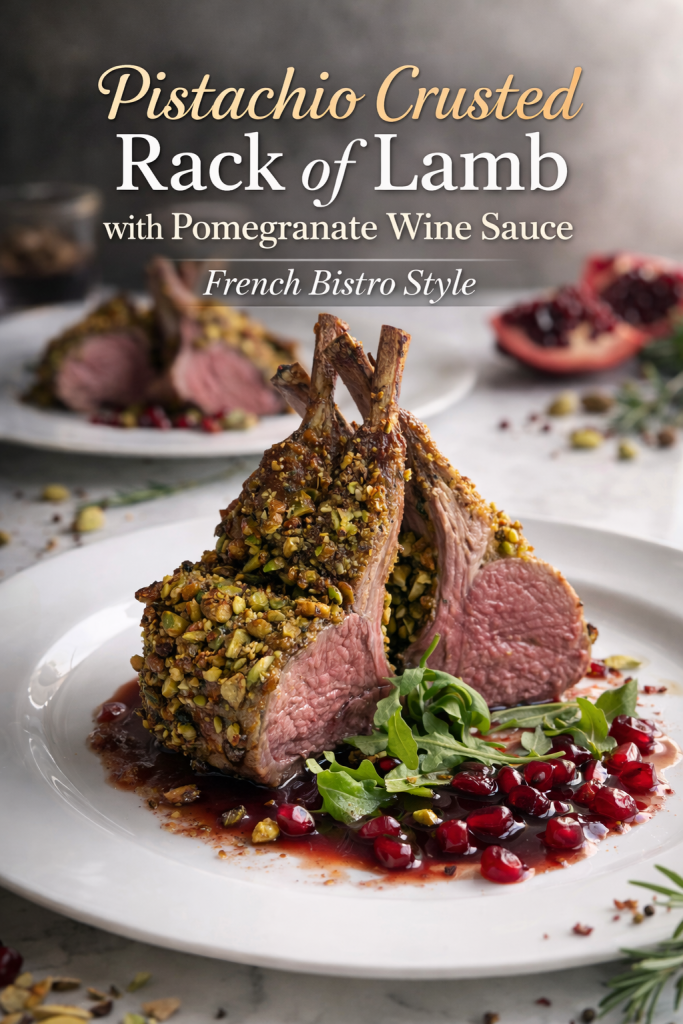
Main Course: Pistachio-Crusted Rack of Lamb with Honey Dijon Glaze Follow those delicate scallops with a showstopping main that shares not just ingredients, but a philosophy. A French-trimmed rack of lamb, coated in a crust of finely chopped pistachios, fresh breadcrumbs, rosemary, and garlic, then roasted to a perfect medium-rare. But here's the brilliant connection—before applying the crust, the lamb is brushed with a honey dijon glaze that's nearly identical to the sauce from your appetizer. The same honey, the same mustard, creating a flavor bridge that ties the meal together. The pistachio crust echoes the garnish from the scallops, while the lamb's richness contrasts beautifully with the scallops' delicacy. Serve with a light rosemary jus on the side, and watch your guests marvel at the cohesion of it all.
Side Dish: Truffled Celery Root Purée Silky celery root purée, enriched with cream and butter, then finished with a drizzle of white truffle oil. The earthiness of celery root and truffle complements both the scallops' sweetness and the lamb's richness, while the velvety texture provides a luxurious counterpoint to the pistachio crust. Serve a generous swoosh on each plate, nestling the lamb chops against it. The subtle celery notes also whisper back to the dill in the appetizer, creating quiet harmony across courses.
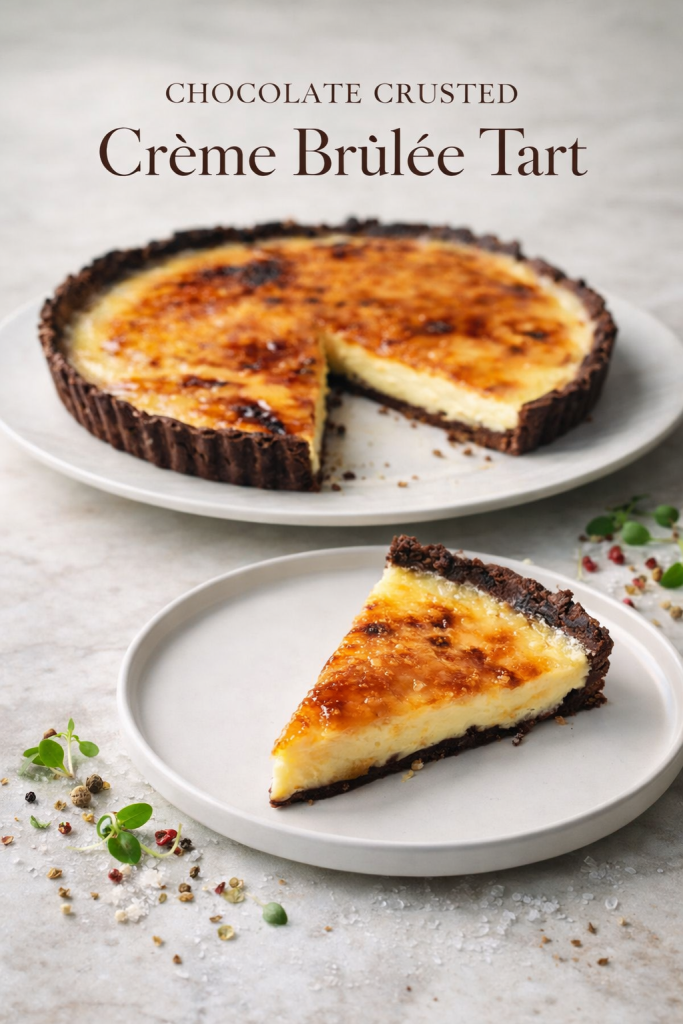
Dessert: Chocolate Crust Crème Brûlée Tart A showstopping finale that combines two beloved desserts into one. A deep, buttery chocolate tart crust—like the world's best chocolate cookie—filled with silky, vanilla-flecked crème brûlée custard, baked until just set, then chilled. Just before serving, sprinkle the top with fine sugar and torch it until it shatters into that signature glass-like crust. The bitter edge of the chocolate crust cuts through the richness of the custard, while the torched sugar adds smoke and crunch. The creamy texture provides relief after the savory courses, while the vanilla echoes the honey's sweetness from earlier. And that torched sugar? It's a textural echo of the seared crust on your scallops—a perfect final note.
Cocktail: The Honey Dijon Martini A sophisticated, savory cocktail that pays homage to the appetizer's star sauce. Muddle a thin slice of fresh jalapeño with ½ teaspoon of honey in a shaker. Add 2 ounces of vodka or gin, ½ ounce of dry vermouth, and a tiny pinch of Dijon mustard (just a dab on a toothpick—enough to add savoriness without overpowering). Shake vigorously with ice, double-strain into a chilled martini glass, and garnish with a lemon twist and a small sprig of dill. The honey provides sweetness, the mustard adds umami depth, and the jalapeño offers a gentle warmth that prepares the palate for the lamb to come. Sip this while enjoying the scallops, and watch how the flavors dance together.
Non-Alcoholic Drink: Sparkling Honey and Rosemary Shrub Create a drinking vinegar (shrub) by combining apple cider vinegar with honey until dissolved. For each serving, mix 2 tablespoons of the shrub with sparkling water, a fresh rosemary sprig gently muddled, and a thin slice of green apple. The apple cider vinegar echoes the vinegar in the scallop sauce, while honey provides continuity. Rosemary adds an herbal note that bridges to the lamb's herb crust. The bubbles refresh the palate between courses, and the green apple adds brightness that prepares you for the next bite. Serve in a champagne flute for maximum elegance.
These pan-seared scallops with honey dijon sauce prove that restaurant-quality appetizers don't require hours in the kitchen. Four perfect scallops, golden-crusted and tender, sit in a bright, creamy sauce made from mayo, honey, mustard, and apple cider vinegar, finished with crunchy pistachios and fresh dill. It's elegant, fast, and the perfect way to begin any special meal.
Ingredients
For the Scallops:
4large sea scallops (about 4-6 ounces total)
1tablespoon unsalted butter
1teaspoon olive oil
Salt
freshly ground black pepper
For the Honey Dijon Sauce:
2tablespoons mayonnaise
1tablespoon honey
1teaspoon Dijon mustard
1/2teaspoon apple cider vinegar
Pinch of salt
For the Garnish:
1tablespoon shelled pistachios
1teaspoon fresh dill (, finely chopped)
Instructions
1
Prep the Scallops: Remove the scallops from the refrigerator 10-15 minutes before cooking. This takes the chill off and ensures even cooking. Using paper towels, pat each scallop completely dry—this is crucial. Any moisture on the surface will steam instead of sear. Season both sides generously with salt and pepper.
2
Make the Honey Dijon Sauce: In a small bowl, combine the mayonnaise, honey, Dijon mustard, apple cider vinegar, and a tiny pinch of salt. Whisk until smooth and emulsified. Taste and adjust—more honey for sweetness, more mustard for tang, more vinegar for brightness. Set aside. (This can be made up to 2 days ahead and refrigerated.)
3
Toast the Pistachios: In a small dry skillet over medium heat, add the chopped pistachios. Shake the pan frequently and toast for 2-3 minutes until fragrant and slightly darkened. Immediately remove from the pan to prevent burning. Set aside.
4
Heat the Pan: Place a heavy-bottomed skillet (cast-iron is ideal) over medium-high heat for at least 3 minutes. The pan should be screaming hot. Add the butter and olive oil—they should sizzle immediately and the butter will foam.
5
Sear the Scallops: Carefully place the scallops in the pan, flat side down, making sure not to crowd them. They should sizzle aggressively. Leave them completely alone for 2-3 minutes—no moving, no peeking. You'll know they're ready to flip when the edges look golden and the bottom releases easily from the pan. If they stick, they're not done searing.
6
Flip and Finish: Using tongs, flip each scallop gently. Cook for another 1-2 minutes on the second side. The scallops should be golden brown on both sides and just barely opaque in the center. Remove from the pan immediately—they'll continue cooking from residual heat.
7
Plate and Serve: Spread a spoonful of honey dijon sauce on each appetizer plate. Place the seared scallops on top of the sauce. Sprinkle with toasted pistachios and fresh dill. Serve immediately while hot.
Nutrition Facts
Amount Per Serving
Calories320kcal
% Daily Value *
Total Fat18g28%
Saturated Fat5g25%
Sodium580mg25%
Total Carbohydrate12g4%
Dietary Fiber1g4%
Sugars9g
Protein24g48%
Vitamin B12 2.4 mcg
Selenium 25 mcg
* Percent Daily Values are based on a 2,000 calorie diet. Your daily value may be higher or lower depending on your calorie needs.
Note
Pro Tips for Success:
The single most important step is drying the scallops. Use fresh paper towels and pat until absolutely dry. Wet scallops = steamed scallops = sad scallops.
Buy "dry" scallops if possible. "Wet" scallops are treated with sodium tripolyphosphate to retain water, which makes them impossible to sear properly. Look for scallops labeled "dry" or "chemical-free."
Don't move the scallops while they sear. Trust the process. They'll release naturally when the crust is formed.
For appetizer portions, four scallops per person is perfect—elegant without being overwhelming.
Make-Ahead Instructions: The honey dijon sauce can be made up to 2 days in advance and stored in an airtight container in the refrigerator. Bring to room temperature before serving. The pistachios can be toasted up to 3 days ahead and stored in an airtight container at room temperature. Scallops should always be cooked fresh just before serving.
Storage Guidelines:
Refrigerator: Cooked scallops will keep for up to 2 days in an airtight container. Reheat gently in a low oven or at room temperature—microwaving will toughen them.
Freezer: Not recommended. Scallops are delicate and their texture suffers significantly when frozen and thawed.
Substitutions:
Scallops: Can't find sea scallops? Use jumbo shrimp instead—same technique, slightly different cook time (shrimp need about 2 minutes per side).
Mayonnaise: Greek yogurt works for a lighter sauce, though it will be tangier and less creamy.
Honey: Maple syrup or agave nectar can substitute, but the flavor profile will shift.
Apple Cider Vinegar: White wine vinegar, champagne vinegar, or fresh lemon juice all work beautifully.
Pistachios: Toasted almonds, hazelnuts, or pine nuts make excellent alternatives.
Dill: Fresh parsley, chives, or tarragon can stand in, each bringing its own personality.
Troubleshooting:
Scallops stuck to the pan: They weren't ready to flip. Wait another 30-60 seconds and try again gently.
Scallops turned out tough: They overcooked. Remember: carryover cooking continues after they leave the pan. Pull them when just barely opaque.
Sauce is too thick: Whisk in a few drops of water or apple cider vinegar to thin.
Sauce is too thin: The emulsion broke. Whisk in another teaspoon of mayonnaise to rebind it.
Ingredient Sourcing: For the best results, buy scallops from a trusted fishmonger who can tell you whether they're dry or wet. Fresh scallops should smell like the ocean—clean and sweet, not fishy. For the honey, local raw honey adds complexity that supermarket honey lacks. And please, use good Dijon mustard—Grey Poupon or Maille make a noticeable difference in this appetizer.
Keywords:
pan-seared scallops with honey dijon sauce, honey dijon scallops, seared scallops appetizer, how to cook scallops, perfect scallops, scallops with honey mustard sauce, easy scallop recipe, restaurant style scallops, date night appetizer ideas, quick seafood appetizers, scallops with pistachios, dill and scallops, homemade honey mustard sauce, apple cider vinegar dressing, seared scallops starter, gluten free appetizer, low carb appetizer, fancy appetizer in minutes, cooking scallops perfectly, elegant starter recipes,
Why This Appetizer Works
A great appetizer walks a tightrope. It must be satisfying enough to feel like an event, yet light enough to leave room for what follows. These pan-seared scallops with honey dijon sauce master that balance perfectly. The scallops themselves are rich and meaty, but the portion—four per person—is judicious. The sauce is creamy and indulgent, but its tangy brightness keeps things lively. The pistachios add crunch and luxury, but a tablespoon is all you need. Every element is calibrated to delight without overwhelming.
The Rhythm of a Multi-Course Meal
When planning a dinner that begins with these scallops, moves to herb-crusted rack of lamb, and ends with honey goat cheese cheesecake, you're creating more than a meal—you're composing an experience. The scallops introduce the honey note that will reappear in dessert. The dill whispers of the herbs to come with the lamb. The pistachios foreshadow the crust of the cheesecake. Each course contains seeds of the next, creating a meal that feels intentional, thoughtful, and deeply satisfying.
A Personal Memory
I first served these scallops as part of a New Year's Eve dinner for close friends. The menu was ambitious—scallops to start, beef Wellington as the main, a chocolate torte to finish—and I was nervous. But when I placed those golden scallops in front of my guests, sauce artfully swiped, pistachios scattered like confetti, the table went quiet. Then came the murmurs of appreciation, the closed-eye chewing, the "where did you learn to cook like this?" That moment taught me that appetizers aren't just preludes. They're promises. And these scallops promise something wonderful.