Introduction
Forget everything you know about oats. Seriously. Put aside the breakfast bowls and the sleepy morning routines, because we're about to reimagine this humble pantry staple as the star of a luxurious, soul-warming dinner.
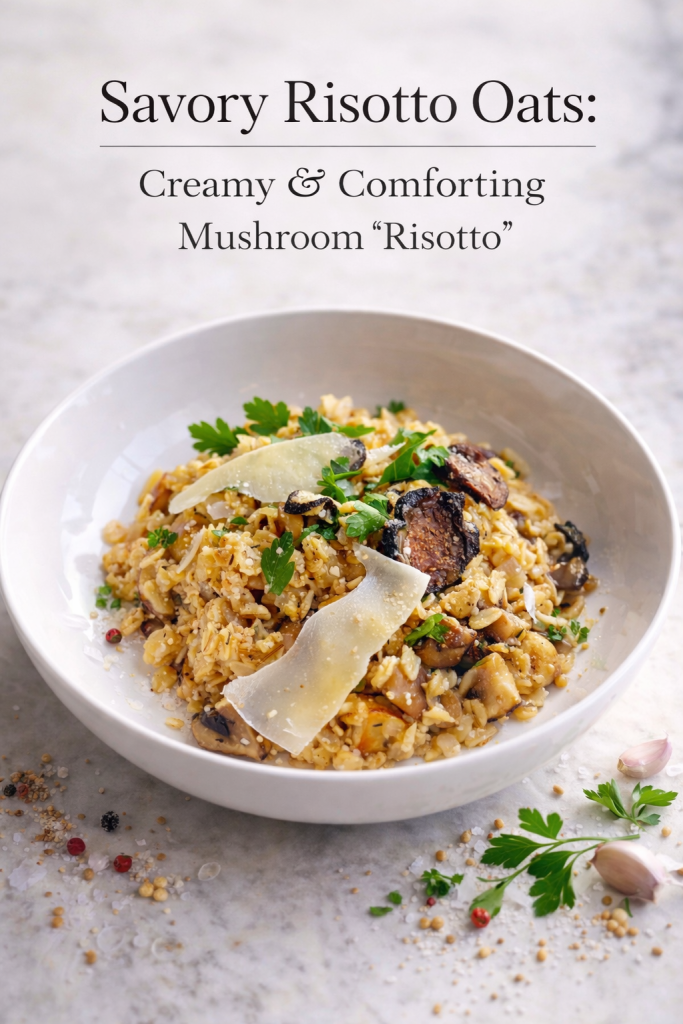
This savory oat risotto is a revelation. By swapping traditional Arborio rice for simple rolled oats, we create a dish with all the creamy, velvety texture of classic Italian risotto, but with a nutty depth and wholesome heartiness that rice simply can't match. Rich, earthy mushrooms, a splash of white wine, and a final flourish of butter and Parmesan transform everyday oats into something truly extraordinary.
What makes this version special? It's faster, more forgiving, and arguably more flavorful than traditional risotto. You'll learn the secrets to achieving that perfect al dente bite, why toasting the oats is non-negotiable, and how a slow, gradual addition of broth builds that signature creamy emulsion. Ready for a weeknight dinner that feels like a special occasion? Let's dive in.
The History: From Ancient Grain to Modern Italian Inspiration
The Humble Origins of Oats
Long before oats became synonymous with breakfast porridge, they were a staple grain of northern Europe. Archaeological evidence suggests that oats (Avena sativa) were cultivated as far back as the Bronze Age, thriving in the cool, damp climates of Scotland, Ireland, and Scandinavia where other grains struggled . For centuries, oats sustained peasants and livestock alike, valued for their heartiness, their ability to grow in poor soils, and their remarkable nutritional density.
In Scotland, oats became the foundation of the national diet, transformed into porridge, bannocks, and hearty broths. The Scots' reverence for oats was so profound that Samuel Johnson's famous dictionary definition—"A grain, which in England is generally given to horses, but in Scotland supports the people"—prompted the witty rejoinder from a Scot: "Yes, and where will you find such horses and such men?" .
The Risotto Tradition
Meanwhile, in the sun-drenched Po Valley of Northern Italy, a different grain was taking center stage. Risotto, derived from the Italian word "riso" (rice), emerged as a culinary art form in the 19th century, particularly around Milan, Venice, and Piedmont . Short-grain varieties like Arborio, Carnaroli, and Vialone Nano became prized for their high starch content, specifically the two types of starch they contain.
The magic of risotto lies in the gentle agitation of the rice grains as they absorb hot broth. This action rubs the surface starches, releasing them into the cooking liquid and creating that signature creamy, almost saucy texture without any added cream . It's a technique that requires patience, intuition, and a willingness to stand at the stove, ladle in hand.
The Fusion: When Oats Met Risotto
The marriage of oats and risotto technique is a relatively recent innovation, born of culinary curiosity and the modern desire for wholesome, nutrient-dense comfort food. Chefs and home cooks began to wonder: if Arborio rice could achieve creaminess through starch release, why not oats?
The answer was a resounding success. Rolled oats, with their own unique starch profile and inherent nuttiness, proved remarkably adept at absorbing liquid and creating a creamy emulsion. The result is a dish that honors the Italian technique while celebrating the ancient grain of the north. This savory oat risotto represents a beautiful fusion—a conversation between two culinary traditions, united on a single plate.
The Science: Unlocking the Creaminess of Oats
The Starch Story
At its heart, the magic of any risotto—whether made with rice or oats—is a story of starch. Oats, like Arborio rice, contain two primary types of starch: amylose and amylopectin . Amylopectin is a highly branched molecule that readily absorbs water and swells, contributing to creaminess. Amylose, with its linear structure, helps the grains hold their shape.
When you slowly add hot broth to oats and stir continuously, you're doing more than just hydrating them. The gentle agitation rubs the surface starches off the grains, releasing them into the surrounding liquid. These freed starches act as natural thickeners, creating a rich, velvety emulsion that coats each oat and gives risotto its signature luscious texture .
Recent research has shed light on the complex interactions between oat protein and starch during heating. Studies show that under high moisture conditions (like our risotto, with water content around 80%), the proteins in oats actually promote starch retrogradation—a reorganization of starch molecules that can influence texture . More importantly, the interaction between oat protein and starch creates a network that slows starch digestion, contributing to the sustained energy release that makes oats so satisfying .
The Maillard Reaction in Your Pan
The deep, savory flavor of this dish doesn't come from the broth alone. It begins the moment those mushrooms hit the hot pan. Searing mushrooms until golden brown triggers the Maillard reaction—the same chemical process that creates the crust on a seared steak and the color on toasted bread.
In the Maillard reaction, amino acids and reducing sugars rearrange themselves under high heat, forming hundreds of new flavor compounds that taste nutty, toasty, and deeply savory . This is why we take the time to sauté mushrooms in batches, allowing them to brown rather than steam. That golden color is literally flavor, developed at the molecular level.
Toasting for Depth
Toasting the oats before adding liquid serves a similar purpose. The dry heat initiates the Maillard reaction on the grain's surface, creating new aromatic compounds that add complexity. This toasting step transforms oats from neutral-tasting to nutty and fragrant, providing a flavor foundation that carries through the entire dish .
The Emulsification Finale
The final flourish of butter and Parmesan isn't just about richness—it's about creating an emulsion. The fat in the butter and cheese, when vigorously stirred into the risotto off the heat, combines with the starchy cooking liquid to form a stable, glossy emulsion. This technique, known as mantecatura in Italian, is the secret to that restaurant-quality finish that makes risotto sing .
Food Hydrocolloids - "Investigation of the functionality of macromolecules in the rheological and baking properties of oat milling fractions" (2024)
America's Test Kitchen - "Savory Oatmeal Recipes: The Exciting Porridge Makeover"
Kitchen Riffs - "Curried Oatmeal Risotto"
Good Pairing Food and Drink
This savory oat risotto is hearty enough to stand alone, but here are perfect companions to round out your meal.
- Appetizer: Crispy Brussels Sprouts with Balsamic Glaze. Shaved Brussels sprouts, pan-fried until crispy and tossed with a tangy balsamic reduction, provide a bright, acidic contrast to the rich, creamy risotto. The slight bitterness of the sprouts complements the earthy mushrooms beautifully.
- Main Course: This is the main event! For a heartier spread, serve alongside Pan-Seared Scallops with Lemon Butter or Grilled Lemon-Herb Chicken.
- Side Dish: Simple Arugula Salad with Lemon Vinaigrette. Peppery arugula dressed with a bright lemon vinaigrette cuts through the richness of the risotto, cleansing the palate between bites. The fresh, sharp greens provide a welcome textural and flavor contrast.
- Dessert: Roasted Pears with Gorgonzola and Honey. The sweet, tender pears, salty funk of Gorgonzola, and floral honey echo the savory-sweet balance of the risotto while offering a completely different texture. It's an elegant, Italian-inspired finish.
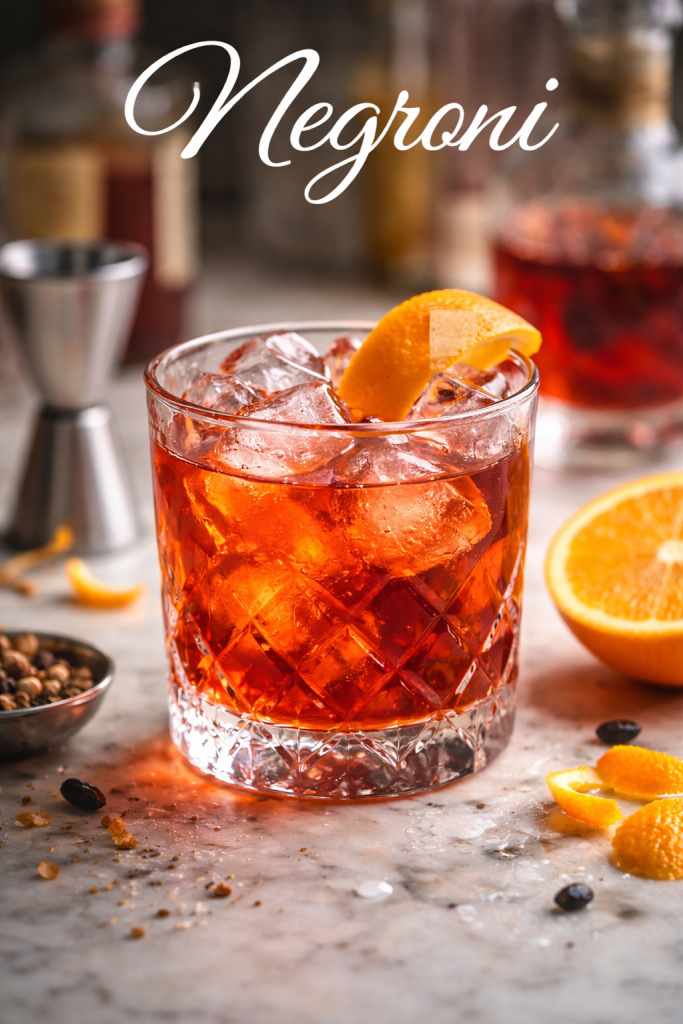
- Cocktail: Classic Negroni. The bitter orange and herbal complexity of a Negroni stand up beautifully to the earthy mushrooms and nutty oats. The cocktail's bitterness provides a sophisticated counterpoint to the dish's richness.
- Non-Alcoholic Drink: Sparkling Rosemary Lemonade. Muddle fresh rosemary with lemon juice, add simple syrup and sparkling water. The herbaceous, bright citrus cleanses the palate and echoes the fresh herbs in the risotto.