
INTRO
Is there any cocktail that screams “vacation” quite like a Mojito? With its intoxicating aroma of fresh mint, the zing of lime, and the crisp bite of rum, it’s the ultimate symbol of relaxation. But have you ever tried to make one at home only to end up with a bitter, sad, or flat version? It’s time to change that. This classic mojito recipe is your ticket to mastering this iconic Cuban highball. We’re not just throwing ingredients in a glass; we’re unlocking the secrets to a perfectly balanced, incredibly refreshing cocktail that rivals anything you’d be served in a Havana bar. From the fascinating legend of its pirate origins to the precise science of muddling, get ready to become a Mojito master.
THE HISTORY
The Mojito’s story is as layered and complex as the drink itself, with roots stretching back to the 16th century and the high seas of the Caribbean. The most widely believed origin story involves the infamous English explorer Sir Francis Drake and a crude medicinal concoction called “El Draque” . When Drake and his crew landed in Havana, they likely had more than just plunder on their minds; they were also seeking a cure for dysentery and scurvy. The local remedy? A mix of aguardiente de caña (a rough, unaged sugarcane spirit), lime, sugarcane juice, and mint . The lime provided a crucial dose of Vitamin C, while the mint helped mask the harsh flavor of the primitive rum .
Fast forward a few centuries, and the aguardiente evolved into a smoother, more refined rum. The “El Draque” became known as the “Mojito,” a name with debated origins. Some believe it’s a derivative of mojadito (Spanish for “lightly wet”), while others link it to mojo, a Cuban lime-based seasoning . By the early 20th century, the Mojito was a firm favorite in Havana, but its global fame is inextricably linked to one of literature’s greatest heavyweights: Ernest Hemingway. The famous writer became a regular at Havana’s La Bodeguita del Medio bar, and his handwritten inscription on the wall—”My Mojito in La Bodeguita, My Daiquiri in El Floridita”—cemented the cocktail’s legendary status forever . Today, it remains one of the world’s most beloved cocktails, a timeless classic that transports you to a sun-drenched Cuban plaza with every single sip.
THE SCIENCE
Making a great Mojito is a perfect example of culinary chemistry. It’s not just about following a recipe; it’s about understanding the “why” behind each step to achieve that flawless balance of flavor, aroma, and texture. Let’s break down the two most critical elements: muddling and carbonation.
Muddling is the most misunderstood—and most important—step . Your goal is not to annihilate the mint into a thousand bitter pieces. The flavor and aroma of mint come from volatile essential oils stored in glands on the leaves. To release them, you need a gentle touch. When you muddle too aggressively, or include the stems (which contain bitter chlorophyll and tannins), you extract harsh, vegetal flavors that will ruin your drink . The sugar isn’t just for sweetness; its granules act as a gentle abrasive to help “scratch” the surface of the mint leaves and release those precious oils, while the lime juice provides the liquid to dissolve the sugar . This creates a harmonious, aromatic syrup base. As one expert bartender notes, “This does not require brute force, it requires patience and delicacy” .
The second science lesson is all about the fizz. Carbonation is what gives the Mojito its signature refreshing lift. The key to preserving those precious bubbles is temperature and technique. Cold liquids hold CO₂ much more effectively than warm ones . This means your soda water and even your glass should be well-chilled. Adding the soda water last and stirring gently—just a few lifts with a bar spoon to integrate—is crucial. Violent stirring or shaking after adding the soda will obliterate the carbonation, leaving you with a flat, lifeless drink . Finally, don’t underestimate the ice. Packing the glass full of ice isn’t just about keeping it cold; it controls dilution. More ice means less surface area for the ice to melt quickly, ensuring your drink stays potent and flavorful until the very last sip .
GOOD PAIRING FOOD AND DRINK
The Mojito’s bright, herbaceous, and slightly sweet profile makes it an incredibly versatile partner for a wide array of dishes . Its acidity cuts through richness, while the mint refreshes the palate. Here are some perfect pairings:
- One Appetizer: Sonoran Shrimp Ceviche . The fresh, citrus-marinated shrimp in ceviche directly echoes the lime in the Mojito. The cocktail’s minty effervescence acts as a perfect palate cleanser between bites of the tangy seafood.
- One Main Course: Carnitas Tacos . The rich, slow-cooked, and slightly crispy pork is balanced beautifully by the Mojito’s bright acidity and cooling mint. The soda water’s fizz cuts through the meat’s richness, preparing you for the next delicious bite.
- One Side Dish: Mexico City Elote (Grilled Corn with Crema and Chile) . The smoky, creamy, and slightly spicy corn on the cob finds its match in the Mojito’s bright and bubbly character. The lime in the drink highlights the corn’s sweetness.
- One Dessert: Key Lime Pie . This is a match made in heaven. The intense, tangy citrus of the pie is a natural companion to the cocktail’s lime base. The Mojito’s mint and sugar provide a cooling, sweet contrast to the rich, creamy texture of the pie.
- One Cocktail and One Non-Alcoholic Drink:
- Cocktail: Hemingway Daiquiri. Since we’re already in Hemingway territory, why not double down? This tart, grapefruit-infused Daiquiri (made with rum, lime, grapefruit juice, and maraschino liqueur) offers a different, more complex take on rum and citrus, creating a fascinating flavor dialogue with the Mojito’s minty freshness.
- Non-Alcoholic Drink: Cucumber-Mint Cooler. To complement the theme, a simple, elegant non-alcoholic option is a blend of muddled cucumber, fresh lime juice, a touch of simple syrup, and sparkling water. It echoes the Mojito’s refreshing and herbaceous qualities perfectly.
Description
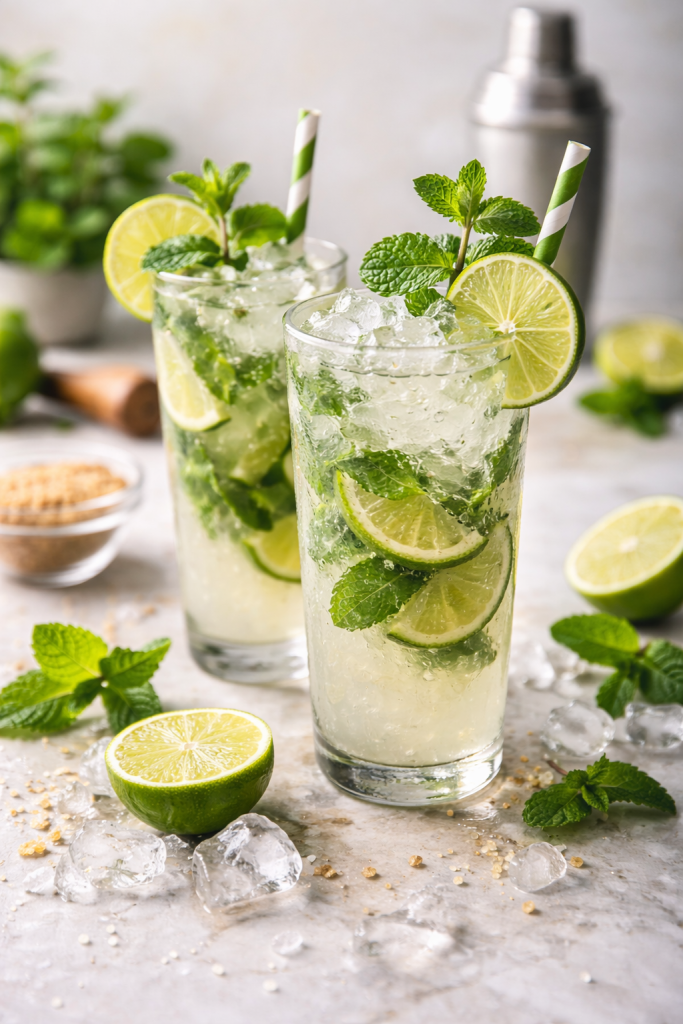
This classic mojito recipe delivers the ultimate refreshing Cuban cocktail. With crisp white rum, fresh lime, and gently muddled mint, it's perfectly balanced, bubbly, and better than any bar version.
Ingredients
Instructions
-
Gently Muddle: Place the mint leaves in the bottom of a sturdy highball or Collins glass. Add the sugar (or simple syrup) and squeeze the juice from two of the lime wedges directly into the glass. Drop the squeezed wedges in as well. Using a muddler or the handle of a wooden spoon, gently press and twist the mint a few times. You only want to bruise the leaves to release their oils, not shred them into pieces. The sugar acts as an abrasive to help this process .
-
Add Rum: Pour the white rum into the glass over the muddled mixture. Give it a brief, gentle stir to help dissolve the sugar and integrate the flavors .
-
Pack with Ice: Fill the glass almost to the top with crushed ice. Packing it in helps keep the drink colder for longer and controls dilution .
-
Top with Fizz: Slowly top off the glass with chilled soda water, pouring gently to preserve the carbonation.
-
The Final Stir: Insert a long bar spoon all the way to the bottom and give the drink a few gentle lifts from the bottom up. This integrates the muddled ingredients with the soda without knocking out all the bubbles .
-
Garnish and Serve: Garnish with the remaining two lime wedges and a fresh, "spanked" mint sprig (clap it between your hands to release its aroma before placing it in the drink) . Serve immediately with a straw.
Nutrition Facts
- Amount Per Serving
- Calories 175kcal
- % Daily Value *
- Sodium 15mg1%
- Total Carbohydrate 10g4%
- Dietary Fiber 1g4%
- Sugars 8g
- Protein 1g2%
* Percent Daily Values are based on a 2,000 calorie diet. Your daily value may be higher or lower depending on your calorie needs.
Note
- Pro Tip for Success: The most common mistake is over-muddling. Remember, you are "waking up" the mint, not killing it. If your drink tastes bitter, you were too aggressive. Remove the mint stems before muddling, as they contribute the most bitterness .
- Make it a Virgin Mojito (Nojito): Simply omit the rum and use a little more soda water and an extra squeeze of lime for a delicious, alcohol-free version .
- Storage: Mojitos are meant to be enjoyed immediately. They do not store well, as the mint will continue to bitter and the carbonation will be lost.
- Substitutions: For a richer, more complex flavor, try using demerara sugar or raw sugar. The larger granules are excellent for muddling . You can also substitute the white rum with coconut rum for a "Cojito" or gold/dark rum for a "Dirty Mojito" .
- Ingredient Sourcing: Use the freshest mint you can find. Look for vibrant green leaves with no wilting. For the lime, always use fresh-squeezed juice; bottled juice lacks the bright, essential oils that make this drink sing .