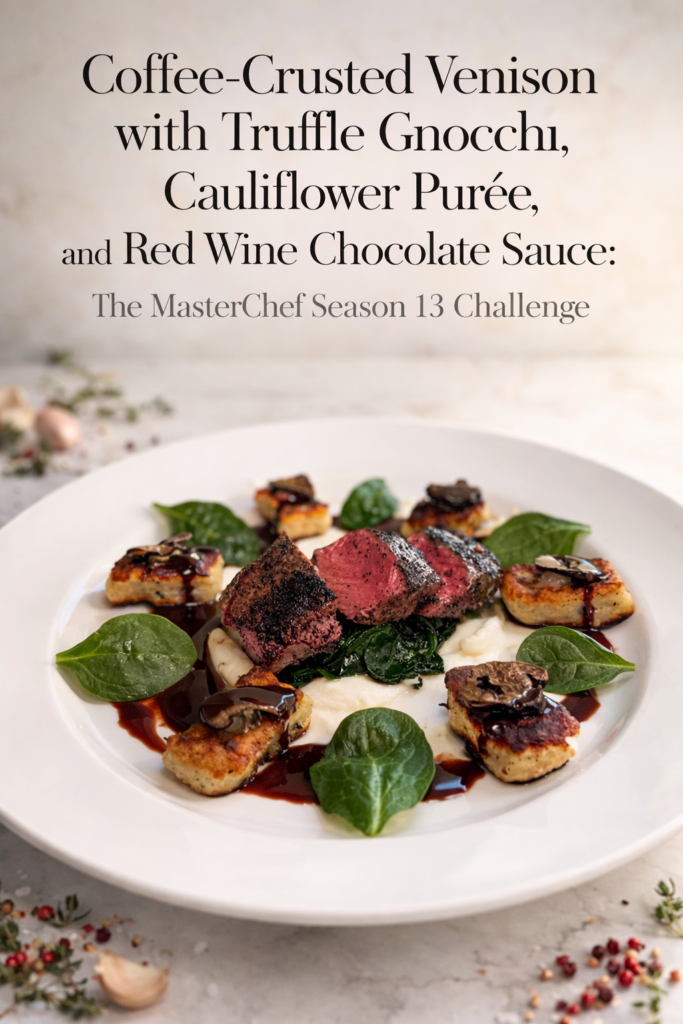
Do you have what it takes to keep up with Gordon Ramsay? That was the question facing four semifinalists on MasterChef US Season 13, Episode 18 during the infamous “Keep Up with Gordon” challenge. The dish? A breathtaking plate of coffee-crusted venison with truffle gnocchi, cauliflower purée, and red wine chocolate sauce—a creation so technically demanding it separates the home cooks from the culinary contenders.
This isn’t just a recipe. It’s a culinary endurance test, a masterclass in fine-dining technique, and arguably one of the most ambitious dishes ever attempted on the show. The combination might sound unusual: coffee on venison? Chocolate with red wine? But this is Gordon Ramsay at his brilliant best, pairing bitter, earthy, and rich elements into a harmonious whole that has become legendary among MasterChef fans.
I’ve spent weeks testing and perfecting this recreation—the same dish that appeared in Season 13, Episode 18—so you can experience the challenge from your own kitchen. Whether you’re looking to impress dinner guests or simply want to test your skills against a Ramsay-level dish, this guide walks you through every component with the precision, science, and storytelling that makes this plate unforgettable.
THE HISTORY
Venison has been a prized protein for millennia, but its journey to the MasterChef kitchen tells a fascinating story. In medieval Europe, venison was exclusively reserved for nobility—poaching a deer was a capital offense. The word itself comes from the Latin venari, meaning “to hunt,” and it represented not just food but status, power, and the spoils of the hunt. According to The British Library’s medieval food history archive, only the aristocracy could hunt deer on their vast estates, making venison the ultimate symbol of wealth and privilege.
The coffee crust, however, is a thoroughly modern innovation. Coffee as a meat rub emerged in the late 20th century, pioneered by chefs who recognized that coffee’s natural bitterness and roasted notes could amplify the earthy, slightly irony flavor of game meats. Specialty Coffee Association research explains that the same compounds that give coffee its complexity—the Maillard reaction products from roasting—echo and enhance the caramelization on the meat’s surface.
The red wine chocolate sauce draws from European culinary tradition, where chocolate has been used in savory contexts for centuries. Mexican mole is the most famous example, but French chefs have long recognized that dark chocolate’s bitterness and richness can transform a wine reduction into something extraordinary. The Oxford Companion to Food (Alan Davidson, 2014) notes that chocolate’s use in savory sauces dates back to pre-Columbian Mesoamerica, where it was combined with chilies and spices for ceremonial dishes.
The MasterChef connection adds another layer to this history. Season 13, Episode 18 (aired 2023) featured the semifinal round’s “Keep Up with Gordon” challenge—a pressure test where contestants had to replicate one of Ramsay’s most complex dishes while watching him cook it live. The coffee-crusted venison was chosen specifically for its technical demands: multiple components, precise timing, and unforgiving ingredients. What made this challenge particularly brutal was the 30-second plating window. Contestants had to finish plating within half a minute of Ramsay’s completion, forcing them to manage timing across four separate components simultaneously.
THE SCIENCE
Let’s talk about what’s actually happening when you cook this dish, because understanding the science separates success from failure.
The Coffee Crust: When you sear a coffee-crusted venison loin, you’re creating layers of the Maillard reaction—the chemical process where amino acids and reducing sugars react to create hundreds of new flavor compounds. McGee on Food & Cooking (Harold McGee, 2004) describes this as the fundamental reaction that gives browned foods their characteristic savory depth. Coffee already contains these compounds from its own roasting process; when you add it to the meat’s surface and hit it with high heat, you’re effectively double-roasting those flavors. The result is a crust that’s intensely savory, slightly bitter, and deeply complex. But here’s the critical part: coffee burns faster than meat burns. You need high heat for a short time—just 60-90 seconds per side—to develop that crust without turning the rub into ash. The brown sugar in the rub accelerates caramelization while balancing bitterness with a hint of sweetness.
The Gnocchi Texture: Traditional potato gnocchi relies on a delicate balance. Too much flour and you get dense, gluey dumplings. Too little and they fall apart. Serious Eats’ guide to gnocchi explains the science: when you bake (not boil) the potatoes, you minimize water absorption. Boiled potatoes absorb water, creating excess moisture that requires more flour to bind, which in turn creates heavier gnocchi. Ricing the baked potatoes creates fine, separate particles that incorporate gently with flour and egg yolk. The goal is a dough that’s just cohesive enough to hold shape but light enough to float—literally. When gnocchi hit boiling water, trapped air expands, making them rise. That’s your visual cue they’re done. Overworking the dough develops gluten, transforming pillows into hockey pucks.
The Cauliflower Purée: This is where technique matters most. Ramsay’s method steams cauliflower in broth rather than boiling it in water. America’s Test Kitchen explains why: cauliflower is a sponge. Boil it and it absorbs water, diluting flavor and creating a watery purée. Steaming in seasoned broth infuses flavor while limiting water absorption. The butter is added to hot broth first to create an emulsion before blending—this ensures the fat distributes evenly rather than separating. The final pass through a fine-mesh sieve removes any remaining fibrous strands, creating that restaurant-quality silky texture.
The Red Wine Chocolate Sauce: Chocolate contains cocoa butter, which emulsifies beautifully with reduced wine and stock. Culinary Institute of America’s sauce guide notes that the tannins in red wine and the bitterness of dark chocolate (70% or higher) are a perfect match for game meat, cutting through richness while adding depth. The key is adding chocolate off the heat and whisking constantly—heat can cause the cocoa butter to separate, breaking the emulsion. The cold butter swirled in at the end (called monter au beurre) adds gloss and rounds out the flavor.
GOOD PAIRING FOOD AND DRINK
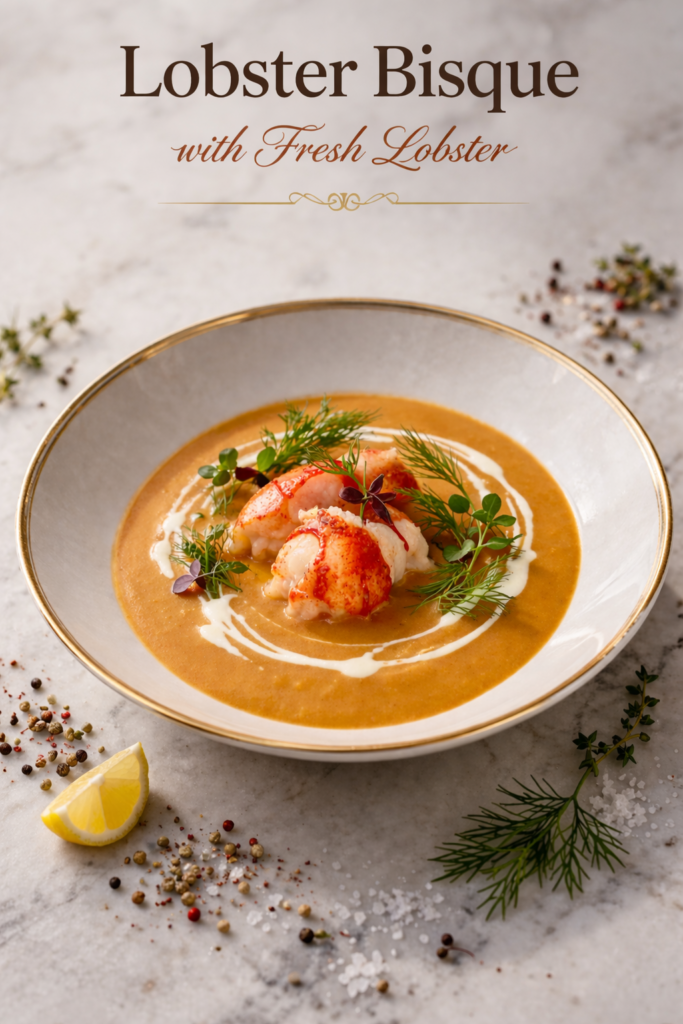
Appetizer:Lobster Bisque with Fresh Lobster: A Silky French Classic Made Simple. The luxurious, creamy richness of lobster bisque mirrors the decadence of the chocolate sauce while the shellfish’s sweet, delicate flavor provides a gentle entry point before the bold, earthy venison.
Main Course: This is the main course—a complete, showstopping plate. If you’re serving a larger feast, consider offering it alongside a simple roasted game bird like quail or pheasant for contrast.
Dessert:How to Make a Perfect Chocolate Crusted Crème Brûlée Tart. A natural extension of the chocolate theme, this tart features a rich chocolate crust cradling silky vanilla custard topped with caramelized sugar. The vanilla notes echo the truffle gnocchi’s creaminess, while the chocolate crust ties directly back to the venison’s sauce.
Cocktail:Old Fashioned Recipe: The Original Whiskey Cocktail. The Old Fashioned’s whiskey, sugar, and Angostura bitters mirror the dish’s flavor architecture: spirit (venison), sweetness (coffee rub and chocolate), and bitter (coffee and dark chocolate). The cocktail’s slow, contemplative sipping style matches the meal’s fine-dining pace.
Non-Alcoholic Drink:Spiced Blackberry Shrub. Mix blackberry syrup with apple cider vinegar and sparkling water. The acidity cuts through the richness, while the berry notes complement the red wine sauce. Serve over ice with a sprig of rosemary for aromatic lift.
Recreate the iconic MasterChef Season 13 challenge with this showstopping coffee-crusted venison. Tender venison loin gets a bold coffee rub, served with pillowy truffle gnocchi, silky cauliflower purée, and a luxurious red wine chocolate sauce.
Ingredients
For the Coffee-Crusted Venison
2 venison loins (, trimmed of silver skin about 180-200g / 6-7 oz each)
200ml red wine (Cabernet Sauvignon or Merlot) (¾ cup)
200ml beef stock (¾ cup)
1tbsp balsamic vinegar
30g dark chocolate (70% cocoa)
2tbsp unsalted butter
For the Sautéed Spinach
200g baby spinach leaves (7 oz)
1tbsp olive oil
1clove garlic, thinly sliced
Salt
black pepper
Fresh spinach leaves, for arrangement (optional)
Instructions
Part 1: The Cauliflower Purée (Can Be Made Ahead)
1
Steam the cauliflower. In a wide pot, bring the chicken broth to a boil. Add the cauliflower florets, reduce heat to low, cover, and steam for 15-20 minutes until completely fork-tender.
Transfer and reserve liquid. Using a slotted spoon, transfer the cauliflower to a food processor. Reserve 3 tablespoons of the hot broth in the pot.
Create the butter emulsion. In the pot with the reserved broth, whisk in the cold butter cubes until completely melted and smooth. This emulsion is the secret to a silky purée.
Blend until smooth. Add the butter mixture, thyme, salt, and white pepper to the food processor. Blend on high for 2-3 minutes, scraping down the sides, until completely smooth. If too thick, add warm broth a tablespoon at a time.
Pass through a sieve (optional but recommended). For an ultra-smooth restaurant texture, press the purée through a fine-mesh sieve with a spatula.
Keep warm or refrigerate. Set aside and keep warm, or refrigerate for up to 3 days.
Part 2: The Truffle Gnocchi
2
Bake the potatoes. Preheat oven to 400°F (200°C). Prick potatoes with a fork and bake for 45-60 minutes until tender. Let cool just enough to handle.
Rice the potatoes. Cut potatoes in half and scoop the flesh into a potato ricer or food mill. Rice onto a clean work surface. Do not use a food processor—it will make the gnocchi gluey.
Form the dough. Spread the riced potato into a well. Add the egg yolk, Parmesan, truffle paste (or grated truffle), and salt. Sprinkle with flour. Gently mix with your hands until a soft, pliable dough forms. Do not overwork.
Roll and cut. Divide dough into 4 portions. Roll each into a ½-inch thick rope. Cut into 1-inch pieces. For the classic gnocchi ridges, roll each piece over the tines of a fork or a gnocchi board.
Cook the gnocchi. Bring a large pot of salted water to a boil. Cook gnocchi in batches until they float to the surface, about 2-3 minutes. Remove with a slotted spoon.
Sauté to finish. In a large skillet, melt 3 tablespoons butter over medium heat. Add the cooked gnocchi and sauté until lightly golden and crisp on the outside. Keep warm.
Part 3: The Coffee-Crusted Venison
3
Make the coffee rub. In a small bowl, combine the finely ground espresso, brown sugar, smoked paprika, cracked black pepper, and salt.
Coat the venison. Pat the venison loins completely dry with paper towels. Rub the coffee mixture all over the meat, pressing gently to adhere.
Sear the venison. Heat olive oil in a heavy skillet (cast iron preferred) over medium-high heat until shimmering. Add the venison and sear for 60-90 seconds per side until deeply caramelized. Don’t crowd the pan—work in batches if needed.
Add aromatics and finish in oven. Add butter, thyme, and crushed garlic to the pan. Transfer to a 375°F (190°C) oven for 4-6 minutes for medium-rare. The internal temperature should read 125-130°F (52-54°C).
Rest. Remove venison from the pan and let rest on a cutting board for 5-10 minutes. Resting is non-negotiable—it allows juices to redistribute.
Part 4: The Red Wine Chocolate Sauce
4
Sauté the shallot. In a small saucepan, melt 1 tablespoon butter over medium heat. Add the minced shallot and cook until softened, about 2 minutes.
Reduce the wine. Add the red wine and balsamic vinegar. Bring to a boil and reduce by three-quarters, until syrupy.
Add the stock. Pour in the beef stock and reduce again until the sauce coats the back of a spoon, about 5-7 minutes.
Finish with chocolate and butter. Remove from heat. Whisk in the chopped dark chocolate until melted and smooth. Whisk in the cold butter for gloss and richness. Keep warm.
Part 5: The Sautéed Spinach
5
Heat the oil. In a large skillet, heat olive oil over medium heat. Add the sliced garlic and cook for 30-60 seconds until fragrant but not browned.
Wilt the spinach. Add the baby spinach in batches, tossing constantly, until just wilted—about 1-2 minutes. Do not overcook; you want vibrant green leaves with a bit of texture.
Season. Season with salt and black pepper to taste. Remove from heat and set aside.
Part 6: Plating (MasterChef Style)
6
Spoon the purée. Create a swoosh of cauliflower purée across each plate.
Arrange the spinach. Place a small mound of sautéed spinach in the center of the plate, positioning it where the venison will rest. This creates a vibrant green bed that catches any juices and adds color contrast.
Add fresh spinach leaves for arrangement. Tuck a few fresh, uncooked spinach leaves around the plate—under the gnocchi or peeking out from beneath the venison—for an elegant, layered look that adds freshness and visual texture.
Place the gnocchi. Arrange 6-8 truffle gnocchi beside or slightly overlapping the spinach.
Slice and plate the venison. Slice the rested venison into ½-inch medallions. Fan the slices over the sautéed spinach, allowing the green to peek through from underneath.
Sauce the plate. Spoon the red wine chocolate sauce around the meat—not over it—for dramatic effect. A few dots or a delicate swoosh adds elegance.
Finish with truffle. If using, shave fresh truffle over the gnocchi and venison. Garnish with microgreens or additional fresh spinach leaves for a final pop of color.
Nutrition Facts
Amount Per Serving
Calories785kcal
% Daily Value *
Total Fat48g74%
Saturated Fat28g140%
Sodium980mg41%
Total Carbohydrate45g15%
Dietary Fiber6g24%
Sugars8g
Protein42g84%
Vitamin C 45 mg
Iron 6 mg
* Percent Daily Values are based on a 2,000 calorie diet. Your daily value may be higher or lower depending on your calorie needs.
Note
Pro Tips for Success
Pat venison bone-dry before applying rub. Moisture is the enemy of a good sear.
Coffee burns fast. Your pan must be hot, and your sear quick. 60-90 seconds per side is the window.
Bake, don’t boil, your potatoes. Boiled potatoes absorb water, making gnocchi dense and gluey. Baking concentrates flavor and controls moisture.
Don’t overwork gnocchi dough. Mix just until combined. Overworking develops gluten, turning pillows into hockey pucks.
Rest the meat. Five minutes minimum. Slice too soon and those precious juices end up on the board, not your plate.
Make-Ahead Instructions
Cauliflower purée: Prepare up to 3 days ahead. Store in an airtight container, press plastic wrap onto the surface to prevent skin formation, and refrigerate. Reheat gently with a splash of broth.
Gnocchi: Shape and refrigerate on a floured tray for up to 24 hours. Do not cook until ready to serve.
Red wine sauce: Make up to 3 days ahead. Reheat gently, whisking in a tablespoon of butter to restore gloss.
Storage Guidelines
Fridge: Store components separately in airtight containers for up to 3 days.
Freezer: Gnocchi freeze beautifully. Freeze on a tray, then transfer to a bag. Cook directly from frozen—add 1-2 minutes to boil time. Venison does not freeze well once cooked; eat fresh.
Substitutions
Venison: Beef tenderloin (filet mignon) is the closest substitute. Reduce oven time by 1-2 minutes.
Fresh truffle: Optional for garnish. The truffle paste in the gnocchi provides plenty of flavor.
Chicken broth for cauliflower: Use vegetable broth for a vegetarian version.
Dark chocolate: 70% cocoa is ideal. Do not use milk chocolate—it lacks the necessary bitterness.
Troubleshooting
Gnocchi fell apart in water: Dough was too wet. Add a bit more flour next time, and ensure potatoes were properly riced, not mashed.
Venison is tough: You overcooked it. Venison has very little fat and becomes tough past medium-rare. Use a thermometer next time.
Cauliflower purée is grainy: Cauliflower wasn’t cooked enough, or you added too much liquid. Steam until completely tender and blend thoroughly.
Chocolate sauce separated: Heat was too high when adding chocolate. Remove from heat first, then whisk in chocolate and butter.
Ingredient Sourcing Tips
Venison: Look for farm-raised venison at specialty butchers or online retailers. Wild venison is leaner and may have a stronger flavor.
Coffee: Use freshly ground, dark-roast espresso beans. Pre-ground coffee lacks the same aromatic punch.
Truffle products: Truffle paste is widely available online and in specialty stores. A little goes a long way.
Keywords:
coffee-crusted venison, Gordon Ramsay venison recipe, MasterChef venison, coffee crusted venison, truffle gnocchi recipe, venison with chocolate sauce, red wine chocolate sauce, cauliflower puree, game meat recipes, fine dining venison, venison loin recipe, how to cook venison, restaurant quality venison, MasterChef recipes, venison with truffle, Christmas venison, holiday main course, MasterChef Season 13, Keep Up with Gordon,
The MasterChef Connection: Season 13, Episode 18
MasterChef US Season 13, Episode 18 featured the semifinal round’s “Keep Up with Gordon” challenge—a pressure test where contestants had to replicate one of Ramsay’s most complex dishes while watching him cook it live. The coffee-crusted venison with truffle gnocchi, cauliflower purée, and red wine chocolate sauce was chosen specifically for its technical demands: multiple components, precise timing, and unforgiving ingredients.
What made this challenge particularly brutal was the 30-second plating window. Contestants had to finish plating within half a minute of Ramsay’s completion, forcing them to manage timing across four separate components simultaneously. Watching the episode reveals the sheer intensity: venison searing in one pan, gnocchi boiling in another, sauce reducing, purée waiting to be swooshed. It’s a masterclass in kitchen organization.
The episode, which aired in 2023, became an instant fan favorite, with the venison dish repeatedly cited as one of the most technically impressive challenges in the show’s history. For home cooks attempting this recipe, the lesson is clear: read through every step before starting, prepare your ingredients (mise en place), and trust your timing.
The Coffee-Crusted Revolution
Coffee as a meat rub might seem novel, but it belongs to a broader tradition of using bitter, roasted elements to enhance savory dishes. Food & Wine’s guide to coffee rubs explains that the combination works on multiple levels: coffee’s natural acidity helps tenderize the meat; its roasted notes echo the Maillard crust; and its slight bitterness cuts through richness.
Chefs like Ramsay have popularized this technique, but its roots go deeper. In the American South, coffee-rubbed brisket has been a barbecue tradition for decades. In Europe, coffee has long been used in marinades for wild game to balance gaminess. The MasterChef version elevates this rustic technique into fine dining by pairing it with luxurious accompaniments like truffle and chocolate.
The Truffle Gnocchi: Pillows of Perfection
What makes Ramsay’s gnocchi distinctive is the truffle integration. Rather than simply adding truffle oil at the end (which can taste artificial), he incorporates truffle paste or grated fresh truffle directly into the dough. This ensures every bite carries that earthy, luxurious aroma. The final shaving of fresh truffle over the plated gnocchi adds visual drama and an aromatic burst just before eating.
The choice of russet potatoes is intentional. The Spruce Eats’ potato guide notes that their high starch content (about 20-22%) creates a lighter, fluffier gnocchi than waxy potatoes like Yukon Golds. When baked, the starch gelatinizes without excess moisture, creating the ideal base for a delicate dumpling.