
Intro
Few cocktails pack as elegant a punch as the French 75. With its bright, citrusy kick followed by a cascade of delicate bubbles, this champagne cocktail has been a symbol of sophistication for over a century. Named after a powerful World War I artillery piece, the French 75 combines gin, fresh lemon juice, simple syrup, and Champagne into a drink that’s at once refreshing and formidable. It’s the kind of cocktail that makes any occasion feel like a celebration—whether you’re toasting a special milestone or simply elevating a quiet evening at home. This recipe walks you through the classic preparation, complete with pro tips to ensure every sip is perfectly balanced.
The History
The French 75’s story begins not in a cocktail lounge, but on the battlefields of World War I. The drink takes its name from the Canon de 75 modèle 1897, a French 75-millimeter field gun that was renowned for its rapid-fire capability and precision—firing up to 28 shells per minute and playing a decisive role in stopping the German advance on Paris . It was a symbol of military power and became a key propaganda tool during the war, soon known simply as “le soixante-quinze” .
The cocktail itself first appeared around 1915, likely created by a French bartender—most believe it was Henry Tépé of Henry’s Bar in Paris . The drink was said to have such a kick that it felt like being shelled by the powerful French artillery piece . An early version appeared in the American press in 1915, brought to Broadway by war correspondent E. Alexander Powell . The recipe evolved through the 1920s, with Harry MacElhone of Harry’s New York Bar (another legendary Paris establishment) featuring a version in his 1922 book, though that early recipe differed significantly from today’s classic . The French 75 as we know it—gin, lemon, sugar, and Champagne—first appeared in a 1927 American booklet called Here’s How, and was immortalized in Harry Craddock’s 1930 The Savoy Cocktail Book with the now-famous warning: “Hits with remarkable precision” . From there, it became a staple of sophisticated drinking, appearing in the movie Casablanca and referenced in multiple John Wayne films .
The Science
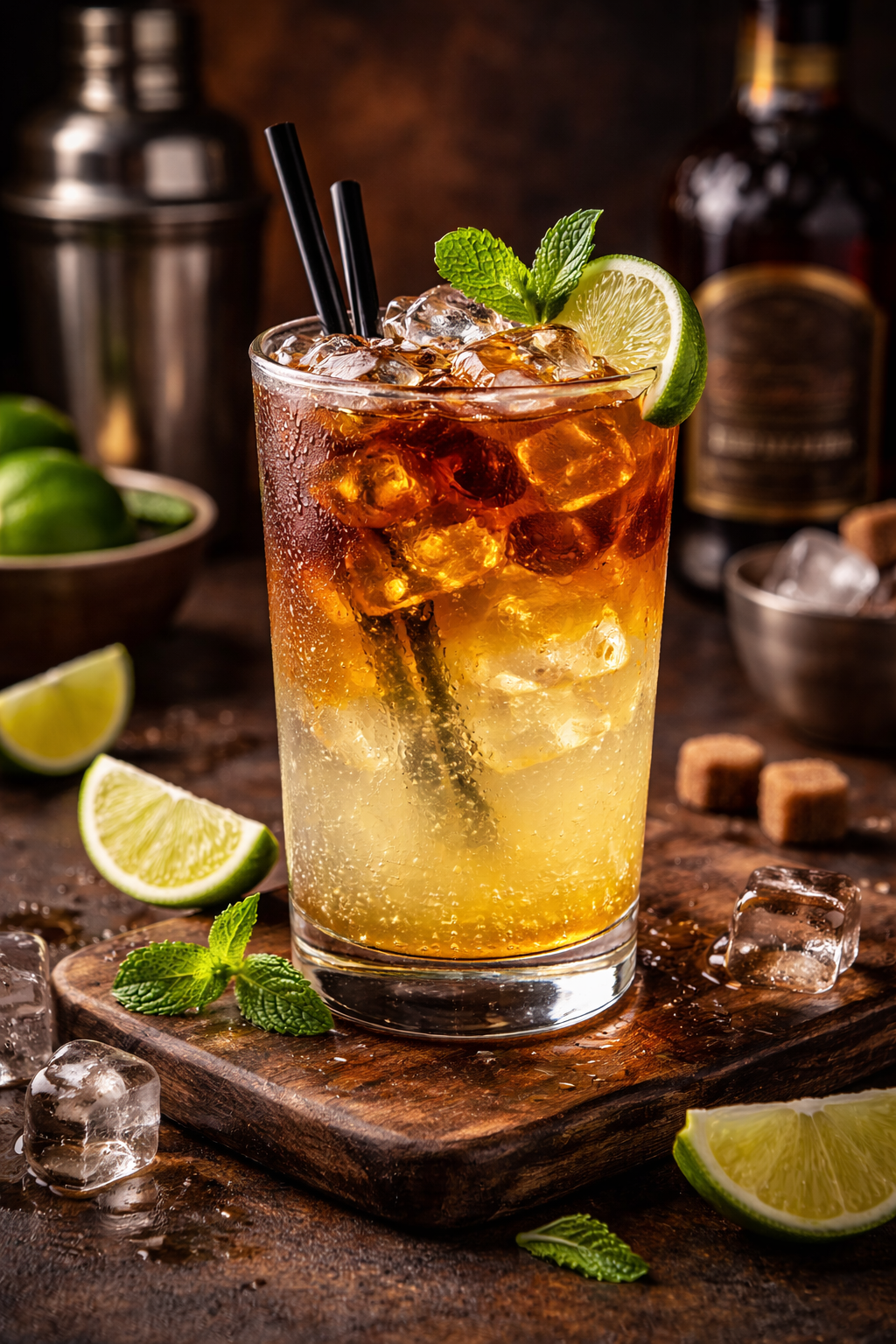
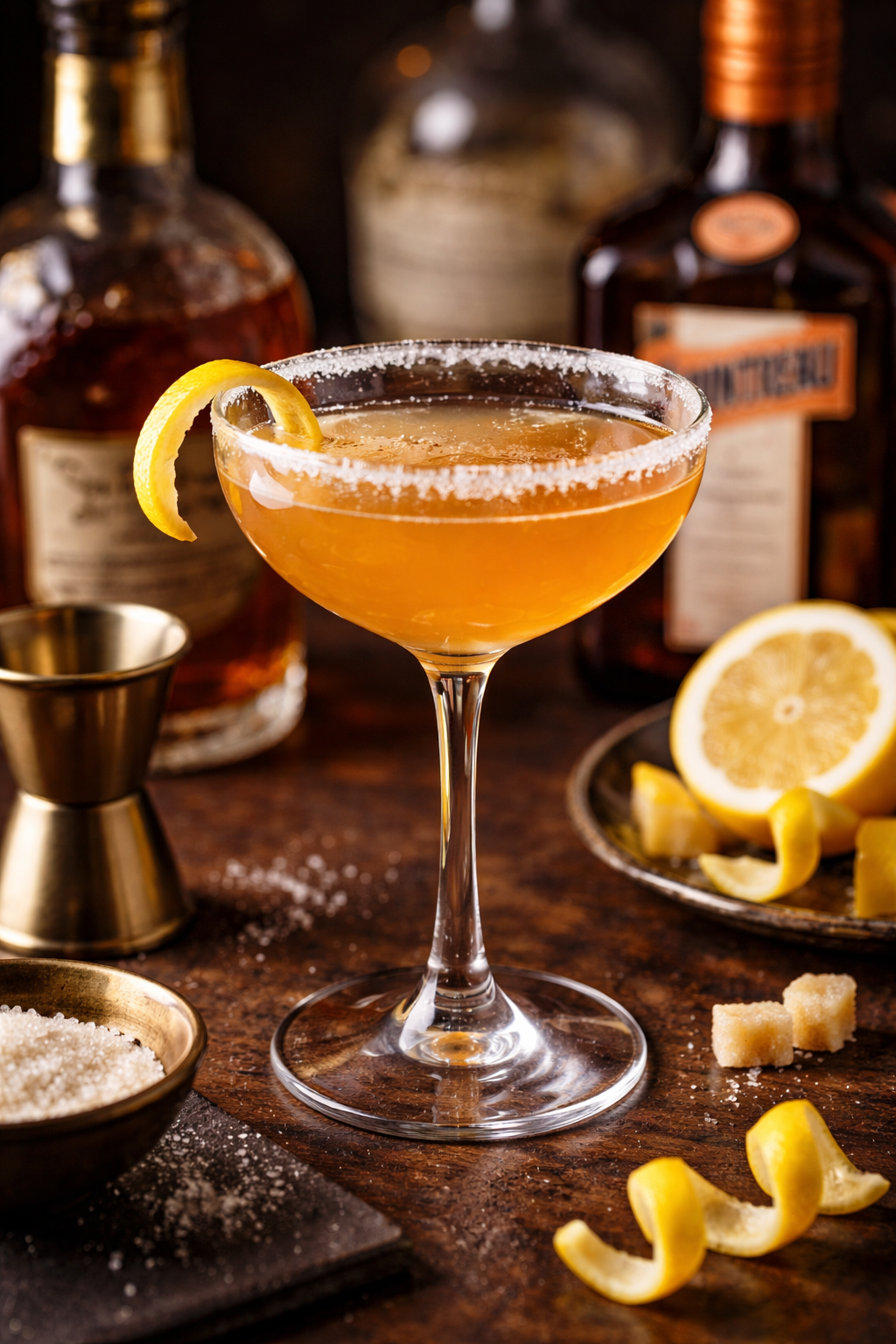
What makes the French 75 so uniquely satisfying? It’s a masterclass in balancing flavor, acidity, and carbonation. The cocktail follows the same structure as a Tom Collins, with Champagne replacing soda water—essentially, it’s a Tom Collins in a tuxedo . The gin provides the botanical backbone, the lemon juice delivers bright acidity, and the simple syrup adds just enough sweetness to balance the citrus.
The Champagne, however, is where the science gets interesting. Carbonation is far more than just bubbles—it’s an active ingredient in the drink’s sensory experience. When carbon dioxide dissolves in water, it creates carbonic acid, which gives the drink a slight additional acidity that you can feel as much as taste . This carbonation actually triggers the same TRPA1 pain receptors that respond to spicy foods, creating that pleasant “pain and pleasure” reaction that makes sparkling drinks so compelling . The bubbles also amplify your perception of aroma, carrying the botanical notes of the gin and the citrus oils directly to your nose with each sip . This is why the order of assembly matters: you always add the Champagne last. Pouring the carbonated ingredient into the glass at the very end preserves the effervescence and keeps the mouthfeel light and airy . If you were to shake the Champagne with the other ingredients, you’d release all those precious bubbles and end up with a tragically flat drink .
GOOD PAIRING FOOD AND DRINK
Appetizer: Oysters on the Half Shell with Mignonette
- Why: The briny, mineral notes of fresh oysters are a classic pairing with Champagne. The bright acidity of the French 75 cuts through the oyster’s richness, while the bubbles act as a palate cleanser, preparing you for the next perfect bite.
Main Course: Note: This is a cocktail. For a complete meal, serve before: Pan-Seared Scallops with Lemon Beurre Blanc
- Why: The delicate sweetness of scallops echoes the cocktail’s bright citrus notes, while the buttery sauce mirrors the richness of the Champagne. The lemon in both the dish and the drink creates a harmonious flavor bridge.
Side Dish: Lemon and Herb Risotto
- Why: The creamy, comforting texture of risotto provides a wonderful contrast to the cocktail’s effervescence, while the bright lemon and fresh herbs tie directly back to the drink’s flavor profile.
Dessert: Lemon Madeleines with Raspberry Coulis
- Why: These delicate French tea cakes echo the cocktail’s lemon notes while the raspberry adds a touch of sweetness. Their light, airy texture complements the Champagne’s bubbles beautifully.
Cocktail: French 125 (Cognac Version)
- Why: A fascinating variation that replaces gin with cognac, creating a richer, more complex drink. It’s the French 75’s sophisticated cousin—perfect for comparing how the base spirit transforms the entire experience .
Non-Alcoholic Drink: Sparkling Lemon & Rosemary Spritzer (Fresh lemon juice, rosemary simple syrup, sparkling water)
- Why: Captures the essence of the French 75 with bright citrus and herbal notes. The rosemary adds an aromatic complexity that mimics the gin’s botanicals, while the bubbles provide the same refreshing effervescence.
Description
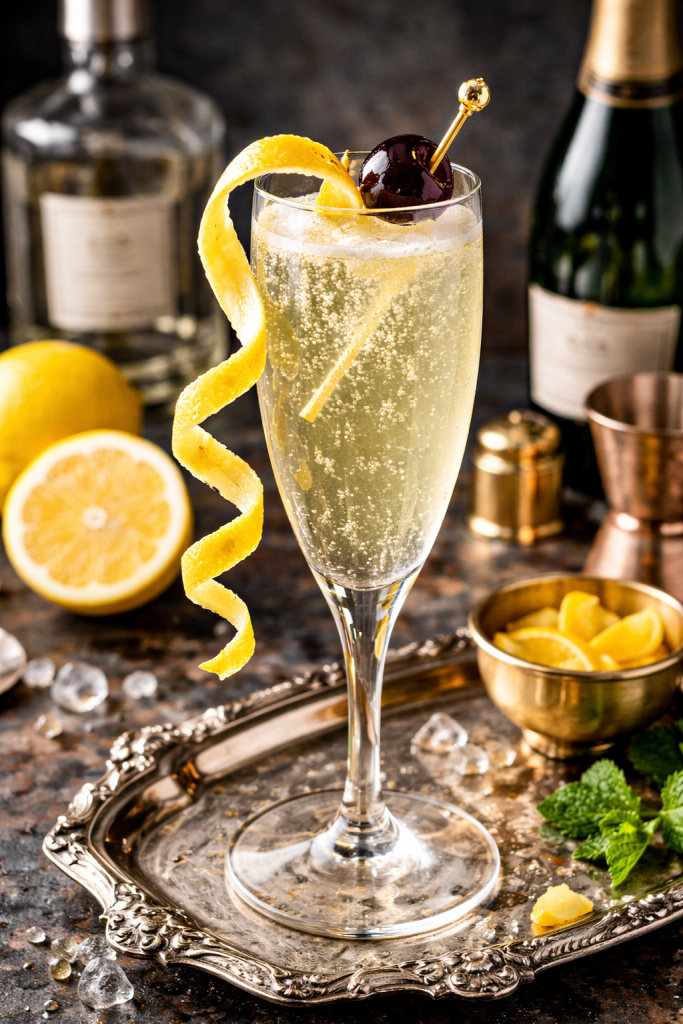
The French 75 is the ultimate celebration cocktail: crisp gin, fresh lemon, and a touch of sweetness topped with elegant Champagne bubbles. It's sophisticated, refreshing, and surprisingly simple to make at home.
Ingredients
Instructions
-
Chill Your Glass: Place a Champagne flute in the freezer or fill it with ice water to chill while you prepare the cocktail. A cold glass helps maintain the bubbles and keeps the drink perfectly chilled.
-
Combine Ingredients: Fill a cocktail shaker with ice. Add the gin, freshly squeezed lemon juice, and simple syrup. Fresh lemon juice is non-negotiable—bottled juice lacks the bright, vibrant acidity essential to this cocktail.
-
Shake Vigorously: Shake the mixture well for 10-15 seconds until thoroughly chilled. This dilutes the drink slightly and incorporates the ingredients perfectly. Unlike carbonated mixers, the non-bubbly components go in the shaker.
-
Strain: Discard the ice water from your chilled flute. Double-strain the shaken mixture into the glass using both a Hawthorne strainer and a fine-mesh strainer. This ensures no ice chips or pulp make it into the final drink, keeping it crystal clear.
-
Top with Champagne: Slowly pour the Champagne into the flute, tilting the glass slightly to preserve as much carbonation as possible. The bubbles will rise and create a beautiful, elegant effervescence.
-
Garnish and Serve: Express a lemon twist over the surface of the drink by twisting the peel to release its oils, then drop it in or rest it on the rim. Alternatively, garnish with a thin lemon wheel. Serve immediately and enjoy responsibly.
Nutrition Facts
- Amount Per Serving
- Calories 175kcal
- % Daily Value *
- Total Carbohydrate 8g3%
- Sugars 8g
- Protein 0.2g1%
* Percent Daily Values are based on a 2,000 calorie diet. Your daily value may be higher or lower depending on your calorie needs.
Note
- Fresh Juice Only: This is a three-ingredient cocktail (plus bubbles)—every component matters. Bottled lemon juice will yield a flat, one-dimensional result. Always use fresh lemons .
- Gin Matters: A good London Dry gin with prominent juniper and citrus notes works best. Citadelle, Tanqueray, and Beefeater are excellent choices . The gin provides the cocktail's backbone.
- Sparkling Wine Selection: Use a dry (Brut) Champagne or sparkling wine. Sweet sparkling wine will make the cocktail cloying. Prosecco or Cava are excellent more affordable alternatives.
- The Order is Crucial: Never shake the Champagne with the other ingredients. This would release all the carbonation and leave you with a flat, sad drink . Always add the bubbles last, after straining.
- Glassware Matters: Serve in a narrow Champagne flute to preserve carbonation. The slim shape minimizes surface area, keeping those precious bubbles in the drink longer than a wide coupe would .