
Have you ever pulled a chicken breast from the oven, only to watch it go from perfectly cooked to dry and overcooked in the time it took you to plate it? That frustration is exactly why I fell in love with sous vide.
This honey mustard sous vide chicken recipe represents everything I adore about precision cooking. We’re cooking the chicken to exactly 140°F—a temperature that yields meat so tender and juicy it practically melts on your tongue. The honey mustard marinade infuses every bite with sweet, tangy, savory depth, while the vibrant roasted red pepper coulis adds a silky, smoky counterpoint that elevates the whole dish to restaurant quality.
What makes this version special? I’m showing you exactly how to scale up for four servings—perfect for family dinner or weekly meal prep. I’ll walk you through bagging techniques to ensure even cooking, share the precise timing for that ideal texture, and reveal my secrets for a coulis so good you’ll want to put it on everything. Let’s dive in.
The History: From French Innovation to Home Kitchen Staple
The Birth of Sous Vide
The story of sous vide begins not in a home kitchen, but in the laboratories and restaurants of 1970s France. In 1974, a food engineer named Georges Pralus discovered that cooking foie gras in sealed plastic bags prevented the precious fat from rendering out, preserving both texture and flavor . Around the same time, another French chef, Bruno Goussault, was exploring how vacuum-sealing combined with precise temperature control could improve the quality of cooked meats .
These two pioneers laid the foundation for what would become one of the most significant culinary innovations of the twentieth century. Pralus focused on texture and flavor, while Goussault delved into the food safety science, developing the time-temperature pasteurization tables that make sous vide both safe and reliable .
From Professional Kitchens to Home Cooks
For decades, sous vide remained the domain of professional chefs. The equipment was expensive, bulky, and required technical knowledge that intimidated home cooks. But the 2010s brought a revolution. Companies like Anova and Joule introduced affordable immersion circulators that clipped onto any pot, making precision cooking accessible to anyone with an internet connection .
Suddenly, home cooks could achieve results that rivaled three-Michelin-star restaurants. The ability to cook chicken to exactly 140°F and hold it there indefinitely meant that dry, overcooked chicken breast became a relic of the past.
The Honey Mustard Tradition
Honey mustard itself has deep roots—ancient Romans combined honey with mustard seeds, and medieval European cooks prized the combination for its ability to balance sweet and pungent flavors . Pairing it with chicken is a classic for good reason: the sweetness of honey caramelizes beautifully during searing, while mustard’s sharp acidity cuts through the richness of the meat.
This recipe marries the ancient honey-mustard pairing with modern precision cooking, then adds a roasted red pepper coulis that draws on Mediterranean traditions of charring peppers to unlock their deepest flavors. It’s a dish that spans centuries and continents, all on one plate.
The Science: Precision, Pasteurization, and Flavor Infusion
Why 140°F?
The temperature you choose for sous vide chicken dramatically affects the final texture. At 140°F (60°C), chicken breast reaches what culinary scientists call the “sweet spot”—hot enough to be safe, but low enough that the proteins haven’t tightened into the dry, stringy texture we associate with overcooked chicken .
At this temperature, the myosin proteins denature and coagulate, creating a firm yet tender structure, while the actin proteins remain partially intact, retaining moisture . The result is chicken that’s juicy through and through, with a texture some describe as “buttery” or “velvety.”
The Safety Equation
If you’ve always heard that chicken must reach 165°F to be safe, you’re not wrong—but you’re only hearing part of the story. The USDA’s 165°F standard represents the temperature at which salmonella is killed instantly . But food safety isn’t a light switch; it’s a function of both temperature and time.
For chicken at 140°F, the same level of pasteurization—a 7-log10 reduction in salmonella—requires holding that temperature for 27.5 minutes after the chicken reaches it internally . This is precisely what sous vide does so beautifully. Our 2-hour cook time provides a massive safety margin, ensuring every bite is both safe and perfectly textured.
Marinade Penetration
Vacuum-sealing chicken with a honey mustard marinade does more than coat the surface. The absence of air in the bag creates pressure that forces flavor compounds deeper into the meat than traditional marinating ever could. The fat in the olive oil carries fat-soluble flavor molecules, while the water in the honey and soy sauce carries water-soluble ones, creating a complex flavor profile that penetrates all the way through.
The Coulis Chemistry
Roasting red peppers until their skins blacken isn’t just about easy peeling—it’s about chemistry. The intense heat triggers the Maillard reaction, creating hundreds of new flavor compounds that taste smoky, sweet, and deeply savory. This char adds complexity that raw or steamed peppers simply can’t match.
Blending these roasted peppers with olive oil creates an emulsion—a stable mixture of water-based pepper juices and oil. The addition of heavy cream adds emulsifying proteins that keep the coulis silky and smooth, while balsamic vinegar provides acidity that balances the peppers’ natural sweetness.
The Takeout – “Honey Mustard Goes Back Further Than We Thought”
TastyFoodLovers – “The Tangy Tale of Honey Mustard: Uncovering Its Sweet and Savory Origins”
Anova Culinary – “Pasteurization with Sous Vide Cooking”
Good Pairing Food and Drink
This chicken and coulis combination is versatile enough to pair with countless sides. Here are my favorite companions.
- Appetizer: Burrata with Balsamic Glaze and Fresh Basil. The creamy, milky burrata provides a cool, luxurious start that echoes the creaminess of the coulis. A drizzle of aged balsamic ties back to the vinegar in the sauce, while fresh basil adds brightness.
- Main Course: This is the main course! But if you’re building a larger spread, serve alongside Garlic Butter Shrimp Scampi for a surf-and-turf variation that shares the same Mediterranean flavor profile.
- Side Dish: Parmesan Herb Orzo or Creamy Polenta. Both options provide a soft, comforting base that soaks up every drop of that gorgeous red pepper coulis. The nuttiness of Parmesan complements the sweetness of the peppers, while the creamy texture mirrors the chicken’s tenderness.
- Dessert: Lemon Ricotta Cake with Fresh Berries. After the savory richness of the main course, a light, citrusy dessert cleanses the palate. The lemon echoes the brightness in the coulis, while the berries add fresh, tart contrast.
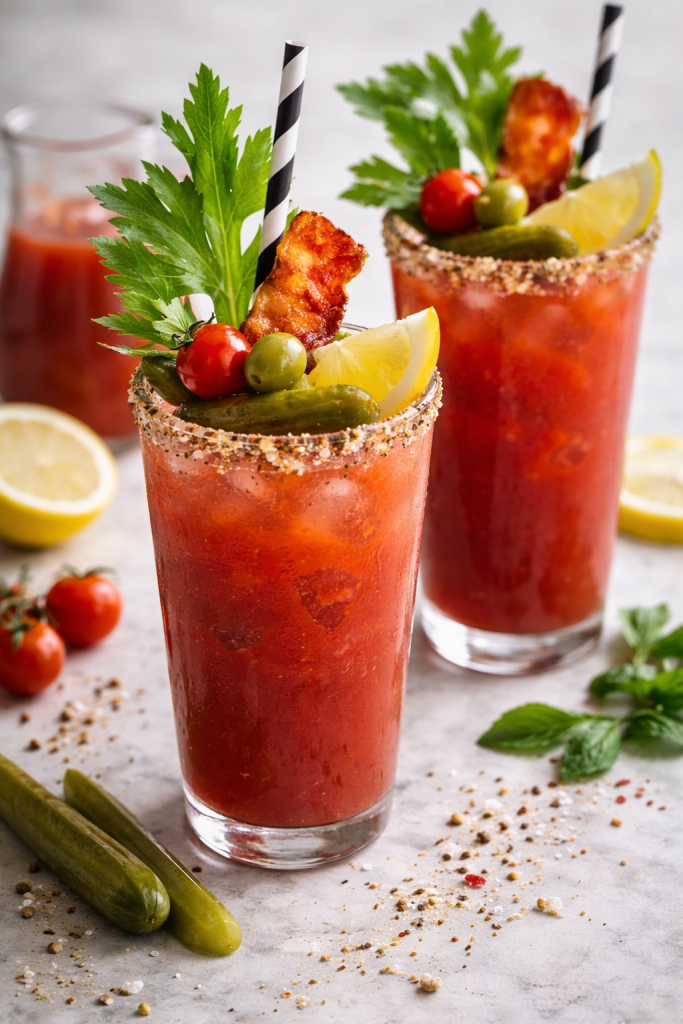
- Cocktail: Smoked Paprika Bloody Mary. The smoky paprika in this savory cocktail echoes the charred peppers in the coulis. Made with vodka, tomato juice, lemon, Worcestershire, and a rim of smoked salt, it’s a perfect aperitif.
- Non-Alcoholic Drink: Sparkling Rosemary Lemonade. Muddle fresh rosemary with lemon juice, add simple syrup and sparkling water, and serve over ice. The herbaceous notes complement the roasted peppers, while the citrus brightness cuts through the honey mustard richness.
Description
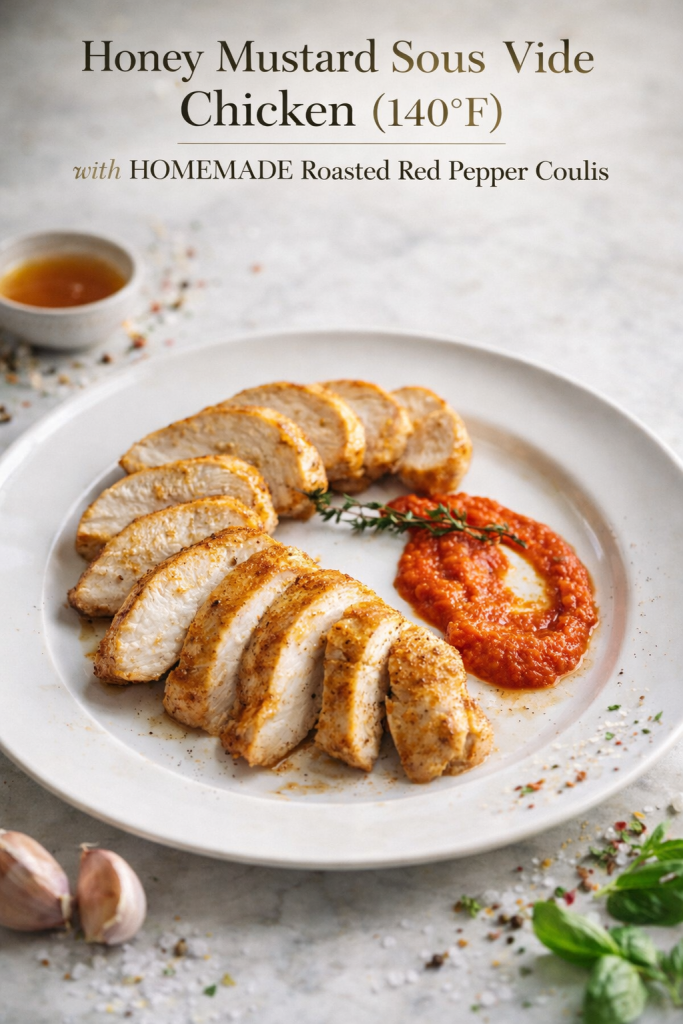
This honey mustard sous vide chicken delivers impossibly tender, juicy chicken breast cooked to exactly 140°F—the sweet spot for texture and safety. A sweet-tangy marinade of Dijon mustard, honey, and soy sauce infuses the meat during its gentle bath, while a silky roasted red pepper coulis adds smoky, creamy contrast. The recipe scales perfectly for four servings, making it ideal for family dinner or weekly meal prep.
Ingredients
For the Sous Vide Chicken:
For the Roasted Red Pepper Coulis (Makes ~2 cups):
Instructions
Part 1: Sous Vide Chicken
-
-
Prepare the marinade. In a medium bowl, whisk together the Dijon mustard, soy sauce, honey, olive oil, black pepper, and paprika until well combined.
-
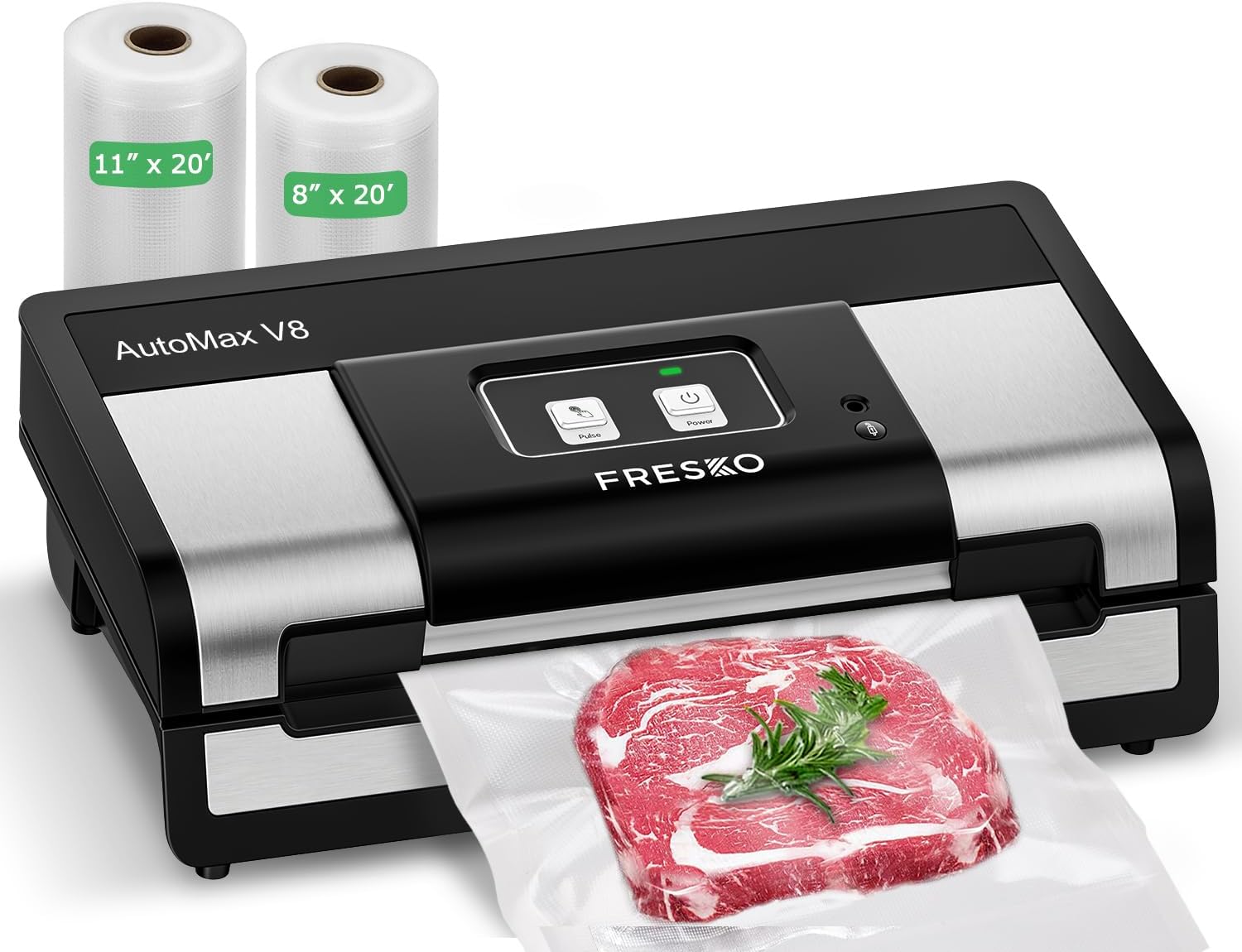
Bag the chicken. For four breasts, use two 1-gallon zipper-lock bags or two vacuum-seal pouches, placing two breasts in each. Divide the marinade evenly between the bags. Seal using the water displacement method (for zipper bags) or a vacuum sealer. Ensure the chicken lies in a single layer for even cooking.
-
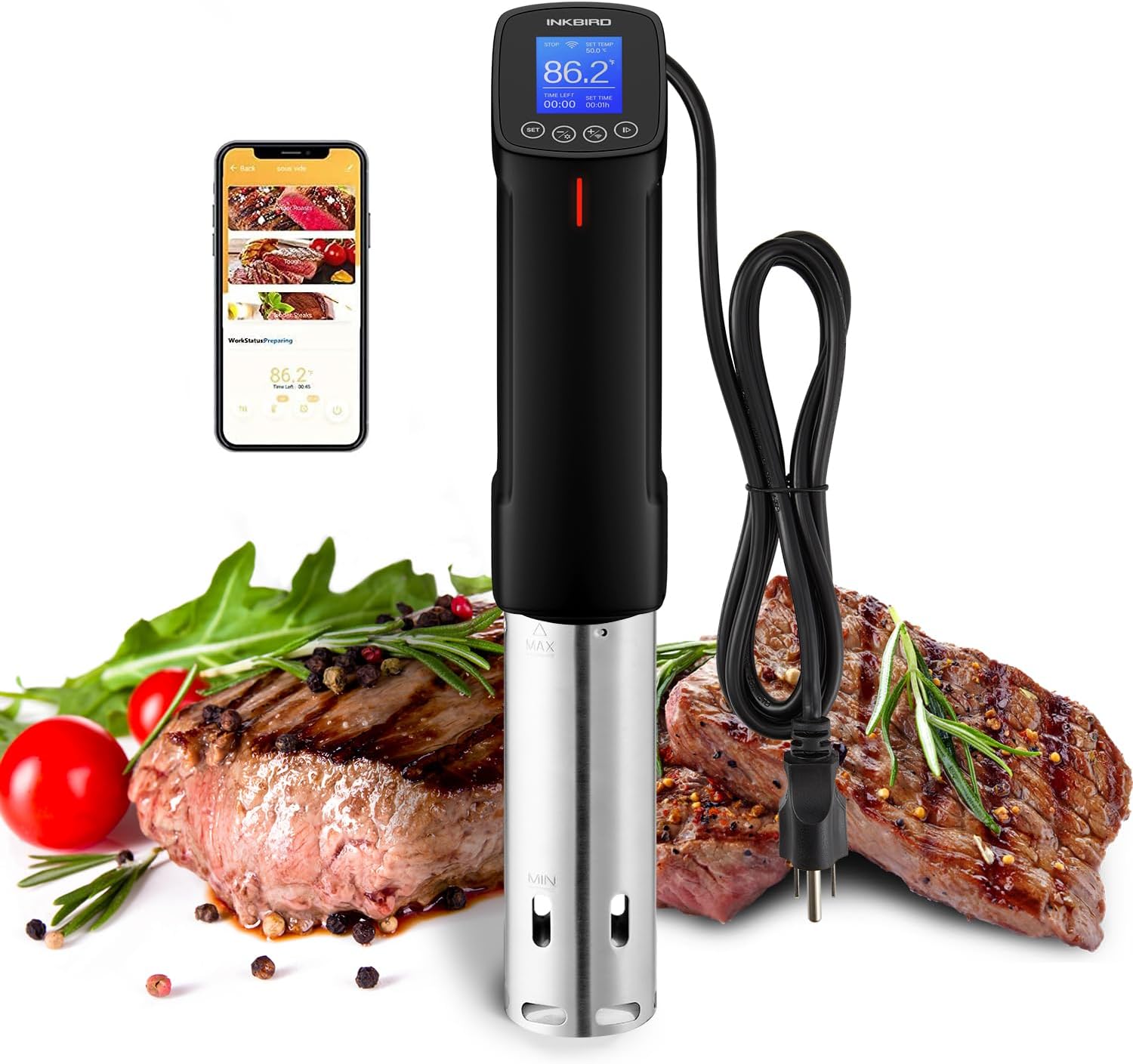
Preheat the water bath. Fill a large pot or container with water. Attach your immersion circulator and set the temperature to 140°F (60°C). Allow the water to come to temperature fully before adding the chicken .
-
Cook the chicken. Submerge the sealed bags completely, ensuring they're not overlapping. You may need to weigh them down with a heavy object. Cook for 2 hours. If the bag is crowded, extend time to 2.5 hours to ensure even heat distribution .
-
Part 2: Roasted Red Pepper Coulis
-
-
Roast the peppers (skip if using jarred). Preheat your broiler to high. Halve the peppers and remove seeds. Place skin-side up on a baking sheet and broil until skins are completely blackened, 10-15 minutes. Transfer to a bowl, cover tightly with plastic wrap, and let steam for 15 minutes.
-
Peel and chop. Remove skins (they should slip off easily). Discard seeds and stems, and roughly chop the flesh.
-
Sauté aromatics. In a small skillet, heat 1 tablespoon of olive oil over medium heat. Add the chopped onion and garlic, and sauté until soft and translucent, about 5-7 minutes. Do not brown.
-
Blend the coulis. Transfer the sautéed onion and garlic to a food processor. Add the roasted peppers, salt, heavy cream, and remaining olive oil. Blend until completely smooth, scraping down the sides as needed.
-
Finish the sauce. Pour the blended mixture into a small saucepan. Stir in the balsamic vinegar. Bring to a gentle simmer over medium heat and cook for 10 minutes, stirring occasionally, until slightly thickened and flavors meld. Keep warm.
-
Part 3: Finishing and Serving
-
-
Remove chicken from bags. Carefully open the bags (watch for hot steam!) and transfer the chicken to a plate. Pat each breast thoroughly dry with paper towels. This step is crucial—moisture prevents proper searing.
-
Sear the chicken. Heat a large skillet (cast iron is ideal) over high heat with a tablespoon of oil. Working in two batches if needed to avoid crowding, sear the chicken for 45-60 seconds per side until golden brown and caramelized. The interior is already fully cooked, so we're just building flavor .
-
Rest briefly. Transfer seared chicken to a cutting board and let rest for 5 minutes. This allows juices to redistribute.
-
Slice and serve. Slice each breast against the grain into medallions. Spoon a generous pool of roasted red pepper coulis onto each plate, arrange the sliced chicken over it, and drizzle with any remaining sauce from the skillet or bag (strained if desired). Garnish with fresh herbs if available.
-
Nutrition Facts
Servings 4
- Amount Per Serving
- Calories 450kcal
- % Daily Value *
- Total Fat 24g37%
- Saturated Fat 6g30%
- Sodium 980mg41%
- Total Carbohydrate 18g6%
- Dietary Fiber 3g12%
- Sugars 12g
- Protein 42g84%
* Percent Daily Values are based on a 2,000 calorie diet. Your daily value may be higher or lower depending on your calorie needs.
Note
- Pro-Tip #1: Don't overcrowd the bags. For even cooking, use two separate bags for four breasts. Overcrowding can create cold spots and uneven heating .
- Pro-Tip #2: Dry thoroughly before searing. Moisture is the enemy of browning. Pat those chicken breasts completely dry with paper towels—don't be shy.
- Pro-Tip #3: Save the bag juices. The liquid in the bags is liquid gold. Strain it through a fine-mesh sieve and add it to the coulis or drizzle it over the finished dish for an extra flavor boost.
- Make-Ahead Instructions: This recipe is perfect for meal prep. Cook the chicken sous vide up to 4 days ahead, chill in an ice bath immediately after cooking, and refrigerate in the sealed bags. The coulis can be made 3 days ahead and refrigerated. When ready to serve, simply sear the chicken (from cold) and reheat the coulis gently.
- Storage Guidelines: Store leftover chicken and coulis separately in airtight containers in the refrigerator for up to 4 days. Chicken can be reheated gently in a low oven or by returning to a 140°F water bath for 20-30 minutes.
- Freezing: Sous vide chicken freezes beautifully in its bag for up to 3 months. Thaw overnight in the refrigerator before searing and serving. The coulis freezes well for up to 3 months in a sealed container.
- Substitutions:
- Soy sauce: Use tamari or coconut aminos for gluten-free; for low-sodium, use a reduced-sodium version.
- Honey: Maple syrup or agave nectar work well for a different sweetness profile.
- Dijon mustard: Whole grain mustard adds texture; spicy brown mustard adds heat.
- Heavy cream: For dairy-free, use full-fat coconut cream or omit entirely (the coulis will be slightly less rich but still delicious).
- Balsamic vinegar: Red wine vinegar plus a tiny pinch of sugar approximates the sweetness.
- Troubleshooting:
- "My chicken is tough/dry!" This almost never happens with sous vide at 140°F, but if you overcooked the sear (more than 60 seconds per side) or used too high heat, the exterior can dry out. Next time, sear quickly and use an instant-read thermometer to check.
- "My coulis is too thin!" Simmer it longer to reduce, or add ½ teaspoon cornstarch mixed with cold water and simmer until thickened.
- "My chicken didn't brown well!" You didn't dry it thoroughly enough, or you overcrowded the pan. Pat dry, use high heat, and work in batches.
- "My bag floated during cooking!" Use binder clips to attach a heavy spoon to the bag, or place a heat-safe plate on top to weigh it down.
- Ingredient Sourcing: Look for bell peppers that are heavy for their size and deeply colored—they're sweeter. If using jarred roasted peppers, drain them well and pat dry before using to avoid excess water in the coulis.