
INTRO
Want a restaurant-quality meal for two without leftovers?
This guide teaches you exactly how to cook pan-seared duck breast with pomegranate sauce using just one breast. It’s the perfect, no-waste romantic dinner.
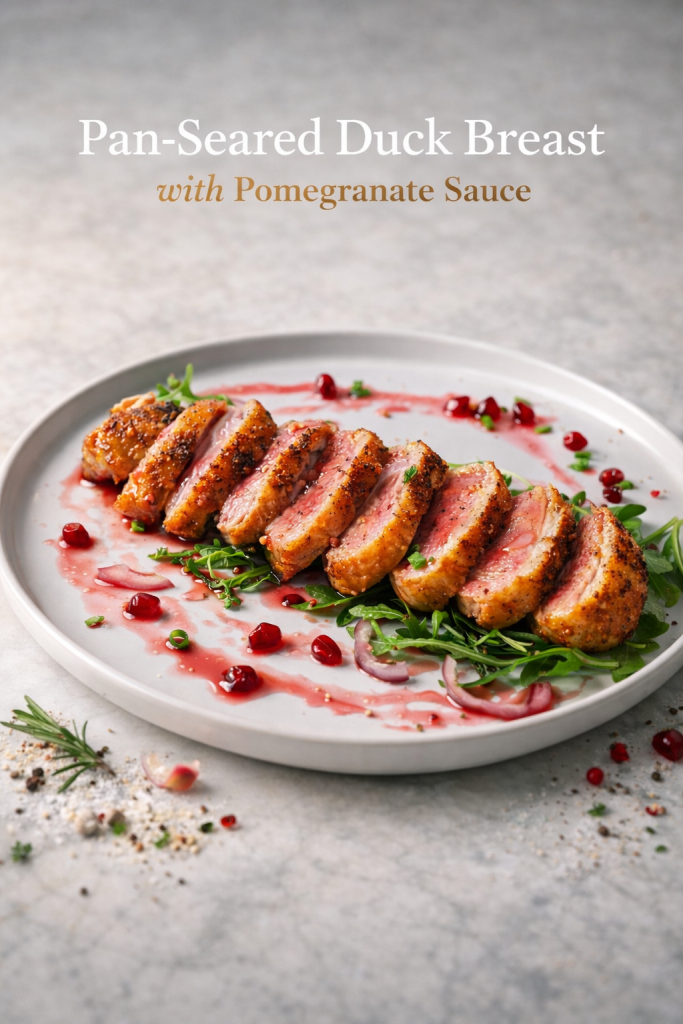
The dish features perfectly cooked duck with crackling-golden skin and a tender, juicy interior. A shimmering, sweet-tart sauce drapes over the top.
What makes this duck breast recipe unique? The from-scratch sauce builds incredible depth with aromatics and orange juice. It’s far better than anything from a bottle.
We’re creating an experience here. It’s a symphony of flavors and textures that makes any dinner feel like a celebration.
THE HISTORY
Duck and pomegranate is an ancient pairing.
It traces back to Persia (modern-day Iran), where the pomegranate is a native fruit and symbol of life. According to Epicurious, fourth-century Persian manuals describe ducks fattened for royalty. The finest meal? Duck served in a tart pomegranate sauce.
This evolved into Fesenjan, a beloved Persian stew from the Caspian Sea region. Fesenjan combines poultry with ground walnuts and pomegranate molasses. It’s rich, creamy, and deeply flavorful.
This traditional Persian duck recipe was favored in fall when pomegranates ripened. It still holds honor at Iranian weddings today.
The core principle endures: rich duck, offset by bright, acidic pomegranate. Some culinary truths are timeless.
THE SCIENCE
Creating perfect pan-seared duck breast teaches two sciences: fat rendering and the Maillard reaction.
Duck breasts have a thick fat cap. The goal is to render that fat for crispy skin without overcooking the meat.
Start the duck in a cold pan. As it heats slowly, the fat gently renders and pools around the breast. This lets maximum fat melt away. Save it for roasting potatoes later.
As any line cook knows, pan-searing is the best method for crispy skin. Direct heat renders fat and promotes browning. This is key to mastering how to cook duck breast.
The Maillard reaction also works its magic. This chemical reaction between amino acids and sugars creates complex, savory flavor and deep color.
Scoring the skin increases surface area for this reaction. It also creates channels for fat to escape.
High pan heat (around 320°F) kickstarts browning. That’s how we get that incredible crust.
Molecular gastronomist Hervé This says we should heat foods quickly at first for maximum Maillard flavor.
Duck fat is prized by chefs. It has a high smoke point (375°F) for searing and a silky texture from its low melting point.
Finally, resting is crucial. It lets juices redistribute throughout the meat. Every slice of your seared duck breast with orange sauce stays succulent and moist.
GOOD PAIRING FOOD AND DRINK
- One Appetizer: Seared Scallops with Brown Butter and Capers. Sweet scallops and nutty butter contrast the rich duck. Capers echo the sauce’s tang, creating a flavor bridge.
- One Side Dish: Saffron Rice with Toasted Almonds. Fragrant saffron rice is the perfect canvas for the sauce. Toasted almonds add crunch against the tender duck.
- One Dessert: Dark Chocolate and Pomegranate Tart. Bitter dark chocolate pairs classically with pomegranate. It echoes the main course in a decadent finale.
- One Cocktail: Pomegranate Ginger Moscow Mule. Spicy ginger beer and zesty lime cleanse the palate. Pomegranate ties it directly to the sauce.
- One Non-Alcoholic Drink: Sparkling Pomegranate-Lime Spritzer. Sparkling water, pomegranate juice, and fresh lime. It’s crisp and tart, mirroring the sauce’s bright acidity.

Description
Learn how to cook duck breast to perfection with this recipe for one. You'll achieve a crispy duck breast with a tender center, paired with an elegant, homemade pomegranate sauce infused with shallot, garlic, and orange. This duck breast recipe is ideal for a special date night dinner.
Ingredients
For the Duck:
For the Pomegranate Sauce:
For Garnish:
Instructions
-
Prepare the Duck: Score the skin in a diamond pattern. Cut through fat, not flesh. Pat completely dry. Season generously with salt and pepper. Let sit at room temperature for 15-20 minutes.
-
Start the Sauce: In a small saucepan, heat oil over medium heat. Add shallot and cook until softened, about 3-4 minutes. Add garlic and cook for one minute until fragrant.
-
Reduce the Sauce: Pour in pomegranate juice, orange juice, and pomegranate molasses. Add thyme sprig. Bring to a boil, then reduce to a simmer. Cook uncovered for 20-25 minutes until reduced by half and syrupy. It should coat the back of a spoon. For more ideas, this guide offers delicious ways to use pomegranate molasses.
-
Sear the Duck: Place duck skin-side down in a cold, heavy skillet (cast iron is ideal). Turn heat to medium-low. This slow start allows fat to render gradually.
-
Render the Fat: Cook skin-side down for 8-10 minutes. Spoon rendered fat into a heat-safe bowl to reserve. The skin should be deep golden brown and incredibly crisp. Research shows the Maillard reaction creates duck's savory aroma compounds.
-
Flip and Finish: Increase heat to medium-high. Flip and sear flesh side for 2-3 minutes for medium-rare. An instant-read thermometer should read 130°F (54°C). According to D'Artagnan, it will rise to 135°F while resting.
-
Rest the Duck: Transfer to a cutting board, skin-side up. Rest for at least 10 minutes. This lets juices redistribute.
-
Finish the Sauce: Remove thyme sprig. Whisk in cold butter (if using) until glossy. Taste and season with salt.
-
Slice and Serve: Slice against the grain into ½-inch pieces. Spoon sauce onto a plate. Arrange duck on top. Garnish with pomegranate arils and chives. Serve immediately.
Nutrition Facts
- Amount Per Serving
- Calories 550kcal
- % Daily Value *
- Total Fat 38g59%
- Saturated Fat 10g50%
- Sodium 600mg25%
- Total Carbohydrate 22g8%
- Dietary Fiber 1g4%
- Sugars 18g
- Protein 35g70%
- Iron 5 mg
* Percent Daily Values are based on a 2,000 calorie diet. Your daily value may be higher or lower depending on your calorie needs.
Note
- Pro Tip for Crispy Skin: Dry skin is happy skin! Pat the duck breast dry before scoring. Moisture creates steam and prevents crisping.
- Rendering Fat: Be patient. If the skin browns too fast, your heat is too high. Turn it down. Melt the fat, don't burn the skin.
- Storing Rendered Duck Fat: Don't waste it! Strain through a fine-mesh strainer into a clean jar. America's Test Kitchen recommends removing all solids. Store in an airtight container for months in the fridge or freezer. Use for roasting potatoes. Nigella Lawson confirms duck fat freezes for up to 3 months.
- Make-Ahead Instructions: The sauce can be made up to 3 days in advance. Follow through step 3, cool completely, and refrigerate. Reheat gently before serving.
- Storage Guidelines: Store leftover sliced duck and sauce separately for up to 2 days. The skin will lose its crispness.
- Substitutions for Pomegranate Molasses:
- Balsamic Vinegar: Balsamic vinegar is an excellent substitute. Use in a 1:1 ratio. Simmer to thicken if needed.
- Lemon Juice and Sugar: Mix lemon juice and sugar in a 2:1 ratio. Adjust to taste.
- DIY Version: Simmer 1 cup pomegranate juice with ¼ cup sugar and a squeeze of lemon juice until syrupy (about 20-25 minutes).
- Ingredient Sourcing: Find duck at specialty butchers or well-stocked grocery stores. Look for pomegranate molasses in the international aisle.