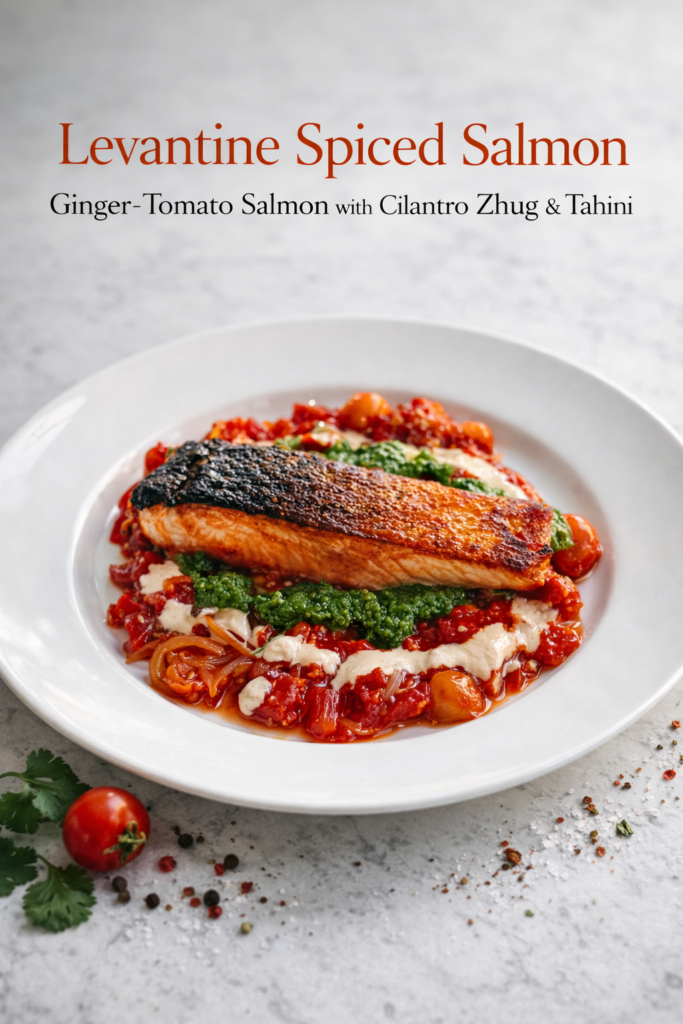
Imagine the scent of sizzling ginger and cardamom filling your kitchen. Picture cherry tomatoes collapsing into a jammy, spiced sauce. This is the magic of Levantine Spiced Salmon—a one-pan masterpiece that transforms simple salmon into a centerpiece-worthy meal.
This recipe marries the aromatic spices of the Levant with a vibrant cilantro zhug and creamy tahini drizzle. The technique is special: the salmon steams gently atop a fragrant tomato compote. It absorbs layers of flavor while staying perfectly moist.
Whether you're a weeknight warrior or a weekend culinary adventurer, this dish is your passport to a memorable dinner.
THE HISTORY
A Crossroads of Flavors
The Levant—spanning Lebanon, Syria, Jordan, Israel, Palestine, and parts of Turkey—has long been a crossroads of civilizations. For millennia, its coastal cities served as vital links in the ancient spice trade. Ginger arrived from Southeast Asia. Cardamom traveled from India's Western Ghats. Persian influence brought slow-cooked tomato stews.
The Silk Road may have ended in the eastern Mediterranean. But its culinary legacy thrived in Levantine kitchens.
A Modern Homage
While salmon is native to the Atlantic and Pacific—not the Mediterranean—this dish honors the region's genius for layering bold, contrasting flavors. The technique of cooking protein atop a simmering bed of aromatics echoes sayadieh, a classic Levantine fish dish where fish cooks with spiced rice and caramelized onions.
The inclusion of zhug (or zhoug)—a fiery cilantro and chili sauce with roots in Yemeni cuisine—speaks to the trade routes that carried spices through the Arabian Peninsula. Today, zhug is as common in Israeli and Palestinian kitchens as it is in Yemen. This recipe is a modern homage to the global pantry the Silk Road helped create.
At the heart of this recipe lies clever culinary science: cooking salmon via steaming and shallow poaching rather than direct searing. When you lay seasoned fillets onto simmering tomatoes, the covered skillet traps steam released from the tomatoes and fish. This creates a gentle, humid environment.
Why does this matter? Salmon is delicate. High, dry heat causes its proteins to contract too rapidly, squeezing out moisture and albumin (that white, coagulated protein). The moist heat here allows proteins to set slowly and evenly. The result is a buttery, flaky texture that's far more forgiving than pan-frying.
The Power of Umami
The tomato compote acts as a flavor vehicle. Tomatoes are rich in glutamates—the amino acids responsible for umami. As they cook down and you smash them, you're breaking cell walls, releasing those glutamates and concentrating natural sugars.
Ginger and cardamom aren't just for aroma. Ginger contains zingibain, a proteolytic enzyme that gently tenderizes proteins. Cardamom's complex terpenes—including eucalyptol and limonene—add citrusy, floral notes that cut through the richness of salmon and tahini.
For a deeper understanding of the Maillard reaction and browning, check out this guide from AmazingRibs.com. To explore the science of umami, Serious Eats offers an excellent explainer.
GOOD PAIRING FOOD AND DRINK
Pairing the right dishes and drinks with your Levantine Spiced Salmon elevates it from a simple meal to a full culinary experience.
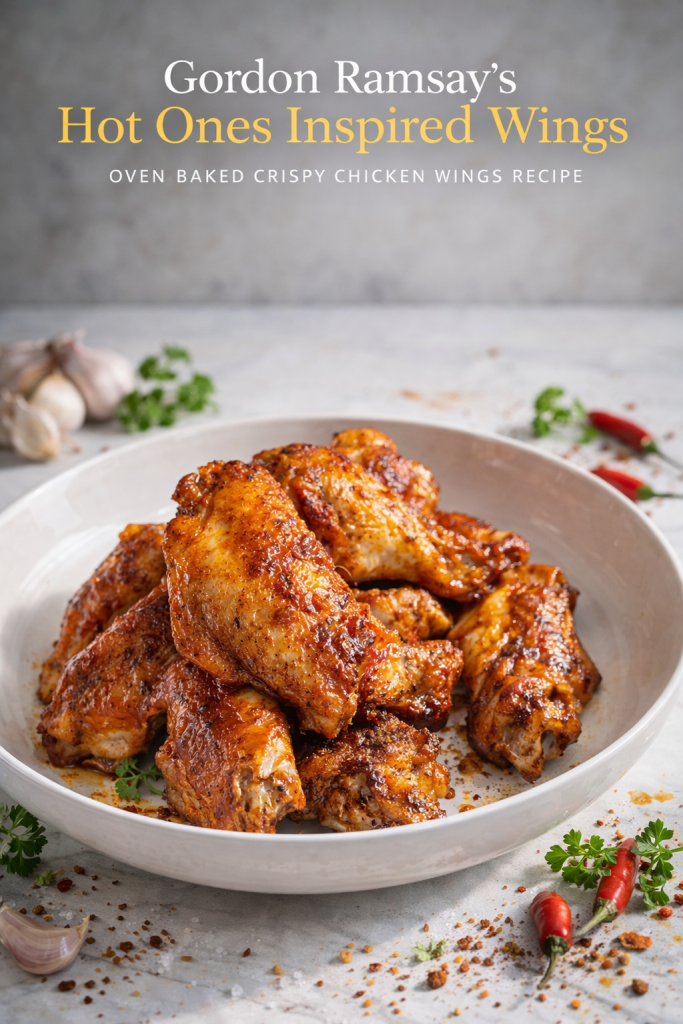
Start your meal with a bang. These insanely crispy oven-baked wings deliver shatteringly crisp skin and a spicy, buttery glaze inspired by the “Hot Ones” phenomenon. The bold heat prepares the palate for the warming spices of the salmon, while the shared emphasis on technique—both recipes rely on precise heat management—creates a cohesive culinary experience. Serve them as a lively opener that sets a confident, flavor-forward tone for the meal to come.
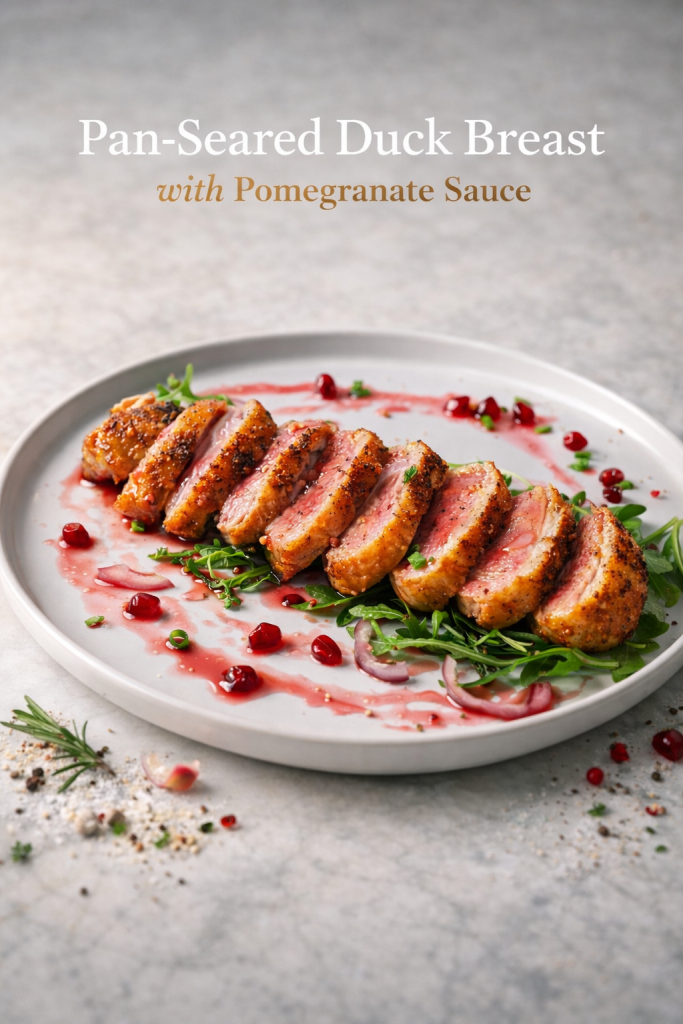
For a truly elevated dinner party, consider this duck breast as an alternative main that shares the Levantine spirit. The pomegranate sauce's sweet-tart depth mirrors the acidity in our tomato compote. The duck's rich, rendered fat is balanced by the same principles of contrasting richness with brightness.
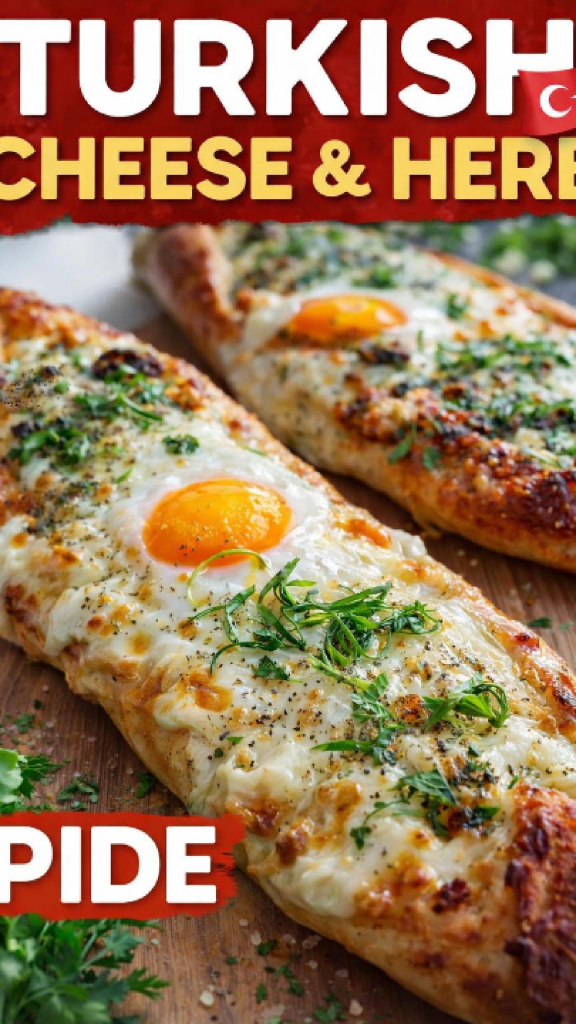
This pide also serves as an incredible side. Tear off pieces of the chewy, herb-flecked crust to scoop up the ginger-tomato compote and zhug. The pide acts as an edible utensil, ensuring no drop of sauce goes to waste. Its richness balances the salmon's leanness harmoniously.
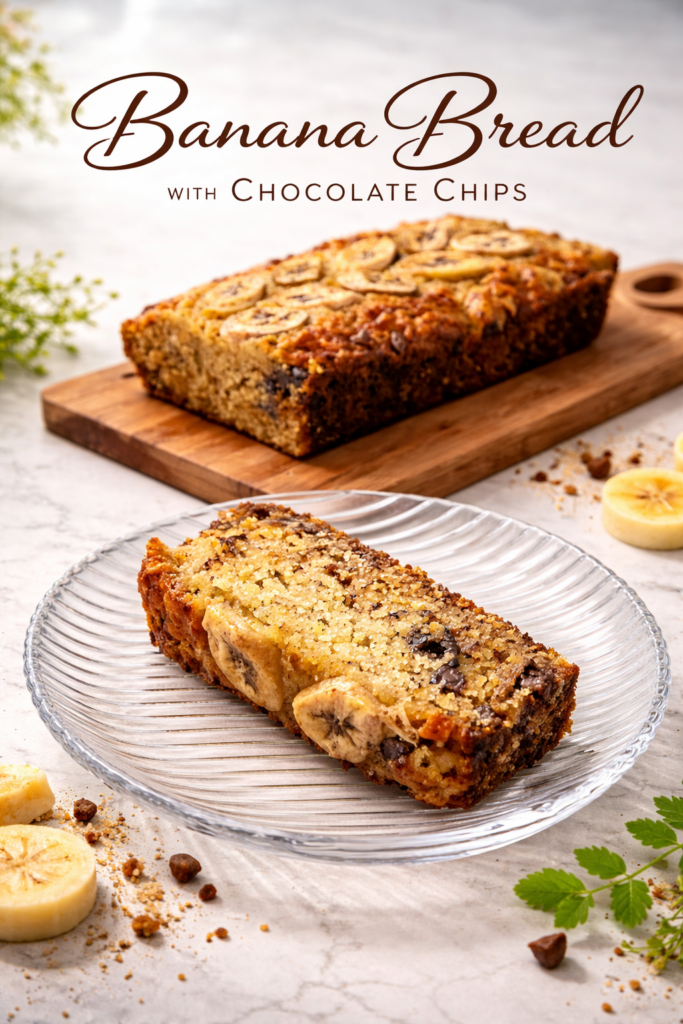
End your meal with a comforting, deeply flavorful dessert that doesn't compete with the bold main course. The banana bread's caramel-like sweetness from brown sugar and pockets of melted chocolate offer a satisfying contrast to the spicy, tangy notes of the zhug and tomato compote. It's a humble yet indulgent finish.
For a more regional pairing, serve it alongside a small glass of sahlab, a warm, creamy Levantine winter milk pudding topped with cinnamon and nuts.
Cocktail
Pomegranate Ginger Mule
The spicy kick of ginger beer echoes the fresh ginger in the tomato compote. The tartness of pomegranate mirrors the lemon in the zhug. This cocktail's effervescence cuts through the richness of the tahini and salmon, cleansing the palate between bites. Use a good-quality ginger beer for maximum zing.
For more classic cocktail inspiration, visit Difford's Guide.
Non-Alcoholic Drink
Sparkling Mint Lemonade
Fresh mint and lemon are quintessential Levantine flavors. This spritzer is bright, cooling, and aromatic—a perfect foil to warm spices and creamy sauces. The acidity refreshes the palate, while bubbles add a celebratory feel. Garnish with a sprig of mint to tie it visually to the cilantro zhug.
For tips on crafting the perfect non-alcoholic spritzer, see The Spruce Eats guide.
Dietary:
Dairy-Free, Gluten-Free, High Protein, Omega-3 Rich
Description
This Levantine Spiced Salmon recipe delivers perfectly flaky salmon fillets steamed atop a fragrant tomato, ginger, and cardamom compote. Finished with a zesty cilantro zhug (a spicy herb sauce) and a cool tahini drizzle, it's a restaurant-quality main course made simple in one skillet.
Ingredients
For the Ginger-Tomato Compote:
2tbsp olive oil
2shallots, thinly sliced
2garlic cloves, minced
2tbsp fresh ginger, grated (about a 2-inch piece)
1/2tsp ground cardamom (optional, but recommended for authentic warmth)
24oz cherry tomatoes, halved
Kosher salt
1tsp soy sauce or fish sauce (optional; adds umami depth)
freshly ground black pepper
For the Cilantro Zhug (Spicy Herb Sauce):
1bunch fresh cilantro, stems and leaves (about 1.5 oz / 40g)
1jalapeño, stemmed (seeds in for heat, out for mild)
2inch piece fresh ginger, peeled and roughly chopped
4tbsp olive oil
Juice of 1 lemon (about 2 tbsp)
1/2tsp kosher salt, or to taste
For the Tahini Sauce:
1/3cup tahini (well-stirred)
4tbsp cold water, or as needed
1/4tsp kosher salt
1small garlic clove, finely grated (optional, for extra punch)
For the Salmon:
4salmon fillets , skin on or off, patted dry (6–8 oz / 170–225g each)
Kosher salt
freshly ground black pepper
Instructions
1
Start the Ginger-Tomato Compote. Heat 2 tbsp olive oil in a large skillet (12-inch is ideal) over medium heat. Add the sliced shallots and cook, stirring occasionally, until they soften and turn translucent, about 2–3 minutes. Add the minced garlic, grated ginger, and cardamom (if using). Cook for 30 seconds, just until fragrant—do not let the garlic brown.
2
Build the Sauce. Add the halved cherry tomatoes to the skillet. Cook, stirring occasionally, using a wooden spoon to gently smash the tomatoes as they soften. Continue until they have collapsed into a chunky, sauce-like consistency, about 10 minutes. Season with salt, pepper, and soy sauce or fish sauce if using. Reduce heat to low to keep warm while you prepare the sauces.
3
Make the Cilantro Zhug. In a small food processor or blender, combine the cilantro (stems and all), jalapeño, 2-inch piece of ginger, 4 tbsp olive oil, and lemon juice. Blend until smooth. Season with about ½ tsp salt, taste, and adjust. Set aside.
4
Make the Tahini Sauce. In a small bowl, whisk together the tahini, salt, and optional grated garlic. Slowly drizzle in cold water, 1 tablespoon at a time, whisking constantly. The mixture will seize up at first, then relax into a smooth, pale, drizzly sauce. You may need 4–6 tablespoons total. Set aside.
5
Cook the Salmon. Pat the salmon fillets dry with paper towels—this ensures better texture and flavor absorption. Season both sides generously with salt and pepper. Increase the heat under the tomato compote to medium-low; you want a gentle simmer. Nestle the salmon fillets into the compote, spooning a little sauce over the top of each. Cover the skillet with a lid and cook until the salmon is opaque throughout and flakes easily with a fork, about 5–8 minutes, depending on thickness. (For a slight crust, you can sear the salmon skin-side down for 2 minutes before covering, but this step is optional.)
6
Assemble and Serve. Transfer the salmon and a generous amount of the compote to plates or a shallow serving platter. Drizzle the cilantro zhug and tahini sauce artistically over the top. Serve immediately.
Nutrition Facts
Servings 4
Amount Per Serving
Calories625kcal
% Daily Value *
Total Fat45g70%
Saturated Fat7g35%
Sodium480mg20%
Total Carbohydrate14g5%
Dietary Fiber4g16%
Sugars7g
Protein42g84%
* Percent Daily Values are based on a 2,000 calorie diet. Your daily value may be higher or lower depending on your calorie needs.
Note
Pro Tips for Success:
Pat the salmon dry. This is non-negotiable. Excess moisture prevents the fish from absorbing flavors and can lead to steaming issues.
Don't overcook. Salmon continues cooking after you remove it from heat. Aim for 125°F (52°C) for medium, or 135°F (57°C) for well-done. The fish should be just opaque and flake gently.
Smash with purpose. Use the back of a wooden spoon to burst cherry tomatoes. This releases juices and creates a richer sauce faster.
Make-Ahead & Storage:
Zhug and Tahini: Both sauces can be made up to 3 days ahead. Store in airtight containers in the refrigerator. The zhug may lose its bright color but will retain flavor. Stir the tahini sauce before using; it may thicken and need a splash of water.
Leftovers: Store leftover salmon and compote in an airtight container in the refrigerator for up to 2 days. Gently reheat in a covered skillet over low heat to avoid drying out. The sauces are best used fresh.
Substitutions:
Salmon: Arctic char or thick, skinless sea bass fillets work beautifully.
Cherry Tomatoes: Grape tomatoes or one 28-oz can of whole peeled San Marzano tomatoes (crushed by hand) can be used. If using canned, reduce cooking time slightly.
Cilantro: For a milder sauce, substitute half the cilantro with flat-leaf parsley.
Jalapeño: Serrano pepper offers similar heat; for less heat, remove seeds and ribs.
My zhug is too spicy. Add a handful of fresh parsley or a spoonful of plain yogurt to balance the heat.
My tahini sauce is too thick. You likely didn't add enough water. Continue whisking in cold water 1 teaspoon at a time until pourable. Cold water is key to preventing seizing.
Keywords:
Levantine Spiced Salmon, ginger tomato salmon, salmon with zhug, salmon with tahini, one pan salmon recipe, Middle Eastern salmon recipe, cilantro sauce for salmon, cherry tomato salmon, how to cook salmon in a skillet, pan seared salmon with sauce, easy salmon dinner, date night salmon recipe, gluten free salmon recipe, cardamom salmon, Persian inspired salmon, Levantine fish recipe, salmon with ginger and cardamom, spicy herb sauce for salmon, tahini drizzle salmon, one skillet salmon dinner,
The Art of the Spiced Tomato Compote
The tomato compote in this recipe is more than a bed for the salmon. It's a foundational sauce that can elevate countless dishes. Its beauty lies in simplicity and the layering of aromatics.
The Aromatic Base: Shallots, garlic, and ginger form a classic mirepoix-like foundation with a distinctly Levantine-Asian fusion. Sautéing until translucent, not browned, builds a sweet, mellow flavor base. Browning would introduce bitterness that competes with cardamom.
The Spice: Cardamom is the star. Its sweet, floral, slightly minty profile is a hallmark of Persian and Levantine cooking. In this dish, it acts as a bridge, connecting the earthy ginger-tomato base with the bright, herbaceous zhug. For best flavor, buy whole green cardamom pods, crack them open, and grind the seeds fresh. Serious Eats explains why fresh-ground spices make a difference.
The Tomato: Why cherry tomatoes? Their high sugar-to-acid ratio means they caramelize beautifully as they collapse, creating natural sweetness without added sugar. Halving them increases surface area, accelerating juice release. Smashing them mid-cook releases pectin, a natural gelling agent in tomato cell walls. This gives the compote a luxurious, jammy consistency without hours of simmering.
This compote, on its own, is a versatile sauce. Toss it with pasta, spoon it over roasted vegetables, or use it as a base for shakshuka. Master this technique, and you'll return to it again and again.
For a deeper dive into the science of cooking with tomatoes, The Food Lab offers an excellent guide.