
INTRO
There are certain dishes that feel like a declaration—a statement that says, “I take my cooking seriously, and tonight, we’re celebrating.” This Pan-Seared Branzino Véronique is exactly that kind of meal. It’s the dinner you make when you want to impress someone special, when you’re tired of the same old weeknight rotation, or when you simply want to treat yourself to something extraordinary without spending hours in the kitchen.
I first encountered Véronique preparations years ago while flipping through a vintage French cookbook. The combination of delicate fish, crisp grapes, and buttery white wine sauce seemed almost too elegant to be real. But here’s the secret: it’s shockingly simple to pull off. The technique requires no special skills—just attention to detail, a hot pan, and the willingness to create something beautiful.
This Pan-Seared Branzino Véronique puts a modern spin on the French classic “Sole Véronique.” Instead of traditional Dover sole, we’re using branzino—European sea bass—with its sweet, flaky flesh and skin that crisps up like potato chips. The sauce is a bright, silky white wine reduction studded with sweet, bursting grapes. It’s restaurant-quality elegance achieved in under 30 minutes, and once you make it, you’ll understand why this combination has endured for over a century.
THE HISTORY
To understand Sole Véronique—and by extension, our Branzino Véronique—we need to travel back to late 19th century France, specifically to the kitchens of the Savoy Hotel in London. The dish was created by the legendary French chef Auguste Escoffier, often called the “king of chefs and chef of kings.”
The story goes that Escoffier named the dish after the lead character in a popular opera of the time. “Véronique” premiered in Paris in 1898, and the chef was so taken with the production that he created an elegant fish dish in its honor. The original preparation featured Dover sole poached in a white wine fish fumet, then garnished with seedless white grapes and finished with a velouté sauce enriched with cream.
What made Véronique revolutionary was its unexpected pairing. Grapes in a savory fish dish? It seemed almost scandalous to diners accustomed to more straightforward preparations. But Escoffier understood something profound about flavor: the sweetness of grapes doesn’t compete with delicate fish—it elevates it, creating a harmony that’s greater than the sum of its parts.
Over the decades, Véronique preparations spread beyond France and beyond sole. Chefs began adapting the concept to local fish and personal interpretations. The common thread remained: white fish, white wine, and grapes, united in a sauce that’s both luxurious and surprisingly light.
Today, Véronique remains a benchmark of elegant French cooking, though it’s far less common than preparations like Meunière or Almondine. That scarcity makes it all the more special—when you serve this dish, you’re offering something genuinely distinctive, rooted in culinary history but fresh and unexpected.
Oxford Reference – Véronique Definition
https://www.oxfordreference.com/display/10.1093/oi/authority.20110803115532653
alive Taiwan – The Opera-Inspired Dish
https://alive.businessweekly.com.tw/single/Index/ARTL000033245
THE SCIENCE
Let’s get into what’s actually happening when you create this dish, because understanding the science transforms you from a recipe-follower into a cook who can troubleshoot, adapt, and succeed every time.
First, consider the fish itself. Branzino—also known as European sea bass or loup de mer—is prized for its moderate fat content and delicate, sweet flesh. The skin contains collagen that, when properly rendered, transforms from chewy and translucent to crackling-crisp and golden. The key is moisture removal. Water is the enemy of crispiness because it creates steam, which prevents the Maillard reaction—that beautiful browning that creates hundreds of new flavor compounds. That’s why we pat the fish absolutely dry and dust the skin with flour. The flour absorbs any remaining surface moisture and provides additional browning material.
Now, the searing process. When the fish hits that hot pan, several things happen simultaneously. The proteins on the skin side begin to denature and coagulate. The collagen breaks down into gelatin, contributing to texture. And the Maillard reaction creates that complex, nutty, savory flavor we associate with perfectly cooked food. The press at the beginning—that gentle 10-second hold—prevents the fillets from curling, ensuring maximum skin contact with the pan.
The sauce is a masterclass in building flavor from seemingly nothing. After removing the fish, the pan looks bare, but it’s actually covered in the fond—those browned bits stuck to the bottom. These are concentrated flavor compounds, essentially the essence of the seared fish. When we add the shallot and then the wine, we’re deglazing, which simply means dissolving those flavor-packed bits back into the liquid. The alcohol in the wine evaporates during reduction, leaving behind the fruit’s acidity and complexity.
The grapes play multiple roles. As they simmer, they release pectin and natural sugars, thickening the sauce slightly while contributing bursts of sweetness that contrast beautifully with the wine’s acidity and the fish’s savoriness. If you choose to add cream, you’re creating an emulsion—fat suspended in liquid—that adds richness and body while softening the wine’s sharp edges.
GOOD PAIRING FOOD AND DRINK
One Appetizer: Oysters on the Half Shell with Mignonette
Start with the cleanest, brightest expression of the sea. The briny freshness of oysters wakes up the palate without overwhelming it, while the sharp vinegar and shallot mignonette echoes the white wine acidity in the main course sauce. It’s a seamless progression from raw to cooked, from simple to complex.
One Main Course: This dish is already the main event, but if you’re building a larger dinner party menu, consider serving it after a light first course and before cheese. It stands beautifully on its own.
One Side Dish: Butter-Basted Fingerling Potatoes
Boil small fingerling potatoes until tender, then finish them in a separate pan with butter, fresh thyme, and a splash of the same white wine you used in the sauce. The potatoes soak up the buttery, herby flavors while providing a starch that balances the dish’s elegance with rustic comfort. Their creamy interior contrasts with the crispy fish skin.
One Dessert: Lemon Verbena Panna Cotta
Follow the French theme with a silky panna cotta infused with lemon verbena. The gentle herbal-citrus notes mirror the brightness of the main course while the creamy texture provides a soothing contrast. Top with a few poached grapes to echo the savory course in a sweet context.
One Cocktail: The French 75
Gin, fresh lemon juice, simple syrup, and champagne—shaken and topped with bubbly. The French 75’s bright citrus and effervescence cut through the richness of the fish and sauce while its elegance matches the occasion. The champagne’s bubbles also work as a palate cleanser between bites.
One Non-Alcoholic Drink: Sparkling Lemon and Thyme Spritzer
Muddle fresh thyme sprigs with lemon juice and a touch of honey, then top with sparkling water. The herbaceous, citrusy notes echo the tarragon in the garnish and the wine in the sauce, while the bubbles provide refreshment without overwhelming the delicate fish.

Description
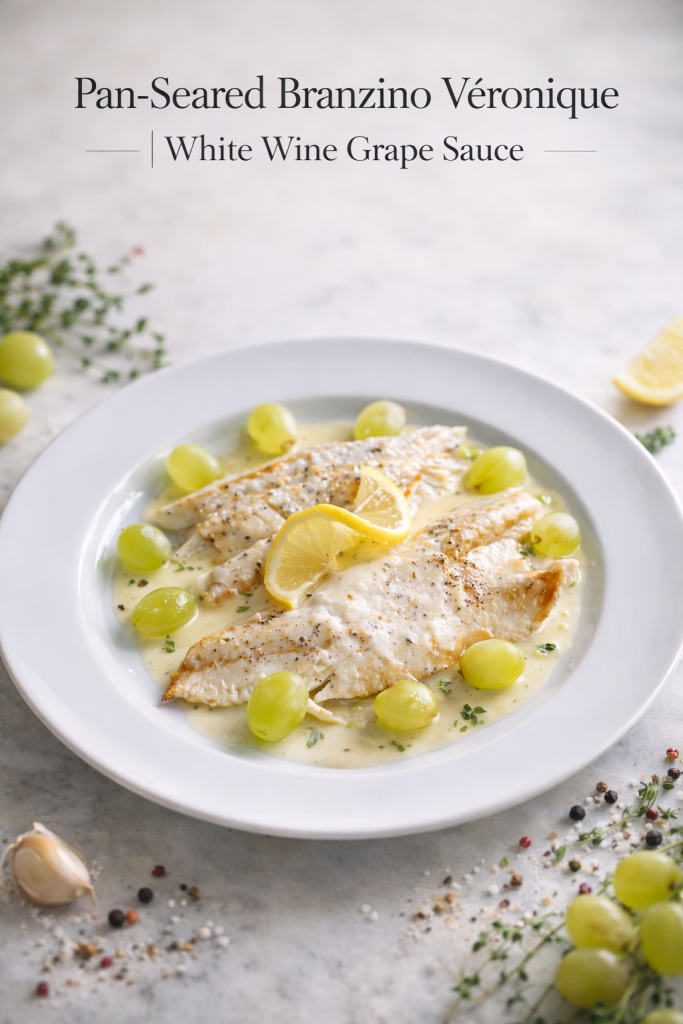
This Pan-Seared Branzino Véronique brings restaurant elegance to your home kitchen. Delicate fish with crackling-crisp skin sits atop a bright, buttery white wine sauce studded with sweet grapes. Ready in 25 minutes but impressive enough for the most special occasion.
Ingredients
For the Fish:
For the Véronique Sauce:
For Garnish and Serving:
Instructions
-
Prepare the fish: Remove branzino fillets from refrigerator 10 minutes before cooking to take the chill off. Place fillets on a plate lined with paper towels and pat them absolutely dry—both skin and flesh sides. Moisture is the enemy of crispy skin. Season generously on both sides with kosher salt and freshly ground black pepper.
-
Dust with flour: Sprinkle the flour onto a small plate. Press the skin side of each fillet into the flour, then shake gently to remove excess. You want a thin, even coating—not a thick paste. Set aside.
-
Heat the pan: Place a large non-stick or well-seasoned stainless steel skillet over medium-high heat for 2-3 minutes. Add the olive oil and 1 tablespoon of the butter. Swirl as the butter melts and foams.
-
Sear the fish (first side): When the butter foam begins to subside, carefully place the fillets in the pan skin-side down, laying them away from you to avoid oil splatter. Immediately press gently on each fillet with a spatula for about 10 seconds—this prevents the skin from curling and ensures even contact. Reduce heat to medium and cook undisturbed for 3-4 minutes. You'll see the edges turning golden and the flesh becoming opaque from the bottom up. The skin should be deep golden brown and visibly crisp.
-
Flip and finish: Using a thin fish spatula, carefully flip each fillet. Cook on the flesh side for 1-2 minutes, depending on thickness. The fish is done when it flakes easily with a fork and is just opaque throughout. Transfer to a warm plate, skin-side up, and tent loosely with foil.
-
Start the sauce (deglaze): Reduce heat to medium. Add the remaining 1 tablespoon butter to the same pan. Once melted, add the minced shallot and sauté for 1-2 minutes until softened and translucent, scraping up any browned bits from the bottom.
-
Add wine and reduce: Pour in the white wine, stirring and scraping to dissolve all the fond (those delicious browned bits) completely. Let the wine simmer vigorously until reduced by half, about 2-3 minutes. The alcohol will evaporate, leaving concentrated flavor.
-
Add stock and grapes: Pour in the chicken or fish stock and add the halved grapes. Simmer for another 3-4 minutes until the grapes soften slightly and the sauce reduces a bit more. The grapes should be tender but still hold their shape.
-
Finish the sauce: If using cream, stir it in now and let it warm through for about 30 seconds—do not boil after adding cream or it may curdle. Season the sauce with salt and white pepper to taste. White pepper keeps the sauce visually pristine, but black pepper works fine.
-
Serve immediately: Spoon the warm grape sauce onto two warmed plates, creating a shallow pool. Place a branzino fillet on each plate, skin-side up to maintain crispiness. Sprinkle with fresh tarragon or parsley and serve immediately with lemon wedges on the side. The squeeze of fresh lemon at the table brightens everything.
Nutrition Facts
Servings 2
- Amount Per Serving
- Calories 420kcal
- % Daily Value *
- Total Fat 22g34%
- Saturated Fat 11g56%
- Sodium 520mg22%
- Total Carbohydrate 18g6%
- Dietary Fiber 1g4%
- Sugars 9g
- Protein 32g64%
* Percent Daily Values are based on a 2,000 calorie diet. Your daily value may be higher or lower depending on your calorie needs.
Note
Pro Tips for Success:
- DRY FISH = CRISPY SKIN. This is the #1 rule. Pat the fillets dry with paper towels immediately before seasoning. Let them sit uncovered in the refrigerator for 15-20 minutes if you have time—even drier, even crispier.
- Don't move the fish for the first few minutes of searing. Let the skin form a crust naturally. Peeking or shifting too early will tear the skin.
- The gentle press at the beginning prevents curling. Hold for 10 seconds, then let the pan do the work.
- Use a fish spatula if you have one. Its thin, flexible blade slides under delicate fish without breaking it.
- Warm your plates. This simple step keeps the fish hot and the sauce silky. Cold plates kill a hot dish in seconds.
Substitutions:
Fish alternatives:
- Sea bass (any variety) works beautifully
- Striped bass is excellent and often more affordable
- Red snapper offers similar flaky texture
- Halibut (though typically thicker; adjust cooking time)
- Dover sole for the classic preparation
Wine substitutes:
- Dry vermouth works perfectly and keeps longer
- Dry white wine is ideal; avoid oaky Chardonnay which can overpower
- For non-alcoholic: Use white grape juice with a tablespoon of white wine vinegar
Herb alternatives:
- Fresh parsley is always reliable
- Fresh dill pairs beautifully with fish and grapes
- Fresh chives add mild onion notes
- Chervil if you want to stay classic French
Make cream-free: Simply omit the cream for a lighter, more verjus-style sauce. The grapes provide enough body and sweetness.
Troubleshooting:
- Skin stuck to the pan? The pan wasn't hot enough, or you tried to flip too early. Next time, wait for the skin to naturally release—it will tell you when it's ready.
- Sauce too thin? Simmer longer to reduce further. You can also swirl in a tiny pat of cold butter at the end for body (monter au beurre).
- Sauce too thick? Thin with a splash of stock or water.
- Grapes disintegrating? You cooked them too long or used grapes that are too soft. Add them later in the simmering process next time.
Make-Ahead:
You can make the sauce (without the cream) up to 2 hours ahead. Reheat gently, add cream if using, and finish while you cook the fish. The fish must be cooked fresh for optimal texture and crispy skin.
Storage:
Leftovers keep refrigerated for up to 2 days, but the skin will lose its crispiness. Reheat gently in a covered skillet with a splash of stock. Better to enjoy the fish cold in a salad the next day.
Ingredient Sourcing:
Look for branzino at seafood counters or Asian markets. Many stores now carry frozen branzino fillets that thaw beautifully. For grapes, choose firm, seedless white grapes—Champagne grapes are lovely if you can find them, but regular green grapes work perfectly.