
Introduction
Have you ever found yourself torn between honoring tradition and jumping on the latest viral dessert trend? What if I told you could do both—in the same baking session?
Today, we’re doing something special. We’re making a full batch of perfect Portuguese egg tarts (Pastéis de Nata)—those iconic, caramelized custard tarts that have captured hearts worldwide. But here’s the twist: we’re taking half of them and transforming them into the internet’s newest obsession: Sweet Corn Cream Tarts with Caramelized Corn Topping.
That’s right—one recipe, two incredible desserts. Whether you’re team Classic Portuguese or team Viral Corn, this tutorial shows you exactly how to nail both versions. You’ll learn my secrets for that iconic caramelized custard top, how to make the dreamiest sweet corn cream, and why this unlikely combination works so beautifully. Let’s bake something unforgettable.
The History: From Lisbon Monasteries to Viral Sensation
The Birth of Pastéis de Nata
The story of Portuguese egg tarts begins in the 18th century, within the walls of the Jerónimos Monastery in the Belém district of Lisbon, Portugal . At that time, Catholic monks and nuns used large quantities of egg whites to starch their religious habits—a common practice to keep garments stiff and presentable . This left them with a surplus of egg yolks, and being resourceful souls, they refused to let them go to waste.
The monks transformed these leftover yolks into sweet pastries, combining them with sugar and cream to create a rich custard, then baking it in delicate pastry shells . These early creations became known as Pastéis de Belém, named after the monastery’s location .
From Monastery to Marketplace
The Liberal Revolution of 1820 brought significant change to Portugal, leading to the closure of many religious orders . Facing closure, the monks at Jerónimos Monastery began selling their beloved tarts to raise revenue. In 1834, the monastery closed its doors, but the recipe was sold to a nearby sugar refinery .
In 1837, the refinery owners opened the Fábrica de Pastéis de Belém, a pastry shop that operates to this day just a three-minute walk from the original monastery . The original recipe remains a closely guarded secret, known to only a few master bakers who work behind closed doors in what they call the “Secret Atelier” . Today, the shop sells over 20,000 tarts daily, and in 2011, the pastry was voted one of Portugal’s Seven Wonders of Gastronomy .
The Journey to Asia and Back
While Pastéis de Belém stayed in Portugal, a modified version—Pastéis de Nata—spread across the globe through Portuguese colonies like Brazil, Mozambique, and Macau . But the version most familiar to Asian dessert lovers came through a fascinating detour.
In 1979, a British pharmacist named Andrew Stow moved to Macau, then a Portuguese colony . During a trip to Portugal, he tasted the famous tarts and became obsessed. Unable to obtain the original recipe, he set about recreating and improving it. In 1989, he opened Lord Stow’s Bakery in the Coloane district of Macau, offering a version with a less-sweet, English-style custard and a signature caramelized top .
The tarts became a sensation. After Stow divorced his wife Margaret Wong in 1997, she opened her own shop, Margaret’s Café e Nata, and eventually licensed the recipe to KFC, bringing Portuguese-style egg tarts to countless locations across Asia . The “egg tart effect” even became an economic term in Taiwan, describing the boom-and-bust cycle of trend-driven businesses .
The New Viral Wave
Today, Portuguese egg tarts are experiencing another renaissance, driven by social media platforms like TikTok and Instagram. And now, creative home bakers are reimagining them yet again—this time with sweet corn, a beloved ingredient in Asian desserts . This sweet corn makeover represents the latest chapter in a centuries-old story of culinary adaptation and innovation.
The Science: What Makes These Tarts Irresistible
The Extraordinary Egg Yolk
What sets Portuguese egg tarts apart from other custard tarts is their extraordinarily high proportion of egg yolks. Where a standard crème brûlée might use two yolks per cup of cream, a traditional pastel de nata recipe can use six yolks per cup of milk . This isn’t just about richness—it’s chemistry.
Egg yolks are nature’s emulsifiers, packed with proteins and lecithin that create a stable, silky custard. When you heat the custard, these proteins coagulate, transforming the liquid into a tender gel. The high yolk content means more protein cross-linking, resulting in a custard that’s dense, creamy, and luscious rather than watery or thin .
The Maillard Reaction Magic
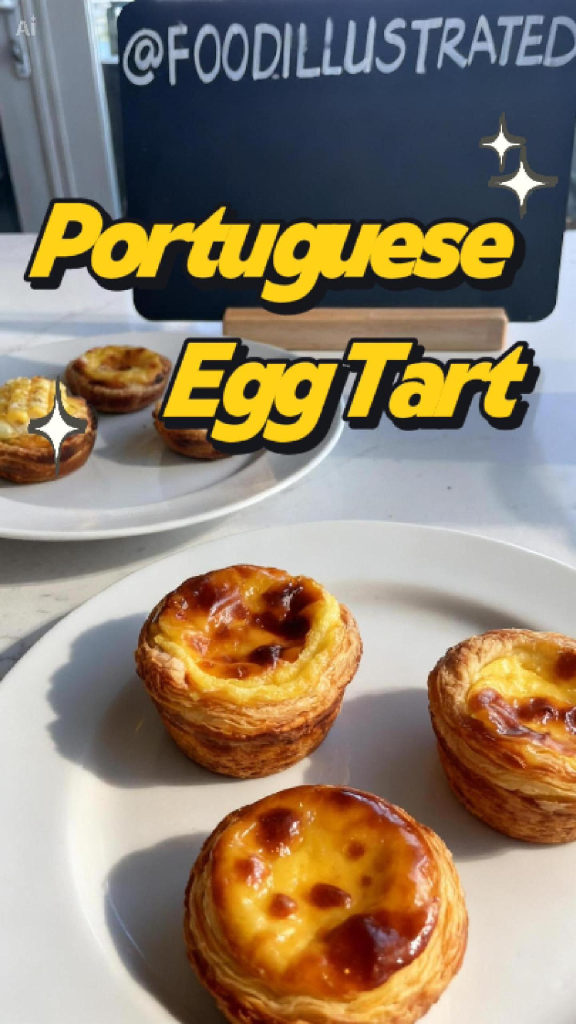
That signature caramelized top—the dark spots that make Portuguese tarts so visually distinctive—is pure Maillard reaction. When you bake these tarts at high heat (around 210°C / 410°F), the sugars and proteins in the custard undergo a complex chemical transformation, creating hundreds of new flavor compounds .
This is why the baking temperature matters so much. High heat drives rapid caramelization before the custard has a chance to overcook and become rubbery. The result? A top that’s blistered and caramelized like a crème brûlée, while the interior remains creamy and just barely set .
The Laminated Crust Paradox
Unlike Chinese egg tarts, which use a dense, shortcrust pastry often made with lard, Portuguese tarts feature a laminated pastry made with butter—closer to a rustic puff pastry . When you roll and fold the dough, you create alternating layers of dough and butter. In the oven, water in the butter turns to steam, forcing the layers apart and creating that characteristic flaky, crispy texture.
Here’s the paradox: the crust must be thin and crispy, but it also needs to hold a liquid custard without becoming soggy. The solution lies in freezing the shells before baking . This ensures the butter is cold and solid when it hits the oven, maximizing steam production and creating maximum flakiness before the custard can soak in.
The Corn Chemistry
Sweet corn brings its own fascinating science to this recipe. Corn contains natural sugars and starches that, when heated, undergo both caramelization (creating deeper sweetness) and gelatinization (thickening the cream) . Cornstarch in particular is a powerful thickener—its starch granules swell when heated in liquid, creating that lush, pudding-like texture.
When you caramelize corn for the topping, you’re driving off water and concentrating sugars, creating new flavor compounds through both caramelization and the Maillard reaction. The slight char adds complexity and visual drama, while the remaining sweetness complements the rich custard base.
Eater – “The Ultimate Guide to Lisbon’s Iconic Egg Tarts”
Condé Nast Traveller India – “From starch to tart: The sweet origin story of egg tarts”
The Takeout – “Portuguese Vs Chinese Egg Tarts: What Is The Difference?”
Good Pairing Food and Drink
These tarts are wonderful on their own, but for a complete dessert spread or afternoon tea, here are perfect companions.
- Appetizer: Portuguese Salt Cod Fritters (Pastéis de Bacalhau). Before diving into sweet tarts, start with savory Portuguese fritters. The salty, savory cod provides a perfect contrast to the sweet custard, and the fritters’ crispy exterior echoes the tarts’ flaky crust. Serve with a garlic aioli for dipping.
- Main Course: These are desserts, not a main course. For a full Portuguese-themed meal, serve Piri-Piri Grilled Chicken with roasted potatoes and a crisp green salad before bringing out the tarts.
- Side Dish: Fresh Berries with Mint. A simple bowl of mixed fresh berries (strawberries, raspberries, blueberries) tossed with fresh mint and a squeeze of lime provides a bright, refreshing counterpoint to the rich, sweet tarts. The acidity cuts through the custard, and the berries’ natural tartness balances the sugar.
- Dessert: This is the dessert! But if you’re building a dessert spread, add Creamy Rice Pudding (Arroz Doce) , another Portuguese classic. The cinnamon-scented rice pudding offers a different texture—creamy and comforting—that complements the tarts beautifully.
- Cocktail: Porto Tonico. This simple Portuguese cocktail combines white port with tonic water, ice, and a lemon twist. The port’s sweet, nutty notes echo the caramelized flavors in the tarts, while the tonic’s bitterness and bubbles cleanse the palate between bites.
- Non-Alcoholic Drink: Strong Bica (Portuguese Espresso). In Portugal, pastéis de nata are traditionally enjoyed with a bica—a strong espresso . The bitter, robust coffee provides the perfect contrast to the sweet, creamy custard. For a non-caffeinated option, try Galao—hot milk with a small shot of espresso, served in a tall glass.
Portuguese Egg Tarts (Pastéis de Nata ) with Sweet Corn Makeover: Classic Meets Viral
Description
Master classic Portuguese egg tarts (Pastéis de Nata) with this foolproof recipe, then transform half into the internet's latest obsession: Sweet Corn Cream Tarts topped with caramelized corn. Featuring flaky puff pastry shells, silky custard, and an optional luscious corn cream filling, this two-in-one recipe lets you offer both traditional and trendy desserts from a single baking session.
Ingredients
For the Tart Shells (Makes 12):
For the Classic Custard Filling (For all 12 tarts):
For the Corn Cream (For 6 tarts):
For the Caramelized Corn Topping (For 6 tarts):
For Garnish (Optional):
Instructions
Part 1: Make All 12 Portuguese Egg Tarts
-
-
Prepare the custard. In a medium bowl, whisk together the whole egg, egg yolks, and sugar until well combined and slightly pale. Add the whipping cream and milk, and whisk until smooth. Cover and refrigerate for at least 30 minutes. Pro tip: Thorough chilling prevents bubbles during baking and ensures a silky texture .
-
Form the tart shells. Lightly dust a clean work surface with flour. Roll out the puff pastry to about ⅛-inch thickness. Using a round cutter (about 4 inches in diameter), cut out 12 circles. Gently press each circle into a standard muffin tin or tart mold, allowing the edges to extend about 1cm above the rim. This overhang creates the characteristic ruffled edge.
-
Freeze the shells. Place the muffin tin with the pastry shells in the freezer for 10 minutes. This step is crucial—cold shells maintain their shape and create maximum flakiness when they hit the hot oven.
-
Preheat oven. While shells freeze, preheat your oven to 210°C (410°F).
-
Fill and bake. Remove shells from freezer. Give the chilled custard a gentle stir, then pour it into each shell, filling about 80% full (the custard will puff slightly). Bake for 23-25 minutes until the tops are deeply caramelized with dark spots and the pastry is golden brown. The custard should be set but still slightly wobbly in the center.
-
Cool and divide. Remove from oven and let cool in the pan for 5 minutes, then transfer 6 tarts to a wire rack to cool completely. These will become your corn cream tarts. The remaining 6 can be served warm as classic Portuguese egg tarts, optionally dusted with cinnamon.
-
Part 2: Transform 6 Tarts into Sweet Corn Cream Tarts
-
-
Make the corn cream. In a blender, combine 1 cup corn kernels, milk, sugar, cornstarch, and salt. Blend until completely smooth, about 30-60 seconds.
-
Cook the corn cream. Pour the blended mixture into a small saucepan. Cook over medium heat, stirring constantly with a whisk or wooden spoon. The mixture will thicken significantly after 5-7 minutes. You'll know it's ready when it pulls away from the sides of the pan and has a pudding-like consistency. Do not stop stirring—cornstarch mixtures can burn easily and lumps form quickly.
-
Finish the cream. Remove from heat and stir in 1 tablespoon of butter until melted and fully incorporated. Transfer to a bowl, cover with plastic wrap directly on the surface (to prevent a skin from forming), and let cool slightly.
-
Caramelize the corn topping. In a small skillet, melt the remaining 1 tablespoon butter over medium-high heat. Add ½ cup corn kernels and 1 tablespoon sugar. Cook for 4-5 minutes, stirring frequently, until the corn is charred in spots and the sugar has caramelized into a sticky glaze. Watch carefully—it burns quickly!
-
Assemble the corn tarts. Once the classic tarts have cooled completely, pipe or spoon the corn cream into the centers, filling them generously. You can leave the cream smooth or create decorative swirls.
-
Add topping and finish. Top each corn tart with a spoonful of caramelized corn. For extra drama and caramelization, use a kitchen torch to gently blister the edges of the corn cream, or place under a broiler for 1-2 minutes (watch constantly!).
-
Serve. Arrange both versions on a platter for a stunning visual contrast—golden classic tarts alongside corn-topped creations. Garnish corn tarts with fresh mint if desired. Serve corn tarts warm for the best texture.
-
Nutrition Facts
Servings 12
- Amount Per Serving
- Calories 235kcal
- % Daily Value *
- Total Fat 15g24%
- Saturated Fat 8g40%
- Sodium 95mg4%
- Total Carbohydrate 20g7%
- Dietary Fiber 9g36%
- Protein 4g8%
* Percent Daily Values are based on a 2,000 calorie diet. Your daily value may be higher or lower depending on your calorie needs.
Note
- Pro-Tip #1: Chill the custard thoroughly. This prevents air bubbles from forming during baking, ensuring a smooth, professional-looking surface. Thirty minutes minimum—an hour is even better.
- Pro-Tip #2: Freeze those shells! Cold pastry + hot oven = maximum flakiness. Don't skip this step, or your shells may shrink and lose their beautiful ruffled edges.
- Pro-Tip #3: Watch the corn cream closely. Cornstarch-thickened mixtures go from perfectly thick to lumpy and scorched very quickly. Stir constantly and remove from heat the moment it bubbles and thickens.
- Pro-Tip #4: Caramelized corn waits for no one. Those 4-5 minutes of cooking time are critical—burning happens fast. Keep your eyes on the pan and stir frequently. The corn should be charred in spots, not uniformly black.
- Make-Ahead Instructions:
- Custard: Prepare up to 24 hours ahead and refrigerate.
- Shells: Form shells in the muffin tin, cover tightly with plastic wrap, and refrigerate for up to 24 hours. Freeze for 10 minutes before baking.
- Corn cream: Make up to 2 days ahead and refrigerate. Bring to room temperature or warm slightly before assembling.
- Caramelized corn: Best made fresh, but can be made 4-6 hours ahead and kept at room temperature.
- Storage Guidelines:
- Classic tarts: Store at room temperature for up to 2 days. Do not refrigerate—the custard may weep and the pastry will soften.
- Corn tarts: Refrigerate in an airtight container for up to 2 days. The corn cream contains dairy and should not sit at room temperature for more than 2 hours.
- Reheating: Warm classic tarts in a 300°F (150°C) oven for 5-7 minutes to refresh the pastry. Corn tarts are best served at room temperature or slightly warm—avoid high heat, which can make the corn cream separate.
- Freezing: Baked classic tarts can be frozen for up to 1 month. Thaw at room temperature and refresh in a warm oven. Corn tarts do not freeze well due to the corn cream's texture.
- Substitutions:
- Puff pastry: Use all-butter puff pastry for the best flavor. In a pinch, crescent roll dough can work, but the texture will be different.
- Whipping cream: Heavy cream (35% fat) works perfectly. For a lighter version, use half-and-half, but the custard will be less rich.
- Corn: Fresh summer corn is ideal, but high-quality frozen corn (thawed and drained) works beautifully. Canned corn is too soft and may make the cream watery.
- Sugar: For the corn cream, honey or maple syrup can substitute for sugar, but reduce liquid slightly.
- Troubleshooting:
- "My custard is full of bubbles!" You didn't chill it long enough, or you whisked too vigorously right before pouring. Next time, chill at least 30 minutes and stir gently.
- "My pastry shrank and lost its shape!" The shells weren't cold enough when they hit the oven. Freeze for the full 10 minutes next time, and consider weighting them with pie weights for the first 5 minutes of baking.
- "My corn cream is lumpy!" You either didn't blend the corn mixture smooth enough, or you stopped stirring during cooking. Blend thoroughly and stir constantly.
- "My caramelized corn burned!" It happens to everyone. Watch closely in the final minutes and pull it off the heat as soon as it's charred in spots. Burnt corn is bitter and should be discarded.
- "My classic tarts didn't caramelize on top!" Your oven might not be hot enough. Portuguese tarts need high heat (210°C/410°F) to achieve that signature blistered top. Check your oven temperature with an independent thermometer.
- Ingredient Sourcing:
- Puff pastry: Look for all-butter puff pastry in the freezer section of well-stocked grocery stores. Dufour and Trader Joe's brands are excellent.
- Corn: Farmers' markets in summer offer the sweetest, freshest corn. For year-round baking, frozen organic corn is a reliable substitute.
- Vanilla: A tiny scrape of vanilla bean or a drop of vanilla paste elevates the classic custard beautifully.