
Imagine cutting into a steak that’s blush-pink from edge to edge.
It’s so buttery-tender, you barely need a knife.
That level of perfection might seem like a chef’s secret. But with the right technique, it’s surprisingly simple.
This recipe for sous vide filet mignon with vibrant chimichurri is your ticket to a foolproof, elegant dinner for four.
We pair the most tender cut of beef with the precision of water-bath cooking. Then we top it with the bright, herby punch of a classic Argentine sauce.
The result? A dish as impressive as it is delicious.
The History
This dish brings two cultures together on one plate.
Let’s start with the steak. “Filet mignon” is French for “dainty filet.” But the name wasn’t actually coined in France.
In French cuisine, this cut is typically called tournedos. Culinary historians note that “filet mignon” was first popularized by American writer O. Henry. In his 1906 story collection, The Four Million, a character dreams of eating “filet mignon with champignons” (External Link: O. Henry’s ‘The Four Million’ on Project Gutenberg).
That dream cemented the steak’s association with luxury in the American imagination.
Now, let’s cross to chimichurri—the lifeblood of Argentine grilling. Its exact origins are murky.
The most popular legend involves a British man named “Jimmy McCurry.” At an Argentine barbecue, locals couldn’t pronounce his name. They supposedly shouted “Jimmy Curry!” for his sauce, which morphed into “chimichurri.”
More likely, the sauce evolved from Spanish and indigenous traditions. It became the quintessential companion for beef grilled over open fires by gauchos (Argentine cowboys).
Today, this recipe marries French-inspired luxury with the bold, grassy flavors of Argentina. It’s the best of both worlds.
The Science
What makes this combination so magical?
It’s all about the physical and chemical reactions in your kitchen.
First, the sous vide method. The tenderloin is the most tender cut of beef. It comes from a muscle that does very little work, so it has minimal connective tissue.
But even this prized cut can be ruined by overcooking.
Sous vide—”under vacuum” in French—eliminates that risk. You seal the steaks in a bag and cook them in a precisely controlled water bath.
You gain ultimate control over doneness.
Traditional high heat creates a gradient: a well-done ring around the outside, a smaller perfect center. With sous vide, you heat the entire steak to the exact target temperature.
At 129°F (54°C) for medium-rare, the protein myosin denatures and coagulates. But actin—the protein responsible for moisture loss—remains unchanged.
As Serious Eats explains, every single molecule cooks to the same buttery-soft consistency. The steak retains far more moisture than with any other method.
The final quick sear isn’t for cooking. It’s for the Maillard reaction—the complex browning of amino acids and sugars.
That deep, savory crust contrasts perfectly with the tender interior.
The Chimichurri Sauce
The chimichurri is a lesson in fresh flavor chemistry.
It’s a vibrant, uncooked emulsion. The red wine vinegar serves multiple purposes. It adds brightness, helps preserve the sauce, and slightly “cooks” the garlic, mellowing its raw edge.
The olive oil carries the fat-soluble flavor compounds from the parsley, oregano, and garlic. It creates a cohesive sauce that coats the rich beef.
The chlorophyll in the parsley provides that signature green color. Using fresh, vibrant herbs is critical for both flavor and visual appeal.
A note on dried oregano: Dried herbs are more concentrated. If substituting, use less (about 1 tablespoon) and add it early. This gives it time to rehydrate and soften in the acidic vinegar and oil.
Good Pairing Food and Drink
A meal this special deserves thoughtful pairings. Here’s how to build a complete menu.
One Appetizer: Garlic and Herb Roasted Mushrooms.
The earthy, umami flavor of mushrooms is a classic beef partner. Sauté mixed mushrooms with thyme and plenty of garlic. Finish with a splash of sherry vinegar.
These savory notes echo the richness of the filet. They also prepare the palate for the herbaceous chimichurri.
One Side Dish: Crispy Smashed Potatoes with Maldon Salt.
These offer the perfect textural contrast. They have a creamy interior and an outrageously crispy, craggy exterior.
Toss them with olive oil and rosemary. Finish with flaky sea salt. They’re irresistible and soak up any extra chimichurri beautifully.
One Dessert: Dark Chocolate and Sea Salt Tart.
The slight bitterness of dark chocolate provides a sophisticated counterpoint to the rich beef. A sprinkle of flaky sea salt on the tart enhances this contrast.
It ties back to the savory elements of the main course. It’s a satisfying and elegant finish.
One Cocktail: Classic Negroni.
The bitter, herbal notes of Campari stand up beautifully to the charred steak. The botanical complexity of gin complements the bright chimichurri.
Its bold structure cleanses the palate between each luxurious bite.
One Non-Alcoholic Drink: Sparkling Lime and Mint Agua Fresca.
This light, hydrating beverage is the perfect palate cleanser. Muddle fresh mint with lime juice and a touch of simple syrup. Top with sparkling water.
The zesty citrus and cool mint echo the freshness of the chimichurri. They cut through the richness of the beef without overwhelming it.

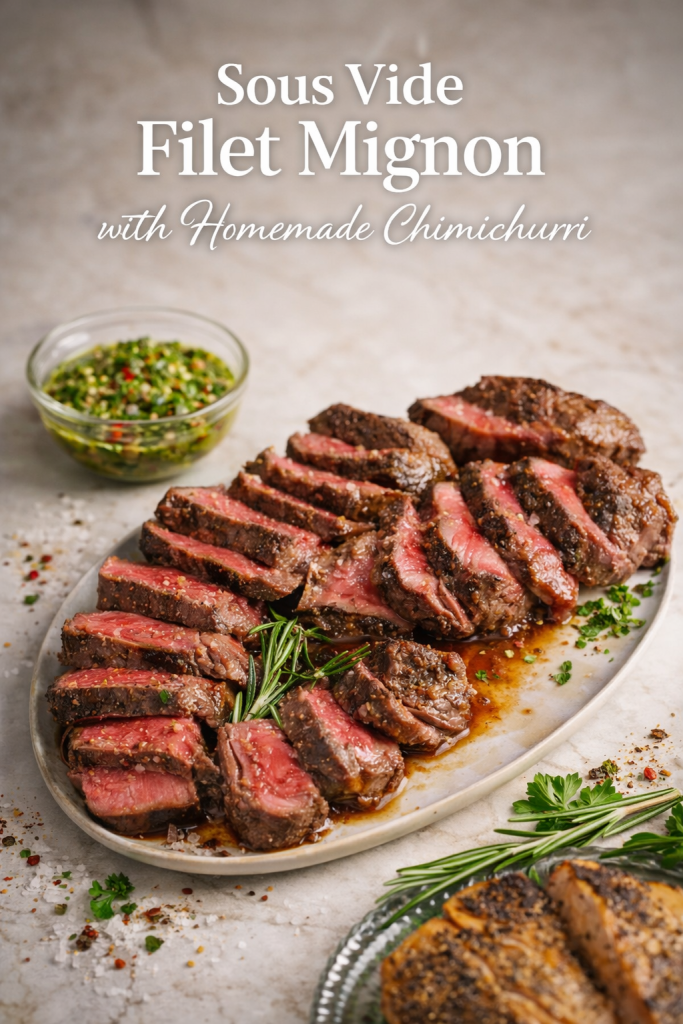
Description
This recipe delivers foolproof, melt-in-your-mouth sous vide filet mignon every single time. Paired with a bright, garlicky homemade chimichurri sauce that cuts through the richness, it’s an elegant, low-stress meal that’s perfect for special occasions or a luxurious dinner at home.
Ingredients
For the Sous Vide Filet Mignon:
For the Homemade Chimichurri Sauce:
Instructions
-
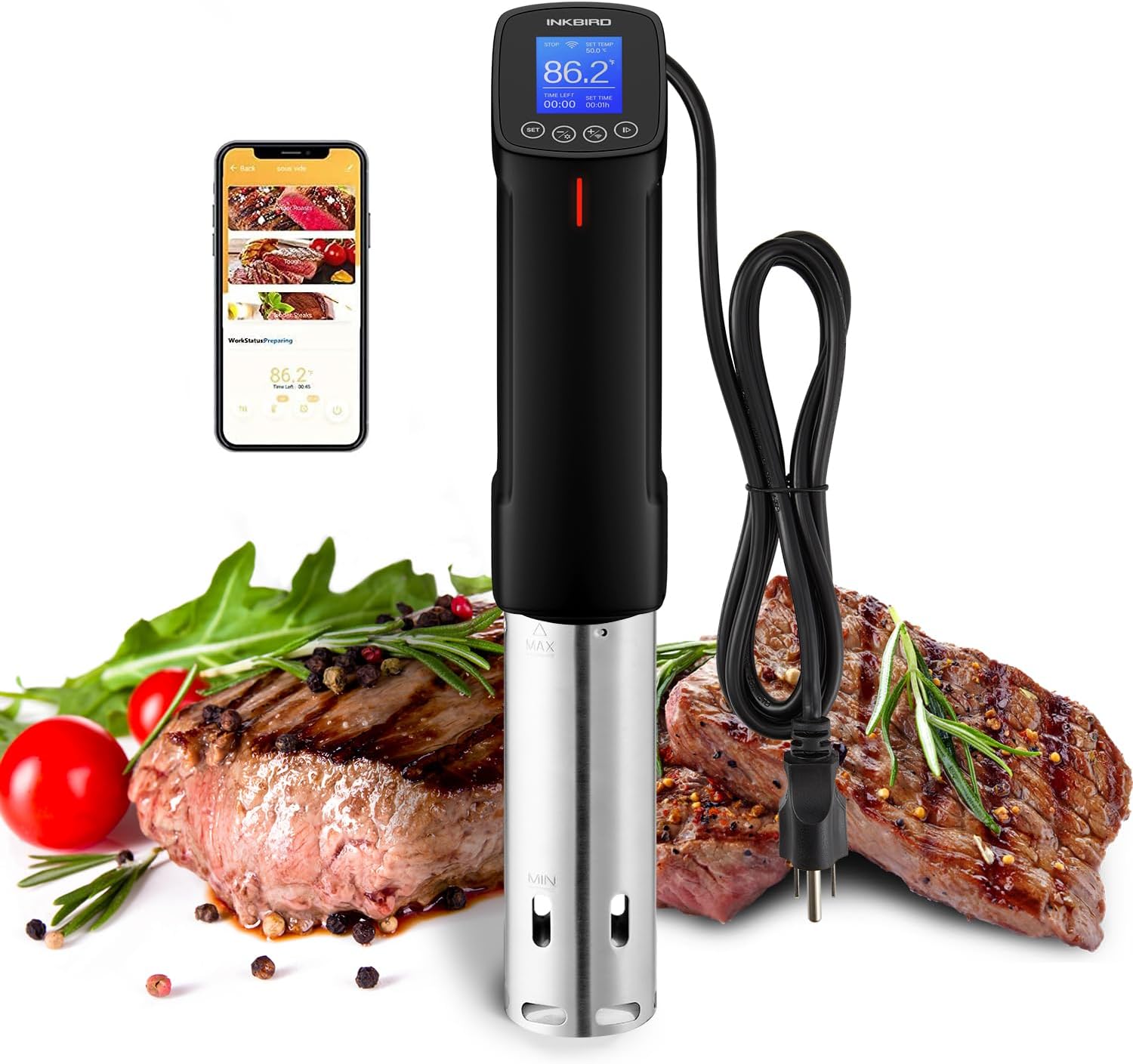
Prepare the Sous Vide Bath: Attach your sous vide immersion circulator to a large pot or container filled with water. Set the temperature to 129°F (54°C) for medium-rare. If you prefer medium, set it to 135°F (57°C). Allow the water to come to temperature while you prepare the steaks.
-
Season the Steaks: Generously season all sides of the filet mignon with kosher salt and freshly cracked black pepper. Don't be shy—this is a thick cut, and proper seasoning is key.
-
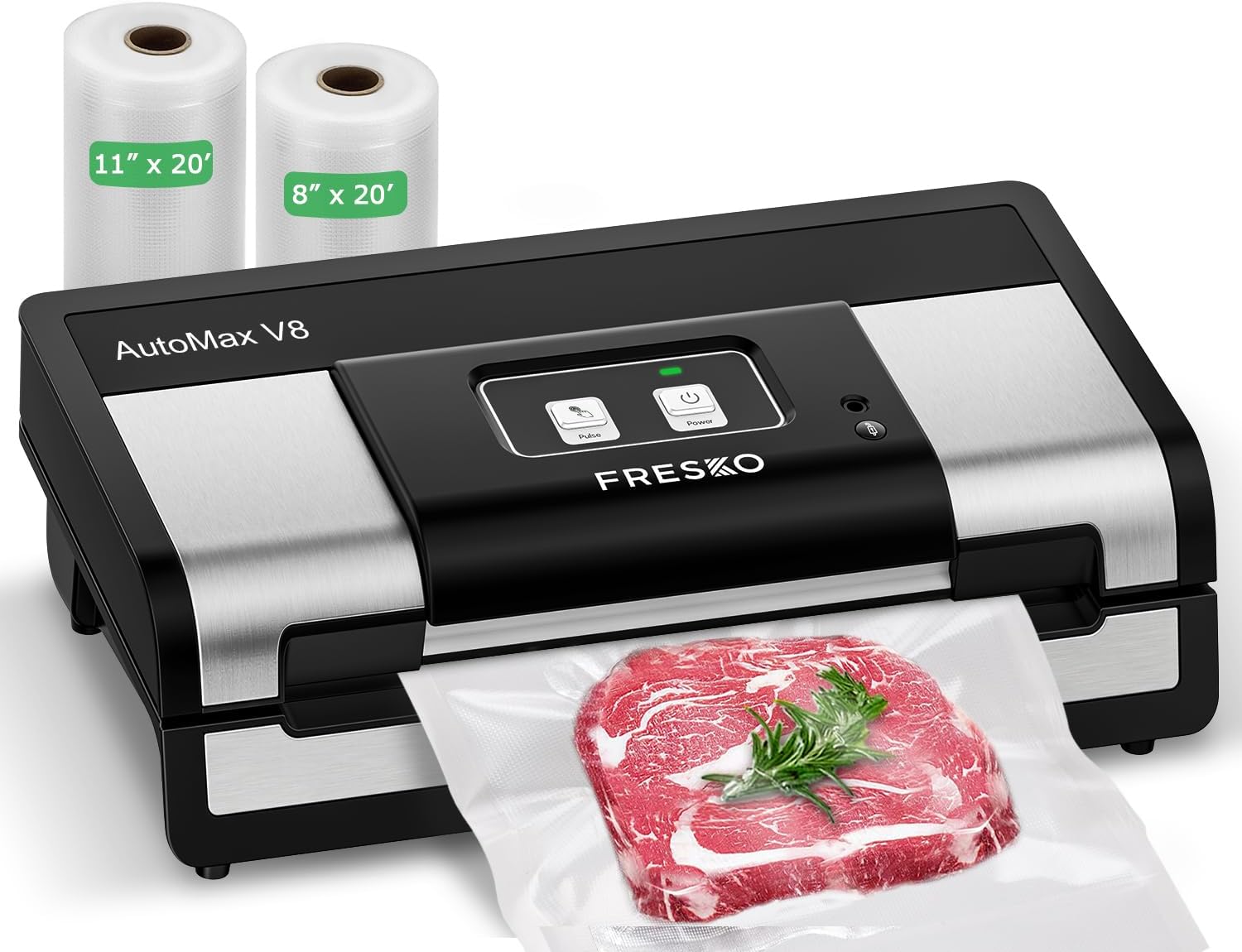
Bag the Steaks: Place one steak in a vacuum sealer bag or a high-quality freezer bag. Add ½ tablespoon of butter, a smashed garlic clove, and a sprig of thyme or rosemary to the bag. Repeat for the remaining three steaks. Seal the bags using a vacuum sealer. If using freezer bags, use the water displacement method: seal the bag almost all the way, then slowly lower it into the water bath, allowing the water pressure to push the air out through the small opening. Seal the bag completely just before it's fully submerged.
-
Sous Vide Cook: Place the sealed bags in the preheated water bath. Ensure they are fully submerged. You can use binder clips to attach them to the side of the container to prevent them from floating. Cook for 1.5 to 2 hours. (A 2-hour cook time is ideal for a 1.5-inch thick steak; longer is fine as it won't overcook).
-
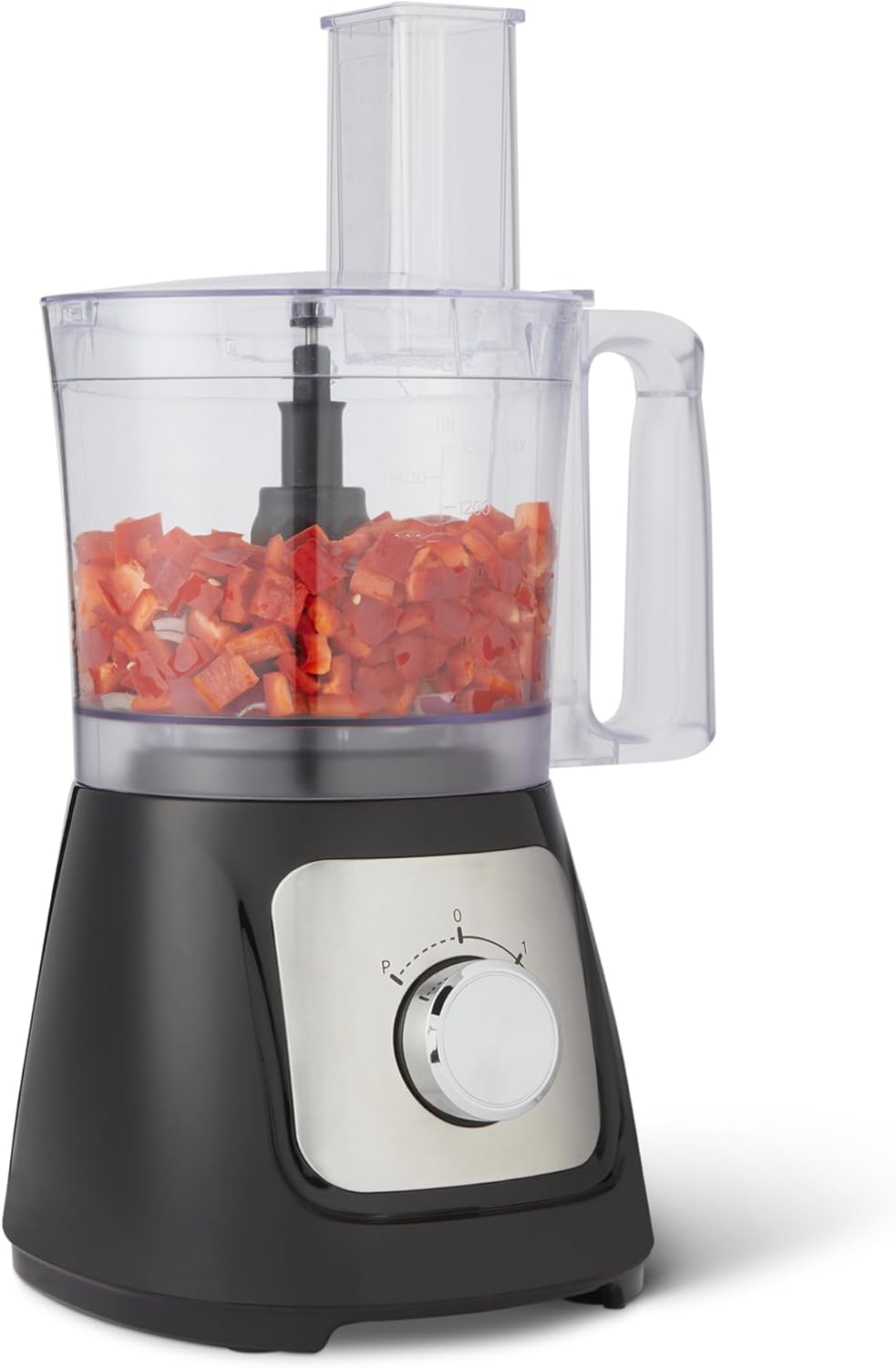
Make the Chimichurri: While the steaks cook, prepare the chimichurri. In a medium bowl, combine the finely chopped parsley, oregano (fresh or dried), and minced garlic. Add the red pepper flakes, salt, and black pepper. Pour in the red wine vinegar and extra-virgin olive oil. Stir well to combine. Taste and adjust seasoning with more salt or a splash of vinegar as needed. If using dried oregano, letting the sauce sit for at least 30 minutes is crucial, as this gives the dried herbs time to soften and rehydrate, infusing the oil and vinegar with their flavor. For the best flavor overall, let it sit at room temperature for at least 30 minutes to allow the flavors to meld.
-
Sear the Steaks: Once the steaks are done, remove them from the water bath. Take them out of the bags and discard the herbs and garlic. Important: Thoroughly pat the steaks completely dry with paper towels. This is the most critical step for a good sear; any surface moisture will create steam and prevent browning.
-
Get the Pan Screaming Hot: Heat a large cast-iron skillet or heavy-bottomed pan over high heat for several minutes until it is smoking hot. Add the high-smoke-point oil and swirl to coat the pan.
-
Sear to Perfection: Carefully place the steaks in the hot pan. Do not overcrowd; you may need to do this in two batches. Sear for 45-60 seconds on the first side, until a deep, dark brown crust forms. Flip and sear the second side for another 45-60 seconds. Use tongs to hold the steaks on their sides to sear the edges for about 15-20 seconds each.
-
Rest and Serve: Transfer the seared filet mignon to a cutting board and let them rest for 5 minutes. This brief rest allows the juices to settle. Serve the steaks whole or sliced, topped with a generous spoonful of the vibrant chimichurri sauce.
Nutrition Facts
Servings 4
- Amount Per Serving
- Calories 650kcal
- % Daily Value *
- Total Fat 48g74%
- Saturated Fat 14g70%
- Sodium 600mg25%
- Total Carbohydrate 3g1%
- Dietary Fiber 1g4%
- Protein 46g92%
- Calcium 5 mg
* Percent Daily Values are based on a 2,000 calorie diet. Your daily value may be higher or lower depending on your calorie needs.
Note
- Pro Tip for Success: Don't skip drying the steaks after the sous vide bath. This is non-negotiable for achieving that beautiful, flavorful crust.
- On Using Dried Oregano: As noted in the ingredient list, you can substitute 1 tablespoon of dried oregano for the fresh. Because dried herbs are more concentrated and lack the water content of fresh, they need time to rehydrate. Be sure to let your chimichurri rest for at least 30 minutes, or even up to 2 hours, to allow the dried oregano to soften and fully release its flavor into the sauce. The texture will be slightly different (less "leafy"), but the flavor will still be delicious.
- Make-Ahead Instructions: The chimichurri sauce can be made up to 2 days in advance and stored in an airtight container in the refrigerator. Bring it to room temperature before serving. The steaks can be cooked sous vide and then immediately placed in an ice bath to chill. Once cold, store them in the refrigerator for up to 3 days. When ready to serve, simply pat dry and sear as directed.
- Storage Guidelines: Store leftover steak and chimichurri separately in airtight containers in the refrigerator for up to 3 days. To reheat steak, gently warm it in a low oven (275°F) or in a warm skillet with a little butter.
- Substitutions:
- Herbs: If you can't find fresh oregano, you can substitute with 2 teaspoons of dried oregano. Cilantro can also be used to replace up to half of the parsley for a different flavor profile.
- Heat: For a milder sauce, reduce or omit the red pepper flakes. For a spicier kick, add a finely chopped red chili pepper.
- Troubleshooting: If your steak is grey and not browning during the sear, your pan wasn't hot enough, or you didn't dry the steak sufficiently. Wait for the pan to get screaming hot before adding the oil and meat.