
Introduction
Have you ever taken a sip of a Negroni and thought, “This is wonderful, but I wish it had the warm, oaky embrace of bourbon”? If so, let me introduce you to your new favorite cocktail. The boulevardier cocktail is everything you love about the Italian classic—that beautiful dance of bitter and sweet—transformed into something deeper, richer, and unmistakably American.
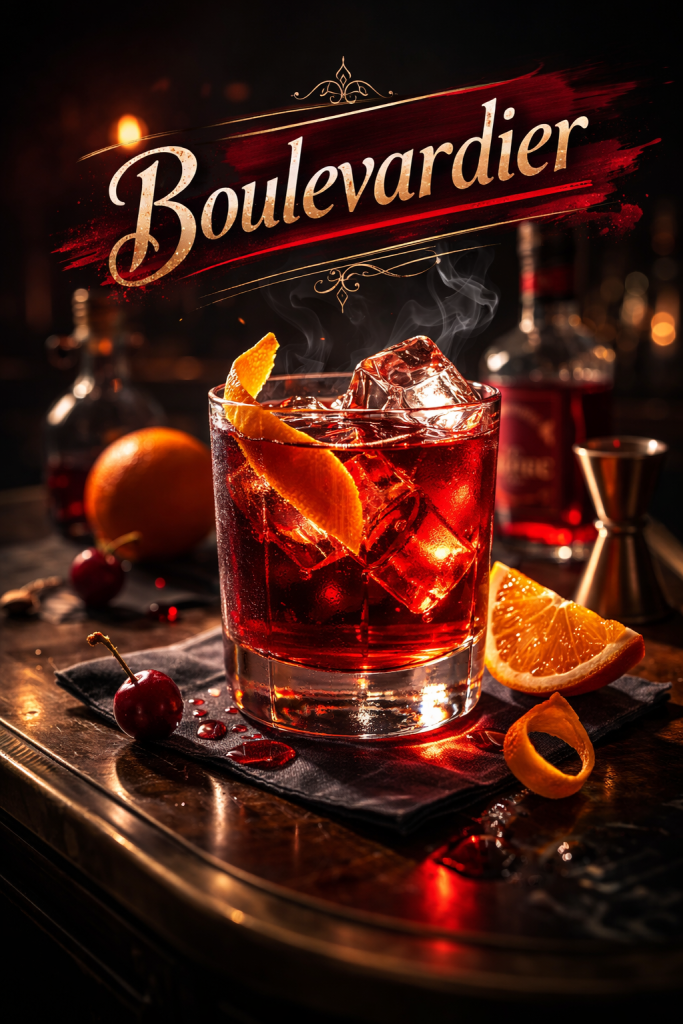
Imagine this: you’re settling into a leather armchair on a cool autumn evening, jazz playing softly in the background, and in your hand is a glass of something the color of a ruby sunset. The first sip hits you with the bold warmth of whiskey, followed immediately by the complex bitterness of Italian amaro, all rounded out by the herbal sweetness of vermouth. This is the boulevardier experience .
What makes this version special? We’re going beyond the basic recipe to explore not just how to make it, but why each element matters. We’ll uncover the cocktail’s glamorous Parisian origins, dive into the science of balancing bitter and sweet, and give you professional techniques to craft the perfect boulevardier every single time. Whether you’re a seasoned home mixologist or just discovering the world of classic cocktails, this guide will transform how you think about this sophisticated sipper.
The History: An American in Paris
The story of the boulevardier cocktail reads like a F. Scott Fitzgerald novel—full of expatriate glamour, literary aspirations, and the cultural cross-pollination that defined the 1920s .
Our story begins at Harry’s New York Bar in Paris, a legendary establishment that became a home away from home for American expatriates fleeing Prohibition. The bar’s owner, Harry McElhone, was a Scottish-born bartender with a genius for capturing the spirit of his era in a glass. In 1927, he published “Barflies and Cocktails,” a delightful collection of recipes and anecdotes from the colorful characters who frequented his establishment .
Tucked away in an essay titled “Cocktails About Town” by Arthur Moss, not in the main recipe list, appears the first mention of the boulevardier. It’s attributed to Erskine Gwynne, an American-born writer, Vanderbilt nephew, and socialite who had founded a monthly magazine in Paris called “Boulevardier.” The magazine, which ran from 1927 to 1932, was described as “fast but clean” and positioned itself as essential reading “before, between and after cocktails” .
The original recipe called for equal parts: one-third Campari, one-third Italian vermouth, and one-third bourbon whiskey . Interestingly, a very similar cocktail called the “Old Pal” appeared in the same essay, differentiated only by its use of Canadian Club whisky .
Despite this promising debut, the boulevardier vanished from cocktail books for nearly 80 years. While its cousin the Negroni rose to fame in the 1950s and earned a spot on the inaugural IBA list in 1961, the boulevardier remained forgotten . It took the craft cocktail revival of the late 2000s to resurrect this gem. Cocktail historian Ted Haigh, writing as “Dr. Cocktail,” rediscovered the recipe and published it in a 2007 issue of Imbibe magazine, sparking a renaissance [citation:12]. By the mid-2010s, the boulevardier had reclaimed its rightful place among the world’s great cocktails, and in 2020, it was officially added to the IBA’s list of “Unforgettables” [citation:14].
The Science: The Art of Balance
At first glance, the boulevardier appears deceptively simple—three ingredients, one technique. But within that simplicity lies a masterpiece of sensory balance that professional bartenders spend years mastering.
The Trinity of Flavor
The boulevardier is built on three pillars: spirit, bitter, and aromatized wine. Each plays an essential role.
Whiskey provides the foundation. Bourbon, with its notes of vanilla, caramel, and oak from new charred American barrels, brings warmth and sweetness that tame Campari’s aggression. Rye whiskey, with its higher rye content, offers a spicier, drier counterpoint . The choice of whiskey fundamentally changes the cocktail’s character—bourbon creates a rounder, sweeter drink, while rye delivers a more assertive, complex experience.
Campari is the soul of bitterness. This vibrant red Italian bitter, with its secret recipe of herbs, spices, and fruit, clocks in at around 24% ABV and contains 180-220 g/L of residual sugar . Its bitterness comes from compounds like those found in gentian root, cinchona, and rhubarb . But Campari isn’t just bitter—it carries notes of orange peel, cherry, clove, and cinnamon that add incredible complexity.
Sweet vermouth is the mediator. This aromatized wine, typically around 15-18% ABV, brings herbal complexity and crucial sweetness that bridges the gap between whiskey and Campari. A quality vermouth like Carpano Antica Formula, with its vanilla and caramel notes and higher residual sugar (around 35%), can transform a good boulevardier into an unforgettable one .
The Ratio Revolution
The original 1927 recipe called for equal parts—1:1:1. But most modern recipes, including the IBA standard, call for a 1.5:1:1 ratio (1½ ounces whiskey to 1 ounce each Campari and vermouth) . Why the change?
This adjustment acknowledges whiskey’s bold personality. Bourbon and rye are typically 40-50% ABV, significantly higher than gin (the Negroni’s base spirit). To stand up to that alcohol intensity and allow the whiskey’s character to shine through without being overwhelmed by Campari’s bitterness, we need a heavier hand with the base spirit .
Some bartenders go even further, preferring a 2:1:1 ratio for a truly whiskey-forward expression . The beauty of the boulevardier is that you can adjust the ratio to suit your palate. Start with the classic 1.5:1:1 and experiment from there.
The Dilution Equation
Perhaps the most overlooked science in cocktail making is dilution. When you stir a boulevardier with ice, you’re not just chilling it—you’re carefully introducing water that transforms the drink.
Proper dilution (targeting about 25-30% of the cocktail’s original volume) serves multiple purposes . It softens the alcohol’s burn, allowing flavors to emerge. It helps bitter compounds integrate rather than dominate. And it creates a more pleasant mouthfeel .
Temperature matters too. At very cold temperatures (around 4°C or 39°F), our perception of sweetness drops by about 30%, while bitterness perception decreases by only 12% . This means an over-chilled cocktail can taste disproportionately bitter. Allowing the drink to warm slightly as you sip reveals its true balance .
This is why large ice cubes are essential—they melt more slowly, giving you controlled dilution and allowing the cocktail to evolve gracefully from first sip to last .
Good Pairing Food and Drink
The boulevardier’s bold, bittersweet profile makes it remarkably food-friendly. Here are our expert-recommended pairings.
- Appetizer: Mushroom Crostini. According to Executive Bourbon Steward Chris Blatner, “The bitter and herbaceous notes of the bitter liqueur in the cocktail are a great match for the umami richness of the mushrooms, creating a well-rounded flavor profile” . The earthy, savory depth of sautéed mushrooms on crispy toast stands up beautifully to the cocktail’s complexity. For extra indulgence, add a smear of melted brie or funky blue cheese .
- Main Course: Grilled Ribeye Steak. A properly grilled ribeye, with its charred exterior and rich, fatty interior, is the boulevardier’s ideal dinner companion. The steak’s savory richness softens the cocktail’s bitterness, while the whiskey notes in the drink echo the smoky char on the meat. The bitter Campari cuts through the fat like a knife, cleansing your palate for the next glorious bite.
- Side Dish: Rosemary Roasted Potatoes. Crispy roasted potatoes tossed with fresh rosemary and garlic provide a hearty, herbaceous counterpoint. The rosemary’s piney aromatics play beautifully with the herbal notes in both the vermouth and Campari, creating a harmonious bridge between food and drink.
- Dessert: Dark Chocolate Flourless Cake. The bitterness of high-quality dark chocolate (70% cacao or higher) resonates with Campari’s bitter complexity, while the cake’s richness is balanced by the cocktail’s structure. This pairing demonstrates how bitterness in one element can highlight sweetness in another .
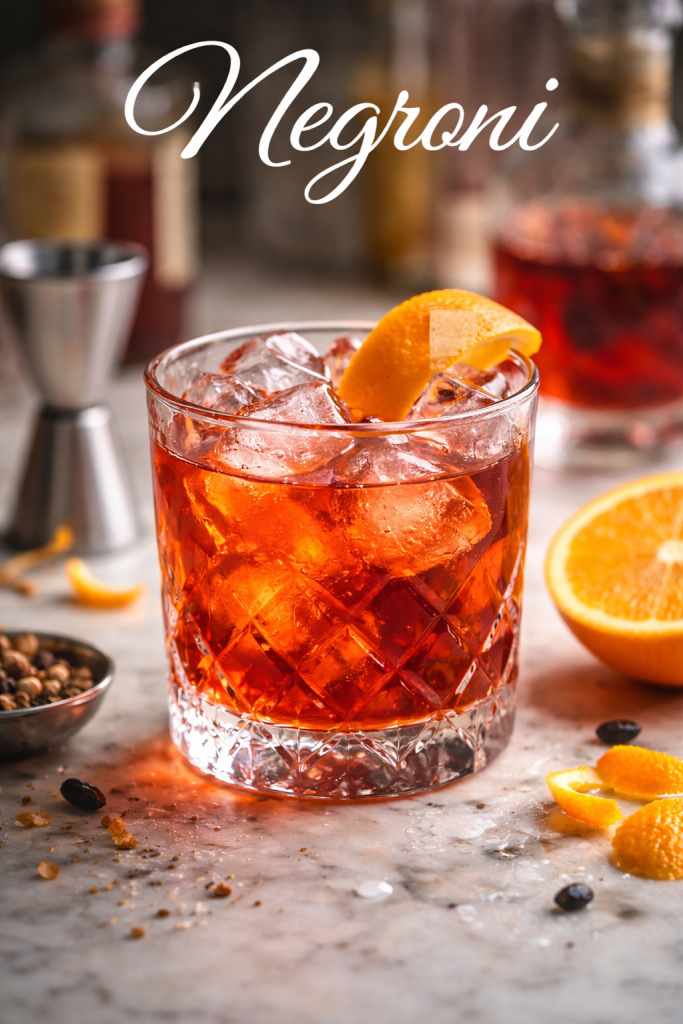
- Cocktail: Classic Negroni. For a fascinating comparison, serve a traditional Negroni (gin, Campari, sweet vermouth) alongside the boulevardier. Guests can experience firsthand how changing just one ingredient transforms the entire character of a cocktail—the Negroni brighter and more botanical, the boulevardier warmer and more brooding .
- Non-Alcoholic Drink: Bitter Italian Soda. Create a sophisticated alcohol-free option by combining San Pellegrino Pompelmo (grapefruit soda) with a splash of tonic water and a generous orange twist. The grapefruit’s natural bitterness echoes Campari’s citrus notes, while the tonic’s quinine provides additional complexity. Serve over ice in a rocks glass for the full experience.
Description
Learn to craft the perfect boulevardier cocktail with our comprehensive guide. This whiskey-forward cousin of the Negroni delivers a perfectly balanced blend of bitter, sweet, and spirit-forward flavors that cocktail enthusiasts adore. With just three ingredients and five minutes, you'll create a drink that tastes like it came from a world-class cocktail bar.
Ingredients
Instructions
-
Chill your glass (optional but recommended). Place your serving glass—either a rocks glass (for serving on the rocks) or a chilled coupe (for serving up)—in the freezer or fill it with ice water to pre-chill while you prepare the cocktail .
-
Combine ingredients. Fill a mixing glass halfway with ice cubes. Using a jigger for accuracy, pour in 1½ ounces of bourbon or rye whiskey, 1 ounce of Campari, and 1 ounce of sweet vermouth .
-
Stir with purpose. Stir the mixture with a bar spoon for 20-30 seconds. You'll know it's ready when the mixing glass feels painfully cold to the touch and a frost forms on the outside. Professional tip: stir for about 25 seconds, which typically achieves the ideal 25-30% dilution .
-
Prepare your serving glass. If you pre-chilled your glass with ice water, empty and dry it. Place one large ice cube or sphere in the bottom. A large cube melts more slowly, giving you better control over dilution as you sip .
-
Strain and serve. Place a julep strainer or Hawthorne strainer over the mixing glass and strain the cocktail into your prepared rocks glass . If you prefer your boulevardier "up" (without ice), strain it into a chilled coupe glass instead .
-
Garnish with flair. Hold the orange peel, colored side down, over the glass and give it a firm twist to express the essential oils onto the surface of the drink. Then rub the peel around the rim of the glass and drop it in or perch it on the edge .
-
Serve immediately. The boulevardier is meant to be enjoyed slowly, allowing it to evolve as the ice gradually melts and the flavors continue to integrate .
Nutrition Facts
- Amount Per Serving
- Calories 245kcal
- % Daily Value *
- Sodium 3mg1%
- Total Carbohydrate 12g4%
- Sugars 2g
* Percent Daily Values are based on a 2,000 calorie diet. Your daily value may be higher or lower depending on your calorie needs.
Note
- Pro-Tip for Success: Use fresh, high-quality ingredients. Vermouth is wine and will oxidize—once opened, store it in the refrigerator and use within 1-2 months . An oxidized vermouth tastes flat and vinegary, which will ruin your cocktail.
- Make-Ahead Instructions: You can pre-batch boulevardiers for parties. Multiply the recipe by the number of servings and combine in a sealed container in the refrigerator. Before serving, add about 20% water to account for dilution, stir well, and pour over fresh ice .
- Storage Guidelines: The cocktail itself should be consumed immediately. Leftover pre-batched mixture can be refrigerated for up to one week.
- Substitutions:
- Whiskey: Rye whiskey creates a spicier, drier cocktail. For a truly unique twist, try a smoky Scotch or a combination of bourbon and peated Scotch .
- Campari: Aperol produces a much lighter, sweeter, lower-alcohol version. Cynar (artichoke-based amaro) adds earthy complexity .
- Vermouth: For a crisper, more herbal profile, try using half sweet and half dry vermouth. This creates a variation closer to the "Old Pal" .
- Troubleshooting Common Issues:
- "My cocktail tastes too bitter." This usually means either the vermouth has oxidized (losing its balancing sweetness) or you've under-diluted. Next time, stir 5-10 seconds longer or add a tiny pinch of salt to mute bitterness .
- "My cocktail tastes watery." You've either stirred too long or used small ice cubes that melted too quickly. Use one large ice cube and time your stir to 20-25 seconds.
- "My cocktail is cloudy." You might have shaken instead of stirred. Shaking aerates the drink and can cloud the spirits. Always stir spirit-only cocktails .
- Ingredient Sourcing: Seek out Carpano Antica Formula or Cocchi Torino for vermouth—they're widely available at better liquor stores and worth the slight premium. For bourbon, a high-rye option like Bulleit or Old Grand-Dad works beautifully.