
Introduction
Have you ever watched an episode of MasterChef and felt your heart race right along with the contestants, especially when Gordon Ramsay himself throws down a challenge so precise, so elegant, it seems almost impossible? That moment when the judges describe a dish with words like “glazed beautifully” and “visually stunning,” you can’t help but wonder… could I actually make that?
This buckwheat honey glazed duck is that dish. It’s the exact recipe from a recent MasterChef Season 15 pressure test that had home cooks scrambling to keep up with the master . But here’s the secret: while it looks like it belongs in a three-Michelin-star restaurant, the techniques are logical, teachable, and incredibly rewarding. This isn’t just a recipe; it’s a culinary education on a single plate. We’re going to break down every element—the perfectly crisp duck breast, the silky parsnip purée, the tangy pickles, and the rich port wine glaze—so you can not only recreate it but truly understand why it works. Get ready to impress yourself.
The History: From French Tradition to MasterChef Glory
To understand this dish, we must first understand the star of the plate: duck breast. While the MasterChef challenge gives it a modern, global twist, the cooking technique is pure French tradition. For decades, French chefs have revered magret de canard, the meaty breast from a duck raised for foie gras. The challenge has always been the same: how to render the thick layer of fat beneath the skin to achieve a lusciously crisp exterior without overcooking the delicate, lean meat beneath.
The solution, perfected in French kitchens and championed by chefs like Gordon Ramsay, is the “cold pan start.” This technique, a staple of classical French training, slowly coaxes the fat to render out, leaving behind a paper-thin, golden crust. The addition of buckwheat, toasted directly in the duck fat, is a more contemporary, rustic touch. It nods to the hearty cuisines of Eastern Europe and Brittany, where buckwheat is a staple, adding a nutty, earthy crunch that stands up to the rich meat .
The supporting elements on the plate are a symphony of classic French haute cuisine principles: a silky purée, a sweet-sour gastrique, and a bright pickle. These components aren’t just random; they are carefully chosen to provide contrast and balance, a hallmark of professional cooking. When Gordon Ramsay presented this dish on MasterChef, he was asking contestants to demonstrate their understanding of this entire culinary history, from fundamental rendering techniques to the art of balancing flavors on a single fork .
The Science: The Alchemy of a Perfect Plate
Cooking this dish is a masterclass in kitchen science. Let’s break down what’s happening chemically and physically.
First, the duck skin. The crosshatch scoring isn’t just for looks; it severs the tough collagen fibers in the skin, preventing it from curling up as it tightens during cooking. It also creates more surface area and channels for the fat to escape. Starting in a cold pan is the most critical step. High heat would cause the proteins in the skin to seize up and contract rapidly, trapping the fat inside and resulting in a chewy, greasy final product. By starting low and slow, you gently melt the fat (rendering), which then fries the skin from the inside out, making it incredibly crisp. This is pure fat-rendering science .
Next, consider the buckwheat. By toasting the groats in the rendered duck fat, you’re not just heating them; you’re initiating the Maillard reaction. The proteins and sugars in the buckwheat break down and recombine under high heat, creating hundreds of new, complex flavor compounds that taste deeply nutty and toasty. Cooking them in the fat also allows them to absorb those savory, meaty flavors, making them the perfect, crunchy counterpoint to the tender meat.
Finally, the parsnip purée and port wine sauce are lessons in texture and flavor balancing. For the purée, we aren’t just mashing; we’re creating an emulsion. Boiling the parsnips hydrates and softens their cell walls, and then blending them with butter and cream creates a stable suspension of fat and water, resulting in that impossibly silky, luxurious mouthfeel. Passing it through a sieve takes it a step further, removing any remaining fibrous bits for a truly flawless texture . The sauce, meanwhile, relies on reduction to concentrate flavors and create viscosity. Simmering the port and vinegar drives off water, concentrating the sugars and acids. The final whisk of cold butter (monter au beurre) emulsifies into the liquid, adding shine, body, and a rich, velvety finish that coats your palate.
Good Pairing Food and Drink
This dish is a complete, restaurant-worthy meal on its own, but if you’re planning an elaborate dinner party, here are some perfect companions that play well with the duck’s rich and tangy profile.
- Appetizer: Seared Scallops with Brown Butter and Lemon. The sweet, delicate scallops, seared to a golden crust and finished with nutty brown butter and a squeeze of bright lemon, are a light and elegant precursor to the rich duck. The citrus note in the lemon echoes the acidity in the pickles and port glaze, creating a seamless flavor bridge.
- Main Course: This is the main course! However, the portions are generous and rich, so it’s truly the star.
- Side Dish: Buttery Pomme Purée (Masher Potatoes). While you already have a parsnip purée, you can never have too many creamy starches. An ultra-smooth, buttery mashed potato (made famous by French chef Joël Robuchon) would be a decadent addition, offering a familiar, comforting base that soaks up any extra port wine sauce.
- Dessert: Dark Chocolate and Orange Flourless Cake. The bitter intensity of dark chocolate is a classic pairing with duck, and this dessert brings it home. The hint of orange in the cake echoes the citrusy notes often found in duck sauces (like the Grand Marnier in a classic Canard à l’Orange) , creating a sophisticated and satisfying finish.
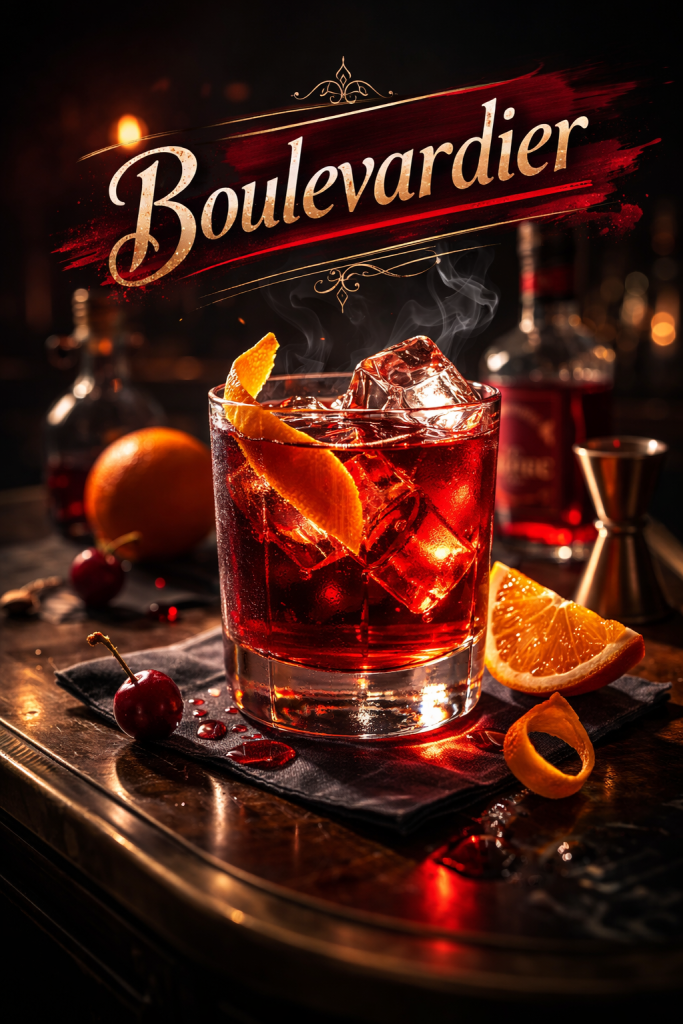
- Cocktail: A Boulevardier. This Negroni variation—made with bourbon or rye, sweet vermouth, and Campari—is the perfect liquid companion. Its bold, bitter, and sweet profile stands up to the richness of the duck and the sweetness of the honey glaze, while the herbal notes from the vermouth and Campari complement the dish’s complexity.
- Non-Alcoholic Drink: Spiced Cherry & Rosemary Shrub. Create a drinking vinegar (shrub) by macerating cherries with sugar and apple cider vinegar. To serve, dilute a few tablespoons with sparkling water and a sprig of fresh rosemary. The sweet-tart cherry flavor is a direct nod to the port glaze’s fruitiness, and the rosemary adds an aromatic, savory depth that cleanses the palate between bites.
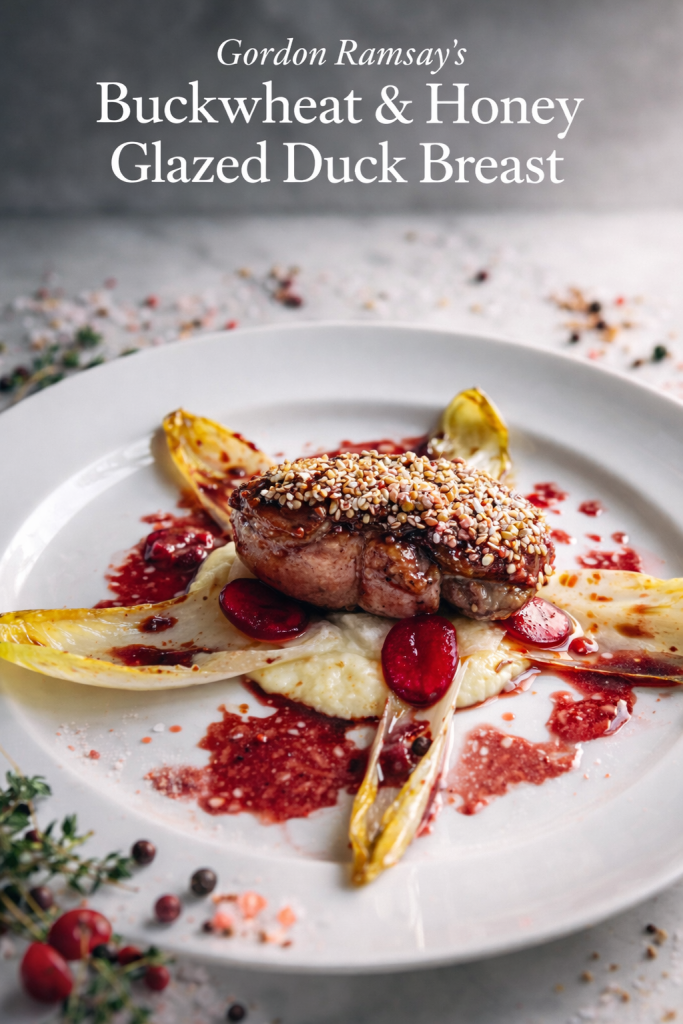
Gordon Ramsay‘s Buckwheat & Honey Glazed Duck Breast – MasterChef Season 15 Recreation
Description
In this high-pressure MasterChef recreation, I attempt to decode Gordon Ramsay‘s Buckwheat & Honey Glazed Duck Breast—the exact dish from the MasterChef Season 15 "Keeping Up With Gordon" Tag Team Challenge . This is my best guess at the three-Michelin-star recipe, built frame-by-frame from the episode and professional technique. The components: a crisp-skinned duck breast with toasted buckwheat, a silky parsnip purée, sweet-and-sour endive, quick-pickled daikon and cherries, and a luscious port wine glaze. This is advanced home cooking at its most rewarding. No official recipe exists—this is my homage.
Ingredients
For the Duck & Buckwheat Crust:
For the Port Wine Glaze:
For the Parsnip Purée:
For the Quick-Pickled Daikon & Cherries:
For the Sweet & Sour Endive:
For Plating:
Instructions
PART 1: PREPARE THE QUICK PICKLES (Day Of, First Step)
-
-
Make pickling liquid: In a small saucepan, combine rice vinegar, water, sugar, and salt. Bring to a boil, stirring until sugar and salt dissolve completely.
-
Pickle: Place thinly sliced daikon and pitted cherry halves in a heatproof bowl. Pour the hot pickling liquid over the vegetables. Let cool to room temperature, then refrigerate until ready to plate. These can be made 2 days ahead.
-
PART 2: PARSNIP PURÉE (The Silky Foundation)
-
-
Cook parsnips: Place chopped parsnips in a medium saucepan. Cover with cold water and add a pinch of salt. Bring to a boil, then reduce to a simmer. Cook for 15-20 minutes until parsnips are completely tender when pierced with a knife.
-
Drain and blend: Drain parsnips well. Transfer to a blender. Add butter and warmed cream. Blend on high for 2-3 minutes until completely smooth. Critical step: Pass the purée through a fine-mesh sieve using a spatula. This removes all fibrous texture and creates that Michelin-star silkiness . Season with salt and white pepper. Keep warm.
-
PART 3: DUCK & BUCK WHEAT (The Ramsay Method)
-
-
Score the duck: Using a sharp knife, score the duck skin in a tight crosshatch pattern, cutting through the fat but not into the meat. Pat the duck breasts completely dry with paper towels. Season generously on both sides with salt and pepper.
-
Cold pan start: Place the duck breasts skin-side down in a cold, oven-safe skillet. This is non-negotiable for perfect fat rendering . Turn the heat to medium-low. Let the fat render slowly for 6-8 minutes. Pour off excess fat as it accumulates (reserve for the buckwheat!).
-
Toast the buckwheat: During the last 2 minutes of rendering, add 1 tbsp buckwheat groats directly to the rendered duck fat in the pan. Toast, stirring occasionally, until fragrant and golden. Remove buckwheat with a slotted spoon and drain on paper towel. Reserve for plating.
-
Sear and roast: Once the skin is deep golden and crisp, flip the duck. Sear the flesh side for 1 minute. Transfer the skillet to a preheated 400°F (200°C) oven. Roast for 6-8 minutes for medium-rare (125-130°F internal). Ramsay demands pink, not raw, not over .
-
Rest: Remove duck from skillet. Place on a wire rack set over a baking sheet. Rest for 10 minutes. Do not skip.
-
PART 4: PORT WINE GLAZE (The Jewel)
-
-
Deglaze: Pour off all but 1 tsp fat from the duck skillet. Place over medium heat. Add minced shallot and sauté 1 minute until softened.
-
Flambé (optional but dramatic): Add port wine. If using a gas stove, tilt the pan slightly to ignite the alcohol. Let the flame burn off for 30 seconds. If electric, simply simmer.
-
Reduce: Add sherry vinegar and honey. Simmer vigorously until the liquid reduces to a syrup consistency that coats the back of a spoon (about 5-7 minutes).
-
Mount with butter: Strain the glaze through a fine-mesh sieve into a clean saucepan. Discard shallots. Over low heat, whisk in cold butter, one cube at a time, until the glaze is glossy and emulsified. Season with salt. Keep warm.
-
-
PART 5: SWEET & SOUR ENDIVE (60-Second Cook)
-
High-heat sear: Heat a separate skillet over extremely high heat. Add 1 tbsp olive oil. Arrange endive leaves in a single layer, cut-side down if halved, or flat if whole leaves. Cook undisturbed for 30 seconds.
-
Glaze: Dust the endive with powdered sugar. Drizzle with balsamic vinegar. Flip and cook for another 20-30 seconds until caramelized and wilted at the edges but still holding shape. Season with salt and pepper. Remove immediately.
-
PART 6: PLATING (The Ramsay Precision)
-
-
Quenelle the purée: Using a warm spoon (dipped in hot water), scoop a perfect quenelle of parsnip purée and place it slightly off-center on each warm plate. Alternatively, pipe a neat dollop.
-
Slice the duck: Using a very sharp knife, slice each rested duck breast diagonally into 6-8 even slices. Fan the slices neatly beside the purée.
-
Scatter buckwheat: Sprinkle the toasted buckwheat groats over and around the duck.
-
Arrange endive: Create a small "star" or cluster of sweet-and-sour endive leaves opposite the purée.
-
Drain pickles: Remove daikon and cherries from pickling liquid. Pat dry. Arrange a small, composed pile of pickled daikon and cherries.
-
Sauce: Spoon the port wine glaze around the duck—not over the crispy skin. A few deliberate strokes.
-
Garnish: Finish with microgreens or chervil. Serve immediately. This dish waits for no one.
-
Nutrition Facts
- Amount Per Serving
- Calories 720kcal
- % Daily Value *
- Total Fat 44g68%
- Saturated Fat 18g90%
- Sodium 890mg38%
- Total Carbohydrate 42g15%
- Dietary Fiber 8g32%
- Sugars 24g
- Protein 38g76%
* Percent Daily Values are based on a 2,000 calorie diet. Your daily value may be higher or lower depending on your calorie needs.
Note
This is a Recreation, Not an Official Recipe:
Gordon Ramsay has not published this exact dish. This recipe is my best guess interpretation based on frame-by-frame analysis of the MasterChef Season 15 episode, professional duck cooking techniques, and the component descriptions confirmed by recap sources . I have attempted to reverse-engineer the flavors, textures, and plating.
The "Keeping Up With Gordon" Challenge:
In this Tag Team relay, contestants had to match Ramsay‘s speed and precision exactly. The judges evaluated:
- Duck cook: Perfect medium-rare, glazed beautifully
- Purée texture: Silky, not peppery or gritty
- Balance: Not oversauced, not clumsy
- Visual finesse: Clean plating, no overcrowding
My Key Learnings from the Attempt:
- Cold pan start is non-negotiable. Duck skin that renders slowly is crisp; rushed skin is rubber.
- Toast buckwheat IN duck fat. This single step adds 100x flavor. Do not use raw buckwheat.
- Sieve the parsnip purée. This separates home cooking from Michelin-star cooking. No shortcuts.
- Endive needs screaming heat. If your pan isn't hot enough, it steams instead of caramelizes.
- Rest the duck on a wire rack. Resting in the pan = soggy skin.
Ingredient Sourcing:
- Buckwheat groats: Look for raw, untoasted kasha. Toast yourself.
- Duck breast: Moulard or Gressingham. Large, thick, fatty. Avoid thin, flimsy breasts.
- Parsnips: Choose small-to-medium. Large parsnips have woody cores that won't purée smoothly.
- Port: Ruby port is sufficient. Do not use white port.
Make-Ahead Strategy:
- Pickles: Up to 3 days ahead.
- Parsnip purée: 1 day ahead. Reheat gently with a splash of cream.
- Port glaze: 1 day ahead. Reheat and whisk in butter fresh.
- Buckwheat: Toast 2 hours ahead. Store airtight.
- Duck: Score and season up to 24 hours ahead. Pat dry before cooking.