
Welcome to Food Illustrated, where we believe the best recipes are the ones with a story — and a little bit of magic. Clarified Milk Punch is exactly that: a 300-year-old paradox that transforms cloudy milk and bold spirits into a crystal-clear, silky-smooth elixir that lasts for months. It was enjoyed by Benjamin Franklin, bottled by Charles Dickens, and is now the secret weapon of world-class bartenders from New York to Vancouver .
But this isn’t just a history lesson. This is the definitive home cook’s guide to making milk punch that rivals the best cocktail bars. Using the Campari Academy’s 25% milk rule and cold clarification technique, this Earl Grey and aged rum version delivers bergamot warmth, baking spice depth, and a velvety mouthfeel — all in a glass so clear you can read a newspaper through it .
Whether you’re batch-prepping for a Dinner party, hunting for the ultimate make-ahead holiday gift, or simply curious about the science of casein proteins, this recipe is your gateway to one of the most impressive and rewarding techniques in the culinary world.

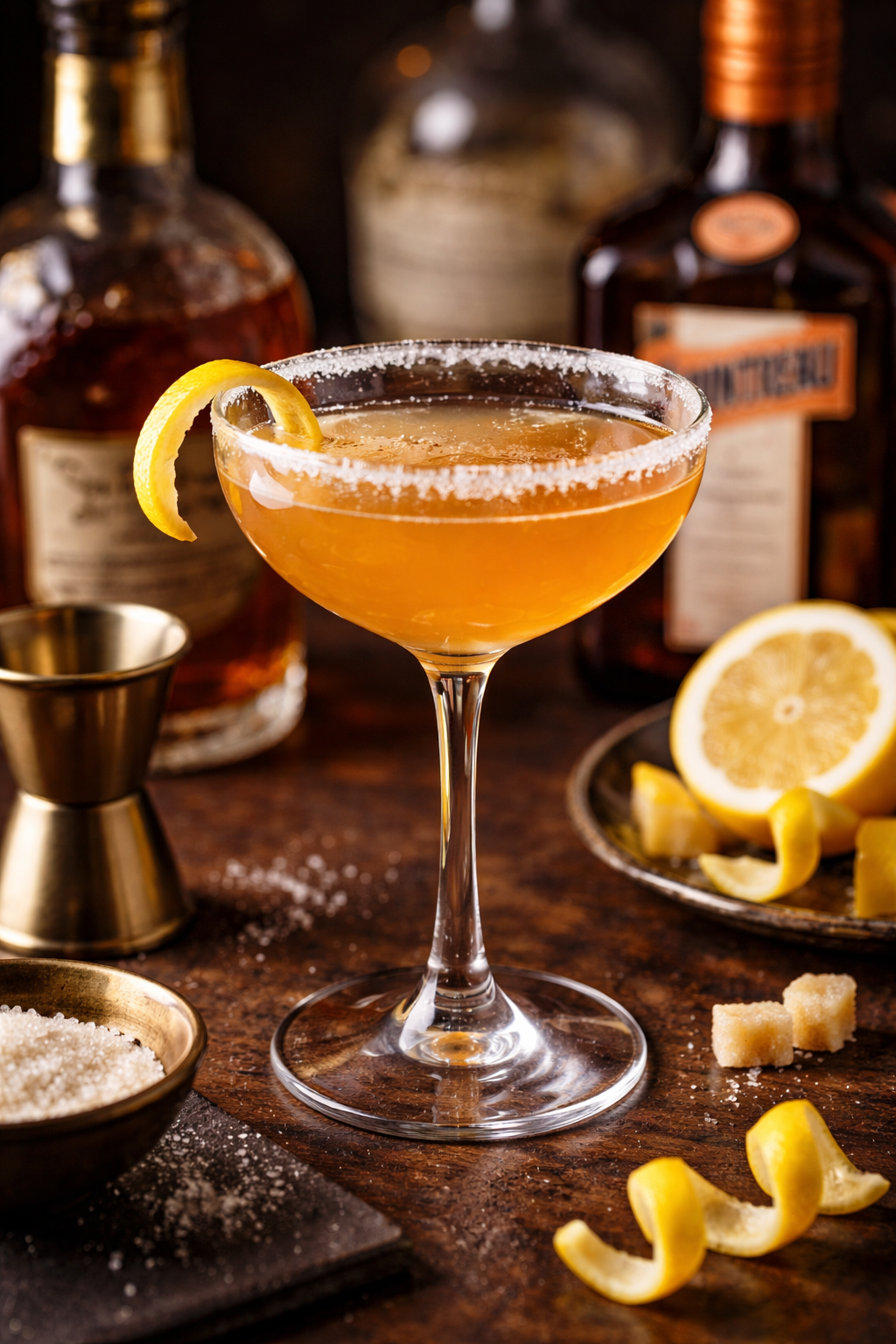

Clarified Milk Punch: The 17th-Century “Liquid Alchemy” Cocktail Bartenders Are Obsessed With
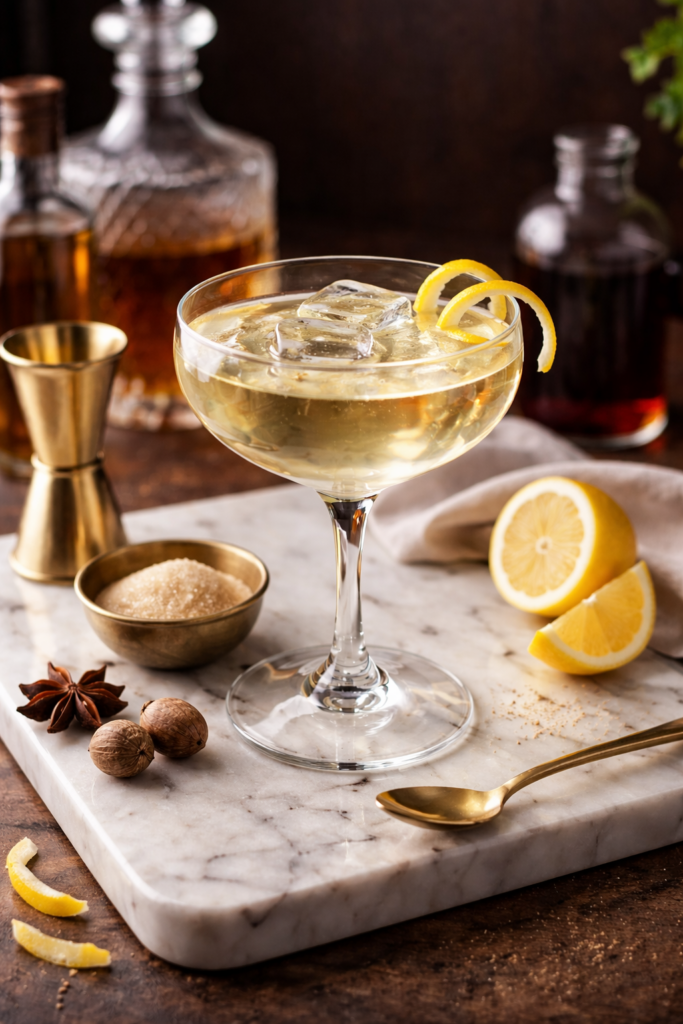
Description
Clarified Milk Punch is the cocktail world's greatest magic trick. You take whole milk — the cloudiest, most opaque ingredient in your fridge — and you intentionally curdle it with citrus and tannin-rich tea. The curds, rich in casein protein, bind to bitter polyphenols and sediment. You wait. You strain. And what drips through is crystalline, velvety, and hauntingly smooth .
This recipe follows the "Make It, Break It, Strain It, Serve It" methodology developed by the Campari Academy and perfected by bartenders like Eamon Rockey, who sparked the modern milk punch revival in 2008 . We use Earl Grey tea for bergamot aromatics, aged rum for molasses depth, and Allspice Dram for holiday warmth. The result is a punch that is shelf-stable for months, better after 48 hours, and so beautiful you will want to bottle it for everyone you know.
No heat required. No complicated equipment. Just patience, precision, and a little bit of 17th-century alchemy.
Ingredients
For the Tea & Spirit Base:
For the Clarification:
For Serving (Optional):
Instructions
-
Make It — Build the Base Cocktail
Heat water to 95°C (203°F). Pour over tea bags in a heatproof quart container. Steep for exactly 3 minutes. Remove tea bags — do not squeeze them. Squeezing releases bitter tannins that can overwhelm the filtration process and create off-flavors .Add sugar to the hot tea and whisk until completely dissolved. Add ruby port, aged rum, Allspice Dram, and lemon juice. Stir gently. Cool this mixture to room temperature (approximately 20–30 minutes).
-
Calculate Milk Volume — The 25% Rule
Professional milk punch relies on a simple, non-negotiable formula: milk volume = 25% of total batch volume . For this recipe, your base cocktail volume is approximately 24 oz. 25% of 24 oz = 6 oz. We use 8 oz (1 cup) for a slightly richer texture and a margin of safety.Pour the whole milk into a clean glass pitcher or wide-mouth jar.
-
Break It — The Curdle (The Only Non-Negotiable Step)
Slowly pour one-third of the cocktail mixture into the milk while stirring gently. The milk will immediately break into visible curds and thin, yellowish whey. This is not a mistake — this is casein proteins denaturing in the presence of acid .Stop stirring immediately once the mixture breaks. Gently pour the remaining cocktail into the pitcher without agitation. Do not stir. Do not shake. Do not reverse the order (cocktail into milk, never milk into cocktail)
-
Rest
Allow the mixture to rest undisturbed at room temperature for at least 1 hour. The curds will continue to coagulate and sink, forming a dense protein mat that will act as your primary filter .For superior clarity and flavor integration, refrigerate for 8–24 hours after the initial rest
Gently pour the curdled mixture into the filter. Do not press down on the solids. Pressing forces sediment through the filter and guarantees cloudiness .
The initial liquid that passes through may be cloudy — this is normal. Pour this cloudy liquid back through the filter again
-
Strain It — First Pass
Line a fine-mesh strainer with a basket-style coffee filter (commercial size, designed for 1.5-gallon coffee makers). Place the strainer over a large receiving container or pitcher.Gently pour the curdled mixture into the filter. Do not press down on the solids. Pressing forces sediment through the filter and guarantees cloudiness .
The initial liquid that passes through may be cloudy — this is normal. Pour this cloudy liquid back through the filter again
-
Wait (Patience Is the Secret Ingredient)
Allow the punch to drip through naturally. This takes approximately 1–2 hours. The curds themselves are the filter — the coffee filter is merely holding them in place .If the filter clogs and slows to a single drip, carefully swap in a fresh filter. Do not rush. Gravity is your ally
-
Polish (For Crystal Clarity)
For glass-like transparency, perform a second pass through a fresh coffee filter. This step is optional but recommended for presentation
-
Bottle and Age
Transfer the clarified punch to a clean quart jar or decorative bottle. Seal tightly. The punch is ready to serve immediately, but peak flavor occurs after 24–48 hours of refrigeration as the flavors meld and integrate
-
Serve
Pour 3–4 oz over a single large ice cube in a rocks glass or Old Fashioned glass. Garnish with a lemon twist or star anise
Nutrition Facts
Servings 8
- Amount Per Serving
- Calories 195kcal
- % Daily Value *
- Total Fat 2g4%
- Saturated Fat 1.2g6%
- Sodium 18mg1%
- Total Carbohydrate 11g4%
- Sugars 9g
- Protein 1g2%
* Percent Daily Values are based on a 2,000 calorie diet. Your daily value may be higher or lower depending on your calorie needs.
Note
Alcohol by Volume (ABV): ~11%
🧪 THE SCIENCE — Why This Actually Works
Clarified milk punch is not magic — it is colloidal chemistry.
Milk contains casein proteins, which are suspended in a stable emulsion. When you introduce acid (lemon juice) and/or astringent polyphenols (tea, wine, aged spirits), the pH drops and the casein denatures. The protein strands unravel and coagulate into solid curds .
As these curds form and settle, they trap suspended particles: tannins, bitter flavonoids, sediment, and even some color compounds. This is called adsorption. The curds act as a micron-level filtration bed — far finer than any coffee filter .
What remains is a liquid that has been chemically polished: lower in astringency, softer on the palate, and stable enough to resist spoilage for months .
📜 THE HISTORY — From Aphra Behn to Your Bar Cart
The origins of milk punch are contested — fitting for a drink that plays with perception.
Some historians credit Aphra Behn, a 17th-century English playwright and spy for King Charles II, who mentioned a milk-based punch in her works. The first written recipe, however, belongs to Mary Rockett, who penned it in 1711. She strained her punch through a flannel shirt .
Benjamin Franklin was an evangelist. In a 1763 letter to his friend James Bowdoin, Franklin included detailed instructions for his personal milk punch recipe, advising that a "sphere of ice" be added before serving .
Queen Victoria had a favorite producer, documented in an 1838 royal warrant. Charles Dickens cellared bottles so effectively that they were discovered — still intact — in his wine cellar decades after his death .
The modern revival began in 2008, when bartender Eamon Rockey encountered milk punch at Bar Pleiades in New York. He brought it to Eleven Madison Park, then Betony, and eventually launched Rockey's Milk Punch, a bottled version that remains the gold standard .
🥛 THE 25% RULE — The Only Math You Need
For any milk punch recipe, regardless of scale:
(Batch volume) × 0.25 = Milk volume
This ratio reliably produces proper curdling and efficient filtration. Scale this recipe for a party by multiplying all ingredients proportionally and recalculating your milk.
⏳ THE 48-HOUR ADVANTAGE
While this recipe is ready to serve in 2–3 hours, the 48-hour refrigerated rest produces superior results. Curds continue to settle. Flavors integrate. Any remaining microscopic sediment drops to the bottom of the bottle. Bartenders at top establishments routinely rest their punches for 24–48 hours before serving .
⚠️ CRITICAL: DAIRY ALLERGEN WARNING
Even though the milk solids (curds) are physically removed during filtration, trace amounts of casein and whey protein remain in the finished punch. This beverage is not dairy-free. If serving guests with milk allergies, you must clearly label the punch and offer an alternative .
❄️ FREEZER STORAGE
Clarified milk punch does not freeze solid due to its alcohol content. It can be stored in the freezer indefinitely. Serve directly from freezer over ice — no thawing required.
♻️ SCALING FOR A CROWD
This recipe scales linearly. For a 24-serving holiday batch, use:
- 1.5 L aged rum
- 1.5 L ruby port
- 1.75 qt whole milk
- 2¼ cups lemon juice
- 12 bags Earl Grey tea
Follow the same method; expect 48 hours of refrigeration for optimal clarity .
🍳 THE HEAT DEBATE — Settled
Many historical recipes, including Benjamin Franklin's, call for scalding the milk . Modern testing by the Campari Academy confirms that heat is entirely optional. As long as your recipe contains adequate acid and/or tannin concentration, the milk will break reliably at room temperature .
Cold clarification is simpler, safer, and better preserves delicate aromatics.