

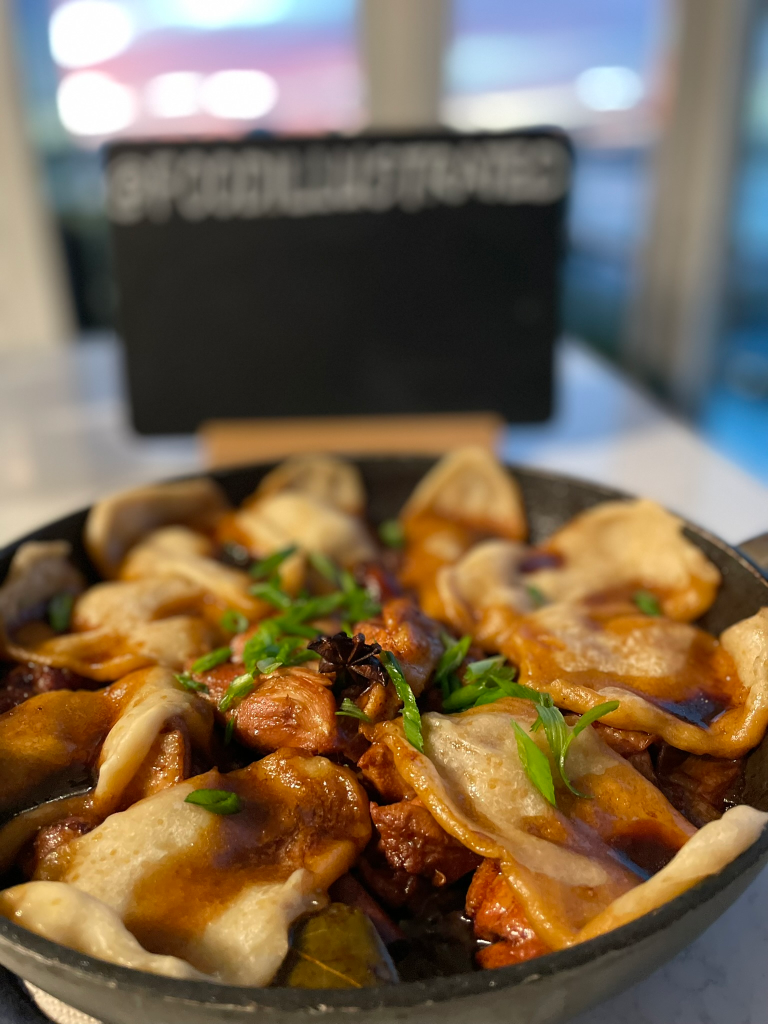
Discover the soul-warming comfort of 地锅鸡 (Dìguō Jī), a legendary one‑pot meal from the banks of China’s Yellow River. This rustic dish features succulent, caramelized bone‑in chicken braised in a fragrant soy‑based sauce, surrounded by thin, hand‑stretched flatbreads that steam directly on the pot walls, soaking up every drop of savory liquid. Guided by traditional techniques—amber sugar caramelization, a parchment cartouche, and ancient dough‑soaking methods—you’ll recreate an authentic taste of Jiangsu and Anhui countryside in your own kitchen. Perfect for family dinners, holiday feasts, or whenever you crave immersive, hands‑on cooking.
Authentic 地锅鸡 (Dìguō Jī) – Chinese Ground Pot Chicken with Hand-Stretched Flatbreads
Description
📜 A Brief History of 地锅鸡 (Ground Pot Chicken)
地锅鸡 (pronounced "Dee-gwoh Jee") originated over 300 years ago in the rural, northern regions of Jiangsu and Anhui provinces, along the banks of the Yellow River. It was a practical dish for farmers and laborers. The name refers to the traditional cooking method—a portable iron wok or pot set directly over a ground fire in the fields. Workers would braise tough, older birds until tender, while simple flour-and-water dough was stuck to the pot's sides to steam, creating a complete, hearty meal with no waste. From this humble "peasant food," the dish evolved into a national comfort food icon, keeping its core rustic charm: braised protein + hand-torn, steamed flatbreads.
Ingredients
For the Hand‑Stretched Flatbreads (面团):
For the Ground Pot Chicken (地锅鸡):
For the Savory Braising Sauce:
Instructions
-
PART 1: PREPARE THE FLATBREAD DOUGH
- Mix dough: In a large bowl, combine flour and salt. Gradually add warm water while stirring with chopsticks or a fork until a shaggy mass forms.
-
-
Knead: Transfer to a clean surface and knead for 5–7 minutes until the dough becomes smooth, elastic, and no longer sticky. (If too dry, add a few drops of water; if too wet, dust with flour.)
-
Rest: Shape into a ball, cover with a damp cloth, and let rest for 30 minutes. This relaxes the gluten, exactly as farm cooks have done for generations.
-
-
PART 2: CARAMELIZE & SEAR THE CHICKEN
-
Heat oil & sugar: Place your Dutch oven over medium heat. Add oil and sugar. Allow sugar to melt undisturbed, then gently swirl the pot until the sugar turns a deep amber color (like dark honey). Do not stir with a spoon – swirling prevents crystallization.
-
Sear chicken: Immediately add chicken pieces in a single layer, skin‑side down. Sear 3–4 minutes until deeply golden, then flip and sear the other side. Work in batches if needed to avoid overcrowding. Remove chicken and set aside.
-
-
PART 3: BUILD THE BRAISE
-
Sauté aromatics: In the same pot, add smashed garlic cloves and fry for 30 seconds until fragrant, then remove garlic (to prevent burning) and set aside. Add ginger slices, white parts of green onion, and onion chunks. Sauté until onions soften and edges turn golden.
-
Deglaze & season: Return chicken and reserved garlic to the pot. Add light soy sauce, dark soy sauce, Shaoxing wine, miso paste, star anise, cinnamon stick, dried chilies, and bay leaves. Pour in hot water or broth – liquid should come about halfway up the chicken.
-
Cartouche method: Cut a circle of parchment paper slightly larger than your pot. Press it directly onto the surface of the liquid (this traps steam and keeps the chicken moist). Cover with the lid, reduce heat to low, and simmer gently for 25 minutes.
-
-
PART 4: SHAPE & STEAM THE FLATBREADS
-
Divide dough: After resting, divide the dough into 8–9 equal pieces. Roll each piece into a small ball.
-
Traditional soak: Fill a small bowl with water. Take one dough ball and submerge it in the water for 10–15 seconds. This ancient trick creates a thin, starchy coating that prevents sticking and helps the breads cling to the pot.
-
Stretch: Place the soaked dough on a clean surface and use your palms and fingers to gently press and stretch it into an oval or oblong flatbread about ⅛‑inch thick. (Don’t worry about perfect shapes – rustic is authentic!)
-
Attach to pot: After 25 minutes of braising, remove the parchment cartouche. One by one, press the raw flatbreads onto the inner wall of the pot, arranging them in a ring around the chicken. About half of each bread should be submerged in the braising liquid; the top half remains above for steaming.
-
Final steam: Cover the pot (without parchment) and simmer for another 15 minutes. The flatbreads will puff up, becoming fluffy and chewy, while their bottoms soak up the rich, dark sauce.
-
-
PART 5: SERVE
-
Garnish: Sprinkle with the reserved green onion greens.
-
Serve: Bring the entire pot to the table family‑style. Invite everyone to tear off pieces of the now‑saucy flatbreads and pile them with tender chicken. Traditionally, no bowls or plates are needed – just good company.
-

Nutrition Facts
Servings 5
- Amount Per Serving
- Calories 650kcal
- % Daily Value *
- Total Fat 32g50%
- Saturated Fat 8g40%
- Sodium 1150mg48%
- Total Carbohydrate 35g12%
- Dietary Fiber 2g8%
- Sugars 7g
- Protein 48g96%
* Percent Daily Values are based on a 2,000 calorie diet. Your daily value may be higher or lower depending on your calorie needs.
Note
- Caramelizing sugar: If the sugar turns bitter or burns, start over. The amber stage comes just after the sugar liquefies and before it smokes. Swirl, don’t stir.
- Miso vs. black bean paste: White miso is a modern, umami‑packed substitute that dissolves smoothly. For a more traditional flavor, use fermented black bean paste ( rinsed and crushed).
- Flatbreads not sticking? Ensure your dough has rested fully and that you soaked each piece in water long enough. The pot wall should be hot and slick with braising liquid.
- Make ahead: The braise can be prepared through step 8 and refrigerated for up to 2 days. Reheat gently, then proceed with shaping and steaming the flatbreads.
- Leftovers: Store chicken and flatbreads separately. The breads soften significantly overnight; re‑crisp them in a dry skillet, or enjoy them as tender “noodle‑like” morsels.