
INTRO
What if I told you there’s a cocktail that looks exactly like a glass of iced tea but contains enough alcohol to fuel a small party? The Long Island Iced Tea is the ultimate paradox of the drinking world—innocent in appearance, absolutely lethal in composition. It’s the drink that snuck past Prohibition authorities disguised as a soft drink and later became the unofficial anthem of college parties everywhere. But here’s the thing: when made correctly with quality ingredients and proper technique, this five-spirit marvel transforms from a frat-house regret machine into a beautifully balanced, refreshingly complex cocktail that deserves a spot in every home bartender’s repertoire. Today, I’m sharing the authentic recipe, the fascinating history behind its creation, and the science that makes it work.
THE HISTORY
The origin of the Long Island Iced Tea is a tale of two Long Islands—one in New York, one in Tennessee—and a delightful cocktail controversy that’s persisted for decades .
Let’s start with the Tennessee version. During Prohibition in the 1920s, a man named Charlie “Old Man” Bishop lived in a community called Long Island in Kingsport, Tennessee . As an illegal distiller, Bishop needed a way to serve potent alcohol without raising suspicion. His brilliant solution? Mix multiple spirits together and add a splash of maple syrup, creating a drink that looked remarkably like ordinary iced tea . The recipe was later refined by his son Ransom Bishop, who added cola, lemon, and lime, cementing its resemblance to the non-alcoholic beverage .
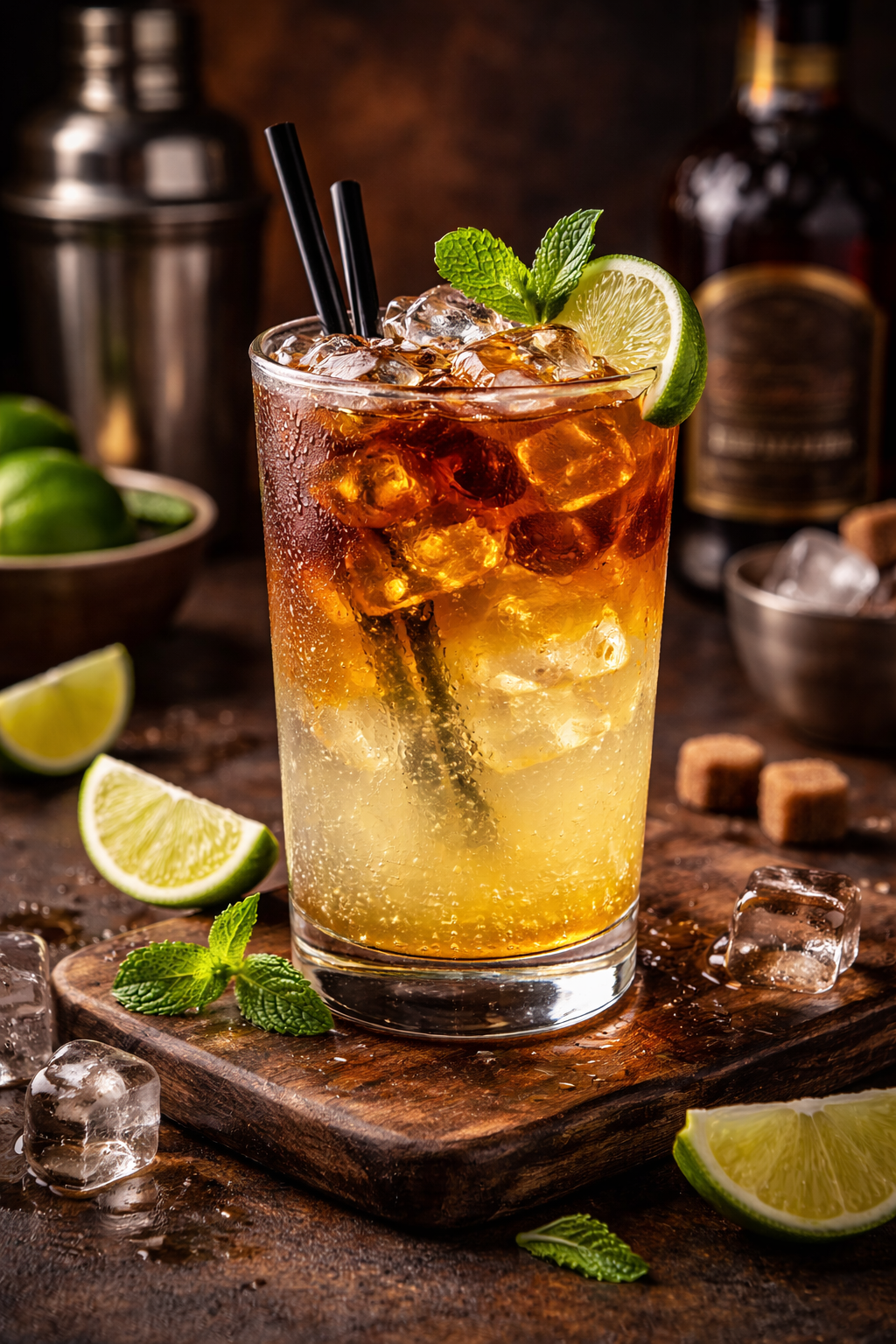
Fast forward to 1972. On New York’s Long Island, a bartender named Robert “Rosebud” Butt was working at the Oak Beach Inn when a challenge was issued: create a new cocktail using triple sec . Butt combined every clear spirit behind the bar—vodka, gin, rum, tequila, and triple sec—topped it with sour mix and a splash of cola for color, and named it after his home turf . His creation won the contest and eventually spread to bars nationwide.
So which story is true? Probably both. The Tennessee version gave us the concept of disguising multiple spirits as iced tea, while Robert Butt gave us the specific formula with triple sec that became today’s standard . Either way, the Long Island Iced Tea has earned its place in cocktail history—for better or worse.
THE SCIENCE
The Long Island Iced Tea is a masterclass in flavor balancing and the psychology of drinking. Let’s break down what’s actually happening in that innocent-looking glass.
The Principle of Equal Parts. The classic recipe calls for equal measures of five different spirits. This isn’t arbitrary—it’s a mathematical approach to flavor harmony . Each spirit contributes distinct notes: vodka adds neutrality and ethanol punch, gin brings botanical complexity, rum offers subtle sweetness, tequila contributes earthy agave notes, and triple sec provides orange sweetness . When equal, no single spirit dominates, creating a unified flavor profile that somehow tastes like none of them individually.
The Disguise Mechanism. The drink’s most brilliant feature is its visual deception. A small amount of cola—just enough for color—transforms a glass of clear liquid into something that reads as non-alcoholic iced tea to the brain . This psychological trick has made it both famous and infamous. The carbonation from the cola also adds lift and brightness, cutting through the alcohol’s heaviness .
The Dilution Equation. With roughly 22% alcohol by volume, a Long Island Iced Tea packs nearly twice the punch of a glass of wine . But here’s the dangerous part: the sweet and sour flavors mask the alcohol taste so effectively that people consume them quickly, leading to rapid intoxication . The sugar from the triple sec and cola actually slows alcohol absorption slightly, but the drink’s easy drinkability overrides this protective effect .
GOOD PAIRING FOOD AND DRINK
- One Appetizer: Spicy Buffalo Wings with Blue Cheese Dip. The cooling, creamy dip balances the cocktail’s sweetness, while the heat from the wings stands up to the drink’s bold alcohol content. The carbonation cuts through the fatty richness perfectly .
- One Main Course: Classic Cheeseburger with All the Fixings. A juicy burger with melted cheese, lettuce, tomato, and pickles complements the cocktail’s complexity. The savory, umami flavors provide a counterpoint to the sweet-sour profile, and the pickles echo the drink’s citrus notes.
- One Side Dish: Loaded Potato Skins. Crispy potato skins filled with cheese, bacon, and sour cream offer salty, fatty richness that tames the alcohol’s edge. The sour cream echoes the cocktail’s citrus tang.
- One Dessert: Key Lime Pie. The bright, tart citrus of the pie mirrors the lemon juice in the cocktail while the graham cracker crust adds a sweet, buttery note that rounds out the experience.
- One Cocktail and One Non-Alcoholic Drink:
- Cocktail: Margarita. Since you already have tequila and triple sec on hand, a classic Margarita makes a perfect follow-up—similar flavor family but more focused and refined.
- Non-Alcoholic: Arnold Palmer (Half Lemonade, Half Iced Tea). The irony is delicious: the drink that inspired the cocktail’s name becomes its non-alcoholic counterpart. The tart lemonade and subtle tea notes echo the cocktail’s profile without the buzz.
Description
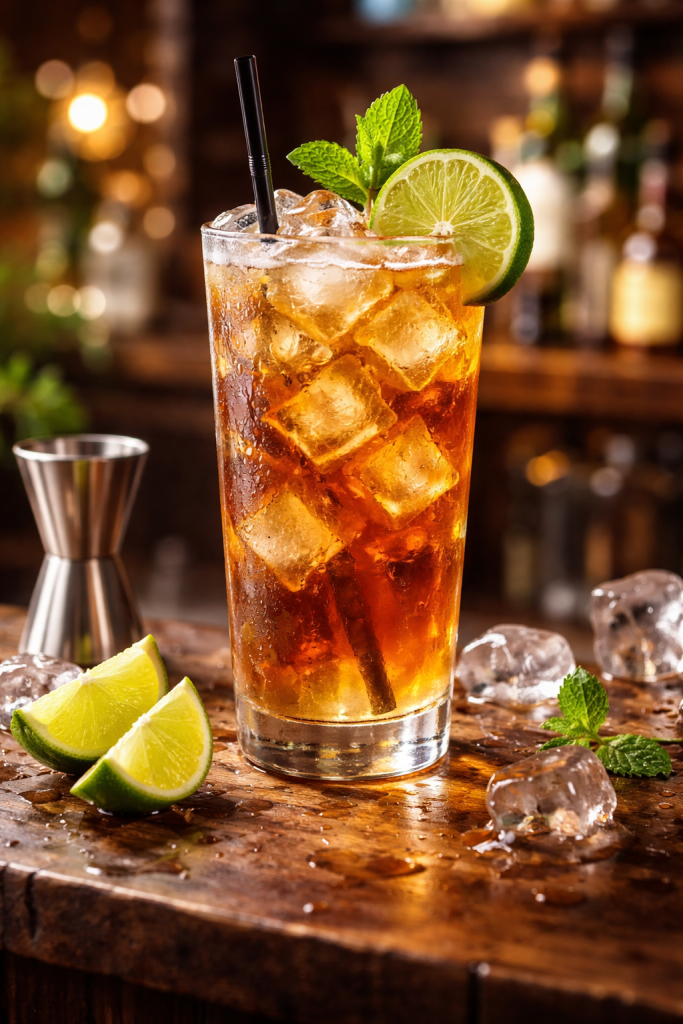
Learn how to make the perfect Long Island Iced Tea at home. With five spirits, fresh lemon juice, and a splash of cola, this classic cocktail is stronger than it looks and more delicious than you remember.
For the Classic Long Island Iced Tea:
Instructions
-
Prepare Your Glass. Fill a highball glass or Collins glass completely full with ice. Using large ice cubes rather than small or crushed ice will dilute the drink more slowly, keeping it strong and flavorful until the last sip .
-
Measure and Add the Spirits. Carefully measure and add the vodka, gin, white rum, blanco tequila, and triple sec directly into the glass over the ice . Precision matters here—unequal measures will throw off the delicate balance that makes this cocktail work .
-
Add the Citrus. Pour in the freshly squeezed lemon juice and simple syrup. Fresh lemon juice is non-negotiable; bottled juice lacks brightness and will make the drink taste flat and overly sweet .
-
Stir Gently. Use a bar spoon or long-handled spoon to stir the mixture gently for about 10-15 seconds. This combines the ingredients and begins the necessary dilution without losing carbonation .
-
Top with Cola. Slowly pour the cola down the side of the glass. You'll see the drink transform from clear to that signature iced tea amber color . Add just enough for color—about 1 to 1 1/2 ounces—not so much that it dilutes the alcohol content excessively.
-
Garnish and Serve. Garnish with a lemon slice or wedge. Serve immediately with a straw, and warn your guests to sip slowly—this one sneaks up on you.
-
For Batch-Making (Party Size):
-
Combine 1 cup each of vodka, gin, white rum, blanco tequila, and triple sec in a large pitcher. Add 2 cups fresh lemon juice and 1 cup simple syrup. Refrigerate until ready to serve. For each serving, fill a glass with ice, add 4-5 ounces of the mixture, top with a splash of cola, and garnish with lemon .
Nutrition Facts
- Amount Per Serving
- Calories 245kcal
- % Daily Value *
- Sodium 3mg1%
- Total Carbohydrate 15g5%
- Sugars 14g
* Percent Daily Values are based on a 2,000 calorie diet. Your daily value may be higher or lower depending on your calorie needs.
Note
- Pro Tip for Balance: The secret to a great Long Island Iced Tea is restraint with the cola. You're adding it for color, not flavor—just enough to achieve that amber iced tea hue . Too much cola makes the drink taste like a mediocre rum and Coke with extra spirits.
- Quality Matters—But Not Top Shelf. You don't need premium, ultra-expensive spirits for this cocktail, but don't use anything that makes you wince when you smell it . Good mid-shelf brands like Absolut vodka, Beefeater gin, Havana Club rum, and Espolòn tequila work perfectly .
- Ditch the Sour Mix. Pre-bottled sour mix is the enemy of a great Long Island Iced Tea. It's typically loaded with high-fructose corn syrup and artificial flavors. Fresh lemon juice and simple syrup take two extra minutes and make an enormous difference .
- Storage: The pre-batched mixture (without cola) can be refrigerated for up to one week. Do not add the cola until serving, as it will go flat .
- Make It a Variation: See the Extended Content section below for endless variations. Once you master the classic, the entire family of Long Island cocktails opens up to you.
- A Word of Caution: This drink is deceptively strong. The flavors mask the alcohol so effectively that it's easy to drink two or three before feeling the effects . Pace yourself, alternate with water, and never drive after drinking.