
INTRO
Have you ever bitten into something that made you stop mid-conversation and just chew—slowly, deliberately, appreciatively? That’s the experience waiting for you in this dish. Braised tofu skin with leeks isn’t just another vegetable stir-fry. It’s a textural revelation: chewy yet tender, crisp yet saucy, with layers of allium fragrance that build with every bite.
I’ll admit, I was late to the tofu skin party. For years, I walked past those dried yellow sticks in Asian grocery stores, unsure what they were or what to do with them. Then a friend’s grandmother—a tiny woman from Shandong province with decades of cooking wisdom—pulled me into her kitchen and showed me the magic. She took those brittle, unassuming sticks and transformed them into something that looked like golden bamboo shoots, tasted like concentrated soy essence, and absorbed a leek-infused sauce like the most luxurious sponge you’ve ever encountered.
This recipe for braised tofu skin with leeks (葱烧腐竹) is my homage to that afternoon. It’s deceptively simple—just a handful of ingredients, one wok, about 45 minutes—but the technique creates something far greater than the sum of its parts. We’ll fry leek greens to infuse oil with their aromatic essence, briefly crisp the tofu skin until it puffs and blisters, then braise everything in a savory-sweet glaze that clings to every fold and crevice.

The result is a dish that feels special enough for a holiday table but simple enough for a Tuesday night. It’s naturally vegan if you choose vegetarian oyster sauce, packed with plant protein, and absolutely irresistible served over steamed rice. Whether you’re a longtime tofu skin enthusiast or someone who’s been wondering what to do with that mysterious package in your pantry, this recipe will become a staple.
THE HISTORY
To understand braised tofu skin with leeks, you have to understand the culinary philosophy of Shandong province—the birthplace of much of what we now call Chinese cuisine.
Shandong, on China’s northeastern coast, has a culinary tradition that dates back over 2,500 years. It’s one of the Eight Great Culinary Traditions of Chinese cuisine, and it’s known for something that might surprise Western palates: a masterful use of alliums. Shandong cooks elevate onions, leeks, garlic, and scallions from mere aromatics to starring roles. The province’s cold winters and fertile soil produce some of China’s most flavorful alliums, and local cooks developed techniques to extract every molecule of their sweet, pungent essence.
The term “葱烧” (cōng shāo) literally means “scallion-braised,” and it’s a classic Shandong technique. You first fry scallions or leeks in oil until they release their fragrance, then use that infused oil as the foundation for braising other ingredients. It’s a lesson in efficiency—the alliums flavor the oil, the oil flavors the dish, and the fried alliums themselves become a garnish. Nothing goes to waste.
Tofu skin, meanwhile, has its own ancient history. Also known as yuba or fu zhu (腐竹), it’s the skin that forms on the surface of simmering soy milk during tofu production—the same phenomenon that creates the skin on heated milk. Chinese cooks have been carefully lifting and drying these delicate sheets for over a thousand years, transforming a byproduct into a delicacy. The drying process concentrates flavor and creates a shelf-stable ingredient that rehydrates into something entirely new.
The combination of these two elements—Shandong’s aromatic braising technique and the ancient craft of tofu skin—represents the best of Chinese home cooking: resourceful, layered, and deeply satisfying. This dish likely evolved in home kitchens where cooks needed to stretch small amounts of protein and create something memorable from humble ingredients. Today, it’s found everywhere from family dinner tables to high-end restaurants, a testament to its enduring appeal.
THE SCIENCE
What makes this dish work so brilliantly is the way each technique prepares the ingredients for what comes next. Understanding the science transforms you from a recipe-follower into a confident cook who knows why each step matters.
Let’s start with the leek oil. When you fry the dark green leek skins in hot oil, you’re performing a fat-based extraction of volatile aromatic compounds. Many of the flavor molecules in alliums—particularly the sulfur compounds that give leeks their characteristic pungency—are fat-soluble. By frying them, you’re essentially dissolving these compounds into the oil, creating a flavor base that will permeate every ingredient that later touches that oil. The heat also triggers the Maillard reaction on the leek skins themselves, creating new savory compounds that add depth. You’ll notice the oil transforms from neutral to deeply fragrant in just 2-3 minutes—that’s the magic happening in real time.
The brief frying of the rehydrated tofu skin serves multiple purposes. First, it drives off surface moisture, allowing the exterior to crisp slightly. This creates texture contrast—a firm exterior that will later soften in the braise but never become mushy. Second, the high heat causes the tofu skin to puff and blister, increasing its surface area. More surface area means more nooks and crannies for sauce to cling to. Third, that initial frying creates its own layer of flavor through browning reactions, adding a nutty, toasty note that complements the soy base.
When you braise the fried ingredients in the savory sauce, something beautiful happens. Tofu skin, despite being fried, remains porous and absorbent. As it simmers in the liquid, it draws in the seasoned broth through capillary action, like a sponge. The structure of tofu skin—layered protein networks formed during the soy milk heating process—creates channels that trap and hold sauce. This is why braised tofu skin delivers such intense flavor with every bite: it’s not just coated in sauce; it’s filled with it.
The final cornstarch slurry isn’t just about thickening. When you add the slurry and stir, the starch granules absorb liquid, swell, and create a translucent, glossy coating that clings to every piece. This glaze carries concentrated flavor and gives the dish that restaurant-quality sheen. The key is adding the slurry off-heat or with the heat turned low—too high, and the starch can clump before it disperses.
GOOD PAIRING FOOD AND DRINK
One Appetizer: Cucumber Salad with Garlic and Chili
Start with a refreshing, crunchy contrast to the rich, saucy main dish. Thinly slice English cucumbers, toss with rice vinegar, minced garlic, a touch of sugar, and crispy chili oil. The cool, crisp cucumber cleanses the palate and provides textural contrast to the chewy tofu skin. The bright acidity and heat wake up your taste buds for the meal ahead.
One Main Course: Steamed Whole Fish with Ginger and Scallions
If you’re building a Chinese feast, this braised tofu skin works beautifully as a vegetable side alongside a simply steamed fish. A whole fish—sea bass or trout—steamed with ginger, scallions, and soy sauce offers delicate, flaky protein that complements the hearty tofu skin without overwhelming it. The gentle cooking method lets the fish’s natural sweetness shine.
One Side Dish: Garlic Baby Bok Choy
You’ll want something green and simply prepared to balance the richness. Quickly stir-fry baby bok choy with minced garlic, a splash of Shaoxing wine, and a pinch of salt. The mild, slightly sweet cabbage provides a fresh counterpoint to the deep, savory notes of the braised tofu skin. Keep the cooking minimal to preserve crunch and bright color.
One Dessert: Mango Pomelo Sago
End the meal with a light, tropical Chinese dessert that won’t weigh you down. This chilled dessert features creamy coconut milk, juicy mango chunks, chewy sago pearls, and bursts of fresh pomelo. Its bright, fruity sweetness and cooling temperature provide the perfect finish after a savory, umami-rich meal.
One Cocktail: Lychee Martini
The floral sweetness of lychee pairs unexpectedly well with the savory allium notes of this dish. Shake vodka, lychee liqueur, and a splash of fresh lime juice with ice, then strain into a chilled glass and garnish with a single lychee fruit. The cocktail’s perfumed sweetness and acidity cut through the richness while complementing the dish’s subtle sweetness.
One Non-Alcoholic Drink: Hot or Cold Jasmine Tea
Jasmine tea is the classic accompaniment to Chinese meals for good reason. Its floral aroma provides a sensory counterpoint to the savory dish, while the light, clean taste refreshes the palate between bites. Serve it hot for a cozy meal or chilled over ice for warmer weather. The tea’s subtle sweetness harmonizes with the caramelized notes in the braising sauce.

Description
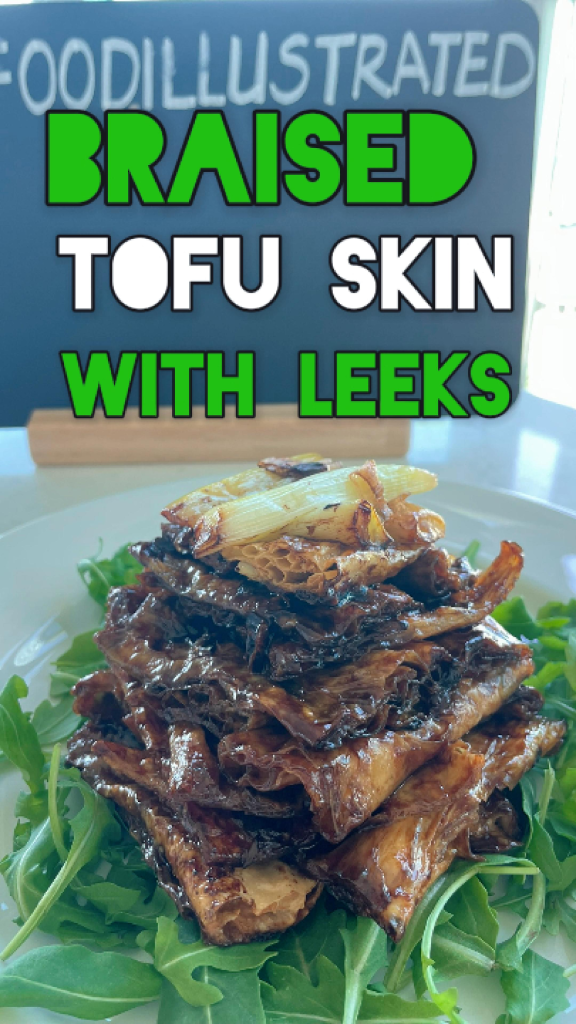
This braised tofu skin with leeks transforms humble ingredients into something extraordinary—chewy, tender tofu skin absorbs a rich, aromatic sauce while crispy fried leeks add texture and fragrance. A classic Chinese technique yields restaurant-quality results in your own kitchen. Ready in 45 minutes.
Ingredients
For the Tofu Skin:
For the Leeks and Aromatic Oil:
For the Braising Sauce:
For Thickening:
Instructions
Part 1: Prepare the Ingredients
-
Step 1: Soak the Tofu Skin
Break the dried tofu skin sticks into large pieces—about 3-4 inches long. Place them in a large bowl and cover completely with warm water. The pieces will want to float, so place a small plate or lid directly on top to keep them submerged. Let them soak for 20-30 minutes, until they're completely soft and pliable with no hard center remaining.Visual cue: Properly rehydrated tofu skin should bend easily without cracking and feel spongy but resilient.
Step 2: Drain and Portion the Tofu Skin
Once softened, drain the tofu skin in a colander. Gently squeeze each piece to remove excess water—you don't want them dripping wet, as this will cause splattering during frying. Tear or cut the pieces into bite-sized, manageable lengths, about 2-3 inches. Set aside on a plate lined with paper towels to continue draining.Step 3: Prepare the Leeks
Trim the root ends and any tough dark green tops from the leeks. You'll use every edible part, but differently.Separate the leeks into two portions:
-
Dark green tops: These are tougher and more strongly flavored. Finely slice them crosswise into thin rounds—these will become your "leek skins" for frying and garnish.
-
White and light green parts: These are tender and sweet. Cut them into 1½-inch long pieces on a slight diagonal for attractive presentation.
Wash all leek pieces thoroughly in a bowl of cold water, swishing to remove any grit between the layers. Lift out and drain well. Pat dry with paper towels—moisture is the enemy of good frying.
-
Part 2: Create the Leek Oil and Fry Components
-
Step 4: Infuse the Oil
Place a wok or heavy-bottomed pot over medium heat. Add the 2 cups of neutral oil. Heat until you see gentle ripples on the surface—about 325-350°F. To test, drop one piece of sliced dark green leek into the oil; it should sizzle gently and steadily, not violently.Add all the sliced dark green leek tops to the oil. Fry for 2-3 minutes, stirring occasionally, until they become crispy and the oil is deeply fragrant. The leeks will darken slightly and release an incredible allium aroma into your kitchen.
Using a slotted spoon or fine-mesh strainer, carefully remove the crispy leek skins from the oil and transfer them to a paper towel-lined plate. Sprinkle lightly with salt while still warm. These are your garnish—don't snack on them all before serving!
Step 5: Fry the Tofu Skin
Keep the leek-infused oil hot. Increase the heat to medium-high. Working in batches to avoid crowding, add the rehydrated tofu skin pieces to the oil. Fry for 2-3 minutes per batch, turning occasionally, until they puff slightly and turn golden at the edges. They should look blistered and slightly crispy.Using a slotted spoon, transfer the fried tofu skin to a paper towel-lined plate to drain. Repeat with remaining batches.
Step 6: Flash-Fry the Leek Pieces
In the same oil, add the 1½-inch leek pieces. Fry for just 30-60 seconds—you want them slightly blistered on the outside but still vibrant and not fully softened. Remove with a slotted spoon and set aside with the fried tofu skin.Step 7: Discard the Oil
Carefully remove the wok from heat and let the oil cool slightly. Pour the used oil into a heatproof container for disposal (do not pour down the drain). Wipe the wok clean with paper towels.
Part 3: Braise and Glaze
-
Step 8: Combine and Season
Return the wok to medium heat and add the 1 tablespoon of fresh oil. Add the flash-fried leek pieces and stir-fry for 10 seconds until fragrant. Add the fried tofu skin back to the wok.Step 9: Add the Sauce
Pour in the dark soy sauce, oyster sauce, and sugar. Stir vigorously and continuously to coat every piece evenly—the key is to work quickly so the sauces caramelize slightly on the hot ingredients without burning.Add the salt and white pepper to taste. Remember that soy sauce and oyster sauce are already salty, so go easy on additional salt.
Step 10: Braise
Pour in the warm water or vegetable broth. Stir to combine, then bring the liquid to a gentle simmer. Cover the wok with a lid, reduce heat to low, and let it braise for 5-7 minutes. During this time, the tofu skin will absorb the seasoned liquid, becoming plump and flavorful.Step 11: Thicken the Sauce
In a small bowl, prepare the cornstarch slurry by mixing the cornstarch with 1 tablespoon of water until smooth.Uncover the wok. Give the slurry a quick stir (it settles quickly) and pour it into the center of the wok, not directly onto the ingredients. Stir gently but continuously as the sauce thickens into a glossy, translucent glaze that coats every piece. This takes about 30 seconds.
Step 12: Finish and Serve
Transfer the braised tofu skin to a serving plate. Sprinkle generously with the reserved crispy fried leek skins. Serve immediately with steamed rice, which is essential for soaking up every drop of that incredible sauce.
Nutrition Facts
Servings 4
- Amount Per Serving
- Calories 285kcal
- % Daily Value *
- Total Fat 18g28%
- Sodium 680mg29%
- Potassium 380mg11%
- Total Carbohydrate 18g6%
- Dietary Fiber 3g12%
- Sugars 6g
- Protein 14g29%
- Calcium 120 mg
- Iron 3.5 mg
* Percent Daily Values are based on a 2,000 calorie diet. Your daily value may be higher or lower depending on your calorie needs.
Note
Pro Tips for Success
- Don't rush the soaking: Tofu skin needs time to rehydrate fully. If it's still hard in the center after 20 minutes, continue soaking. Properly rehydrated tofu skin should feel like a firm sponge.
- Dry your ingredients thoroughly: Any water introduced to hot oil will cause splattering. Pat everything dry with paper towels before frying.
- Work in batches when frying: Crowding the wok drops the oil temperature and leads to greasy, soggy results. Give each piece room to crisp.
- Save that infused oil: The leek oil is liquid gold. After straining out solids, you can use it for stir-fries throughout the week. It keeps refrigerated for up to 2 weeks.
- Taste before adding salt: Oyster sauce and soy sauce vary in saltiness. Always season at the end after tasting.
Make-Ahead Instructions
- Prepare components: You can soak and fry the tofu skin and leeks up to 2 days ahead. Store them separately in airtight containers in the refrigerator. Bring to room temperature before final braising.
- Make the full dish: Braised tofu skin with leeks actually tastes even better the next day, after the flavors have melded. Make it a day ahead and gently reheat, adding a splash of water if needed to refresh the sauce.
Storage and Reheating
- Refrigerator: Store leftovers in an airtight container for up to 4 days.
- Freezer: This dish freezes surprisingly well for up to 2 months. The texture of tofu skin remains remarkably intact after thawing. Thaw overnight in the refrigerator.
- Reheating: Reheat gently in a wok or skillet over medium-low heat with a tablespoon of water to restore the sauce. Cover and steam briefly until hot. Avoid microwaving if possible, as it can make the tofu skin slightly rubbery.
Substitutions
- Tofu skin: Fresh tofu skin sheets (yuba) can be used instead of dried. Skip the soaking step and proceed directly to frying, though fresh may need less time.
- Leeks: Large scallions (spring onions) can substitute. Use the white parts for the braise and green tops for frying and garnish.
- Oyster sauce: For a vegan version, look for vegetarian oyster sauce made from mushrooms, or use mushroom stir-fry sauce. Hoisin sauce is too sweet but can work in a pinch mixed with soy sauce.
- Dark soy sauce: This provides color and depth. If you only have regular soy sauce, add ½ teaspoon molasses or brown sugar for similar richness and color.
- Oil: Any neutral oil with a high smoke point works—vegetable, canola, peanut, or avocado oil.
Troubleshooting
- Tofu skin too chewy? It may need longer braising. Add a little more liquid, cover, and simmer for another 5 minutes.
- Sauce not thickening? Your cornstarch slurry may have settled before adding. Give it another stir, ensure your sauce is simmering (not boiling), and add a tiny bit more slurry if needed.
- Leeks bitter? The dark green tops can become slightly bitter if over-fried. Fry just until crispy and fragrant—about 2-3 minutes maximum.
- Dish too salty? A squeeze of fresh lemon juice or a pinch of sugar can balance excess salt. Serve with plenty of plain rice.
Ingredient Sourcing
- Dried tofu skin sticks: Look in the refrigerated or dried goods section of Asian grocery stores, often labeled as "fu zhu" or "bean curd sticks." They're also available online.
- Good leeks: Choose leeks with bright, crisp green tops and firm white bases. Smaller leeks tend to be more tender.