
INTRO
Have you ever bitten into a Korean vegetable pancake at a restaurant and wondered why yours at home never achieves that shatteringly crisp exterior? The secret you’ve been searching for is likely already sitting in your pantry. I’m talking about corn starch—the unsung hero that transforms a good crispy korean vegetable pancake into an absolutely unforgettable one.
I still remember my first trip to Seoul’s Gwangjang Market, where ajummas (Korean grandmothers) tended to sizzling griddles piled high with golden pancakes. The sound alone—that satisfying crunch with every fold and flip—drew crowds like moths to a flame. Years later, after countless test batches and conversations with Korean home cooks, I’ve cracked the code to achieving that same restaurant-quality texture in your own kitchen, and it’s easier than you think.
This yachaejeon (야채전) isn’t just another vegetable pancake recipe. It’s a masterclass in texture, a celebration of humble vegetables transformed by heat and science, and quite possibly the fastest impressive meal you’ll ever make. From the ice-cold water trick that guarantees tenderness to my no-stress flipping method that builds confidence with every attempt, every detail here serves a purpose. And that dipping sauce? You’ll whip it up while the pancake cooks, because great cooking is about working smarter, not harder.
THE HISTORY
Korean jeon (전)—the broader category of pan-fried, battered dishes—has ancient roots that stretch back to Korea’s Three Kingdoms period (57 BCE – 668 CE). Historical records suggest that early forms of jeon were offerings made to ancestors during shamanistic rituals and royal ceremonies. These weren’t everyday foods but rather celebratory dishes reserved for special occasions, holidays, and ancestral rites known as jesa.
The word “jeon” itself shares linguistic origins with the Chinese character “煎,” meaning to pan-fry in oil, though Korean jeon has evolved into a distinct culinary tradition with its own techniques and variations. Yachaejeon—the vegetable version—emerged as a way to celebrate seasonal produce while adhering to Buddhist temple cuisine principles that emphasized plant-based eating. Korean Buddhist monks, who have maintained vegetarian diets for centuries, perfected the art of transforming simple vegetables into satisfying, texturally complex dishes without relying on meat.
By the Joseon Dynasty (1392–1910), jeon had become firmly established in Korean court cuisine. Royal kitchens prepared elaborate variations for banquets, while common people developed their own versions using accessible ingredients. The beauty of yachaejeon lies in its democratic nature—it welcomes whatever vegetables are abundant, making it a true reflection of Korean’s agricultural calendar and the philosophy of “using what you have.”
Today, yachaejeon occupies a beloved place in Korean food culture as both home cooking and street food. During rainy days, Koreans traditionally crave jeon paired with makgeolli (milky rice wine)—a combination so iconic that “jeon and makgeolli on a rainy day” has become a cultural trope. The sizzle of pancakes hitting the pan signals comfort, community, and the simple joy of sharing food with loved ones.
- KoreaScience Academic Article: A Bibliographical Study of Korean Pan Fried Side dishes(Jeon) in Korean Literatures before the 1900s
https://www.koreascience.or.kr/article/JAKO201723449251876.page - Cereals & Grains Association (AACC International): Utilization of Oxidized and Cross-Linked Corn Starches in Wheat Flour Batter
https://www.cerealsgrains.org/publications/plexus/cfw/PastIssues/2012/July-August/Pages/default.aspx
THE SCIENCE
What transforms a simple flour-and-water mixture into something transcendent? Let’s geek out for a moment, because understanding the science will make you a better cook forever.
The Corn Starch Revelation: Flour contains gluten-forming proteins that, when mixed with water, create stretchy networks. While some gluten provides structure, too much makes pancakes tough and chewy—the opposite of what we want. Corn starch, however, contains no gluten. When you replace a portion of flour with corn starch, you’re effectively diluting the gluten-forming potential while adding pure starch. During frying, these starch granules absorb moisture, swell, and eventually burst, creating millions of microscopic air pockets that fry up shatteringly crisp. Think of corn starch as your texture insurance policy—it guarantees crunch even if you accidentally overmix.
Ice Water’s Secret Role: Cold water isn’t just about temperature—it’s about gluten management. Gluten develops more slowly in cold environments, giving you better control over the batter’s final texture. The temperature shock also creates steam more dramatically when the batter hits hot oil, contributing to those coveted air pockets. Additionally, cold batter helps maintain the vegetables’ crisp-tender texture rather than turning them limp before they hit the pan.
The Maillard Reaction Dance: That deep golden color isn’t just aesthetic—it’s chemistry. When proteins and sugars in the batter and vegetables reach temperatures above 285°F (140°C), they undergo the Maillard reaction, creating hundreds of new flavor compounds. This browning process, combined with caramelization of natural vegetable sugars, builds the savory complexity that makes jeon so satisfying. The high heat of your skillet (medium-high for a reason!) initiates this reaction almost immediately, creating that flavorful crust while the interior steams gently.
Oil Management Matters: Notice how the recipe instructs you to add oil around the edges when flipping? This isn’t random—it’s strategic. The pancake absorbs oil primarily through its exposed surfaces. By adding fresh oil before flipping, you ensure the second side has enough fat to conduct heat evenly and achieve the same golden crust as the first. Too little oil and you’ll get uneven browning; too much and the pancake becomes greasy rather than crisp. The 3-4 tablespoon range hits the sweet spot where oil acts as a heat transfer medium without overwhelming the dish.
GOOD PAIRING FOOD AND DRINK
One Appetizer: Korean Style Pickled Vegetables (Quick Jangajji)
Before diving into the pancake, offer a small plate of quick-pickled vegetables. Thinly sliced cucumber, radish, and carrot tossed in rice vinegar, soy sauce, and a touch of sugar provide a bright, acidic counterpoint that awakens the palate. The contrast between the pancake’s rich, fried exterior and the pickles’ clean crunch creates a perfect opening rhythm for the meal.
One Main Course: Korean Beef Bulgogi
If you’re building a Korean-inspired feast, serve the pancake alongside bulgogi—thinly sliced ribeye marinated in soy sauce, pear, garlic, and sesame oil. The sweet-savory beef pairs beautifully with the vegetable-forward pancake, while both benefit from being wrapped in crisp lettuce leaves with ssamjang (thick, spicy dipping paste). The pancake becomes both side dish and wrap component, demonstrating its versatility.
One Side Dish: Sesame Spinach Salad (Sigeumchi Namul)
Blanched spinach dressed with soy sauce, sesame oil, garlic, and toasted sesame seeds offers a nutrient-dense, room-temperature side that requires no last-minute attention. Its earthy, nutty flavors echo the sesame notes in the pancake’s dipping sauce while providing textural relief from the fried exterior.
One Dessert: Honey Poached Pear with Ginger
End the meal with a simple, elegant dessert that cleanses the palate. Asian pears poached gently in honey, ginger, and star anise until tender but not mushy—served warm or at room temperature with a spoonful of poaching liquid. The fruit’s natural sweetness and the ginger’s warmth provide a soothing finish that doesn’t compete with the meal’s savory notes.
One Cocktail: Makgeolli Cocktail
Honor Korean tradition with a modern take on makgeolli—Korea’s milky, slightly effervescent rice wine. Mix 4 ounces makgeolli with 1 ounce soju, a splash of yuzu juice, and a drizzle of honey. Shake with ice and strain into a rocks glass. The drink’s creamy texture and subtle sweetness complement the pancake’s savory crunch while its low alcohol content (compared to cocktails) encourages lingering over conversation.
One Non-Alcoholic Drink: Iced Barley Tea (Bori Cha)
Toasted barley tea, served cold, is Korea’s quintessential table beverage. Its nutty, slightly smoky flavor profile cleanses the palate between bites without overwhelming the food. Brew double-strength and chill thoroughly, serving over ice with a lemon wedge if desired. The tannins in barley tea also help cut through the richness of fried foods—a thoughtful, functional pairing.
Description
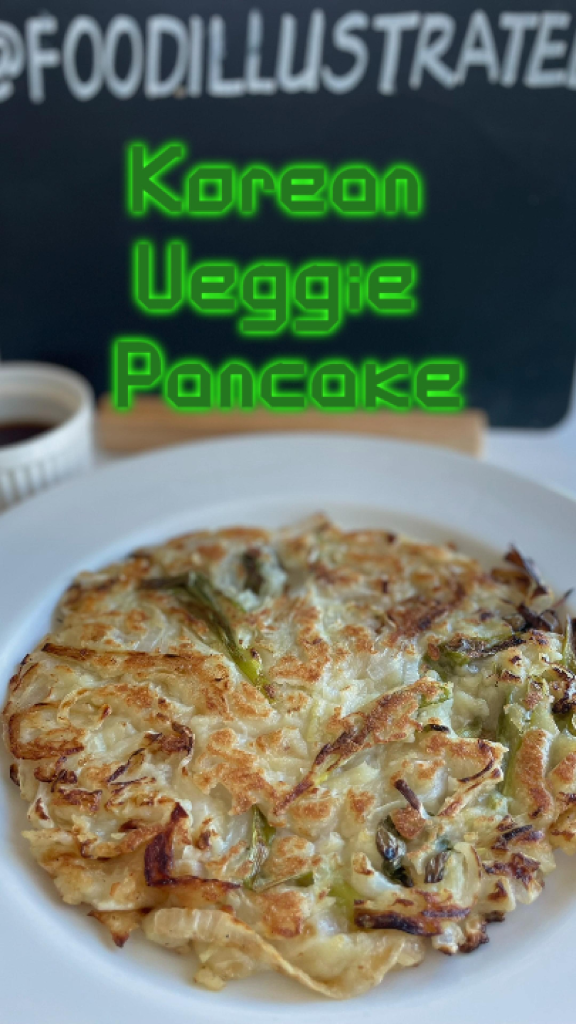
This crispy korean vegetable pancake (yachaejeon) achieves restaurant-quality texture thanks to a secret corn starch addition and ice-cold water technique. Packed with cabbage, onion, and leek, it's served with a tangy soy-scallion sauce you can make while it cooks. Ready in 15 minutes.
Ingredients
For the Ultimate Crispy Batter:
For the Vegetables:
For Cooking:
For the Dipping Sauce:
Instructions
-
Prepare the ice-cold water first. Fill a measuring cup with water and add a few ice cubes. Let it sit while you gather other ingredients. The colder, the better for gluten control.
-
Make the super-crispy batter. In a large bowl, whisk together the all-purpose flour, corn starch, salt, and pepper. The corn starch is your crunch powerhouse—don't skip it! Create a well in the center and pour in the ice-cold water (minus any ice cubes) and beaten egg. Whisk gently until just combined. A few lumps are totally fine—overmixing develops gluten and makes the pancake tough. The batter should be thin, about the consistency of heavy cream.
-
Combine veggies and batter. Add all your sliced vegetables to the bowl with the batter. Use your hands or a large spoon to toss everything together until every piece is evenly coated. This ensures each bite contains both vegetable and batter in perfect harmony.
-
Heat the pan properly. Place a large non-stick skillet (10 to 12 inches) over medium-high heat. Add 2 tablespoons of vegetable oil and swirl to coat. Wait until the oil shimmers—this indicates it's hot enough. If you're unsure, flick a drop of batter into the pan; it should sizzle immediately.
-
Cook the first side. Pour the entire vegetable-batter mixture into the hot skillet. Immediately use a spatula to spread it into an even circle, about ½-inch thick. Gently press down on the vegetables to ensure good contact with the pan. Let it cook undisturbed for 4-5 minutes—resist the urge to peek or move it. You'll know it's ready when the edges look golden and the top surface starts to set. The bottom should be deep golden brown and incredibly crispy.
-
Make the sauce while it cooks. Don't just stand there—use this time! In a small bowl, combine all dipping sauce ingredients: soy sauce, rice vinegar, sesame seeds, chopped green onion, gochugaru (if using), sesame oil, and minced garlic. Stir and set aside. The sauce will be ready before your pancake needs flipping.
-
Master the flip (no fear!). Here's the moment of truth. Choose your method:
-
Plate Method (My Favorite): Slide the pancake onto a large plate. Place the empty skillet upside-down over the plate, then carefully flip them together so the pancake falls back into the pan, uncooked side down. This method requires zero coordination and always works.
-
Spatula Method: Use one or two large spatulas to confidently lift and flip it in one swift motion. Get underneath the center, lift firmly, and flip with conviction. Hesitation leads to broken pancakes.
-
Crisp the second side. Drizzle another 1-2 tablespoons of oil around the edges of the pancake—it will seep underneath and help crisp the second side. Cook for another 4-5 minutes until the second side is equally golden and crispy. The vegetables should be tender when pierced with a knife.
-
Drain briefly and serve. Slide your masterpiece onto a cutting board or wire rack. If you used a paper towel-lined plate, blot gently to remove excess oil. Let rest for 1-2 minutes (this helps maintain crispness), then slice into wedges with a sharp knife or kitchen shears.
-
Serve immediately. Transfer to a warm platter with the dipping sauce on the side. The pancake is best eaten within minutes of cooking, while still hot and shatteringly crisp. Encourage guests to dip each bite generously.
Nutrition Facts
Servings 4
- Amount Per Serving
- Calories 215kcal
- % Daily Value *
- Total Fat 11g17%
- Saturated Fat 1.5g8%
- Sodium 680mg29%
- Total Carbohydrate 25g9%
- Dietary Fiber 3g12%
- Sugars 4g
- Protein 6g12%
* Percent Daily Values are based on a 2,000 calorie diet. Your daily value may be higher or lower depending on your calorie needs.
Note
Pro Tips for Success:
- Keep vegetables uniform. Slice all vegetables to roughly the same thickness (about ⅛ inch) so they cook evenly. Thicker pieces may remain crunchy but won't integrate as well with the batter.
- Don't crowd the pan. This recipe is designed for one large pancake. Making multiple smaller pancakes? Cook them one at a time and keep finished pancakes warm in a 200°F oven on a wire rack (not directly on a baking sheet, which traps steam).
- Test your heat. If the first side browns in less than 3 minutes, your heat is too high—reduce slightly for the second pancake. If it takes more than 6 minutes, increase heat next time. Every stovetop behaves differently.
- The sound test. A properly cooking pancake should sizzle continuously but not aggressively. If it's smoking, the oil is too hot.
Make-Ahead Instructions:
While pancakes are best fresh, you can prep components ahead:
- Slice vegetables up to 24 hours in advance and store in an airtight container in the refrigerator.
- Mix dry ingredients (flour, corn starch, salt, pepper) and store at room temperature.
- Make dipping sauce up to 3 days ahead; store covered in the refrigerator.
Storage Guidelines:
- Refrigerator: Cool leftover pancake completely, wrap in paper towels, and place in an airtight container. Refrigerate for up to 3 days.
- Freezer: Not recommended—the vegetables release water upon thawing, making the pancake soggy.
- Reheating: For best results, reheat in a dry skillet over medium heat until crispy, about 2-3 minutes per side. Avoid microwaving, which creates steam and ruins texture.
Substitutions:
- Gluten-Free: Replace all-purpose flour with ¾ cup gluten-free flour blend + 2 tbsp corn starch (keep the corn starch). Add ¼ tsp xanthan gum if your blend doesn't include it.
- Vegan: Omit the egg and increase ice water to 1¼ cups. Add 1 tbsp additional corn starch for structure.
- Vegetable Variations: Substitute up to half the vegetables with zucchini (thinly sliced), carrot (julienned), bell pepper (thin strips), or kimchi (chopped, reduce salt slightly).
- No leek? Use additional green onions or ½ cup thinly sliced regular onion.
- No gochugaru? Substitute ¼ tsp crushed red pepper flakes or simply omit—sauce will still be delicious.
Troubleshooting Common Issues:
- Pancake falls apart when flipping: Your batter may be too thin or vegetables too sparse. Next time, reduce water by 2 tablespoons or add an extra tablespoon of flour.
- Soggy center: The pancake was too thick or heat too low. Spread thinner and ensure oil is hot enough before adding batter.
- Not crispy enough: Either insufficient oil, heat too low, or you flipped too early. Let the first side develop a deep golden crust before attempting to flip.
- Burnt exterior, raw interior: Heat too high. Reduce temperature and cook longer on each side.
Ingredient Sourcing:
Look for gochugaru (Korean red pepper flakes) at Asian markets or online—it has a distinct smoky, slightly sweet flavor that regular red pepper flakes don't match. Toasted sesame seeds are worth seeking out; untoasted ones lack the nutty aroma that makes this dish sing.