
Introduction
Have you ever wanted to create a dish that looks like it belongs on a Michelin-starred menu but doesn’t require culinary school training to execute? Meet your new secret weapon.
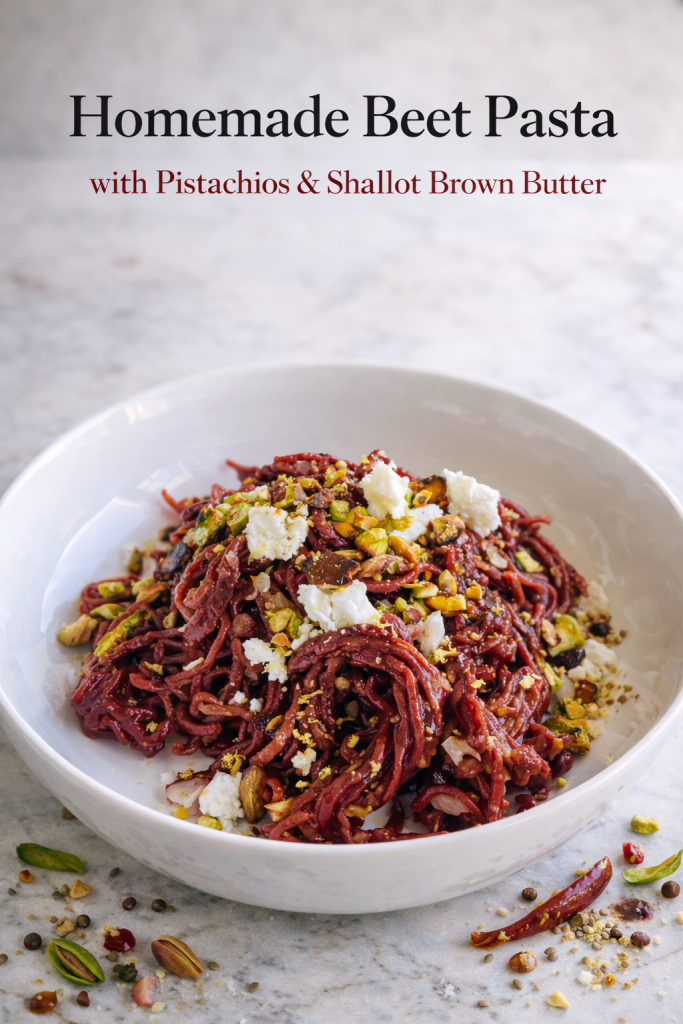
This vibrant beet pasta with pistachios is that rare recipe that delivers on every level: visual drama, complex flavor, and surprising simplicity. The pasta itself blushes a gorgeous magenta thanks to nature’s own food coloring—no artificial dyes here. Tossed in a nutty shallot brown butter that coats every strand like liquid gold, then finished with crunchy toasted pistachios, bright lemon zest, and creamy goat cheese that melts into the sauce, this dish transforms humble ingredients into something truly extraordinary.
I’ll walk you through every step, from making the beet pasta dough (or cheating beautifully with store-bought) to mastering brown butter without burning it. Whether you’re planning a romantic date night at home, impressing dinner guests, or simply treating yourself to something special, this recipe delivers restaurant-quality results in about 30 minutes.
The History: From Ancient Roots to Modern Romance
The Humble Beet’s Ancient Journey
Before this dish became an Instagram-worthy sensation, the beet had already traveled a long and fascinating road. People have been cultivating and eating beets for thousands of years—there are accounts indicating beets were grown in the legendary Hanging Gardens of Babylon . Originally, ancient civilizations prized beet greens for medicinal purposes and consumed the roots only occasionally.
The Romans considered beet juice an aphrodisiac, a bit of historical trivia that adds a charming layer to serving this romantic pink pasta on Valentine’s Day . When you twirl that magenta-hued pasta around your fork, you’re participating in a culinary tradition stretching back to antiquity.
The Tomato-Beat Connection
Here’s a fascinating twist: some food historians suggest that before tomatoes arrived in Europe from the Americas after the Age of Discovery, it was the beet that cooks used to make colorful pasta sauces . The first reference to tomato sauce with pasta in an Italian cookbook appeared around 1790, meaning beets may have been adding color and sweetness to noodles long before the beloved pomodoro took over.
This recipe pays homage to that history—using beets not as a substitute but as a star ingredient in their own right, creating a sauce that’s vibrant, earthy-sweet, and unmistakably beautiful.
The Brown Butter Revelation
Brown butter, or beurre noisette in French (literally “hazelnut butter”), has been a cornerstone of French cuisine for centuries. The technique of browning butter until the milk solids caramelize transforms a simple fat into something nutty, complex, and deeply aromatic. Paired with shallots—the elegant, mild member of the onion family favored in French cooking—it creates a sauce that’s both simple and profound.
The combination of beets, brown butter, pistachios, and goat cheese represents a beautiful meeting of traditions: ancient beets, classic French technique, Middle Eastern nutty crunch, and creamy tang from fresh chèvre. It’s global cuisine on a single plate.
The Science: What Makes This Dish Work
The Magic of Brown Butter
When you melt butter and continue heating it, you’re not just warming fat—you’re orchestrating a complex chemical transformation. Butter contains about 80% fat, 18% water, and 2% milk solids (proteins and sugars). As the water evaporates, the temperature rises above 212°F, allowing the milk solids to undergo the Maillard reaction—the same browning process that creates the crust on bread and the sear on steak .
These milk solids break down and recombine into hundreds of new flavor compounds, creating that unmistakable nutty aroma. The French call it beurre noisette because of its hazelnut-like fragrance. This is why we swirl the pan constantly—to ensure even browning and prevent burning, which would create bitter flavors.
Why Pasta Water Is Liquid Gold
Adding reserved pasta water to the sauce isn’t just a chef-y trick—it’s essential chemistry. Pasta water contains starch that has leached from the noodles during cooking. This starch acts as an emulsifier, helping the butter-based sauce cling to the pasta rather than pooling greasily at the bottom of the bowl .
The starch molecules have both water-loving and fat-loving ends, creating a bridge between the oily butter and the watery pasta surface. When you toss vigorously, you’re creating a silky emulsion that coats every strand. This is the same principle behind a classic carbonara or cacio e pepe—the starch creates a sauce that’s greater than the sum of its parts.
Beets: Nature’s Food Coloring
The stunning magenta hue of this pasta comes from pigments called betalains, specifically betacyanins. These water-soluble compounds are surprisingly stable during cooking, which is why your pasta retains that gorgeous pink color .
Beets also contain glycine betaine, folates, and B-complex vitamins, along with minerals like iron, manganese, and copper . When you incorporate beet puree into pasta dough or sauce, you’re adding nutrition along with beauty. The betalin pigments have even been shown to assist the body’s natural detoxification processes .
The Pistachio Factor
Toasting pistachios before using them does more than add crunch. The heat triggers the Maillard reaction in the nuts themselves, creating new aromatic compounds that deepen their flavor . Raw pistachios are sweet and mild; toasted pistachios develop notes of toastiness and warmth that complement both the earthy beets and nutty brown butter.
Good Pairing Food and Drink
This pasta is substantial enough to stand alone, but for a complete dining experience, here are perfect companions.
- Appetizer: Citrus-Marinated Roasted Beet Salad with Whipped Goat Cheese. Echo the beet theme with a lighter starter. Roast baby beets, marinate them in orange vinaigrette, and serve over whipped goat cheese with a sprinkle of pistachios . The citrus brightness cleanses the palate and previews the lemon zest to come, while the whipped goat cheese offers a creamy, airy texture that contrasts with the pasta’s saucier finish.
- Main Course: This is the main course! But if you’re adding protein, seared scallops with lemon butter complement the dish beautifully. The sweet, delicate scallops echo the sweetness of the beets while adding luxurious texture. Alternatively, grilled lemon-herb chicken provides a lighter protein that won’t overshadow the pasta’s flavors.
- Side Dish: Sautéed Tri-Color Carrots with Fresh Herbs. Tender carrots sautéed in butter with garlic, honey, and fresh thyme and parsley add another root vegetable element with complementary sweetness . The orange and yellow carrots create a beautiful color palette alongside the pink pasta, and the honey enhances the natural sweetness of both vegetables.
- Dessert: Honey and Pistachio Baklava. Continue the pistachio theme with this classic Mediterranean pastry. The flaky phyllo, sweet honey, and crunchy nuts echo the pistachios in the pasta while offering a completely different texture. A scoop of vanilla bean ice cream or dollop of Greek yogurt balances the sweetness.
- Cocktail: Italian Greyhound. Combine grapefruit juice with vodka or gin and a splash of lime. Serve in a salt-rimmed glass. The bright, slightly bitter citrus cuts through the richness of the brown butter and goat cheese, while the salt enhances all the flavors. A rosemary sprig garnish adds aromatic herbal notes.
- Non-Alcoholic Drink: Sparkling Blood Orange Italian Soda. Mix blood orange syrup with club soda and a squeeze of fresh lime over ice. The citrus brightness echoes the lemon zest in the pasta, while the bubbles cleanse the palate. The deep red-orange color complements the pink pasta beautifully on the table.
Description
This stunning beet pasta with pistachios features homemade pasta naturally tinted magenta with real beet puree, then tossed in a luxurious shallot brown butter sauce. Toasted pistachios add crunch, lemon zest provides brightness, and creamy goat cheese melts into a silky, tangy coating. Perfect for Valentine's Day, date nights, or anytime you want to impress with minimal effort.
Ingredients
For the Homemade Beet Pasta (Makes about 250g / 9 oz for two servings):
Alternative:
For the Sauce & Assembly:
For Garnish:
Instructions
If Making Homemade Beet Pasta:
-
-
Prepare the beet puree. If you haven't already, roast or boil the beet until tender (about 45 minutes at 400°F if roasting, or 30-40 minutes boiling). Cool slightly, then peel. Puree in a food processor or blender until completely smooth. Measure out 3 tablespoons of puree .
-
Make the pasta dough. On a clean work surface, pile the flour and salt into a mound. Create a well in the center. Crack the egg into the well and add the beet puree. Using a fork, gently beat the egg and puree, gradually incorporating flour from the edges of the well. Continue until a shaggy dough forms.
-
Knead the dough. Using your hands, bring the dough together and knead for 8-10 minutes until smooth and elastic. If the dough is too sticky, add a sprinkle of flour; if too dry, add a drop of water. The dough should feel supple and slightly tacky but not sticky .
-
Rest the dough. Wrap the dough tightly in plastic wrap and let it rest at room temperature for 30 minutes. This allows the gluten to relax, making rolling easier.
-
Roll and cut the pasta. Divide the dough into 2-4 pieces. Using a pasta machine, roll each piece through successively thinner settings, starting at the widest and working down to setting #5 or #6 (about 1/16-inch thick for fettuccine). Dust with flour as needed to prevent sticking. Run the sheets through the fettuccine cutter, or slice by hand into ¼-inch wide strips. Toss with a little flour or semolina to prevent sticking and set aside .
-
For the Complete Dish:
-
-
Toast the pistachios. Place a large dry skillet or pan over medium heat. Add the pistachios and toast for 2-3 minutes, shaking frequently, until fragrant and lightly golden. Watch carefully—they burn quickly! Transfer to a cutting board, let cool slightly, then roughly chop. Set aside .
-
Cook the pasta. Bring a large pot of generously salted water to a rolling boil (it should taste like the sea). Add the fresh pasta and cook for 2-3 minutes until al dente—it will float to the surface when done. Crucial: Before draining, reserve about ¼ cup of the starchy pasta water. Drain the pasta (do not rinse!) and set aside .
-
Make the brown butter sauce. In the same large skillet you used for pistachios (wipe it out first), melt the butter over medium heat. Continue cooking, swirling the pan occasionally, until the butter turns a golden-brown color and smells nutty and toasty, about 3-4 minutes. Watch closely—it can go from brown to burnt in seconds .
-
Cook the shallots. Immediately add the chopped shallots and a pinch of salt to the browned butter. Stir and cook over medium heat until the shallots are soft, fragrant, and lightly caramelized, about 5-7 minutes. Reduce heat if they're browning too quickly.
-
Combine pasta and sauce. Add the drained pasta directly to the skillet with the shallot butter. Toss vigorously with tongs to coat every strand. Add a splash of the reserved pasta water—about 2-3 tablespoons—and continue tossing. The starch in the water will emulsify the butter into a silky sauce that clings to the pasta . Season with salt and black pepper to taste.
-
Finish off the heat. Remove the skillet from the heat. Add most of the crushed pistachios (reserve some for garnish), the lemon zest, and about two-thirds of the crumbled goat cheese. Toss gently until the cheese just begins to melt and create a creamy coating. The residual heat is enough—don't put it back on the burner or the cheese may break.
-
Plate immediately. Divide the pasta between two warm bowls. Top with the remaining pistachios, an extra crumble of goat cheese, another pinch of lemon zest, and a final twist of black pepper. Garnish with fresh herbs if using. Serve at once—this dish waits for no one.
-
Nutrition Facts
- Amount Per Serving
- Calories 670kcal
- % Daily Value *
- Total Fat 38g59%
- Saturated Fat 18g90%
- Sodium 520mg22%
- Total Carbohydrate 62g21%
- Dietary Fiber 6g24%
- Sugars 8g
- Protein 20g40%
* Percent Daily Values are based on a 2,000 calorie diet. Your daily value may be higher or lower depending on your calorie needs.
Note
- Pro-Tip #1: Master the Brown Butter. The line between beautifully browned and burnt is thin. Swirl the pan constantly and watch for the moment the butter turns golden and smells nutty. Remove from heat immediately when adding shallots—the pan's residual heat will continue cooking .
- Pro-Tip #2: Reserve That Pasta Water! This is non-negotiable. The starchy water is the secret to a silky, emulsified sauce that clings to every strand. If you forget, add a splash of warm water with a tiny pinch of flour whisked in—but it's not the same .
- Pro-Tip #3: Don't Overcook Fresh Pasta. Fresh pasta cooks in 2-3 minutes—literally the time it takes to boil water and drop it in. Watch for it to float, then test immediately. Overcooked fresh pasta turns mushy and loses its beautiful texture.
- Make-Ahead Instructions:
- Pasta dough: Make the dough up to 24 hours ahead, wrap tightly in plastic, and refrigerate. Let sit at room temperature for 20 minutes before rolling.
- Fresh pasta sheets: Rolled pasta sheets can be layered between parchment, wrapped in plastic, and refrigerated for up to 8 hours.
- Cut pasta: Fresh-cut pasta can be laid out on a baking sheet dusted with semolina, covered loosely, and refrigerated for several hours.
- Pistachios: Toast and chop up to 2 days ahead; store in an airtight container at room temperature.
- Storage Guidelines: Store leftover pasta in an airtight container in the refrigerator for up to 2 days. The sauce will continue to absorb into the pasta.
- Reheating: Reheat gently in a skillet over low heat with a splash of water or milk to loosen the sauce. Toss until warmed through. Microwaving can make the goat cheese grainy.
- Freezing: I don't recommend freezing the assembled dish, as the sauce may separate and pasta texture will suffer. However, uncooked homemade beet pasta can be frozen for up to 1 month. Spread cut pasta on a baking sheet, freeze until solid, then transfer to a freezer bag. Cook directly from frozen, adding 1-2 minutes to cooking time.
- Substitutions:
- Pasta: Use 9 oz of high-quality store-bought fresh pasta. Look for beet-infused pasta at specialty stores, or use fettuccine, pappardelle, or tagliatelle. Dried pasta works in a pinch—cook according to package directions.
- Shallots: Substitute ½ cup finely chopped sweet onion or leek (white parts only).
- Pistachios: Walnuts or hazelnuts work beautifully, offering similar crunch and nuttiness .
- Goat cheese: For a different tang, use ricotta (adds creaminess), feta (saltier, crumblier), or mascarpone (richer, less tangy). For dairy-free, try a cashew-based cheese alternative .
- Butter: For dairy-free, use a high-quality plant-based butter designed for baking. Vegan butter browns differently, so watch carefully.
- Lemon zest: Orange zest offers a sweeter citrus note that also complements beets.
- Troubleshooting:
- "My brown butter burned!" Start over—burnt butter tastes acrid and bitter. Next time, use a light-colored pan so you can see the color change, and remove from heat the moment it turns golden.
- "My sauce is greasy and not coating the pasta." You need more starch emulsion. Add another tablespoon of reserved pasta water and toss vigorously off the heat. The starch will help bind the butter to the pasta.
- "My goat cheese clumped instead of melting." The pan was likely too hot. Remove from heat completely before adding cheese, and toss gently. If clumps form, add a splash of warm pasta water and toss to encourage melting.
- "My pasta dough is too dry/cracking." Sprinkle with a few drops of water and knead to incorporate. If it's still cracking, wrap in a damp paper towel for 10 minutes, then knead again.
- "My pasta dough is too sticky." Dust with flour while kneading, adding a little at a time until the dough comes together smoothly.
- Ingredient Sourcing:
- Beets: Look for small to medium beets—they're sweeter and more tender than large ones. Farmers' markets often have the freshest, most flavorful beets.
- Pistachios: Buy shelled, raw pistachios and toast them yourself for the freshest flavor. Pre-toasted nuts can be stale.
- Goat cheese: Fresh chèvre log is ideal—creamy, tangy, and crumbles beautifully. Avoid pre-crumbled goat cheese, which often contains anti-caking agents that prevent smooth melting.
- "00" flour: Available at Italian markets, specialty stores, or online. All-purpose flour works perfectly well; "00" just gives a slightly silkier texture.