
INTRO
Let me tell you about the worst dessert experience of my life. It was late, I was desperate for something sweet, and a viral video promised three-minute microwave flan. Three minutes. Sounded impossible, but the comments were glowing. What could go wrong?
Everything.
The glass cup shattered in my microwave—first casualty. The eggs, subjected to nuclear heat, transformed into sweet scrambled egg clumps floating in a pool of lukewarm milk—second casualty. My dignity? Also a casualty. I spent twenty minutes cleaning caramelized sugar off every surface of my microwave while questioning every life choice that led me to that moment.
This is my redemption arc.
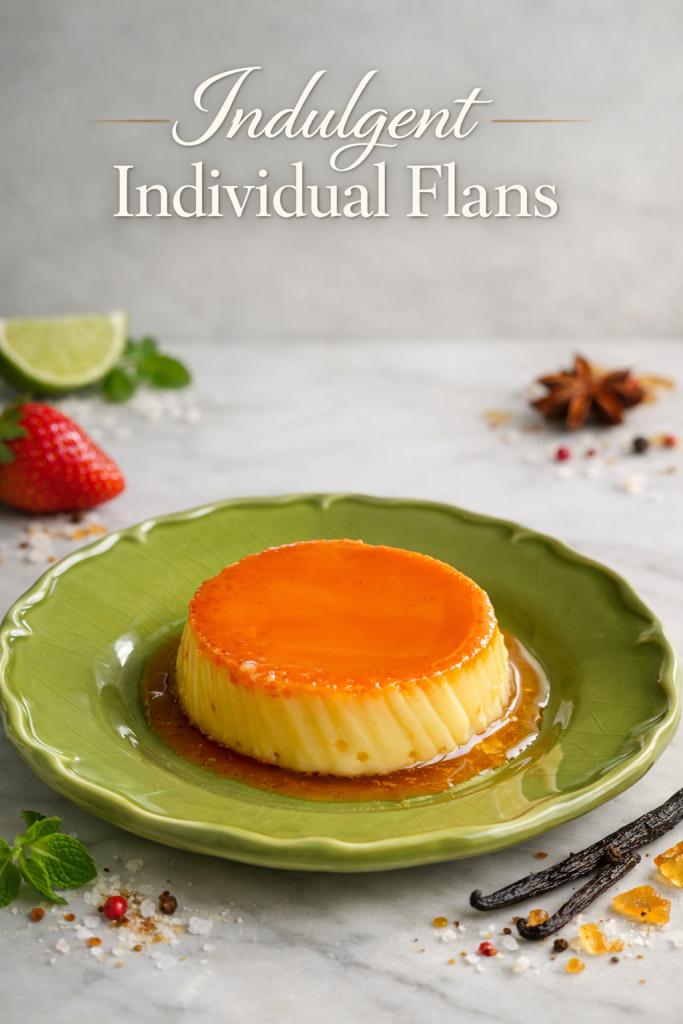
These indulgent individual flans are everything that microwave disaster wasn’t: silky, luxurious, portion-perfect, and actually worth the effort. Each spoonful glides across your tongue like liquid silk, the caramel pooling around the edges in an amber lake that begs to be mixed into every bite. The texture is firm enough to hold its shape when unmolded, yet tender enough to yield to the slightest pressure of a spoon.
I’m making these with a rich heavy cream base—none of that skim milk nonsense—because flan should be decadent. It should feel special. It should make your dinner guests close their eyes and make that little “mmm” sound that tells you you’ve created something memorable.
This step-by-step guide covers everything: the essential water bath method, how to nail that perfect caramel without a candy thermometer, exactly why those viral shortcuts fail (spoiler: eggs are delicate creatures that demand respect), and all the little techniques that separate restaurant-quality flan from kitchen disasters.
Save your dishes. Save your microwave. Make dessert magic the right way.
THE HISTORY
To understand flan is to trace a line through culinary history that stretches back nearly two thousand years, crossing continents and cultures, evolving from a savory Roman experiment to the caramel-topped icon we know today.
It all started in Ancient Rome—specifically, with chickens. When the Romans began domesticating poultry on a large scale, they suddenly had more eggs than they knew what to handle. Looking to the Greeks, who had already mastered the art of mixing eggs with other ingredients, Roman cooks began experimenting . The result was “flado,” a savory custard dish often flavored with fish or meat. Yes, you read that correctly: the ancestor of your dessert was essentially an ancient quiche, sometimes made with eel . The name itself derives from the Old High German “flado,” meaning a flat cake, which evolved into the Medieval Latin “fladonem” and eventually the French “flaon” before settling into “flan” .
As the Roman Empire expanded, so did their recipes. When the Romans reached the Iberian Peninsula, they brought their custard traditions with them. But it was much later—centuries later—that the dish transformed into what we’d recognize today. The Spanish, with access to sugar from trade routes and colonies, had the brilliant idea to add caramelized sugar to the bottom of the custard mold . This single innovation created the signature feature of modern flan: that pool of liquid amber that cascades over the custard when inverted.
When Spanish colonizers arrived in Mexico in 1518, flan came with them. But it didn’t stay Spanish for long. Each region that embraced flan made it their own. In Mexico, cooks began incorporating cream cheese (creating flan napolitano) and using condensed milk instead of fresh . In the Philippines, leche flan became denser and richer, using more egg yolks and both condensed and evaporated milk . The Caribbean islands developed coconut flan (flan de coco). In Argentina and Uruguay, flan is often served with dulce de leche or whipped cream . France, Italy, Portugal, Japan, India—all created their own versions, each reflecting local tastes and ingredients .
What’s remarkable is that through all these transformations, the essential soul of flan remained unchanged: eggs, milk, sugar, transformed by gentle heat into something greater than the sum of their parts. It’s a testament to the power of simple ingredients, handled with care and respect.
THE SCIENCE
Why does flan require such precise technique? Why can’t you just microwave it and call it a day? The answer lies in the delicate chemistry of eggs and the physics of heat transfer.
Protein Transformation: Eggs are the structural backbone of flan. When heated, the proteins in both the whites and yolks undergo a process called coagulation. Think of protein molecules as long, coiled springs. In their raw state, they float independently in liquid. As heat is applied, these springs begin to unwind (denature) and then bond with neighboring proteins, forming a three-dimensional network that traps water and fat . This network is what transforms liquid custard into a delicate, quivering gel.
The magic happens at specific temperatures. Egg proteins begin coagulating around 144°F (62°C) and continue setting until about 180°F (82°C). If you cook them too quickly or at too high a temperature, the proteins contract too aggressively, squeezing out the water and fat they’ve trapped—a process called syneresis . This is exactly what happened in my microwave disaster: the rapid, intense heat caused the proteins to seize up instantly, expelling liquid and creating that curdled, scrambled texture. The result was sweet egg clumps floating in a puddle of separated milk—the opposite of silky flan.
The Water Bath’s Role: This is why we use a water bath (bain-marie). Water transfers heat far more gently and evenly than air. By surrounding the ramekins with 325°F water, we create an environment where the custard heats slowly and uniformly . The temperature never spikes, the proteins coagulate gradually, and the resulting gel is smooth, tender, and homogeneous rather than tough and curdled. The water also acts as a thermal buffer, preventing the edges from overcooking before the center sets.
Straining and Resting: Those little white things you sometimes see in poorly made flan? Those are chalazae—the twisted cords of egg white that anchor the yolk in place . Straining the custard removes them along with any bits of undissolved sugar or accidentally cooked egg. The resting period after blending serves a different purpose: it allows air bubbles introduced during mixing to rise to the surface and pop. If you bake immediately, those bubbles become unsightly holes in your otherwise flawless flan.
The Cream and Milk Balance: This recipe uses both heavy cream and milk for a reason. The high fat content from cream contributes to that luxurious mouthfeel and prevents the custard from tasting lean or austere. The milk provides just enough protein to help the gel set properly without making it rubbery . Together, they create a custard that’s rich but not heavy, tender but not fragile.
GOOD PAIRING FOOD AND DRINK
One Appetizer: Spanish Marcona Almonds with Manchego Cheese
Start your meal with a simple, elegant plate of Marcona almonds—those round, buttery Spanish almonds fried in olive oil and lightly salted—alongside thin slices of aged Manchego cheese. The almonds’ delicate crunch and the cheese’s nutty, slightly tangy flavor set the stage for the creamy sweetness to come. The contrast between savory and sweet primes your palate without overwhelming it.
One Main Course: Citrus-Marinated Grilled Chicken or Fish
Before the flan’s rich sweetness, serve a main course with bright, acidic notes to balance. A chicken breast or white fish marinated in orange juice, lime, garlic, and oregano, then grilled until lightly charred, provides a fresh, zesty counterpoint. The citrus cuts through richness while complementing the caramel notes in the dessert. If you’re feeling ambitious, a mojo marinade—classic in Cuban cuisine—pays homage to flan’s Latin American journey.
One Side Dish: Cilantro-Lime Rice with Black Beans
For a complete meal that nods to flan’s Mexican heritage, serve cilantro-lime rice alongside black beans seasoned with cumin and epazote if you can find it. The earthy beans and bright, herbaceous rice provide savory contrast to the sweet, creamy dessert to come. This is the kind of meal that feels like a celebration, even on a Tuesday.
One Dessert: This Flan (It’s the Star!)
No need for another dessert—this flan is the finale. But if you’re serving a crowd, consider offering a contrast: a plate of fresh berries (raspberries or sliced strawberries) alongside the flan provides bright, tart pops that cut through the custard’s richness. A sprinkle of flaky sea salt over the caramel just before serving adds a sophisticated savory edge.
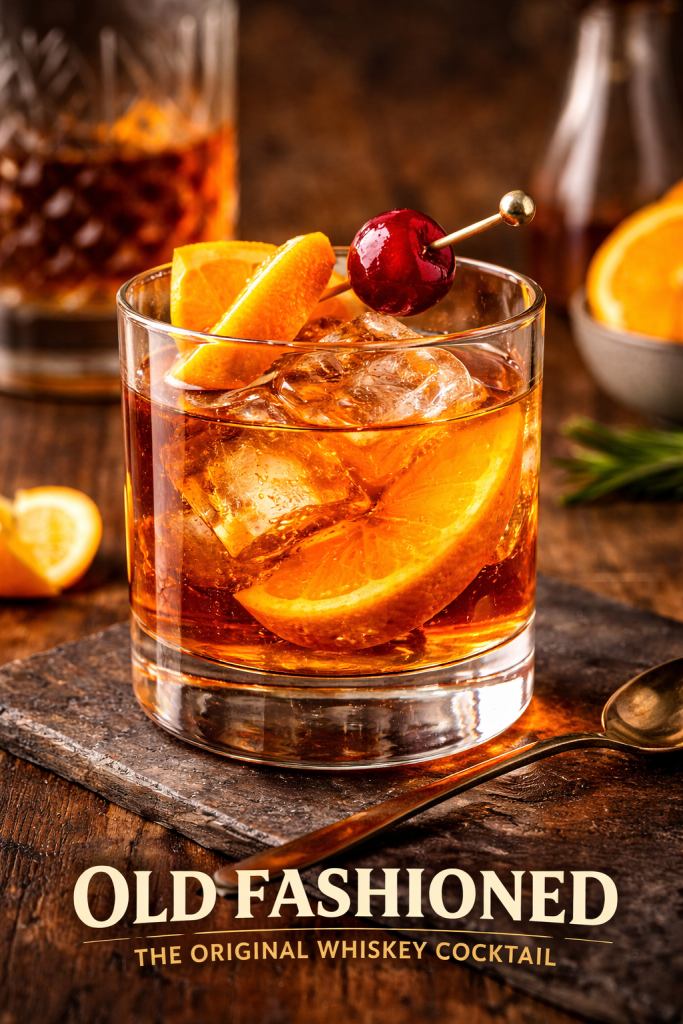
One Cocktail: Classic Dark Rum Old-Fashioned
The molasses notes in dark rum echo the caramelized sugar in the flan beautifully. Muddle a sugar cube with bitters, add a generous pour of aged dark rum, stir with ice, and garnish with an orange twist. The spirit’s warmth and complexity stand up to the custard’s richness, while the orange oil brightens every sip. It’s a match made in dessert heaven.
One Non-Alcoholic Drink: Mexican Horchata or Café de Olla
For an authentic pairing, serve horchata—the sweet, creamy rice drink flavored with cinnamon. Its cool, milky spice notes complement the flan’s caramel and vanilla beautifully. Alternatively, a small cup of café de olla, Mexican cinnamon coffee sweetened with piloncillo, provides a warm, aromatic counterpoint. The coffee’s gentle bitterness balances the dessert’s sweetness .
Spanish Caramel Innovation
- Source: Tasting Table (same as above)
- Link: https://www.tastingtable.com/1384901/history-caramel-became-main-ingredient-flan/
Flan as Custard vs. Pudding
- Source: Daily Meal – “What Kind Of Dessert Is Flan?”
- Link: https://www.thedailymeal.com/1351520/what-flan-dessert-explained/
Egg Science: Gels and Syneresis
- Source: Exploratorium – “Science of Eggs: Flan Recipe: What’s Going On?”
- Link: https://annex.exploratorium.edu/cooking/eggs/flan-pop.html
Description
Forget the viral microwave disasters—this is the real deal. These indulgent individual flans combine a luxuriously smooth heavy cream custard with a deep amber caramel for the ultimate make-ahead dessert. A gentle water bath ensures silky texture, while individual servings make for stunning presentation. Perfect for dinner parties and special occasions.
Ingredients
For the Caramel:
For the Cream Custard:
Instructions
Step 1: Prepare Your Equipment and Mindset
-
Preheat your oven to 325°F (160°C). Arrange twelve 6-ounce ramekins on a clean work surface or baking sheet. You'll also need a large roasting pan or deep baking dish that can hold all ramekins with space between them.
Read through the entire recipe before starting. Flan requires focus, especially during the caramel stage, but rewards attention with spectacular results.
Step 2: Make the Caramel (Carefully!)
-
In a light-colored saucepan (this is important—dark pans make it hard to see color changes), combine the 1 cup sugar with ⅓ cup water. Stir gently over medium heat just until the sugar dissolves. You want to help it along, but once dissolved, stop stirring.
Increase heat to medium-high. Now, do not stir again. Instead, swirl the pan occasionally by gently rotating the handle. This prevents crystallization while ensuring even cooking.
Watch closely as the mixture transforms. First it will bubble furiously as water evaporates. Then it will thicken and begin to color. After about 7-10 minutes, you're looking for a deep amber color—think the color of an old penny or dark honey. The moment it reaches this shade, remove it from heat immediately. It will continue cooking from residual heat.
Safety note: Caramel reaches temperatures above 300°F. It will cause severe burns if it touches skin. Use oven mitts and work deliberately but calmly.
Visual cue: The caramel should smell rich and slightly nutty, not burnt. If you see smoke or smell scorching, you've gone too far.
Work quickly now. Carefully pour about 1 tablespoon of hot caramel into the bottom of each ramekin. Tilt each ramekin gently to coat just the bottom—you don't need to go up the sides. Set aside. The caramel will harden rapidly into a solid disc; this is exactly what should happen.
Step 3: Create the Ultra-Smooth Custard
-
In a blender, combine the eggs, ¾ cup sugar, vanilla, and pinch of salt. Blend on low speed for about 20 seconds, just until the eggs are broken up and combined. Do not aerate—you're mixing, not whipping.
With the blender running on low, slowly pour in the heavy cream and milk through the opening in the lid. Continue blending for only 10-15 seconds until the mixture is completely homogeneous. Over-blending incorporates too much air, which creates bubbles in your finished flan.
Crucial rest: Let the mixture rest for 10 full minutes. During this time, any air bubbles introduced will rise to the surface and pop. This single step makes the difference between a flawless surface and one dotted with tiny holes.
Step 4: Strain and Pour
-
After resting, place a fine-mesh sieve over a large pouring jug or measuring cup with a spout. Pour the custard through the sieve, catching any chalazae (the white egg cords), bits of undissolved sugar, or any stray bubbles .
Divide the strained custard evenly among the caramel-lined ramekins, filling each about three-quarters full. The custard will expand slightly as it bakes, so leave room.
Step 5: The Foolproof Water Bath
-
Place the filled ramekins into your large roasting pan. They should fit comfortably without touching.
Bring a kettle of water to a full boil. Pull out your oven rack partway, place the roasting pan on it, and then carefully pour the boiling water into the roasting pan until it reaches halfway up the sides of the ramekins. This method is safer than trying to carry a pan full of water.
Why this works: The water bath insulates the custards from direct oven heat, ensuring they cook gently and evenly . Without it, the edges would overcook before the centers set.
Gently slide the rack back into place and close the oven door.
Step 6: Bake to Perfection
-
Bake for 35-40 minutes, but start checking at 30 minutes. The flans are done when the edges are fully set but the centers still have a slight, subtle jiggle—like firm Jell-O, not liquid. If you gently shake a ramekin, the center should wobble just a little.
The jiggle test: This is more reliable than a knife test for flan. A knife inserted should come out clean, but the visual jiggle tells you the custard is perfectly cooked.
Crucial: Better to slightly under-bake than over-bake. The custard continues to set as it chills. Over-baked flan becomes rubbery and may weep liquid.
Step 7: Cooling and Chilling
-
As soon as the flans come out of the oven, remove them from the water bath immediately using tongs or oven mitts. If left in the hot water, they'll continue cooking.
Place the ramekins on a wire rack and let them cool completely to room temperature, about 1 hour.
Once cool, cover each ramekin tightly with plastic wrap. Refrigerate for at least 6 hours, but preferably overnight. This chilling time is essential—it allows the custard to fully set and the flavors to meld and deepen. The caramel will also liquefy during this time, creating that signature sauce.
Step 8: Serve and Impress
-
When ready to serve, remove a ramekin from the refrigerator. Run a thin paring knife or offset spatula carefully around the inside edge to loosen the flan.
Place a small dessert plate upside-down over the ramekin. With one hand holding the plate firmly in place and the other supporting the ramekin, flip confidently but gently.
Give the assembly a gentle shake up and down. You should feel the flan release and hear a soft plop as it lands on the plate. Lift the ramekin slowly—the caramel will cascade down the sides, pooling around the custard.
If the flan doesn't release immediately, don't panic. Let it sit inverted for a minute; gravity often helps. You can also warm the bottom of the ramekin briefly with your hands or a warm towel.
Serve immediately, garnished with fresh berries, a mint sprig, or a tiny sprinkle of flaky sea salt if desired.
Nutrition Facts
Servings 12
- Amount Per Serving
- Calories 415kcal
- % Daily Value *
- Total Fat 27g42%
- Saturated Fat 15g75%
- Sodium 110mg5%
- Total Carbohydrate 37g13%
- Sugars 37g
- Protein 7g15%
- Vitamin A 950 IU
- Calcium 150 mg
* Percent Daily Values are based on a 2,000 calorie diet. Your daily value may be higher or lower depending on your calorie needs.
Note
Pro Tips for Success
- Use a light-colored saucepan for caramel: Dark pans make it impossible to see the color change accurately, leading to burnt caramel.
- Don't stir the caramel once it starts boiling: Stirring can cause crystallization, leading to grainy caramel. Swirl instead.
- Room temperature ingredients matter: Cold eggs and cream can cause the mixture to seize or not blend properly. Let them sit out for 30 minutes before starting.
- Rest the blended custard: That 10-minute rest isn't optional—it's the difference between flawless and pockmarked flan.
- The jiggle is your friend: Trust the jiggle test over absolute time. Ovens vary, and the perfect flan has a soft center that firms while chilling.
- Remove from water bath immediately: Leaving flans in the hot water leads to overcooking and a rubbery texture.
Make-Ahead Instructions
This is the ultimate make-ahead dessert. Flans keep perfectly in the refrigerator for up to 3 days after baking, making them ideal for dinner parties and holidays. Simply prepare through Step 7, cover tightly with plastic wrap, and refrigerate. Unmold just before serving.
Storage and Reheating
- Refrigerator: Store covered flans (in their ramekins) for up to 3 days.
- Freezer: Not recommended—freezing destroys the delicate gel structure, resulting in a watery, grainy texture upon thawing.
- Reheating: Flan is served cold. Do not reheat.
Substitutions
- Milk: Whole milk provides the best texture, but 2% works in a pinch. Avoid skim milk—the resulting flan will be less creamy.
- Heavy cream: For a slightly lighter version, you can use all half-and-half instead of the cream+milk combination, though the texture will be less luxurious.
- Vanilla: One vanilla bean, split and scraped, can replace the extract. Steep the pod in the cream while warming, then remove before blending.
- Sweetened condensed milk: This is not easily substituted—it provides both sweetness and the unique texture that makes flan so creamy. If you must reduce sugar, look for recipes specifically designed for less sweetener.
- Flavor variations: Infuse the cream with cinnamon sticks, citrus zest, or a shot of espresso before blending for different flavor profiles.
Troubleshooting
- Caramel crystallized/grainy: Usually caused by stirring after sugar dissolved or by sugar crystals on the pan sides. Next time, wash down pan sides with a wet pastry brush before boiling.
- Bubbles in finished flan: The mixture wasn't rested long enough, or you over-blended. Let rest 10 minutes next time and blend minimally.
- Flan didn't unmold cleanly: Run the knife around the edge more thoroughly. If still stuck, dip the ramekin bottom in warm water for 10 seconds.
- Rubbery texture: Over-baked. Next time, pull from oven when center still has slight jiggle.
- Weeping/soggy layer on bottom: Over-baking caused syneresis—the protein network squeezed out liquid .
- Curdled, scrambled texture: Oven too hot or baked too long without water bath. Always use water bath and monitor temperature.