
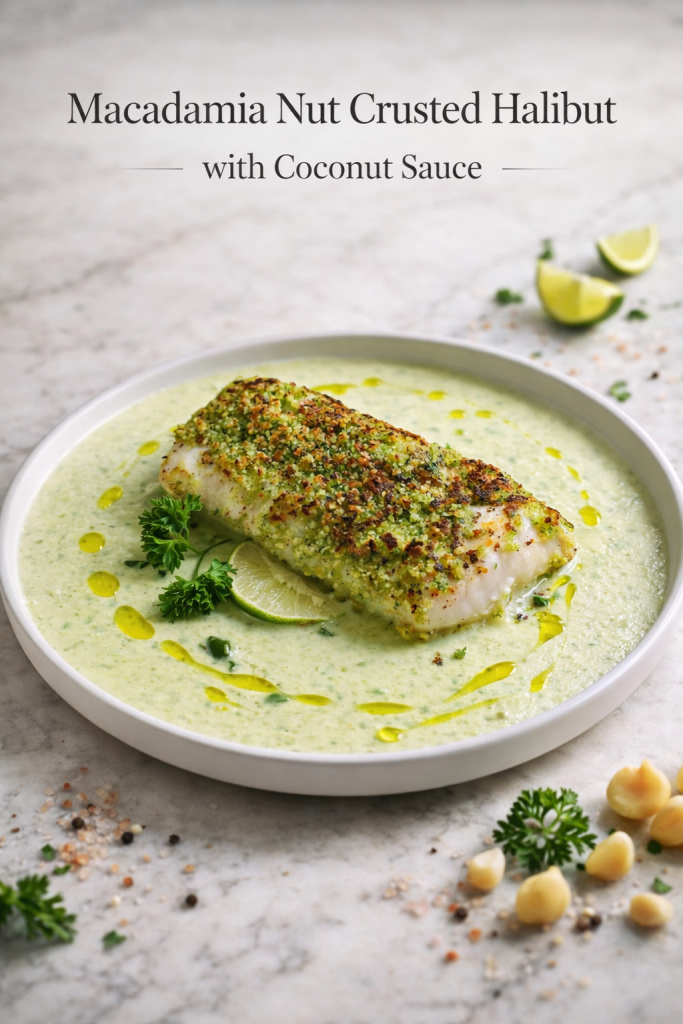
Imagine a piece of flaky, white fish, its top a beautiful golden brown, crowned with a crunchy, buttery nut crust. Now, picture that fillet resting in a pool of silky, vibrant sauce, kissed with lime and the gentle warmth of roasted jalapeño. This is not a fantasy from a high-end coastal restaurant. This is macadamia nut crusted halibut, and it’s a dish that effortlessly brings the flavors of a tropical island vacation straight to your dinner table.
This macadamia nut crusted halibut recipe is special because it achieves a perfect harmony of textures and tastes. The rich, crumbly macadamia nuts provide a decadent crunch that contrasts beautifully with the halibut’s tender, delicate flakes. The sauce, a creamy coconut milk base blitzed with charred jalapeño, adds a layer of smoky, tangy complexity that ties everything together. It’s an elegant dish that feels indulgent and sophisticated, yet it’s built on techniques that are entirely achievable for a home cook. We’ll explore the fascinating journey of its key ingredients and the simple kitchen science that makes this the best macadamia crusted fish you’ll ever make at home.
The History: A Pacific Rim Fusion
While this specific dish is a modern creation, its soul is rooted in the culinary traditions of the Pacific Rim. The star ingredient, the macadamia nut, is the only major commercial food crop native to Australia. For thousands of years, it was a prized food source for Aboriginal Australians, who revered its rich flavor and high oil content. It wasn’t until the 19th century that it began its journey to global fame, finding a particularly welcoming home in the volcanic soils of Hawaii. There, it became synonymous with island cuisine, often used in both sweet and savory applications to add a local, buttery crunch to dishes like this Hawaiian-style halibut.
Similarly, the combination of coconut and seafood is an ancient one, stretching from the shores of India to the islands of Southeast Asia and the Caribbean. Coconut milk, extracted from the grated meat of mature coconuts, has been a cornerstone of these cuisines for centuries, prized for its ability to add a rich, creamy body and a subtle sweetness to curries and sauces. The roasted jalapeño and lime introduce a distinctly New World element, a nod to the chiles and citrus that traveled the globe, adding their bright, acidic notes to traditional flavor profiles. For more on the journey of the macadamia nut, The Australian Macadamia Society’s History Page offers a fascinating deep dive. This macadamia nut crusted halibut is a testament to culinary globalization, a beautiful conversation between an ancient Australian nut, a tropical coconut, and the fresh ingredients of the Americas, all united on a single plate.
The Science: Crunch, Cream, and Char
Creating this dish is a masterclass in applying fundamental cooking science to achieve maximum flavor and texture. Let’s break down what happens at each critical step when you cook this easy baked halibut recipe.
- The Crust: A Symphony of Fat and Starch: The crust is a brilliant combination of macadamia nuts and panko breadcrumbs. Macadamia nuts are extraordinarily high in fat (up to 75%), which is why they taste so buttery. When pulsed with the lighter, drier panko, they create a coating that fries up to an incomparable crunch. The panko acts as a structural matrix, providing crispy peaks and valleys that the nuts cling to. The egg wash acts as the glue, but also a crucial barrier. It helps seal in the fish’s moisture, preventing it from steaming the crust from the inside out and ensuring the crust stays crisp. This technique is essential for any nut-crusted fish recipe.
- The Sear: The Maillard Reaction in Action: We start the fish in a hot pan on the stovetop. That sizzle you hear is the sound of the Maillard reaction—the complex chemical process between amino acids and reducing sugars that creates hundreds of new flavor compounds and that beautiful, deep brown crust. This initial sear is non-negotiable for developing a savory depth that baking alone cannot achieve. For a deeper dive into this transformative process, Science of Cooking: The Maillard Reaction offers a fascinating explanation. It’s this step that elevates halibut with coconut sauce from good to unforgettable.
- The Sauce: From Charred to Silky: Roasting the jalapeños until the skin chars does two things. First, it softens the pepper’s texture. Second, and more importantly, it introduces a subtle, smoky bitterness that balances the rich sweetness of the coconut milk. Trapping the hot peppers in a bag to steam allows the charred skin to slip off easily, leaving behind the smoky, fruity flesh. Finally, when we reduce the coconut milk, we are driving off water and concentrating its fats and sugars, thickening it into a luxurious, velvety coconut cream sauce that will cling perfectly to the fish.
Good Pairing Food and Drink
This dish is rich, nutty, and slightly spicy with a creamy sauce. The key to pairing is to find companions that complement without competing. This seafood dinner idea is perfect for entertaining.
- One Appetizer: Poke Bowls. A small, chilled ahi tuna poke bowl with avocado, sesame, and soy sauce is a perfect start. The freshness of the raw fish and the umami flavors are a natural prelude to the tropical notes of the main course.
- One Main Course: (This is the main course)
- One Side Dish: Coconut-Lime Rice. This is the ideal supporting actor. Cook jasmine rice with half water and half coconut milk, a kaffir lime leaf, and a pinch of salt. The rice will absorb the same tropical flavors as the sauce, creating a cohesive and satisfying plate. A sprinkle of fresh cilantro at the end adds a pop of color. It’s the perfect side for macadamia crusted fish.
- One Dessert: Mango Sticky Rice. Continue the tropical theme with this classic Southeast Asian dessert. The sweet, juicy mango and the lightly salted, creamy coconut sticky rice are a light, refreshing, and utterly satisfying way to end the meal.
- One Cocktail: Spicy Pineapple Margarita. The tartness of lime, the sweetness of pineapple, and the heat of jalapeño-infused tequila mirror the flavors of the dish’s sauce. The salt rim on the glass also plays off the seasoned crust of the fish beautifully.
- One Non-Alcoholic Drink: Coconut Water with Lime and Mint. Keep it simple and hydrating. The natural electrolytes in coconut water are refreshing, while a squeeze of fresh lime and a few muddled mint leaves echo the citrus and herbal notes of the dish without adding any sugar.
Description
Treat yourself to a restaurant-quality meal at home with this macadamia nut crusted halibut. The crunchy, nutty crust pairs perfectly with flaky fish and a vibrant, creamy coconut sauce that comes together in under an hour.
Ingredients
For the Roasted Jalapeño Coconut Sauce:
For the Macadamia Nut Crusted Halibut:
Instructions
-
Roast the Jalapeños: Preheat your oven to 350°F (175°C) and position the rack in the center. Line a small baking sheet with foil and spray with cooking oil. Place the jalapeño halves cut-side down on the prepared sheet. Roast for about 10 minutes, until the skins are bubbly and charred in spots. The heat will begin to break down the cell walls, softening the pepper.
-
Steam and Cool: Immediately transfer the hot jalapeños to a small zip-top bag. Seal the bag and set it aside for 10 minutes. The steam trapped inside will loosen the skin, making it incredibly easy to peel off later. Keep the oven on, as you'll be using it to finish the fish.
-
Reduce the Coconut Milk: While the peppers roast, pour the coconut milk into a small saucepan. Bring it to a gentle simmer over medium heat, then reduce the heat to low. Cook, stirring occasionally, until it has thickened and reduced to 1/2 cup. This usually takes about 15-20 minutes. The gentle heat evaporates water, concentrating the fat and creating a luxuriously creamy texture. Keep the sauce warm on the lowest possible setting.
-
Make the Crust: In a food processor, combine the macadamia nuts and panko breadcrumbs. Pulse 5-7 times until you have a crumbly, uniform mixture. Be careful not to over-process into a paste; you want some texture. Transfer this mixture to a shallow bowl and stir in 1 teaspoon of the chopped parsley and all of the chives.
-
Prepare the Egg Wash: In a second shallow bowl, beat the egg with 1 tablespoon of water until smooth. This will be the "glue" for our crust.
-
Season and Dredge the Fish: Pat the halibut fillets completely dry with a paper towel. (Moisture is the enemy of a good sear!) Season both sides generously with the 1/2 teaspoon of salt and 1/4 teaspoon of pepper. Working with one fillet at a time, dip it into the egg wash, letting any excess drip off. Then, place it into the nut mixture, pressing gently to ensure an even, thick coating covers all sides.
-
Sear the Fish: In a large, oven-safe, non-stick skillet, heat the 2 teaspoons of oil over medium-high heat until it's shimmering. Gently place the crusted fillets in the pan, being careful not to crowd them (work in batches if necessary). Sear until the crust is a deep golden brown, about 2-3 minutes. This is the Maillard reaction at work, building a deep, savory flavor.
-
Flip and Finish in the Oven: Carefully flip each fillet using a thin spatula. Immediately transfer the skillet to the preheated 350°F (175°C) oven. Roast for 5-7 minutes, until the fish is cooked through and flakes easily with a fork. The exact time will depend on the thickness of your fillets. An instant-read thermometer inserted into the thickest part should read 130°F-135°F, as it will continue to carry-over cook.
-
Finish the Sauce: While the fish is in the oven, peel the now-cooled jalapeños. The skins should slip right off. Discard the skins. In a clean blender or food processor, combine the peeled jalapeños, the reduced coconut milk, lime juice, and 1/2 teaspoon of salt. Blend until the sauce is completely smooth and vibrant. Taste and adjust seasoning if needed.
-
Serve Immediately: To serve, spoon a generous pool of the warm coconut-jalapeño sauce onto each plate. Place a macadamia nut crusted halibut fillet in the center. Garnish with the remaining fresh parsley. Serve immediately with coconut-lime rice or your favorite vegetables.
Nutrition Facts
- Amount Per Serving
- Calories 590kcal
- % Daily Value *
- Total Fat 42g65%
- Saturated Fat 18g90%
- Sodium 780mg33%
- Total Carbohydrate 12g4%
- Dietary Fiber 3g12%
- Sugars 2g
- Protein 41g82%
* Percent Daily Values are based on a 2,000 calorie diet. Your daily value may be higher or lower depending on your calorie needs.
Note
- Pro Tips for Success:
- Don't Skip Drying the Fish: Patting the halibut dry is essential. Any excess moisture will create steam, preventing the crust from getting beautifully golden and crisp. This is the number one tip for perfect macadamia nut crusted halibut.
- Use Full-Fat Coconut Milk: Light coconut milk has a higher water content and will not reduce to the same creamy, luxurious consistency. For this sauce, full-fat is non-negotiable.
- Work in Batches: If your skillet isn't large enough to hold all four fillets with space between them, sear them in two batches. Overcrowding the pan will lower the temperature and steam the fish, ruining the crust.
- Make-Ahead Instructions:
- The coconut sauce can be made up to 2 days in advance. Store it in an airtight container in the refrigerator. Gently reheat it on the stovetop over low heat before serving.
- The nut crust mixture can be prepared and stored in an airtight container at room temperature for a day.
- Storage Guidelines: This dish is best enjoyed fresh, as the crust will lose its crunch when refrigerated. However, leftover cooked fish can be stored in an airtight container in the fridge for up to 1 day. To reheat, place it in a low oven (300°F) on a wire rack to try and re-crisp the exterior, though it won't be quite the same as fresh.
- Substitutions:
- Fish: Halibut is a premium, firm white fish. Good substitutes include Pacific cod, sea bass, or a thick-cut tilapia. Adjust cooking time based on thickness.
- Nuts: Macadamia nuts are buttery and rich. Cashews or almonds would also work, though they will change the flavor profile slightly.
- Panko: For a gluten-free version, simply use gluten-free panko breadcrumbs. They work perfectly.
- Jalapeño: For a milder sauce, use only one jalapeño or substitute with a poblano pepper. For more heat, keep a few of the seeds.
- Troubleshooting:
- Crust falling off: This usually happens if the fish wasn't patted dry, the oil wasn't hot enough when searing, or the fillets were moved too much in the pan. Let them sear undisturbed to form a good crust.
- Sauce is too thin: The coconut milk likely wasn't reduced enough. You can return the finished sauce to the pan and simmer it for a few more minutes to thicken further.