
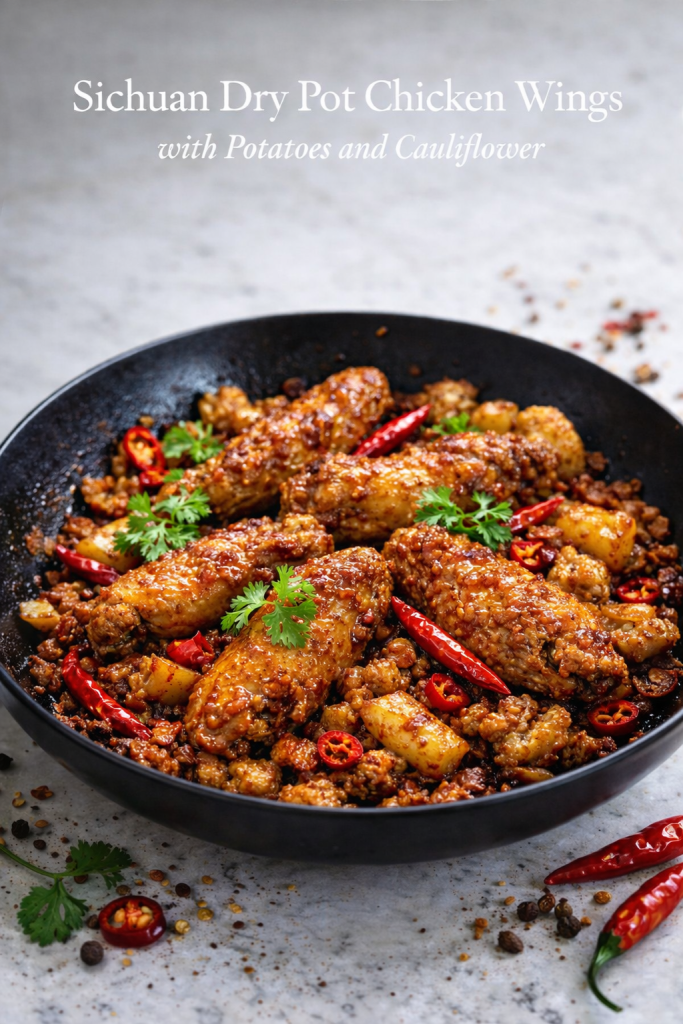
Make Sichuan dry pot chicken wings at home with crispy skin, tender potatoes, and cauliflower. A fiery, numbing Chinese restaurant favorite.
INTRO
Have you ever craved that fiery, tingly sensation that only Sichuan cuisine can deliver? The kind of heat that makes your lips hum and your taste buds dance? That is the magic of dry pot, and today I am showing you how to make it at home with chicken wings, potatoes, and cauliflower.
This Sichuan dry pot chicken wings recipe delivers restaurant-quality flavor right from your own kitchen. Using a shortcut ingredient—Sichuan hotpot paste—we bypass the long list of dried chilies and spices without sacrificing any of that complex, malty, numbing goodness. The wings turn golden and crispy. The potatoes soak up all the spicy oil. The cauliflower adds texture and soaks in the sauce. It is a complete meal in one sizzling pan.
Let me walk you through the history, the science, and every step to achieve dry pot perfection.
THE HISTORY
Dry pot, or gān guō (干锅), originates from the Chongqing region of southwestern China, specifically the cities of Deyang and Mianyang in Sichuan province. According to The Food of Sichuan by Fuchsia Dunlop, the dish emerged as a rustic way to use leftovers. Unlike its soupy cousin, hot pot, dry pot features ingredients braised or stir-fried in a flavorful, intensely spicy sauce with minimal liquid. The name literally translates to “dry pot” or “dry wok.”
Cooks originally developed dry pot as a way to use leftover meats and vegetables. They would toss them into a wok with powerful seasonings—Sichuan peppercorns, dried chilies, ginger, garlic, and fermented bean pastes—creating a dish that was both practical and explosively flavorful. As China Sichuan Food explains, by the early 2000s, dry pot began spreading from Sichuan to cities like Chengdu, and from there it rapidly gained popularity across China.
Today, you find dry pot restaurants across China and worldwide. Diners select their own combination of proteins and vegetables from a display case. Chefs then stir-fry the selection to order in a massive wok over volcanic heat. The result lands at your table in a shallow metal pot, often kept warm by a small burner. It is communal eating at its most exciting. My version adapts this tradition for the home cook, using accessible ingredients while honoring those bold, authentic flavors.
THE SCIENCE
Understanding a few key principles ensures your Sichuan dry pot chicken wings turn out spectacular every time.
The Maillard Reaction: We start by searing the chicken wings and potatoes in a hot pan. This browning creates hundreds of new flavor compounds through the Maillard reaction. Those golden-brown bits on the wings and potatoes are pure umami. Do not skip this step. It builds the foundational flavor that the spicy sauce then amplifies.
Má Là (Numbing Spiciness): The signature sensation of Sichuan cooking comes from two sources. Dried chilies provide the heat, or là. Sichuan peppercorns provide the unique numbing, or má. These peppercorns contain hydroxy-alpha-sanshool, a compound that creates a tingling, buzzing sensation on your lips and tongue. As ScienceDirect reports, research shows that this compound makes your nerves fire at about 50 Hertz—the same frequency as a low electrical current or the vibration of a phone. This numbing effect actually makes you more sensitive to other flavors, allowing you to perceive deeper savory notes. According to Chemistry World, chemists at the University of Hong Kong have even developed methods to synthesize this compound for research into potential medical applications. My recipe uses Sichuan hotpot paste, which conveniently combines both elements with fermented broad bean paste (doubanjiang) for a complete flavor base.
Starch and Fat Interaction: Potatoes play a crucial role here. As they cook, their starches absorb the spicy oil and seasonings. The potato pieces become flavor bombs, carrying the heat deep into their creamy centers. Parboiling the potatoes first ensures they cook through without burning before the chicken finishes.
GOOD PAIRING FOOD AND DRINK
One Appetizer: Cucumber Salad with Garlic and Chinkiang Vinegar
A cold, refreshing cucumber salad provides the perfect counterpoint to the heat. The cool crunch and tangy vinegar dressing cleanse your palate between bites of spicy wings. Make it twenty minutes ahead and let it marinate while you cook.
One Main Course: This dish functions as a hearty main course on its own. Serve it with plenty of steamed rice to absorb the incredible sauce.
One Side Dish: Steamed White Rice
You absolutely need rice. The fluffy, neutral grains soak up the spicy, numbing oil and provide a cooling base for the intense flavors. Use jasmine or short-grain rice for best results.
One Dessert: Mango Sago Pomelo
A light, fruity dessert balances the meal. This classic Cantonese dessert features sweet mango, chewy sago pearls, and tangy pomelo in a coconut milk base. Its cool, creamy sweetness soothes any remaining heat.
One Cocktail: Sichuan 75
Mix gin, fresh lemon juice, simple syrup, and a tiny splash of Sichuan peppercorn-infused vodka. Shake vigorously and strain into a coupe. The herbal gin notes complement the Chinese flavors, and the hint of peppercorn echoes the dish’s numbing quality.
One Non-Alcoholic Drink: Iced Jasmine Tea with Honey
Brew strong jasmine green tea, chill it over ice, and sweeten lightly with honey. The floral aroma and slight sweetness refresh your mouth between bites. It also contains antioxidants that aid digestion.


Description
This Sichuan dry pot chicken wings recipe delivers restaurant-quality heat at home. Crispy wings, tender potatoes, and cauliflower swim in a spicy, numbing sauce that will make your taste buds hum.
Ingredients
For the chicken marinade:
Instructions
-
Prepare the chicken wings. Pat the wing pieces completely dry with paper towels. In a bowl, combine them with the marinade ingredients: soy sauce, Shaoxing wine, cornstarch, and white pepper. Mix well and set aside for 15 minutes while you prep the vegetables.
-
Parboil the potatoes. Place potato chunks in a small pot and cover with cold water. Bring to a boil and cook for 5 minutes. They should be slightly tender but not fully cooked. Drain and set aside. This step ensures they cook through without burning later.
-
Sear the chicken. Heat 1 tablespoon of vegetable oil in a large wok or heavy-bottomed skillet over medium-high heat. Add the chicken pieces in a single layer, skin-side down if possible. Do not crowd the pan; work in batches if necessary. Cook undisturbed for 5-7 minutes until the skin turns deep golden brown and crispy. Flip and cook another 3-4 minutes. Remove chicken to a plate. The chicken is not fully cooked yet.
-
Sear the potatoes. Add the parboiled potatoes to the same pan. Cook for 4-5 minutes, turning occasionally, until they develop golden-brown edges. Remove to the plate with the chicken.
-
Cook the aromatics. Reduce heat to medium. Add the remaining 1 tablespoon of oil to the pan. Tumble in the onion, ginger, and garlic. Stir-fry for 2 minutes until the onion softens and the aromatics smell fragrant.
-
Bloom the paste. Add the Sichuan hotpot paste to the pan. Stir constantly for 1-2 minutes. The oil will turn deep red and smell intensely aromatic. This blooming step activates the spices and deepens the flavor.
-
Add liquid and simmer. Pour in the Shaoxing wine, sugar, and water (or stock). Stir to combine, scraping up any browned bits from the bottom of the pan. Bring to a simmer.
-
Combine and finish. Return the chicken and potatoes to the pan. Add the thawed cauliflower. Stir everything to coat in the sauce. Cover and simmer for 8-10 minutes, until the chicken cooks through and the cauliflower tenderizes.
-
Reduce the sauce. Remove the lid. Increase heat to medium-high and cook for another 2-3 minutes, stirring frequently, until the sauce thickens slightly and coats all the ingredients. You want a dry pot, not a soup.
-
Garnish and serve. Transfer to a serving platter or serve directly from the pan. Sprinkle generously with fresh chopped parsley. Serve immediately with steamed white rice.

Nutrition Facts
Servings 4
- Amount Per Serving
- Calories 585kcal
- % Daily Value *
- Total Fat 32g50%
- Saturated Fat 7g35%
- Sodium 1120mg47%
- Total Carbohydrate 38g13%
- Dietary Fiber 6g24%
- Sugars 5g
- Protein 38g76%
* Percent Daily Values are based on a 2,000 calorie diet. Your daily value may be higher or lower depending on your calorie needs.
Note
Ingredient sourcing: Find Sichuan hotpot paste in Asian grocery stores or online. Haidilao brand offers excellent flavor and moderate heat. The paste contains fermented broad beans, chili, and Sichuan peppercorns. Refrigerate after opening.
Spice level adjustment: Control the heat by choosing a milder or spicier hotpot paste. For less heat, use 2 tablespoons of paste and add a teaspoon of regular fermented bean paste (doubanjiang) for flavor without extra fire.
Make it gluten-free: Use a gluten-free Sichuan hotpot paste and tamari instead of soy sauce in the marinade. Check all labels carefully.
Frozen cauliflower tip: Do not thaw the cauliflower fully before adding. Slightly frozen florets hold their shape better during cooking. Add them directly from the freezer; they will thaw and cook in the simmering sauce.
Don't skip the searing: The initial browning creates deep flavor. If you crowd the pan, the chicken steams instead of sears. Work in batches if needed.
Leftovers: Store in an airtight container in the refrigerator for up to 3 days. Reheat in a skillet over medium heat with a splash of water. The potatoes will soften further but remain delicious.