Basque Burnt Cheesecake: Authentic La Viña Style Recipe
This authentic Basque Burnt Cheesecake (La Viña style) requires only 5 ingredients. Get the perfect burnt top and custardy center with no crust or water bath.
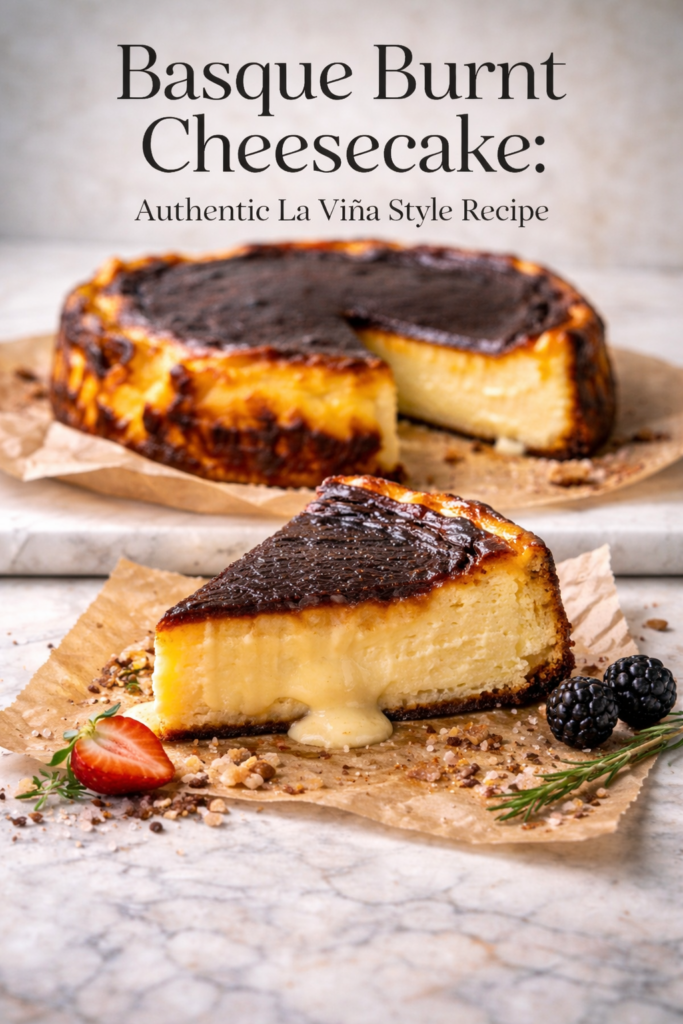
Have you ever tried to make a Basque Burnt Cheesecake? Unlike the dense, precise New York variety, this Spanish masterpiece actively encourages burning. Hailing from the culinary capital of San Sebastian, this "burnt" dessert is ironically the most forgiving and impressive cheesecake you will ever bake. With a scorched, mahogany-black exterior hiding an oozy, custardy center, it defies every traditional baking rule. There is no crust to pre-bake, no cracking anxiety, and no complex water bath. In just 25 minutes, you will create a dessert that looks like it came from a Michelin-starred kitchen.
The History: Santiago Rivera’s Accidental Genius at La Viña
To truly understand the Basque Burnt Cheesecake, you must travel to the heart of Spain’s Basque Country: San Sebastian. While the city is world-famous for its pintxos culture, the dessert at a small, unassuming bar called La Viña has become a global pilgrimage site. According to Accor’s culinary guide, the story begins in 1990 when Chef Santiago Rivera was looking to innovate.
He wanted to break away from the heavy, graham-cracker-crusted cheesecakes that dominated the era. Legend has it that he was trying to make a traditional cheese tart but left it in a blisteringly hot oven for too long. When he pulled it out, the top was black and the center was frighteningly liquid. Before throwing it away, he tasted it. The result was shocking: a bitter-sweet, caramelized crust giving way to the smoothest, creamiest custard he had ever experienced.
This love for "burnt" flavors is deeply embedded in Spanish cooking. Just as we cherish the socarrat—the caramelized, crispy layer of rice at the bottom of a Chicken and Chorizo Paella—Basque chefs celebrate the char. Rivera’s innovation was applying that same principle to dairy. For decades, food lovers have waited in long lines at La Viña for a humble, rustic slice served on a paper plate. The cake represents the Basque spirit: bold, unpretentious, and deeply satisfying. It evolved from a local secret to an internet sensation precisely because it is easier and more impressive than its traditional counterparts. For another savory take on Spanish-inspired cooking, try this Chicken Marbella with olives and capers.
The Science: The Maillard Reaction and The Wobble
Why does this recipe work so spectacularly well? It comes down to two scientific principles: The Maillard Reaction and Egg Coagulation.
First, the "burn." When we bake this cheesecake at 500°F (260°C) , we are accelerating the Maillard reaction—a chemical reaction between amino acids and reducing sugars that creates complex, savory, toasty flavors. This is the same phenomenon that browns a loaf of bread or sears a steak. At these extreme temperatures, the surface browns rapidly, creating a bitter-sweet "burnt" flavor that cuts through the richness of the cream cheese. The high fat content (33% milk fat) prevents the sugars from turning into bitter carbon ash, halting the reaction at the perfect stage of caramelized bliss. You can see this same browning principle at work in our Banana Bread with Chocolate Chips, where high heat creates a deeply toasted crust, or in this savory Caramelized Tomato Tarte Tatin, where sugars transform into a deep mahogany glaze.
Second, the texture. To understand the stark contrast between this dessert and a traditional one, Serious Eats’ guide to cheesecake physics explains that traditional versions bake low and slow to gently coagulate egg proteins evenly. Here, the fierce heat sets the outer perimeter instantly, forming a sturdy "wall." However, the center of the cake acts as a heat sink. When we pull the cake at 25 minutes, the center is still around 145°F to 150°F—hot enough to pasteurize the eggs but not hot enough to turn them solid. This leaves you with a custardy, molten center that slices like a dream but melts on your tongue like a pot de crème.
What Makes a Basque Burnt Cheesecake Different?
Unlike New York-style cheesecake, the Basque version is baked at a very high temperature (500°F) to create a caramelized, burnt exterior while maintaining a soft, custardy, and wobbly center. It is famously crustless and uses only five main ingredients: cream cheese, sugar, eggs, heavy cream, and a pinch of salt (no flour required for the authentic version). For the best results, Cook’s Illustrated recommends using full-fat, brick-style cream cheese rather than spreadable tubs, as the stabilizers in whipped varieties can alter the texture of the custard.
Good Pairing Food and Drink
The beauty of the Basque Burnt Cheesecake is its balance of savory burnt notes and sweet cream. It pairs beautifully with bright, acidic, or bitter accompaniments.
Appetizer:Jamón Ibérico with Pan con Tomate. Start Spanish. The salty, nutty, cured ham and the garlic-rubbed, tomato-soaked toast prepare your palate for the creamy cheesecake. For a hot appetizer, try these Pan-Seared Salmon with Warm Tartare Sauce—the rich, buttery fish primes the palate for a heavy dessert.
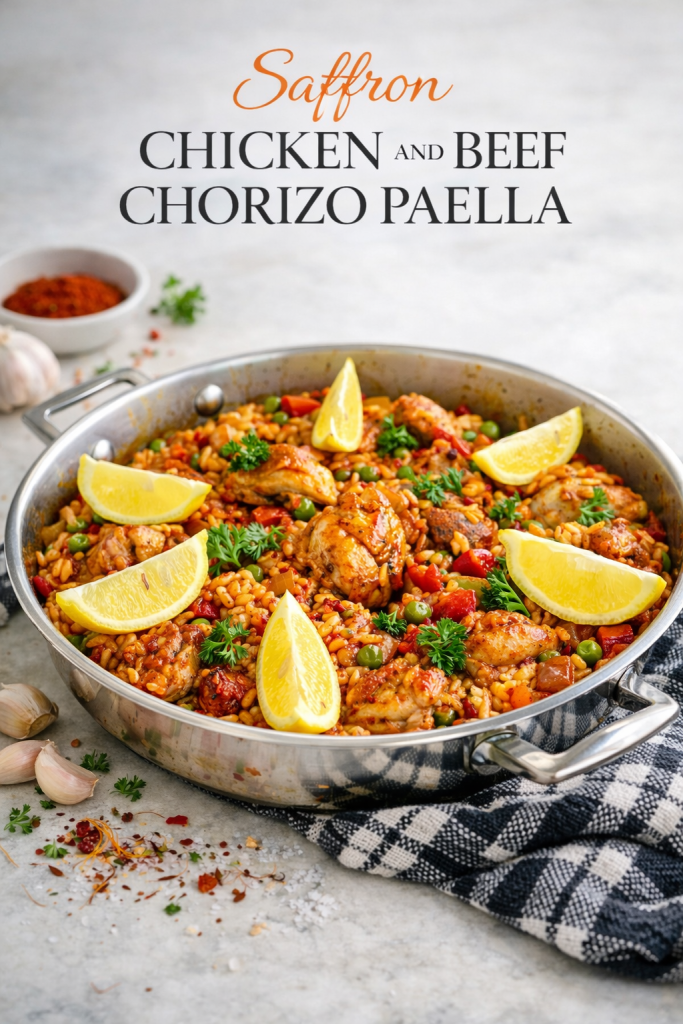
Main Course:Paella de Mariscos (Seafood Paella) . Saffron-infused rice loaded with shrimp, mussels, and clams. The briny, oceanic flavors provide a savory counterpoint. Keep the meal entirely Spanish with this Saffron Chicken and Beef Chorizo Paella.
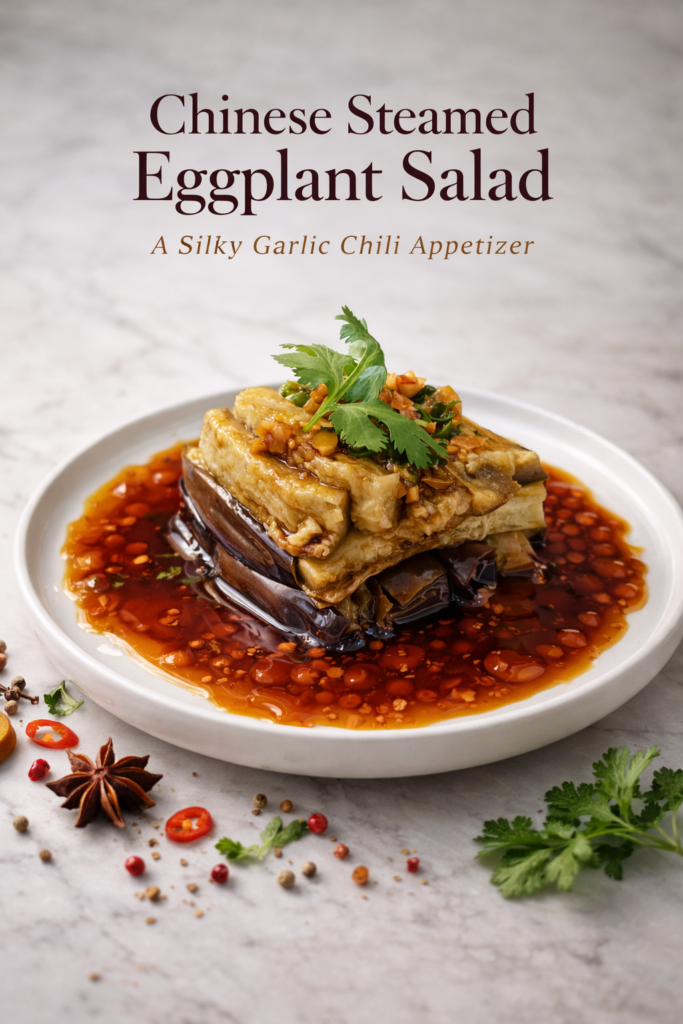
Side Dish (The Perfect Contrast):Chinese Steamed Eggplant Salad. To balance the heavy, decadent nature of the cheesecake, you need high acidity and a "clean" feel. This hand-torn eggplant salad provides a sharp, silky contrast. The garlic-chili oil and cilantro cleanse the palate between bites of rich cream cheese, while the soft texture of the eggplant mirrors the "oozy" center of the cake.
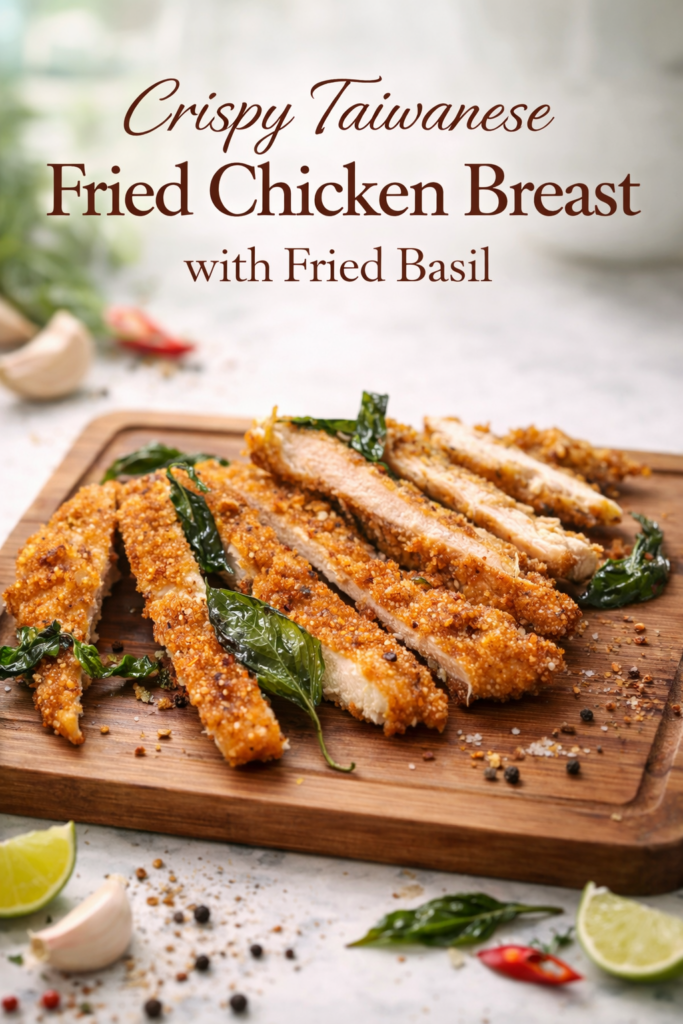
Snack (Textural Variety):Crispy Taiwanese Fried Chicken (盐酥鸡). If you are serving the cheesecake as part of a casual spread or "tapas night," this is the ultimate salty-to-sweet transition. The craggy, crunchy sweet potato starch crust and aromatic fried basil provide a massive textural departure from the smooth cheesecake. The savory five-spice seasoning makes the sweetness of the cheesecake's caramelized top pop even more.
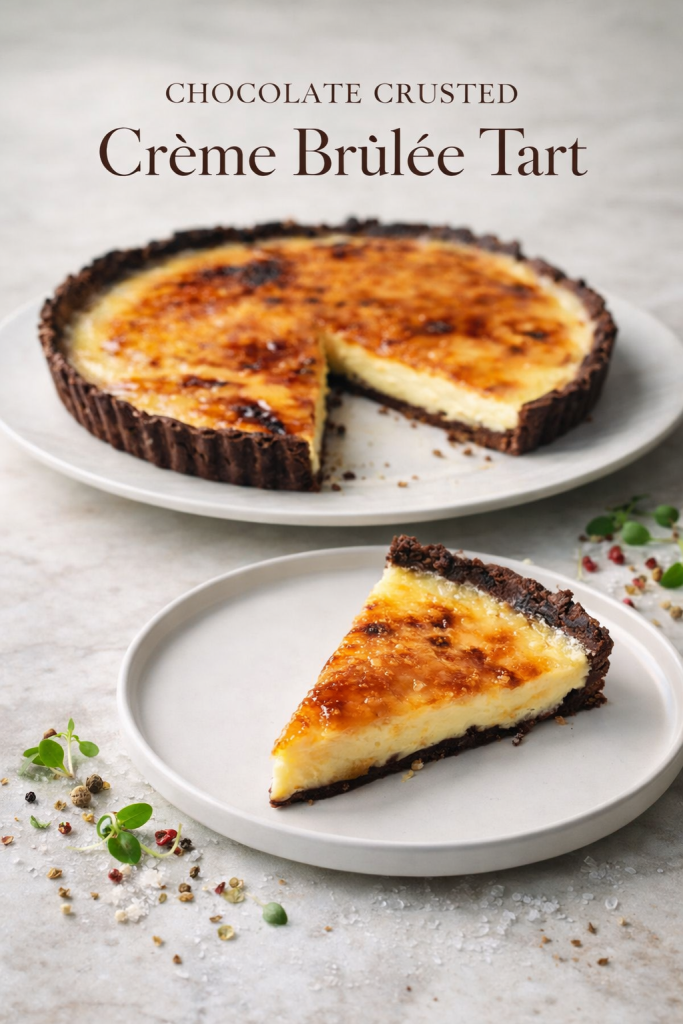
Dessert (Sister Recipe): For those who can't get enough of a "burnt" sugar topping paired with a creamy center, you must make this Chocolate Crusted Crème Brûlée Tart. It is the ultimate companion to this cheesecake.
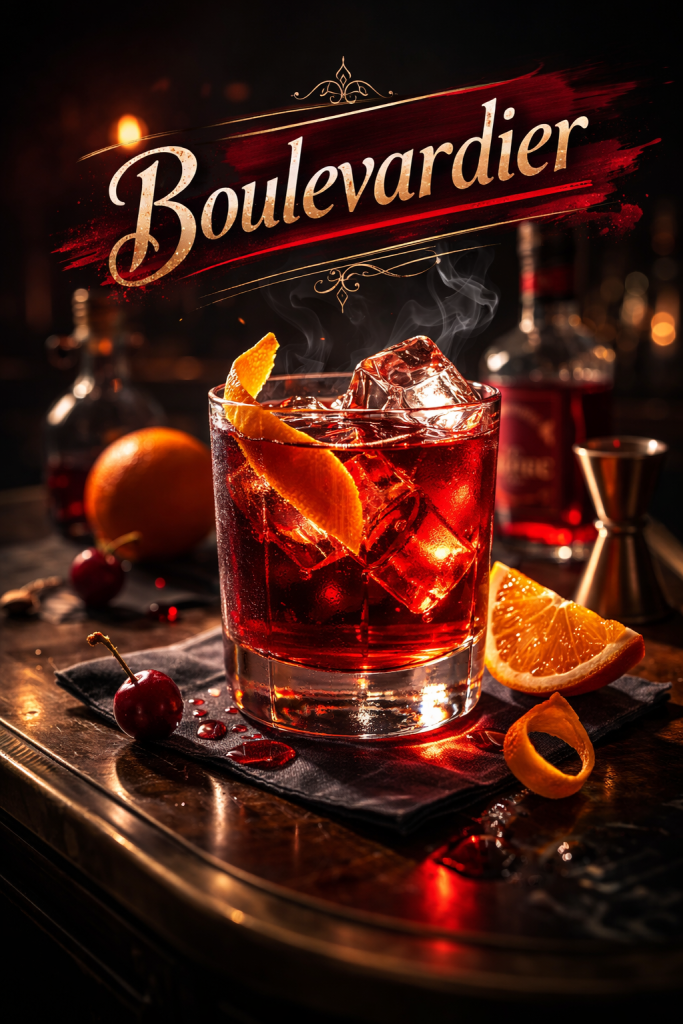
Cocktail:Boulevardier. Bourbon, Campari, and Sweet Vermouth. The bitter orange notes of the Campari cut through the fat of the cheesecake like a knife.
Non-Alcoholic Drink:Espresso or Cold Brew. Coffee bitterness harmonizes with the "burnt" top, enhancing the caramel notes.
The iconic crustless Spanish cheesecake with a burnt, caramelized top and an irresistibly oozy, custardy center. No flour, no water bath, just 5 ingredients.
Prepare the Oven and Pan. Preheat your oven to 500°F (260°C) . This is crucial. Because home ovens can vary widely, use an oven thermometer to verify the temperature. Line a 10-inch springform pan with two large sheets of parchment paper. Crumple the paper, then press it into the pan, allowing the edges to extend about 2 inches above the rim. The paper will buckle and fold—this is exactly what you want.
2
Blitz the Batter (Food Processor Method). In a food processor, combine the room-temperature cream cheese and sugar. Pulse to break it up. Add the eggs, salt, and heavy cream. Process for 3 full minutes. Set a timer. You want the batter to become extremely smooth, liquid, and glossy.
3
Alternative Mixer Method. Use a stand mixer with a paddle attachment. Beat cream cheese and sugar for 5 minutes until completely smooth. Scrape the bowl often. Add eggs one at a time on low speed. Do not whisk on high; you don't want to incorporate too much air.
4
Pour and Pan. Pour the batter directly into the prepared parchment-lined pan. Do not butter the pan. Do not smooth the top too much; rustic is better.
5
The High-Heat Bake. Place the pan on a baking sheet (to catch drips) and put it in the center of the oven. Bake for 25 minutes. Do not open the oven for the first 20 minutes.
6
Look for the Signs. At 25 minutes, the top should be very dark brown or black in spots. The edges should be puffed and set, but the center will look incredibly loose and jiggly, like a liquid. This is correct.
7
Cool. Remove the cake and place it on a wire cooling rack. It will deflate dramatically. Cool completely to room temperature (about 1-2 hours).
8
Chill. Place the cooled cake (still in the pan) into the refrigerator. Chill for at least 4 hours, but preferably overnight. This sets the center to a custard-like consistency.
Nutrition Facts
Servings 16
Amount Per Serving
Calories580kcal
% Daily Value *
Total Fat45g70%
Saturated Fat25g125%
Sodium350mg15%
Total Carbohydrate35g12%
Protein10g20%
* Percent Daily Values are based on a 2,000 calorie diet. Your daily value may be higher or lower depending on your calorie needs.
Note
Pro Tips for Success:
Room Temperature is Non-Negotiable: If your cream cheese or eggs are cold, the batter will be lumpy. Cube your cream cheese an hour before starting.
The Jiggle Test: When you pull it out of the oven, you might think it is raw. Trust the process. If the center is completely solid, it is over-baked and will be dry.
Don't Line the Bottom Perfectly: The magic of this cake is the rough, craggy edges. The batter seeps into the parchment folds, creating thin, caramelized crispy bits.
Storage & Make-Ahead:
Refrigerator: Store in an airtight container for up to 5 days. The texture improves on day 2.
Freezer: Wrap slices tightly in plastic wrap and foil. Freeze for up to 3 months. Thaw overnight in the fridge.
Substitutions:
Gluten-Free: This recipe is naturally gluten-free. No modifications needed.
No Flour for Purists: Authentic La Viña style uses no flour. Do not add cornstarch unless you want a denser, less "molten" texture.
Low Sugar: You cannot substitute granulated sugar with artificial sweeteners 1:1 here, as sugar is required for the Maillard reaction (browning).
Troubleshooting:
Why is my top pale? Your oven wasn't hot enough, or you opened the door too often. Move the rack to the top third of the oven.
Why is my center solid? You baked it too long. Next time, pull it out at exactly 25 minutes, even if the wobble scares you.
Keywords:
Basque Burnt Cheesecake, San Sebastian Cheesecake Recipe, La Viña Cheesecake Recipe, Tarta de Queso, Spanish Burnt Cheesecake, authentic basque cheesecake no flour, easy 5-ingredient burnt cheesecake, how to get perfect burnt top on cheesecake, gluten-free san sebastian cheesecake, food processor vs mixer cheesecake, crustless cheesecake, jiggly cheesecake texture, high heat baking 500°F,
In most baking, the crust is a protective layer. The Basque Burnt Cheesecake rejects this. By removing the crust, the intense heat directly attacks the dairy. The lactose and milk proteins on the surface undergo rapid polymerization, creating a "crust" out of the cheese itself. This tastes like toasted milk and butter—far more flavorful than graham crackers.