
INTRO
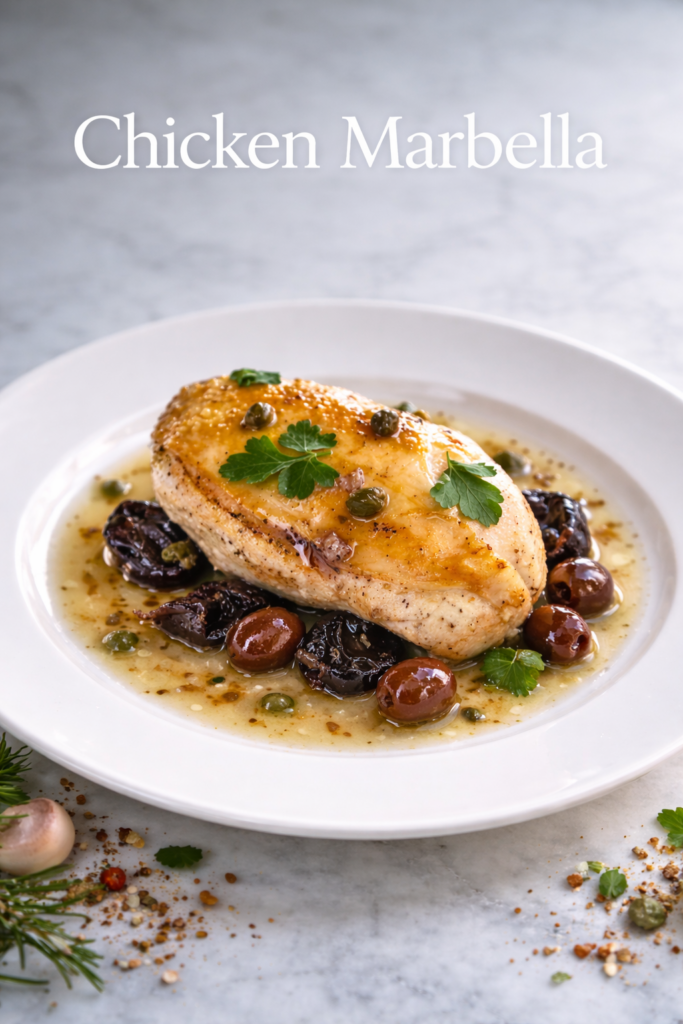
Some recipes transcend their era. The chicken marbella recipe from The Silver Palate cookbook (1982) has achieved cult status—and for good reason. This unlikely masterpiece marries briny Spanish green olives, sweet prunes, tangy capers, and a dusky blanket of brown sugar into one gloriously sticky, savory-sweet pan sauce. You marinate bone-in, skin-on chicken pieces overnight, then roast them low and slow until the thighs yield clear juice and the skin turns golden and crisp. What emerges from the oven tastes impossibly complex—as if you spent all day tending a fire, not just basting a sheet pan. But here’s the secret: Chicken Marbella is nearly foolproof. It welcomes you hot from the oven, at room temperature, or straight from the fridge the next morning. This version honors the original while explaining the why behind every clove of garlic and splash of vinegar. Let’s cook a piece of culinary history.
THE HISTORY
Chicken Marbella didn’t emerge from a rustic farmhouse or a royal court. It was born in a Manhattan kitchen in the early 1980s, when Sheila Lukins and Julee Rosso opened a tiny specialty food shop called The Silver Palate. Their 1982 cookbook—written in a breezy, confident voice—became the bible of American dinner parties. Among its 350 recipes, one shone brightest: Chicken Marbella. The dish captured the spirit of the era: bold, eclectic, and unapologetically easy.
But the flavor roots run much deeper. The sweet‑sour‑salty blueprint—fruit with vinegar, olives with sugar—echoes Sephardic Jewish cooking from medieval Spain. After the 1492 expulsion, Jewish communities carried this preserved‑fruit-and-brine technique across the Mediterranean and into the Americas. By the time it landed in Manhattan, prunes had become a pantry staple, and capers nodded to the old country. Chicken Marbella became a quiet bridge: a dish that felt exotic yet familiar, elegant yet forgiving. Today, food historians call it a “retro revival.” Social media calls it genius. We call it dinner.
THE SCIENCE
Why does a handful of prunes and a glug of vinegar transform a simple roast chicken into something velvety and complex? The answer lies in three chemical processes: the Maillard reaction, acid‑sugar balance, and collagen breakdown.
First, the brown sugar isn’t just for sweetness. When you sprinkle it over the marinated chicken before baking, it caramelizes in the 350°F oven, kickstarting the Maillard reaction—that browning magic that creates hundreds of aromatic compounds. At the same time, the red wine vinegar and white wine provide acidity. Acid lowers the pH of the pan juices, which prevents the prunes from turning mushy and helps the chicken skin retain a slight tautness. More importantly, the acid teams up with the sugar to create flavor layering: our taste buds detect sweet, sour, salty (from olives and capers), and savory (from oregano and garlic) all at once. That explosion is why one bite feels so satisfying.
Finally, the overnight marinade does more than flavor. The olive oil and vinegar gently denature surface proteins, while the salt (2¼ teaspoons kosher) works deep into the muscle through osmosis. As the chicken roasts, collagen in the joints and skin breaks down into gelatin, thickening the pan juices into a glossy, clinging sauce. No flour or cornstarch required. That’s the quiet science of a one‑pan wonder.
GOOD PAIRING FOOD AND DRINK
Chicken Marbella’s sweet, salty, tangy, and briny profile is a gift for pairing. It loves bright acidity, creamy textures, and flavors that echo its Mediterranean soul. Here are perfect companions from the Food Illustrated collection.
- One Appetizer: Cucumber Gazpacho (10-Minute No-Cook Soup). Start with something cool and herbaceous. This dairy-free, vegan gazpacho—blended with green grapes and fresh dill—mirrors the marinade’s bright, acidic backbone without competing. The chilled, silky soup prepares your palate for the rich, sticky chicken to come.
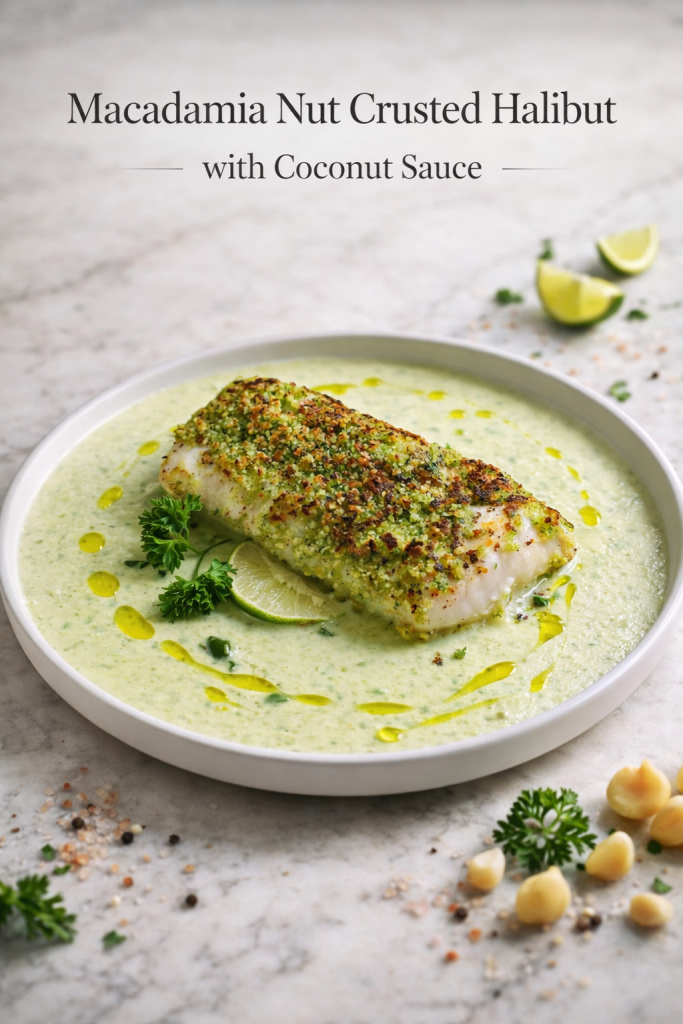
- One Main Course: (Chicken Marbella is the main.) But for a surf-and-turf twist, serve it alongside Macadamia Nut Crusted Halibut. The flaky, buttery fish with its smoky coconut-jalapeño sauce offers a creamy, tropical contrast to the chicken’s sweet-savory intensity. Two proteins, one unforgettable plate.
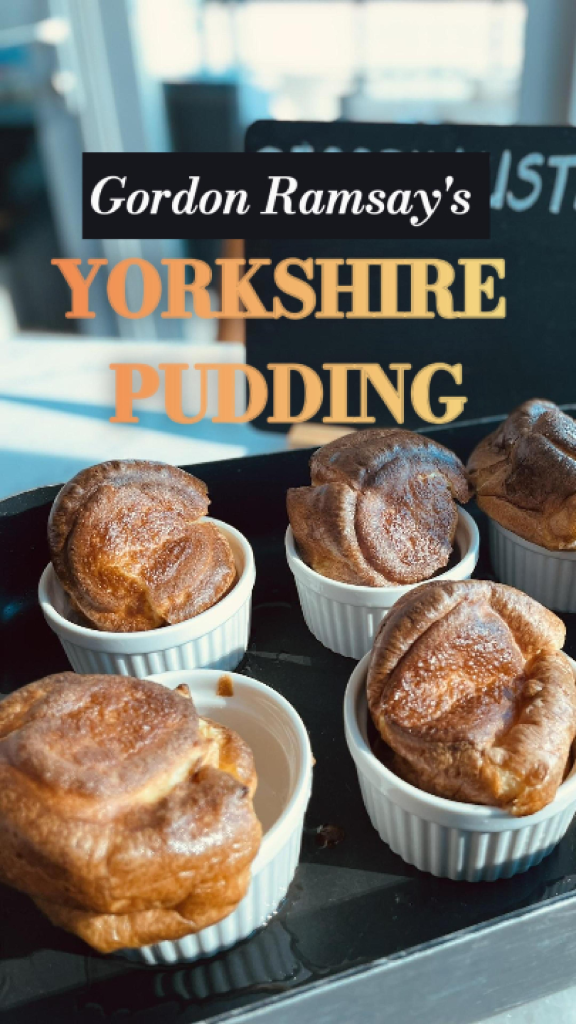
- One Side Dish: You need something to soak up every drop of that glossy pan sauce. Gordon Ramsay’s Perfect Yorkshire Puddings are the unexpected hero. Their crispy, airy, golden cups are ideal for catching the prune-and-olive juices. The savory, eggy batter also stands up beautifully to the brown sugar glaze. Alternatively, for a more traditional route, serve with coconut-lime rice (from the halibut recipe).
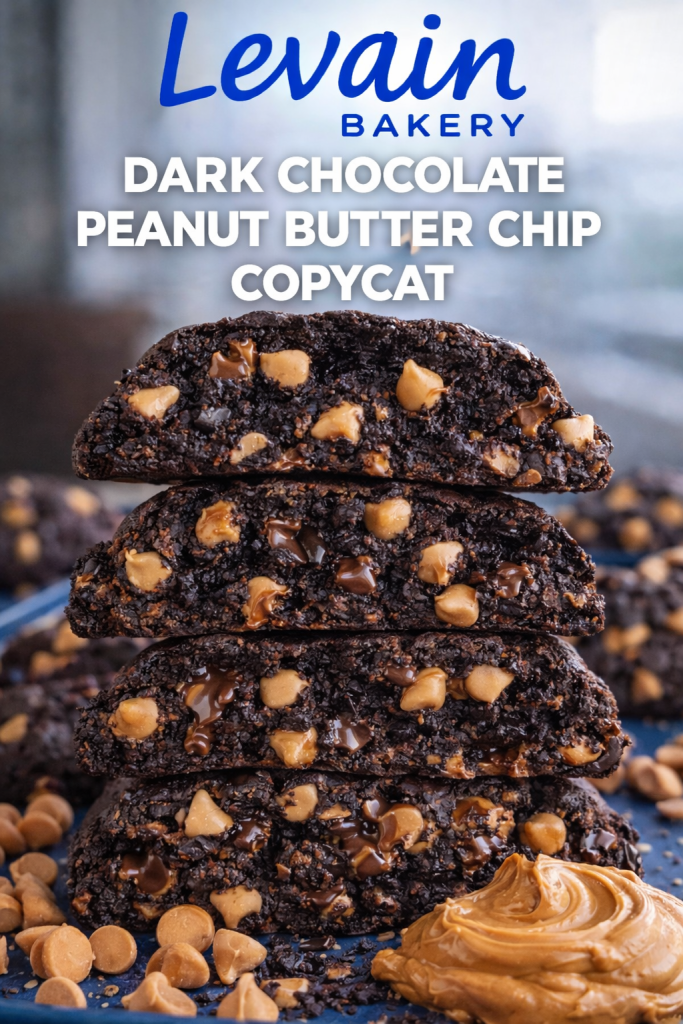
- One Dessert: End on a sweet-salty high note. Levain Bakery Copycat Cookies (Dark Chocolate Peanut Butter Chip). The gooey, fudgy centers and melty peanut butter chips echo the brown sugar richness of the chicken, while the dark chocolate provides a deep, bitter counterpoint that cleanses the palate. A giant cookie is always a good idea.
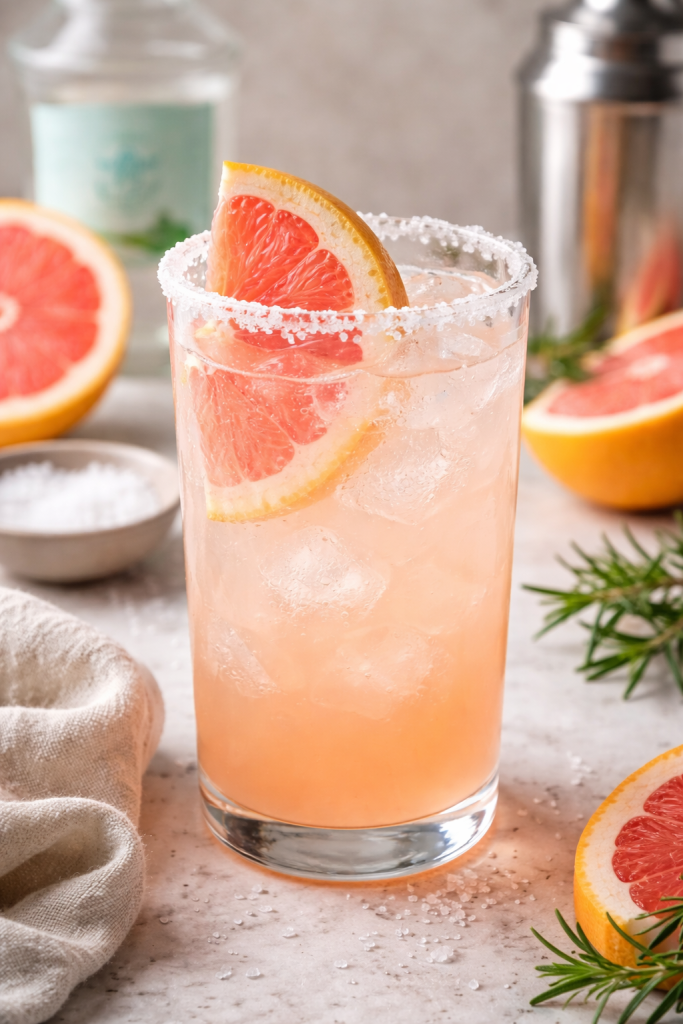
- One Cocktail: Salty Dog Cocktail. This is a masterstroke. The bright, bitter grapefruit and gin mirror the red wine vinegar and olives in the marinade. The salted rim directly echoes the briny capers and Spanish olives. Together, they create a perfect flavor loop—sip, bite, smile.
- One Non-Alcoholic Drink: Rosemary Greyhound (No Alcohol). Muddle a sprig of fresh rosemary with ¼ oz simple syrup. Add 4 oz fresh grapefruit juice and 2 oz chilled water or club soda. Serve over ice in a salt-rimmed glass. The herbaceous rosemary ties to the oregano in the chicken, while the grapefruit and salt deliver the same bright, briny lift as the cocktail.
Description
This classic chicken marbella recipe transforms bone-in chicken pieces into a velvety, sweet‑savory masterpiece. Marinate overnight with garlic, oregano, vinegar, prunes, olives, and capers, then bake low and slow until the pan sauce turns glossy and rich. Serve hot or at room temperature.
Ingredients
For the marinade & chicken:
Just before baking:
For serving:
Instructions
-
Make the marinade. In a very large bowl, combine the minced garlic, dried oregano, kosher salt, black pepper, red wine vinegar, olive oil, prunes, Spanish olives, capers (plus their brine), and bay leaves. Stir well.
-
Marinate the chicken overnight. Add the chicken pieces to the bowl. Using your hands, rub the marinade all over each piece—especially under the skin where flavor penetrates deepest. Cover the bowl tightly with plastic wrap or a lid. Refrigerate for at least 8 hours, or up to 24 hours. (Don’t skip this: overnight marination is non‑negotiable for the signature texture.)
-
Preheat and arrange. When ready to bake, position two oven racks in the centermost positions. Preheat your oven to 350°F (175°C). Arrange the marinated chicken in a single layer, skin‑side up, across two 9×13‑inch (23×33‑cm) baking dishes. Spoon the remaining marinade (including all prunes, olives, and capers) evenly over the chicken.
-
Add sugar and wine. Sprinkle the light brown sugar over all the chicken pieces. Pour the white wine around them (not directly on top, or you’ll wash off the sugar).
-
Bake and baste. Bake for about 1 hour, basting occasionally with the pan juices. You’ll know the chicken is done when a fork pricked into the thickest part of a thigh yields clear yellow juice (not pink). An instant‑read thermometer should register 165°F (74°C) in the thigh.
-
Serve two ways (your choice).
-
Standard: Using a slotted spoon, transfer the chicken, prunes, olives, and capers to a serving platter. Discard the bay leaves. Spoon some of the pan juices over the top, sprinkle generously with fresh parsley, and pass the remaining sauce in a gravy boat.
-
Crispy skin (recommended): For crackling‑crisp skin, transfer the baked chicken pieces to a foil‑lined baking sheet. Broil 5 inches from the heating element for 2–3 minutes, watching closely so the sugar doesn’t burn. Then transfer to a platter, add the pan juices, parsley, and serve.
-
Serve hot or at room temperature. Chicken Marbella is legendary at room temperature—the flavors deepen as it cools.
Nutrition Facts
Servings 4
- Amount Per Serving
- Calories 485kcal
- % Daily Value *
- Total Fat 24g37%
- Saturated Fat 5g25%
- Sodium 890mg38%
- Total Carbohydrate 26g9%
- Dietary Fiber 2g8%
- Sugars 18g
- Protein 38g76%
* Percent Daily Values are based on a 2,000 calorie diet. Your daily value may be higher or lower depending on your calorie needs.
Note
Pro tips for success:
- Don’t skip the overnight marinade. The salt needs time to penetrate the meat; 8 hours is the minimum.
- Use light brown sugar (not dark) unless you want a deeper molasses flavor. Dark brown sugar works, but the sauce will be less bright.
- Basting is optional but helpful. If you baste twice (at 30 and 50 minutes), the skin turns more evenly golden.
Make‑ahead & storage:
- Marinate the chicken up to 24 hours in advance.
- Bake fully, then cool and refrigerate for up to 3 days. Reheat covered at 300°F until warm.
- To freeze: Bake, cool completely, then freeze in a sealed container for up to 2 months. Thaw overnight in the fridge and reheat.
Substitutions:
- Chicken: Use 8 large bone‑in, skin‑on thighs instead of whole cut‑up chickens. Reduce baking time to 45 minutes.
- Prunes: Dried apricots or dried figs work, but the dish becomes sweeter and less tangy.
- Spanish olives: Any briny green olive (Picholine, Castelvetrano) works. Avoid black olives—they’re too mild.
- White wine: Use chicken broth + 1 tablespoon white wine vinegar in a pinch.
- Brown sugar: Coconut sugar or maple sugar will work but produce a less glossy sauce.
Troubleshooting:
- Sauce is too thin? Remove chicken and simmer pan juices on the stovetop for 5–7 minutes until reduced.
- Skin isn’t crispy? Use the broiler method in step 6. Watch closely—sugar burns fast.
- Too salty? Next time, reduce kosher salt to 1¾ teaspoons and rinse the capers. Serve with unsalted rice or bread to balance.
Ingredient sourcing: Look for Manzanilla olives in the international aisle. Spanish capers packed in salt (rinsed) are superior to brined, but brined is fine.