
INTRO
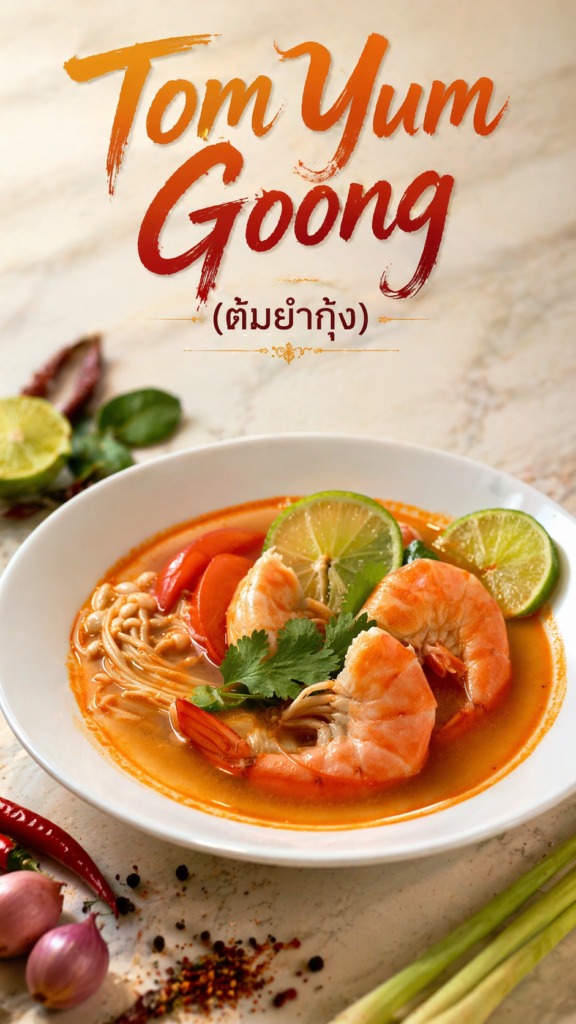
Few soups command the kind of devotion that tom yum goong does. One spoonful delivers an electrifying punch—sour, spicy, salty, and aromatic all at once. This iconic Thai hot and sour shrimp soup is the gold standard of Southeast Asian comfort food, and once you master this tom yum goong recipe, you’ll never settle for takeout again.
This version is clear, broth-forward, and uses delicate enoki mushrooms. It contains no onion, no shallots, and no oyster mushrooms—making it suitable for those following specific dietary preferences without sacrificing authenticity. What makes this recipe special? You’ll learn not just how to make it, but why each ingredient matters, from the scientific role of galangal to the precise moment to add lime juice. Let’s dive into the vibrant, soul-warming world of authentic Thai soup.
THE HISTORY
Tom yum goong (ต้มยำกุ้ง) translates literally to “boiled salad shrimp”—a seemingly contradictory name that reveals its essence. “Tom” means boiling, “yam” refers to a Thai salad’s characteristic hot-and-sour dressing, and “goong” means shrimp. The dish originated in Central Thailand, likely in the Chao Phraya River basin, where freshwater shrimp were abundant and wild herbs like lemongrass and galangal grew readily.
Historians trace tom yum’s roots to the Ayutthaya Kingdom (1351-1767), a period when Thai cuisine absorbed influences from trade routes connecting India, China, and Persia. The yam-style dressing—lime juice, fish sauce, and chilies—reflects Thai ingenuity: using bright, acidic flavors to balance the richness of river shrimp and the heat of a tropical climate.
For decades, tom yum goong remained a rustic riverbank dish. It entered mainstream Thai cuisine in the mid-20th century as Bangkok grew into a culinary capital. Today, it’s recognized globally as one of UNESCO’s signature Thai dishes (inscribed on the Representative List of the Intangible Cultural Heritage of Humanity in 2019). The version you’ll make here honors that heritage while adapting to modern kitchens—and dietary needs.
THE SCIENCE
Why does tom yum goong taste so incredibly vibrant? The answer lies in volatile aromatic compounds and acid-base chemistry. Lemongrass, galangal, and kaffir lime leaves contain essential oils—citral, eugenol, and limonene—that are fat-soluble but also release into hot water. Simmering these herbs at a gentle boil (not a rolling boil) extracts their oils without destroying their delicate molecules. That’s why you smash them first: breaking cell walls accelerates extraction.
The soup’s signature sourness comes from lime juice’s citric acid. Here’s the critical science: heat degrades citric acid’s flavor profile. When you boil lime juice, you lose the bright, forward sourness and are left with a flat, metallic taste. That’s why any authentic tom yum goong recipe adds lime juice at the very end, off the heat. The same principle applies to fish sauce (umami from glutamates) and palm sugar (balances pH). Together, they create a perfect flavor triangle: sour, salty, sweet.
The shrimp? They cook via protein denaturation. As heat penetrates the muscle fibers, proteins unwind and coagulate, turning the flesh from translucent to opaque pink. Overcooking—past 135°F (57°C)—squeezes out moisture, leaving rubbery shrimp. That’s why we add them late and watch closely.
🍽️ GOOD PAIRING FOOD AND DRINK
Pairing dishes with Tom Yum Goong is about balancing its signature spicy, sour, salty, and aromatic notes. You want dishes that either complement the broth’s brightness or contrast its heat with richness and texture. Below are perfect companions from the Food Illustrated archives and beyond.
Appetizer
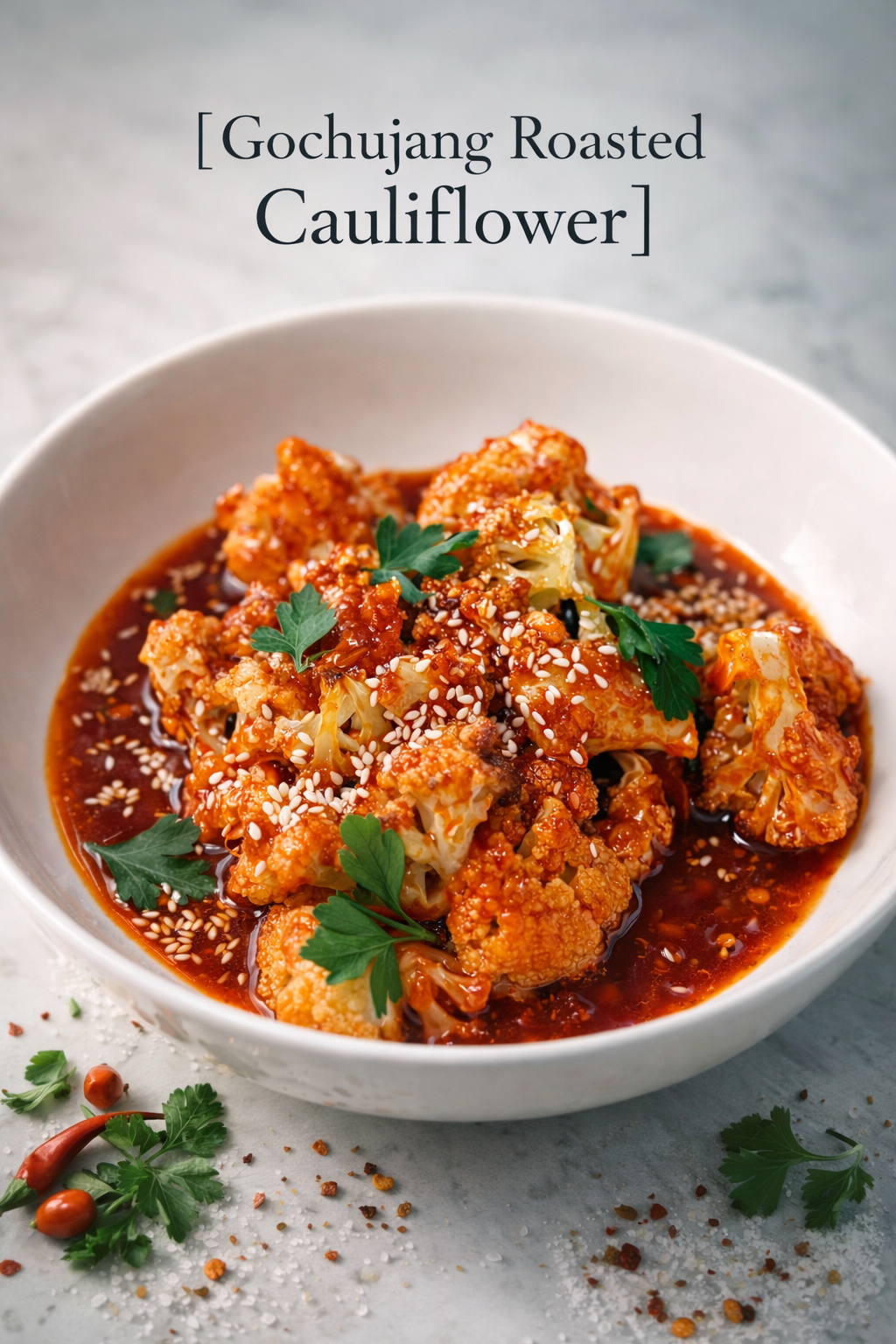
Gochujang Roasted Cauliflower: Sweet, Spicy & Crispy
This bold, umami-packed roasted cauliflower is a fantastic starter before Tom Yum. The sticky, fermented heat of the Korean gochujang glaze echoes the soup’s spicy depth, while the crispy, caramelized edges provide a textural counterpoint to the brothy soup. Both dishes share a love for fermented chili paste, creating a cohesive flavor journey from the first bite to the last sip.
Main Course (if serving Tom Yum as a starter)
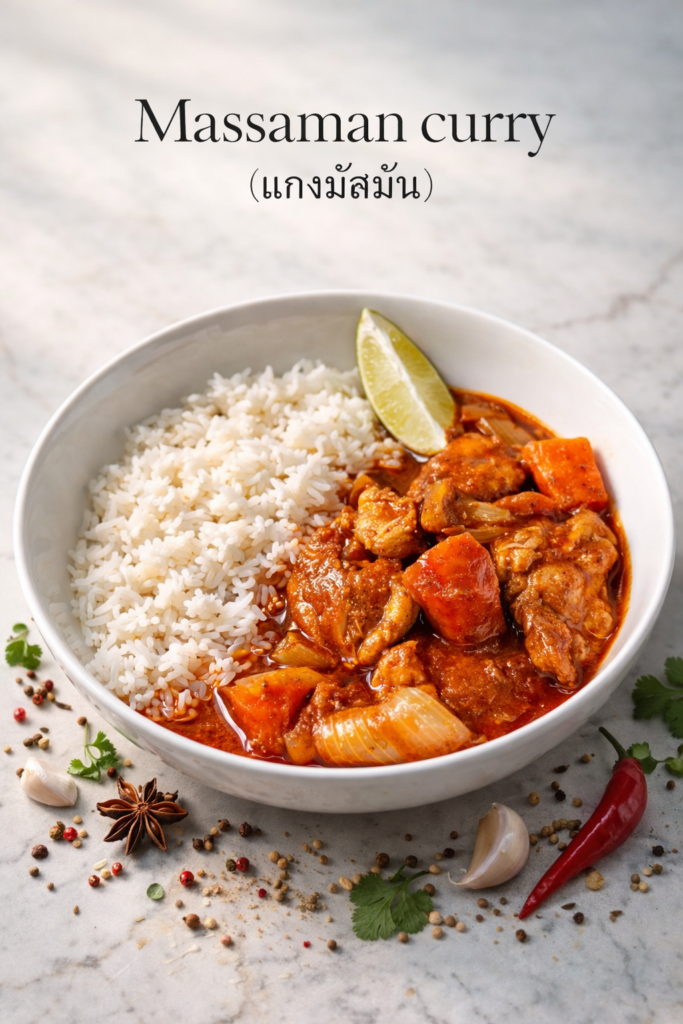
Massaman Chicken Curry: The King of Curries Made Simple
If you’re serving Tom Yum as an opener, follow it with this rich, creamy, and mild Thai curry. The Massaman’s warm spices (cinnamon, star anise, cardamom) and luxurious coconut milk provide a gentle, soothing contrast to the bright, sour heat of the Tom Yum. The tender chicken and potatoes make for a hearty, satisfying main course that still feels distinctly Thai.
Quick Main Course (weeknight option)
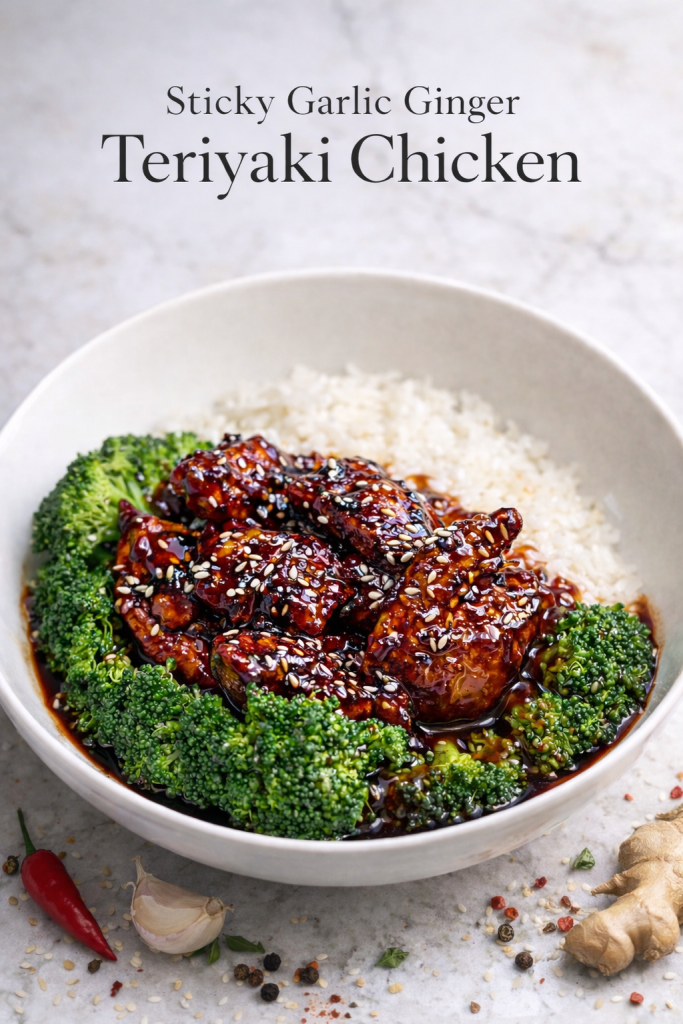
20-Minute Sticky Teriyaki Chicken: Faster Than Takeout
For a faster weeknight pairing, this sweet-savory teriyaki chicken is a winner. The glossy, caramelized glaze on the chicken offers a sticky, rich counterpart to the clear, acidic Tom Yum broth. Serve both with jasmine rice for a complete Asian-inspired meal that comes together in under 30 minutes.
Side Dish
Jasmine Rice (steamed)
Absolutely essential. The fragrant, slightly sticky rice absorbs the Tom Yum broth and tempers the spice. It’s the neutral canvas that lets the soup’s complex flavors shine.
Seafood Feast Main Course (for a special occasion)
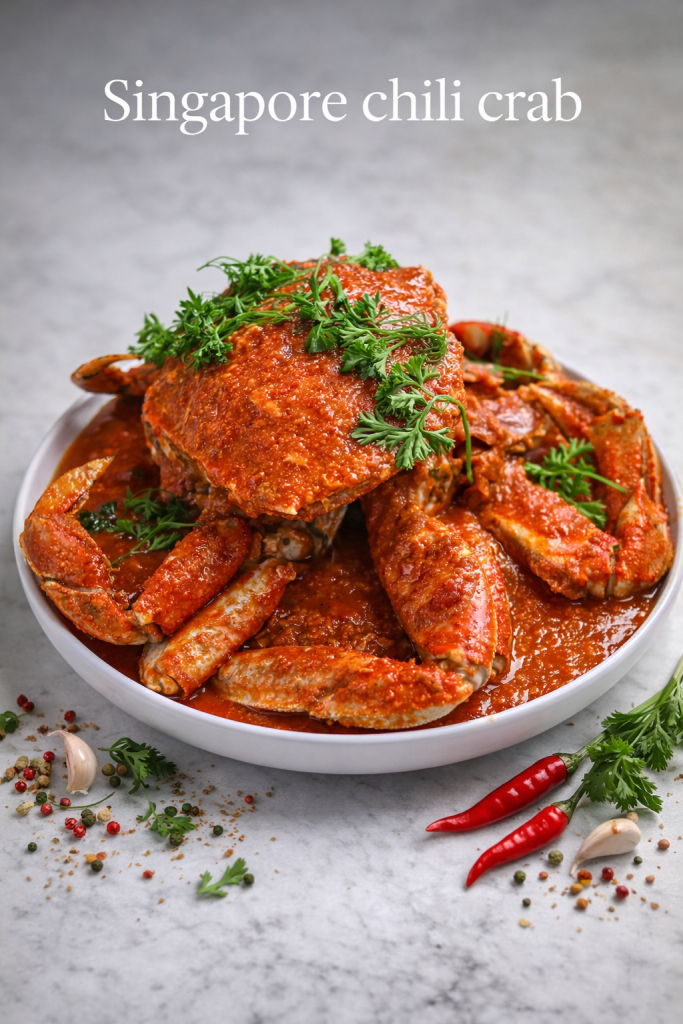
Authentic Singapore Chili Crab Recipe: The Ultimate Hawker Center Feast
For a truly spectacular Southeast Asian feast, serve Tom Yum Goong alongside this legendary Singapore chili crab. Both dishes celebrate the region’s love for sweet-spicy-savory seafood. The crab’s thick, egg-ribboned tomato-chili sauce is richer and more substantial than the Tom Yum broth, creating a beautiful contrast in textures and intensities. Provide plenty of mantou buns (fried or steamed) to soak up both the chili crab sauce and the last drops of Tom Yum.
Dessert
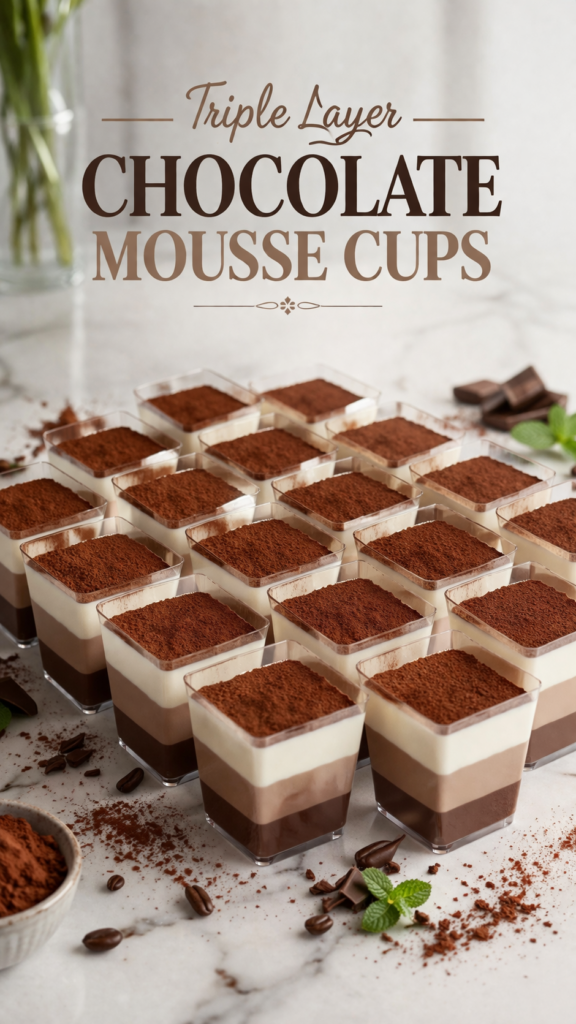
Chocolate Mousse Cake: No Bake Silky Eggless Dessert
After the intense, savory heat of Tom Yum, you need a cool, silky, and deeply satisfying finish. This no-bake chocolate mousse cake is perfect. Its rich, creamy texture and pure chocolate flavor provide a luxurious contrast without competing spices. The fact that it’s eggless and sets beautifully with gelatin makes it a reliable, make-ahead showstopper.
Cocktail – Lemongrass Mojito
Muddle fresh lemongrass (instead of mint) with lime juice, simple syrup, white rum, and top with soda water. The herbaceous, citrusy notes directly echo the soup’s lemongrass and kaffir lime, while the effervescence cleanses the palate between spicy bites.
Non-Alcoholic Drink – Iced Thai Tea (Cha Yen)
The creamy, sweet, spiced tea (with star anise and tamarind) is a classic pairing. The cold, milky sweetness soothes the tongue after the soup’s heat, while the spices subtly harmonize with the aromatic broth.
📚 A Note on Food Preservation & Flavor
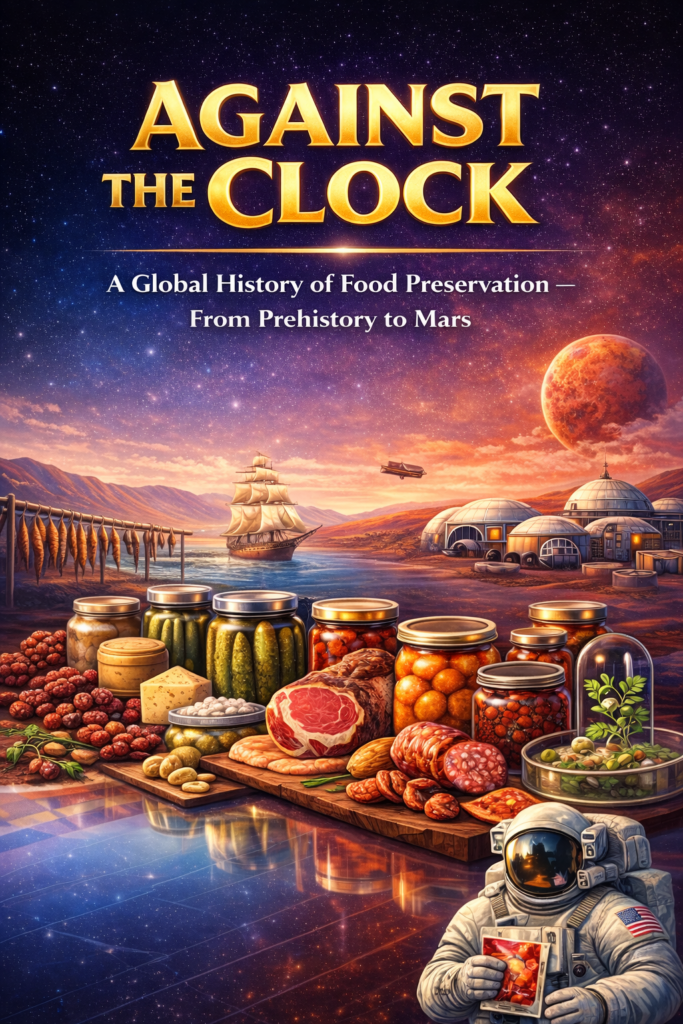
The bold, layered flavors in Tom Yum Goong—from fermented fish sauce to dried chilies—are a testament to the power of food preservation. These techniques don’t just prevent spoilage; they create entirely new dimensions of taste.
For a deep dive into how salt, smoke, microbes, and human ingenuity have shaped global cuisines (from ancient fish sauce to modern space missions), explore my book:
Against the Clock: A Global History of Food Preservation—From Prehistory to Mars
How salt, smoke, microbes, and ingenuity saved us from the relentless march of spoilage.
Available now on Amazon. Learn why the umami in your Tom Yum owes its existence to thousands of years of preservation wisdom.
Description
This authentic tom yum goong recipe delivers the perfect balance of spicy, sour, salty, and aromatic flavors in under 30 minutes. Made with succulent shrimp, fragrant herbs, and delicate enoki mushrooms—and no onion or shallots—this Thai hot and sour soup is restaurant-quality and surprisingly easy at home.
Ingredients
For the Aromatic Broth:
For the Shrimp & Soup Base:
For the Seasoning:
For Garnish:
Instructions
-
Prepare the shrimp stock (optional but rewarding). In a medium pot, combine 4 cups of water and the reserved shrimp shells (and heads, if using). Bring to a gentle simmer over medium heat. Cook for 8-10 minutes, then strain the liquid through a fine-mesh sieve. Discard the shells. Return the fragrant stock to the pot. Skip this step and use plain water for a lighter, faster soup.
-
Build the aromatic base. Add the smashed lemongrass, sliced galangal, torn kaffir lime leaves, smashed chilies, and smashed garlic to the pot. Bring to a gentle simmer (small bubbles, not a rolling boil) over medium heat. Simmer for 5-7 minutes until the kitchen smells intensely fragrant.
-
Add the tomato and shrimp. Add the tomato wedges and cook for 1 minute. Add the peeled shrimp. Watch closely—they will turn pink and opaque in just 1-2 minutes. Do not overcook. The shrimp are ready when they curl into a loose "C" shape (a tight "O" shape means they're overdone).
-
Add the enoki mushrooms. During the last 30 seconds of cooking, add the separated enoki mushrooms. Stir gently. They need only a quick warm-through to absorb the broth's flavor. Overcooking turns them limp and slimy.
-
Season the soup. Turn the heat to low or remove the pot from the stove entirely. Add:
-
3 tablespoons fish sauce
-
1 teaspoon palm sugar
-
3-4 tablespoons fresh lime juice (start with 3, taste, add more)
-
1 tablespoon nam prik pao (if using), stir until dissolved
-
Taste and adjust. This is the most important step. Tom yum is about balance. Taste the broth. Need more salt? Add fish sauce drop by drop. More sour? A squeeze of lime. More heat? Smash another chili into the pot. Too intense? A teaspoon of sugar or a splash of water.
-
Serve immediately. Ladle the soup into bowls. Garnish generously with fresh cilantro and Thai basil (if using). Serve hot with a side of jasmine rice. Do not let the soup sit—the herbs will become bitter and the shrimp will continue cooking.
Nutrition Facts
Servings 3
- Amount Per Serving
- Calories 210kcal
- % Daily Value *
- Total Fat 4g7%
- Saturated Fat 0.5g3%
- Cholesterol 145mg49%
- Sodium 1450mg61%
- Total Carbohydrate 12g4%
- Dietary Fiber 2g8%
- Sugars 6g
- Protein 28g57%
* Percent Daily Values are based on a 2,000 calorie diet. Your daily value may be higher or lower depending on your calorie needs.
Note
Pro Tips for Success:
- Smash, don't chop: Smashing lemongrass, galangal, and chilies releases essential oils without making them hard to fish out later. Use the flat side of your knife or a meat mallet.
- Lime juice goes last, off heat: This is non-negotiable. Boiled lime juice tastes flat and bitter.
- Fresh herbs only: Dried lemongrass or powdered galangal will not produce the same bright, layered flavor. Seek out a local Asian grocery or order fresh herbs online from ImportFood.com.
- Shrimp doneness: Remove the pot from heat the moment the shrimp turn pink and just begin to curl. Residual heat will continue cooking them slightly.
Make-Ahead Instructions:
You can prepare the aromatic broth (through step 2) up to 2 days ahead. Cool completely, refrigerate in an airtight container. When ready to serve, reheat the broth to a simmer, then continue with step 3 (add tomato, shrimp, mushrooms). Add lime juice and fish sauce only at the very end.
Storage Guidelines:
- Refrigerator: Store leftover soup (without garnishes) in an airtight container for up to 1 day. The herbs will continue to steep and may become bitter. The shrimp will also become firmer.
- Freezer: Not recommended. The texture of the shrimp and mushrooms degrades significantly, and the lime flavor fades.
Substitutions:
- No galangal? Use fresh ginger. The flavor will be sharper and less floral, but still delicious.
- No kaffir lime leaves? Add 1 extra strip of lime zest and 1 bay leaf. Not authentic, but works.
- No nam prik pao? Omit or add ¼ teaspoon smoked paprika + ¼ teaspoon chili flakes + a tiny drop of molasses.
- Vegetarian version: Use vegetable stock, substitute shrimp with firm tofu or king oyster mushrooms, and use vegetarian fish sauce (soy sauce + kombu + shiitake).
Troubleshooting:
- Soup tastes flat: You likely added lime juice too early or not enough. Add another squeeze of fresh lime off heat.
- Too salty: Add a splash of water or coconut milk (for creamy version) and a squeeze of lime.
- Too sour: Add a pinch of sugar and a drop of fish sauce.
- Shrimp are rubbery: They overcooked. Next time, add them 30 seconds later and remove from heat immediately when pink.
Where to Buy Ingredients: Find lemongrass, galangal, kaffir lime leaves, and nam prik pao at any Asian grocery store (look for "Thai" section) or online at Amazon, Sayweee.com, or ImportFood.com.