
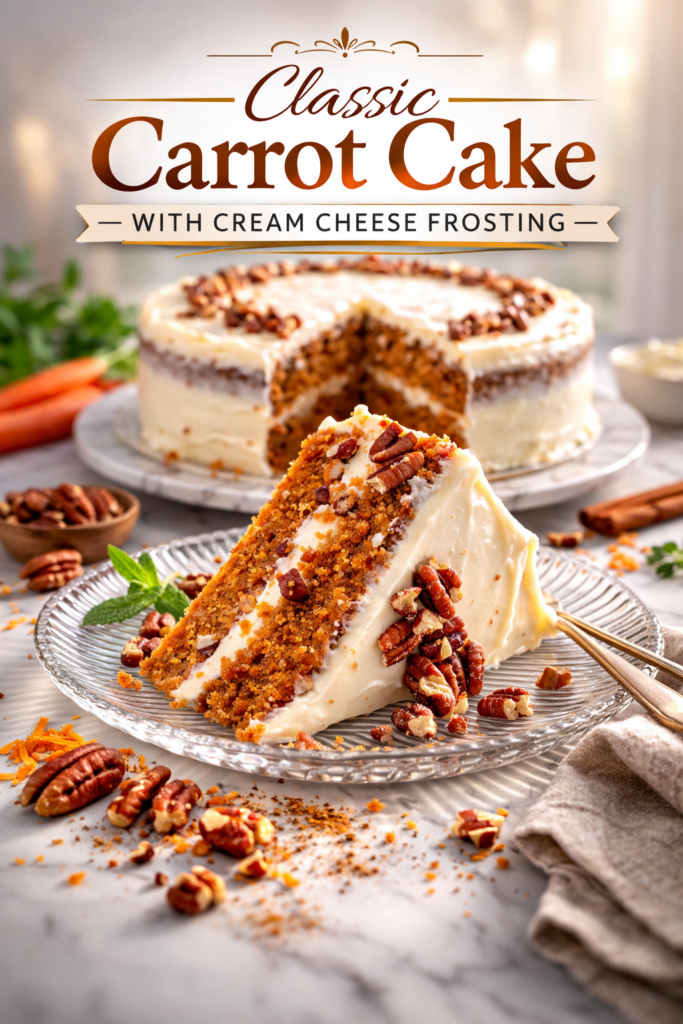
This classic carrot cake with cream cheese frosting delivers an incredibly moist, spiced crumb packed with carrots, pecans, and raisins. Our foolproof recipe includes pro tips and science.
Intro
Is there any dessert that feels more simultaneously wholesome and decadent than a slice of classic carrot cake with cream cheese frosting ? It’s the dessert that tricks you into thinking you’re eating something virtuous—I mean, it has carrots, right?—while delivering a profoundly satisfying experience of warm spices, tender crumb, and that tangy, velvety cream cheese frosting that we all secretly want to eat with a spoon.
I still remember the first carrot cake that stopped me in my tracks. It wasn’t at a bakery or a restaurant. It was at a backyard birthday party, the kind where the cake sits on a paper plate, slightly lopsided, with a handful of chopped pecans scattered on top. One bite, and I understood: this wasn’t just “carrot cake.” This was the carrot cake—the one against which all others would be measured. Years later, after dozens of test batches, countless tweaks, and more than a few failures, I’ve landed on this version. It’s the one I make for birthdays, for holidays, and for no reason at all except that Tuesday deserves a little spice and sugar.
In this post, I’ll walk you through every step of creating this classic carrot cake with cream cheese frosting, from the science of why oil creates a moister crumb than butter, to the secret behind a stable, pipe-able cream cheese frosting that doesn’t slide off the cake. Let’s get baking.
The History
Carrot cake is a curious culinary paradox: a dessert that celebrates a vegetable. Its roots stretch back much further than the 1970s health-food movement that popularized it in the United States.
Medieval Beginnings: When Sugar Was Scarce
The earliest ancestors of carrot cake emerged in medieval Europe, where sugar was an expensive luxury reserved for the wealthy. Resourceful cooks turned to naturally sweet ingredients like carrots and beets to sweeten their puddings and cakes. Carrots, with their high natural sugar content, became a clever substitute. These early “carrot puddings” were more like sweetened, spiced vegetable stews than the tender cakes we know today, but they established the foundational idea: carrots belong in desserts. According to food historians, these recipes appeared as early as the 16th century in European cookbooks.
Wartime Rationing and the Rise of Carrot Cake
Carrot cake as we recognize it began to take shape during World War II. In Britain, government-sponsored propaganda encouraged citizens to use carrots as a sugar substitute in cakes and puddings due to severe sugar rationing. The Ministry of Food promoted “carrot cake” as a patriotic, economical dessert. These recipes, however, were often dense and relied on whole-wheat flour and margarine. They were practical, not necessarily decadent.
The American Revival: From Hippie Kitchens to Fine Dining
Carrot cake’s transformation into the luxurious dessert we crave today happened in the 1960s and 1970s in the United States. The back-to-the-land movement embraced whole foods and natural ingredients, and carrot cake—with its vegetables, nuts, and lack of refined butter—fit perfectly into the ethos. Health-food bakeries began refining the recipe, adding crushed pineapple for moisture, walnuts for crunch, and, most importantly, a rich cream cheese frosting that balanced the cake’s earthy sweetness with tangy richness.
By the 1980s, carrot cake had shed its “health food” reputation and entered the mainstream. It became a staple at coffee shops, a popular wedding cake alternative, and a symbol of sophisticated, rustic elegance. Today, this classic carrot cake with cream cheese frosting sits at the intersection of nostalgia and timeless appeal—a dessert that feels both comforting and special.
The Science
What makes a great carrot cake? It’s not magic. It’s chemistry. Understanding the science behind the ingredients and techniques will ensure your cake turns out perfectly every time.
Why Oil Creates a More Tender Crumb
Unlike butter, which is about 80% fat and 20% water, vegetable oil is 100% fat. When you cream butter and sugar, you incorporate air, which creates structure. Oil, however, does not aerate. Instead, it coats the flour proteins (gluten), preventing them from forming long, tough strands. This results in a cake that is exceptionally moist and tender with a soft, velvety crumb. As Serious Eats explains, oil-based cakes stay softer at cold temperatures because the fat remains liquid, whereas butter solidifies when chilled.
The Role of Carrots: Moisture, Sugar, and Structure
Grated carrots do three essential things. First, they provide natural moisture. As the cake bakes, the carrots release steam, which helps keep the crumb soft. Second, they contribute natural sugars that caramelize slightly during baking, adding depth of flavor. Third, the physical structure of the grated carrot adds tenderness by interrupting the gluten network, similar to how zucchini works in zucchini bread. According to King Arthur Baking, the finer you grate the carrots, the more evenly they disperse moisture throughout the batter. It’s important to use finely grated carrots—about the size of a coarse grate on a box grater—so they melt into the batter rather than leaving noticeable stringy bits.
The Baking Soda Balancing Act
This recipe calls for 2 teaspoons of baking soda. Why so much? Carrot cake batters are naturally acidic. Carrots contain acids, brown sugar is slightly acidic, and many recipes include buttermilk or other acidic ingredients. Baking soda is a base that reacts with these acids to produce carbon dioxide gas, creating lift. The baking soda also helps neutralize excess acidity, allowing the warm spices—cinnamon especially—to shine. The instruction to “level the teaspoon” is crucial here. Too much baking soda can leave a bitter, soapy aftertaste. Too little, and your cake will be dense and flat. For a deep dive into leavening agents, The Spruce Eats offers an excellent guide on how they work.
The Cream Cheese Frosting Science
Traditional cream cheese frosting often suffers from being too soft to hold its shape or too sweet to taste like cream cheese. Our recipe uses two clever techniques. First, we add a small amount of cornstarch, which stabilizes the frosting without altering flavor, creating a structure that holds its shape on the cake. Second, we use cold heavy cream whipped in at the end. The fat in the cream, combined with the chilled ingredients, creates a light, mousse-like texture that’s simultaneously sturdy and luxurious. This isn’t a frosting that slides off the sides; it’s one that sits proudly on top, ready to be swirled into beautiful peaks.
Good Pairing Food and Drink
This classic carrot cake with cream cheese frosting is rich, spiced, and wonderfully versatile. Here’s how to build a full dessert experience around it.
- Appetizer: Classic Creamy Mushroom Soup (Roux Method for Perfect Texture). Start your meal with a bowl of velvety, earthy mushroom soup. The savory, umami depth of the soup provides a wonderful contrast to the sweet, spiced cake that follows. The silky texture of the soup also primes the palate for the creamy frosting to come, creating a satisfying journey from savory comfort to sweet indulgence.
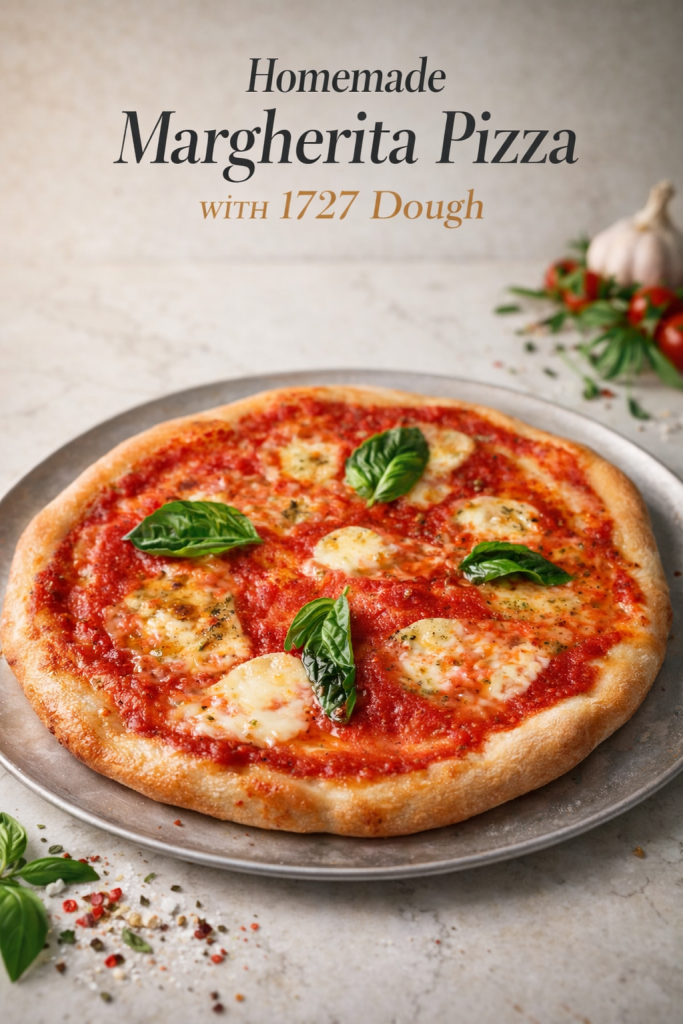
- Main Course: Faster & Yummier Than Delivery: The 72-Hour Dough Recipe for Homemade Margherita Pizza. While carrot cake often shines as a dessert after any meal, a simple, high-quality Margherita pizza makes an excellent savory prelude. The bright acidity of the tomato sauce, the creamy freshness of the mozzarella, and the subtle sweetness of the basil create a balanced, not-too-heavy main course that won’t compete with the cake’s warm spices.
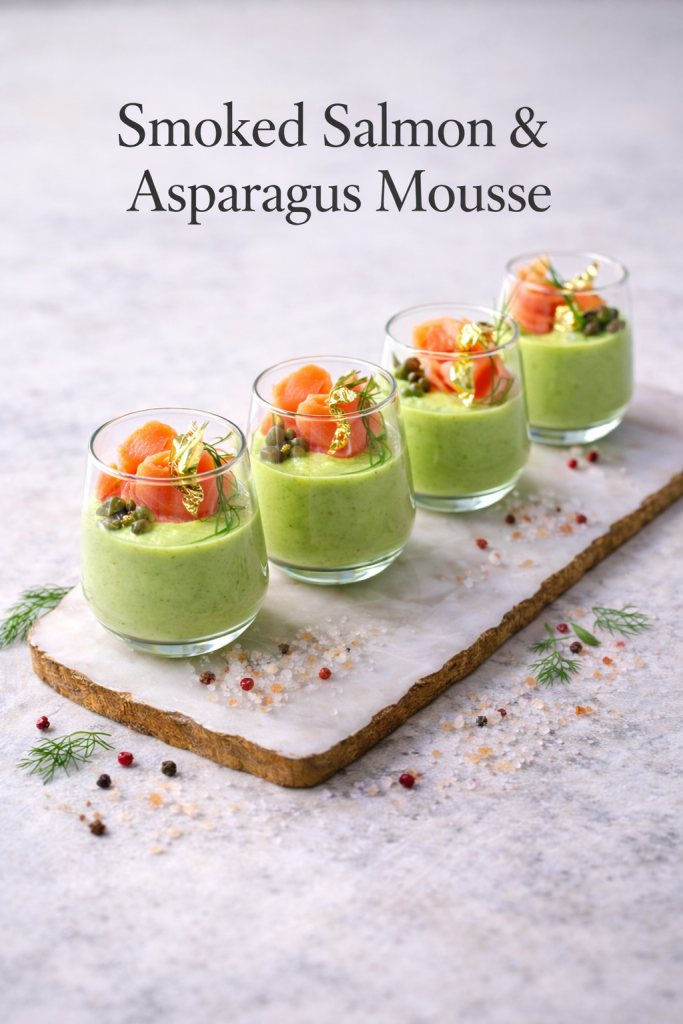
- Side Dish: Smoked Salmon & Asparagus Mousse: An Elegant 5-Ingredient Appetizer. I’m placing this elegant, savory mousse in the side dish category because it functions beautifully as a light, sophisticated starter served alongside the main course or as part of a larger spread. Its bright, fresh, and slightly smoky profile offers a refined counterpoint to the dense, sweet richness of the carrot cake, making it ideal for a celebratory brunch or springtime gathering.
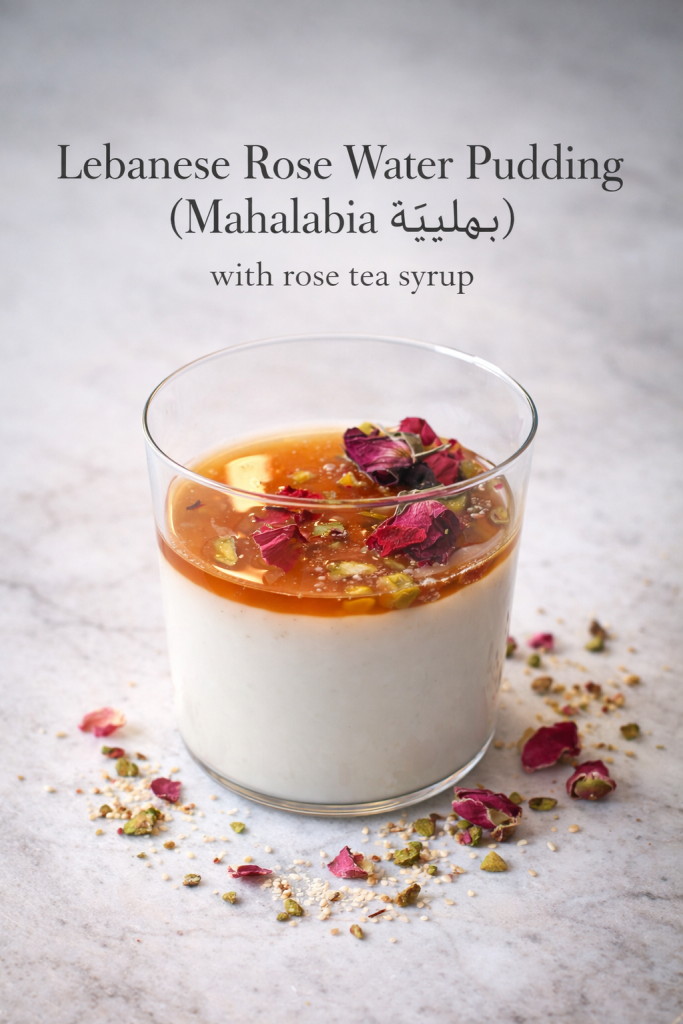
- Dessert: Lebanese Rose Water Pudding (Mahalabia مهلبية) with Rose Tea Syrup. If you want to offer a second dessert alongside the carrot cake, this silky, floral Middle Eastern pudding is a stunning choice. Where the carrot cake is dense, spiced, and tangy with cream cheese, Mahalabia is light, creamy, and delicately perfumed with rose. The contrast in textures—rich cake versus silky pudding—and flavors—warm cinnamon versus cool rose—creates a beautifully balanced dessert spread that feels both indulgent and elegant.
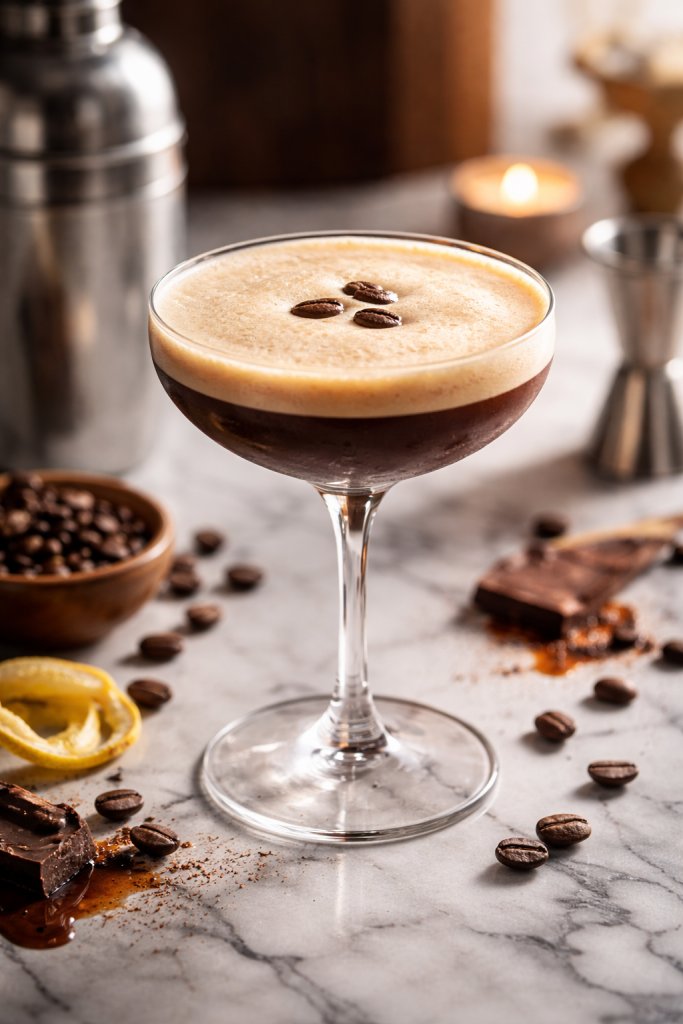
- Cocktail: Espresso Martini Recipe: The Iconic London Cocktail. The deep, roasty notes of coffee in an Espresso Martini complement the warm cinnamon and nutmeg in the cake beautifully. The cocktail’s rich, slightly bitter profile cuts through the sweetness of the frosting, while its creamy texture echoes the frosting’s velvety mouthfeel. It’s a sophisticated pairing that transforms dessert into an occasion.
- Non-Alcoholic Drink: Masala Chai Latte. The warm spice blend of chai—cardamom, cinnamon, ginger, cloves—echoes the cake’s own spice profile. A lightly sweetened, creamy chai latte served alongside a slice feels like a hug in beverage form. For a cold alternative, a spiced iced tea with a splash of oat milk works beautifully.
Description
Looking for the ultimate classic carrot cake with cream cheese frosting? This recipe delivers a perfectly moist, warmly spiced cake topped with a silky, stable cream cheese frosting that's easy to make and even easier to love.
Ingredients
For the Carrot Cake
For the Cream Cheese Frosting
Instructions
-
Bake the Cake
-
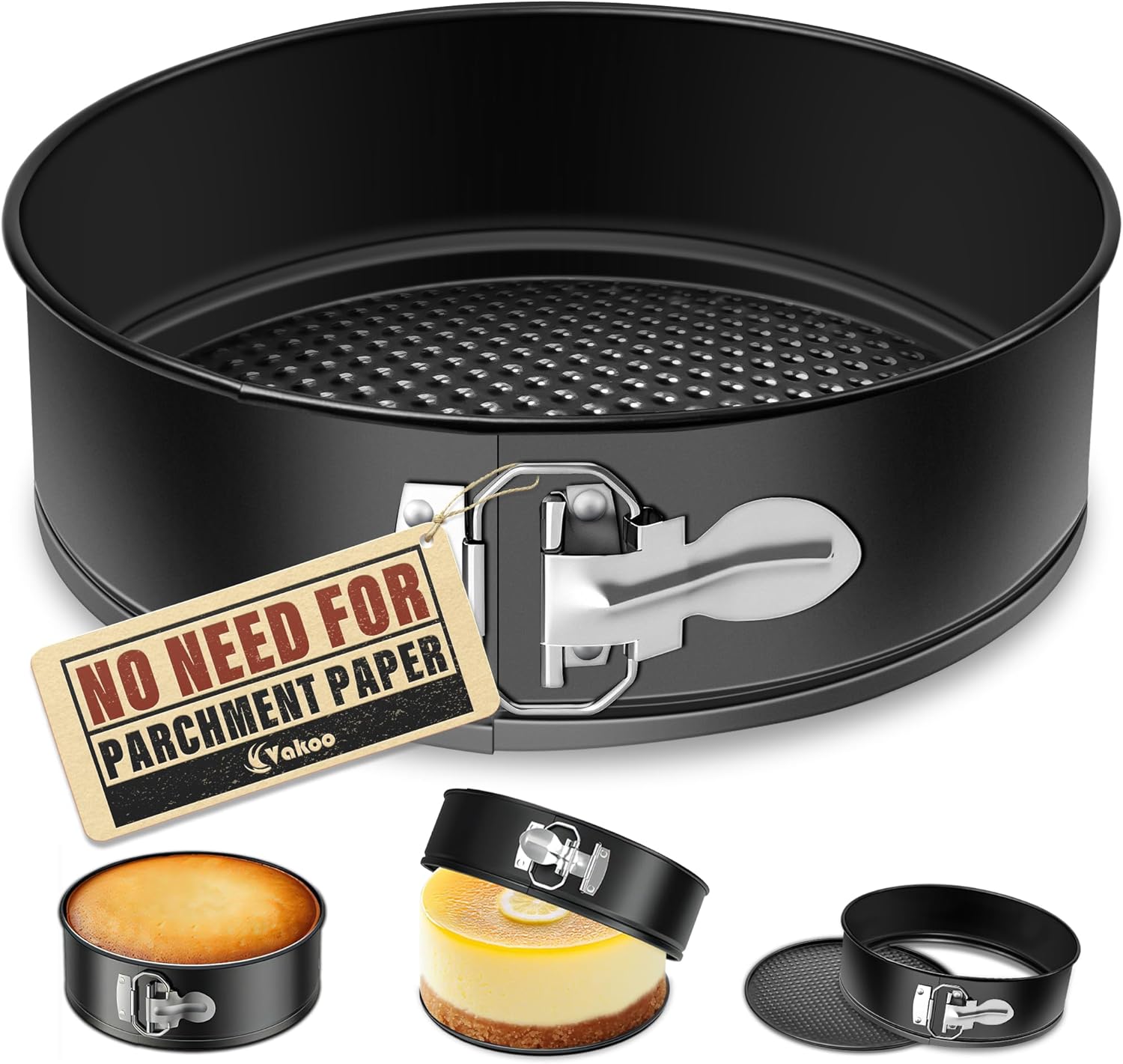
Heat oven and prepare pans: Position a rack in the middle of the oven. Preheat to 350°F (180°C). Grease two 9-inch round cake pans. Line the bottom of each with parchment paper, then grease the parchment. Alternatively, grease and flour the pans.
-
Prepare dry ingredients: In a medium bowl, whisk the flour, baking soda, salt, and cinnamon until very well blended. Set aside.
-
Prepare wet ingredients: In a large bowl, whisk the vegetable oil, granulated sugar, brown sugar, and vanilla extract until combined. Add the eggs one at a time, whisking well after each addition. The mixture should look smooth and slightly thickened.
-
Make the batter: Switch to a large rubber spatula. Scrape the sides and bottom of the bowl. Add the dry ingredients in three additions, gently stirring after each until just combined—do not overmix. Stir in the grated carrots, chopped pecans, and raisins until evenly distributed.
-
Bake cake layers: Divide the batter evenly between the prepared pans. Bake for 35 to 45 minutes. You'll know the cakes are done when the tops are springy to the touch and a toothpick inserted into the center comes out clean or with just a few moist crumbs.
-
Cool them: Remove the cakes from the oven and let them cool in the pans for 15 minutes. Run a knife around the edges to loosen, then carefully turn the cake layers out onto wire racks. Remove the parchment paper. Allow the cakes to cool completely before frosting—this is essential. If a layer sticks to the pan, invert it and let gravity do the work for a few minutes before gently tapping.
-
Make the Frosting
-
-
Prep dry ingredients: In a small bowl, whisk or sift together the cornstarch and powdered sugar. Set aside.
-
Beat cream cheese: In a large bowl, beat the cream cheese with a handheld mixer on medium speed until very smooth, whipped, and creamy, about 1 to 2 minutes. There should be no lumps.
-
Combine ingredients: With the mixer on low speed, add the cornstarch-powdered sugar mixture to the cream cheese, a heaped spoonful at a time, until fully combined. Scrape down the bowl as needed.
-
Add the cream: Pour in the cold heavy cream. Beat on medium to medium-high speed for 2 to 3 minutes, or until the frosting is whipped and creamy. If it is not whipping, chill the bowl in the refrigerator for 15 minutes and try again. The finished frosting will resemble the texture of lightly whipped cream—soft, spreadable, and stable. Chill covered until ready to frost the cake.
-
Assemble
-
-
Frost the cake: When the cake layers are completely cool, place one layer on a serving plate. Spread a generous layer of frosting over the top. Place the second cake layer on top. Add the remaining frosting to the top of the cake and use a butter knife or small offset spatula to swirl it around artistically. Leave the sides of the cake unfrosted for that classic rustic look.
-
Finish: Sprinkle the remaining chopped pecans over the top. Slice, serve, and prepare for compliments.
-
Nutrition Facts
Servings 12
- Amount Per Serving
- Calories 550kcal
- % Daily Value *
- Total Fat 38g59%
- Saturated Fat 7g35%
- Sodium 380mg16%
- Total Carbohydrate 58g20%
- Dietary Fiber 3g12%
- Sugars 42g
- Protein 7g15%
* Percent Daily Values are based on a 2,000 calorie diet. Your daily value may be higher or lower depending on your calorie needs.
Note
Pro Tips for Success
- Spoon and level your flour: Scooping directly from the bag compacts the flour, leading to a dense, dry cake. Spoon flour into your measuring cup and level with a knife.
- Grate your own carrots: Pre-shredded carrots from a bag are too dry and coarse. Freshly grated carrots release moisture as they bake, keeping the cake tender.
- Room temperature ingredients matter: Cold eggs won't emulsify properly into the oil mixture. Set them out an hour before baking.
- Don't overmix: Once the flour goes in, stir just until combined. Overmixing develops gluten, which makes the cake tough.
Make-Ahead Instructions
- Cake layers: Bake the cake layers, cool completely, wrap tightly in plastic wrap, and refrigerate for up to 3 days or freeze for up to 3 months. Frost frozen layers straight from the freezer—they're easier to handle.
- Frosting: Prepare the frosting up to 2 days ahead, store in an airtight container in the refrigerator, and bring to slightly softened room temperature before whipping briefly to restore texture.
Storage Guidelines
- Refrigerator: Store frosted cake in an airtight container or loosely covered in the refrigerator for up to 5 days. The cream cheese frosting requires refrigeration.
- Freezer: Unfrosted cake layers freeze beautifully for up to 3 months. Frosted cake can also be frozen, though the texture of the frosting may change slightly. Wrap well and freeze for up to 1 month.
Substitutions
- Nuts: No pecans? Walnuts are a classic substitute. For a nut-free version, simply omit them or replace with toasted coconut.
- Raisins: Swap for dried currants, chopped dates, or omit entirely.
- Flour: A 1:1 gluten-free baking flour blend works well in this recipe. Add ½ teaspoon xanthan gum if your blend doesn't already include it.
- Oil: Canola, avocado, or grapeseed oil are neutral substitutes. Do not use olive oil—its flavor is too pronounced.
- Cornstarch in frosting: If you skip it, the frosting will still be delicious but slightly softer. Chill the frosted cake for 30 minutes before serving to help it set.
Troubleshooting
- Cake is dense: Likely from overmixing or expired baking soda. Test your baking soda by adding a pinch to vinegar—it should bubble vigorously.
- Cake stuck to pan: Let it cool the full 15 minutes in the pan, then invert. If it still sticks, place the pan upside down on a cooling rack and let gravity work for 5 more minutes.
- Frosting too soft: Your cream cheese was too warm, or you over-whipped. Chill the frosting for 15-20 minutes, then whip briefly. If it separates, you've over-whipped the cream; start over.